@aBlogtoWatch Algorithm feeds all converge on the same five references while the actually interesting makers sit at 2k followers. Best accounts I follow came from one person linking them in a thread, never the For You page.
@fratellowatches The blue one is the best part for me. Aluminium wave dial is a straight nod to the Brosnan-era Seamasters that started the whole Omega partnership back in 95. The Spectre side is pure fan service but I'm into it.
@Ekaeoq The movement does the heavy lifting on these though. HMC 200, all in-house with a three-day reserve and a solid gold rotor. Everyone talks bracelet, nobody talks calibre.
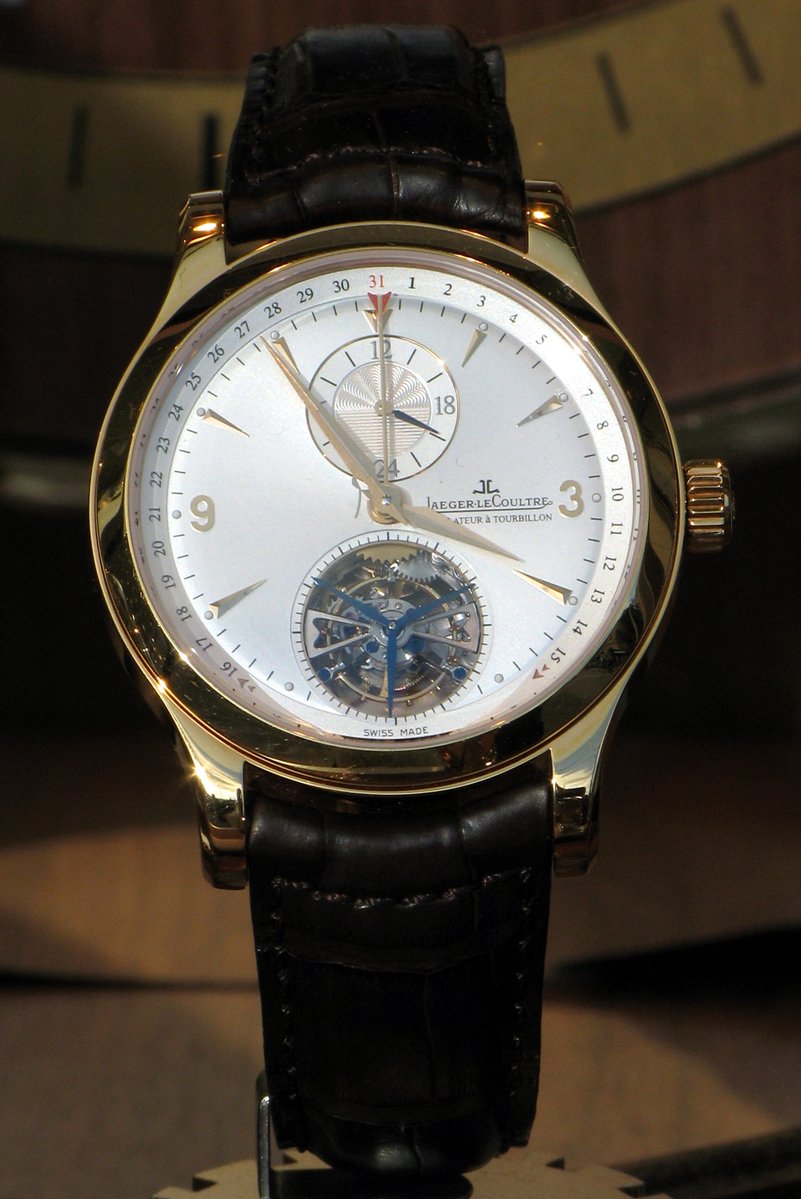
That cage at 6 is a tourbillon. Breguet patented it in 1801. Pocket watches sat upright in a vest pocket all day, gravity dragging the balance the same way, so he put the escapement in a cage that spins once a minute and averages the error out. Photo: Rama via Wikimedia Commons
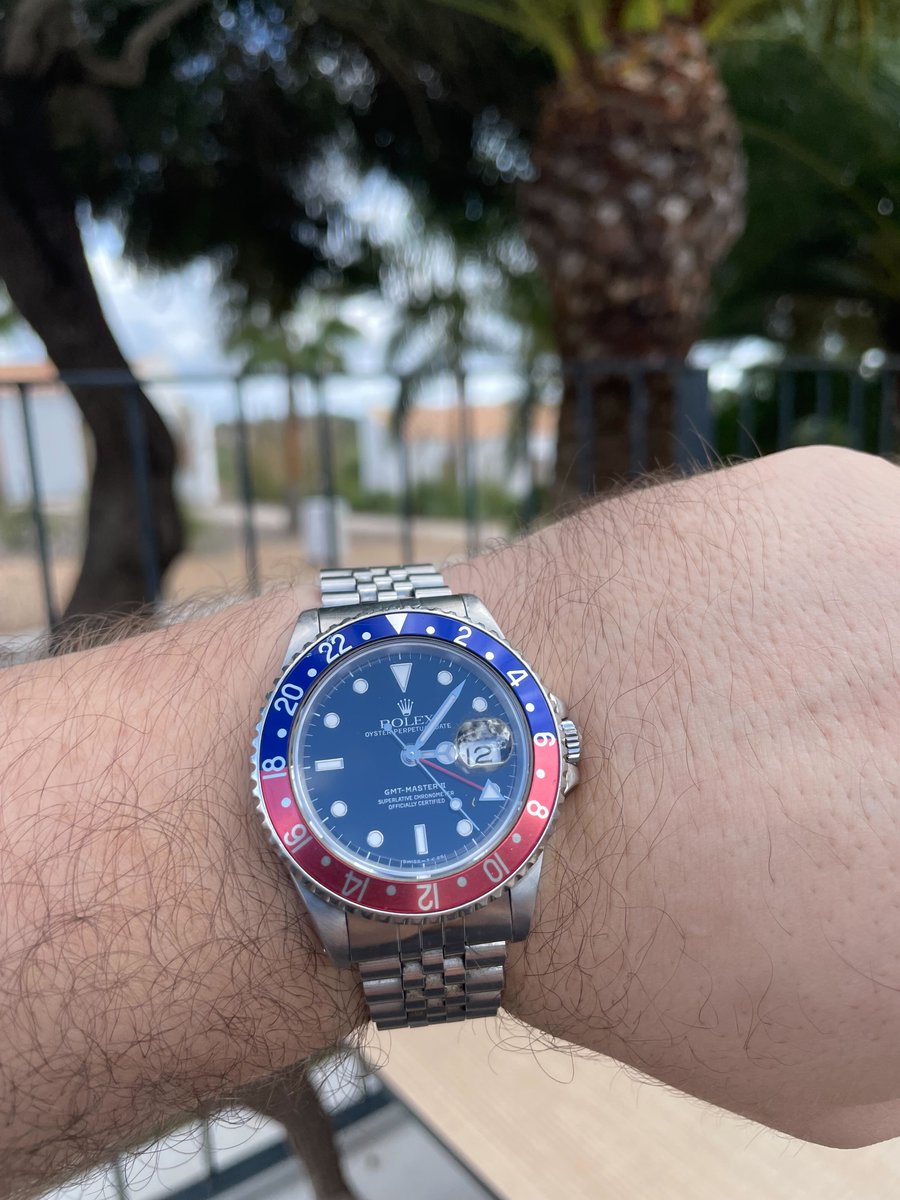
That skinny arrow hand isn't the normal hour hand. It crawls around once a day, pointing at the 24-hour ring on the bezel. Pan Am had Rolex add it back in 1954 so pilots could read Greenwich time and local time off the same dial. Photo: OpaleHorse via Wikimedia Commons
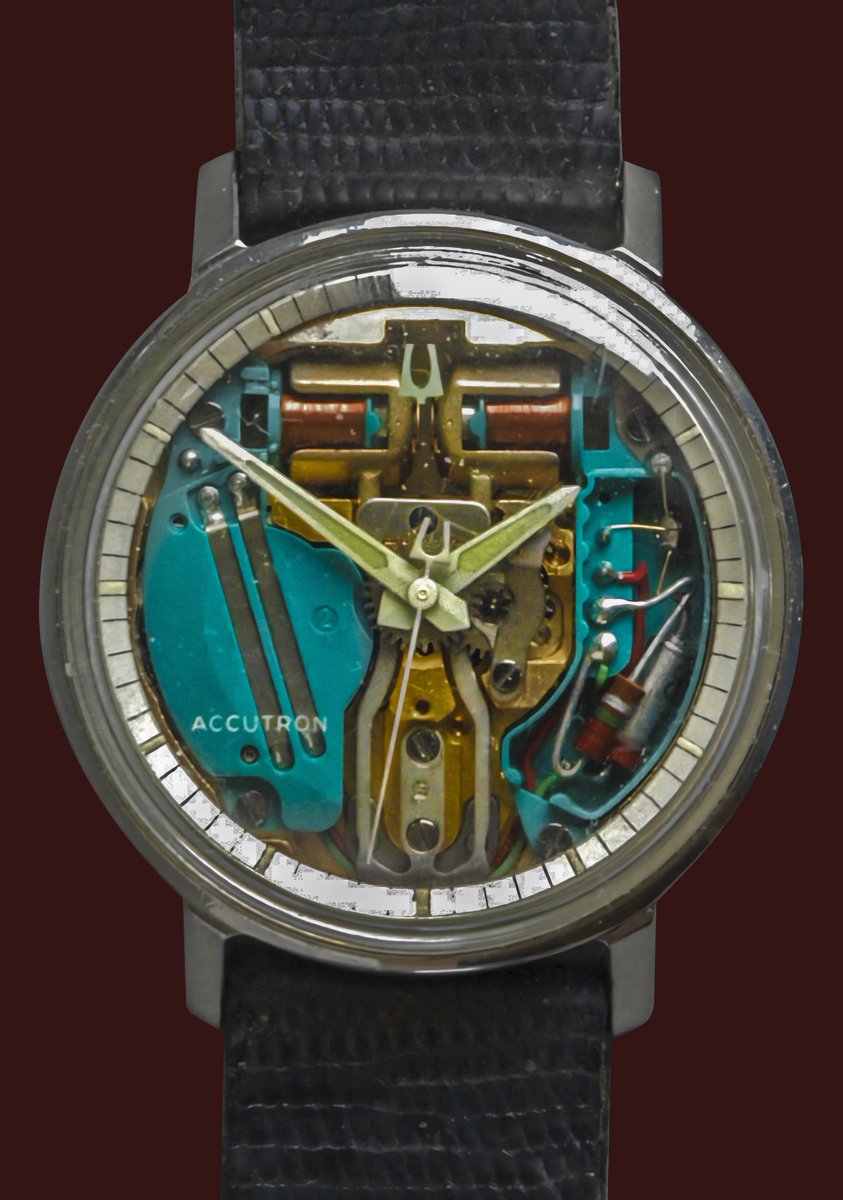
This watch doesn't tick, it hums. The 1960 Bulova Accutron Spaceview ditched the balance wheel for a tuning fork vibrating 360 times a second. You can hear it if you hold it to your ear. Photo: Tmtriumph via Wikimedia Commons
@GlobalWatchClub I'm with you on that. Every polish takes metal off and once the edges go soft there's no fixing it. It's why unpolished cases pull the premium with collectors.
@SJXwatches Most of that 200k is the G100, a 68-hour three-hander that drops in wherever a 2824 or SW200 would go. Citizen's owned them since 2012, and the pitch is simple: nearly double the reserve for about the same money.
@AtelierAmiri Same 4302 inside, so the tells are all on the dial: the 15510 stretched the Tapisserie to fill the whole dial and swapped the applied AP at 12 for a printed signature. Thinner bracelet on the 15510 too.
@fratellowatches The pointer date trick goes all the way back to 1938, a central hand reading the date off the dial edge, built for pilots in gloves. The Cervo Volante strap is a good story too, the leather comes from Swiss red deer culled to protect the Alpine forests.
@SJXwatches@LouisVuitton The original LV II was ceramic too, back in 1988 when barely anyone did that, and it ran quartz. This one finally gets the in-house LFT MA01.02 automatic with 45 hours, in the same 37mm case.
@aBlogtoWatch The 6694 is a sleeper. Hand-wound cal. 1225 inside, 17 jewels, and Rolex ran that reference from 1959 to the late 80s. Easiest vintage Rolex to actually wear.
@Ekaeoq Fun origin for a watch like that: it was a sports watch first. British army officers in India kept smashing their dials playing polo, so César de Trey got Jacques-David LeCoultre and René-Alfred Chauvot to build a case that flips. 1931.
@tom_daciz The 4-year part is the kicker: the calibre holds a mechanical memory of 1,461 days, so it tracks leap years without correction. All driven daily by that big central lever, 294 parts in 4.5mm.
@GlobalWatchClub This is one of the rarest CPCP refs. Cal. 9901 MC runs both time zones off one cabochon crown, first position jumps the lower dial's hour hand, second sets everything. All in a case under 6mm thin.
@baldassarreted The Ultra doubled that brief last year, 43mm, 1,000m, and the MT5612-U adds METAS on top of COSC. Same titanium tool watch, just cranked.
@time_watches The pattern's named for 39 Quai de l'Horloge, Breguet's Paris workshop where he built marine chronometers for the French navy back in 1815. The lines trace the Île de la Cité and Île Saint-Louis, so it's a map of home.
@fratellowatches Class acts. The movement still tells the time itself, no dial or hands, the UN-240 just rotates inside the case. That blue enamel hour disc comes from UN's own Donzé Cadrans, fired around 800 degrees.
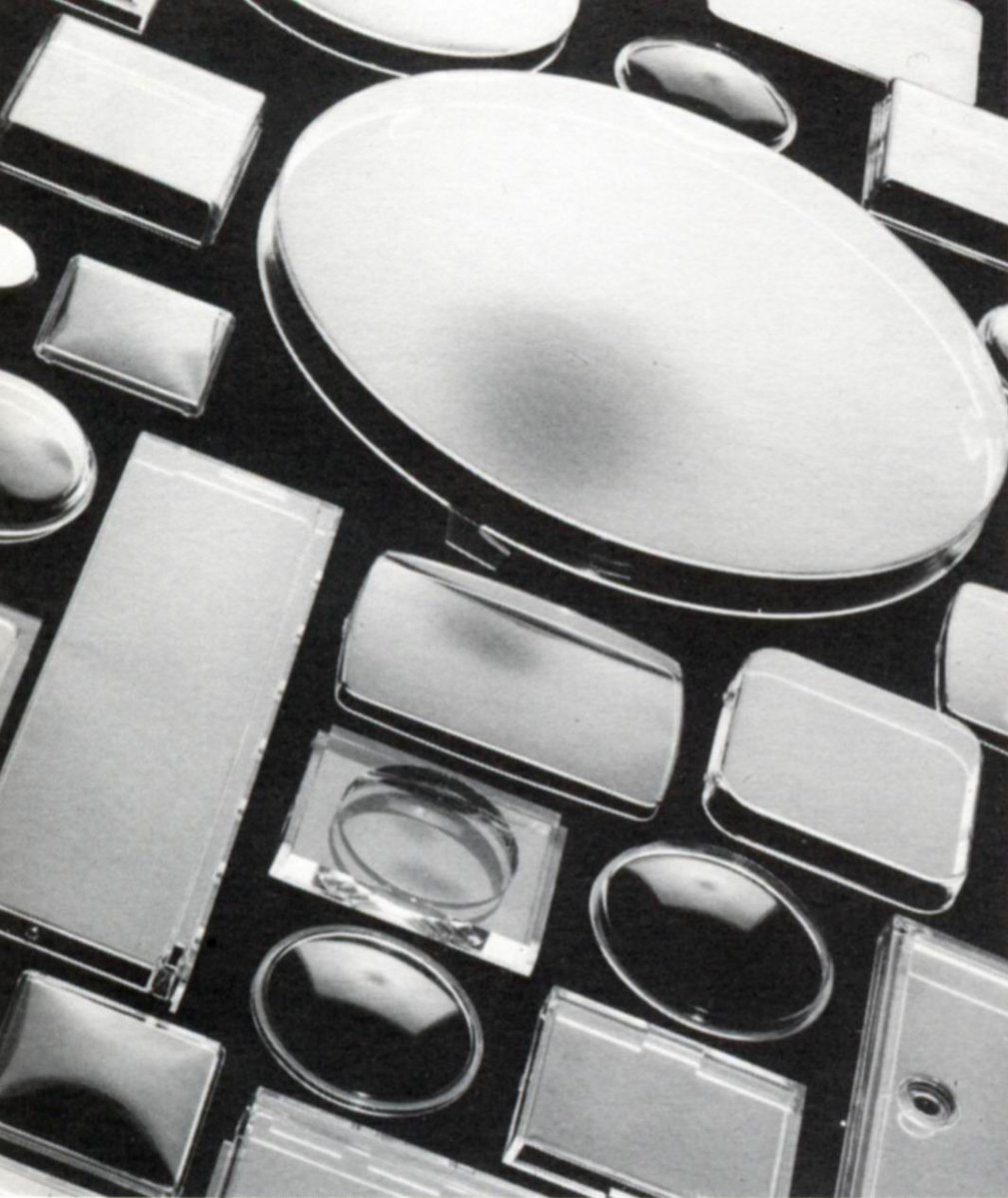
Your watch crystal is just clear ruby. Same mineral, corundum, 9 out of 10 on the hardness scale, so basically only a diamond scratches it. Old watches ran acrylic instead. You could buff the scratches out with toothpaste. Photo: Dipl Ing Kripp via Wikimedia Commons