Markets. Economy. Tech. AI. Crypto.
I couldn’t find a newsletter that delivered signal without noise -
so I started writing it.
📩 Insight Weekly is the kind of 5-minute read I always wanted.
Sent every Sunday.
No hype. Just insight.
👉 https://t.co/qxHufNxZNp
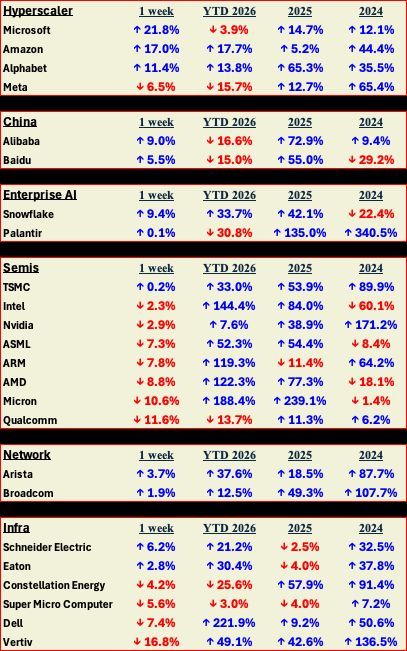
This week drew a clean line through the AI trade: companies whose spending is already converting into booked cloud revenue on one side, companies still asking investors to trust the payoff on the other.
𝗠𝗶𝗰𝗿𝗼𝘀𝗼𝗳𝘁 and 𝗔𝗺𝗮𝘇𝗼𝗻 were in the first camp. Azure's growth accelerated to its fastest pace in years and pushed Microsoft's stock to its best single day since the financial crisis, while an AWS reacceleration drove Amazon's steepest post-earnings jump in over a decade.
𝗔𝗹𝗽𝗵𝗮𝗯𝗲𝘁 and 𝗠𝗲𝘁𝗮 were on the other side. Alphabet's cloud unit also grew, but investors reacted instead to a capital spending forecast raised again, toward the top of an already enormous range. Meta's problem was starker: AI investment consumed nearly all of its operating cash flow this quarter, and guidance offering no sense of when that spending might ease sent the stock down hard.
The semiconductor complex fell for a related but distinct reason. A report that a Chinese manufacturer had made progress on lithography technology long dominated by ASML reopened a competition question just as investors were already reassessing whether near-term AI revenue can justify the sector's spending, and the sell-off wiped out a substantial share of chipmakers' combined market value over the past month. 𝗠𝗶𝗰𝗿𝗼𝗻, 𝗔𝗦𝗠𝗟, 𝗔𝗥𝗠, 𝗔𝗠𝗗 𝗮𝗻𝗱 𝗤𝘂𝗮𝗹𝗰𝗼𝗺𝗺 𝗮𝗹𝗹 𝗳𝗲𝗹𝗹 𝗱𝗲𝘀𝗽𝗶𝘁𝗲 𝗹𝗶𝘁𝘁𝗹𝗲 𝗰𝗵𝗮𝗻𝗴𝗲 𝗶𝗻 𝘂𝗻𝗱𝗲𝗿𝗹𝘆𝗶𝗻𝗴 𝗱𝗲𝗺𝗮𝗻𝗱, evidence of a trade that had simply run too far rather than a broken thesis, and the second such reset the sector has suffered this summer.
Enterprise software mirrored the hyperscaler split: Snowflake extended a strong run built on AI tools converting into paying accounts, while Arista and Broadcom held up on continued hyperscaler capital commitments.
Vertiv fell despite beating on earnings and raising full-year guidance, punished instead for a revenue shortfall it attributed to supply-chain timing, while Constellation Energy and Super Micro extended recent declines as the same repricing spread into the power and hardware names financed by the same buildout.
Alibaba and Baidu kept climbing, helped by China's regulator clearing Apple's AI features for the iPhone using Alibaba's Qwen model, and by capital rotating out of an expensive US chip sector into cheaper Chinese platforms.
#InsightWeekly #AI #ArtificialIntelligence #Markets
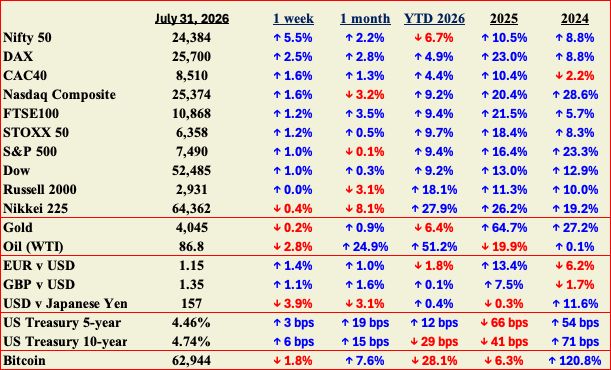
The Federal Reserve held rates steady this week - the vote was 9-3.
Three policymakers wanted a hike, the sharpest internal split of Chair Kevin Warsh's tenure. Stocks fell hard on the announcement, and the long end of the Treasury curve kept climbing through the week, with the 30-year yield pushing above 5.2 percent for the first time since 2007. It reflects investors demanding more compensation to hold government debt for three decades, a message about fiscal supply and inflation credibility that one Fed meeting can't talk down.
Treasury yields climbed to the highest point since January 2025, with two-year notes touching levels last seen in early 2025.
There was a second, competing story. Early-week selling in AI-related shares, driven by questions over capital spending and financing arrangements, gave way to a sharp reversal once Microsoft's cloud results landed, pulling the Nasdaq, Dow and S&P higher while midcaps and small caps were left behind. Consumer discretionary led the S&P's sectors on a late rally in Amazon shares, while utilities and real estate, the parts of the market most exposed to that rising long bond, lagged.
Eurozone growth for the second quarter beat expectations by a wide margin, and easing worries over a Middle East escalation, with Brent holding below the triple-digit mark, gave the STOXX 600 room to reach a fresh intraday high, led by Germany's DAX.
India topped every major index in the table, its best week since April, as strong results from Bajaj Finance, Bajaj Finserv and Mahindra & Mahindra lifted financials and autos enough to offset a drag from IT and consumer staples.
Japan was the outlier, pulled lower by uncertainty over the earthquake that struck Kyushu and by a sudden yen surge, its sharpest intraday move against the dollar since December 2023, that revived intervention speculation even as the Bank of Japan held rates and signalled openness to moving again in September.
#InsightWeekly #Finance #Macroeconomics #Markets
The capex anxiety hitting the hyperscalers did not send money out of the AI trade so much as further down the supply chain. Micron and AMD extended a rally already running into the triple digits this year, with Micron's memory pricing power drawing renewed attention after a blowout quarter that left AI memory effectively sold out. Super Micro Computer was the week's sharpest mover of any name in the group, jumping after disclosing a record order backlog above $60 billion and a gross margin outlook well ahead of prior guidance. Dell and Constellation Energy rose on the same logic, rewarded as suppliers of the servers and power that hyperscalers are now committing hundreds of billions of dollars toward, even as the hyperscalers themselves were marked down for the spending.
Palantir broke from the enterprise-software script that had shielded it in recent weeks, falling on valuation scrutiny, insider selling and reports of emerging open-source competition ahead of its own results. It is a reminder that the "safer" corner of the AI trade is only safer until sentiment turns.
Nvidia, TSMC and ASML also advanced, though by less than the memory and server names, consistent with investors favouring companies with hard evidence of order books over the more diffuse compute buildout story this week. Not every chip name shared in the rotation, though.
ARM, Intel and Qualcomm all fell, each still working off extraordinary gains built up over the year and now facing fresh valuation scrutiny of their own, ARM following an analyst downgrade that called its price ahead of its fundamentals. The split suggests investors are drawing a line this week between fresh evidence of demand and stocks that have simply run furthest, rather than turning on chips wholesale. China's AI-adjacent names slipped modestly, tracking the broader shift away from AI spenders.
#InsightWeekly #AI #ArtificialIntelligence #Markets
𝙏𝙝𝙞𝙨 𝙞𝙨 𝙣𝙤𝙩 𝙣𝙚𝙬. 𝘽𝙞𝙜 𝙏𝙚𝙘𝙝'𝙨 𝙘𝙖𝙥𝙞𝙩𝙖𝙡 𝙨𝙥𝙚𝙣𝙙𝙞𝙣𝙜 𝙞𝙢𝙥𝙖𝙘𝙩𝙨 𝙨𝙩𝙤𝙘𝙠𝙨!
Alphabet, Amazon, Meta and Microsoft all fell hard this week after Alphabet raised its 2026 capex guidance toward $205 billion and the four hyperscalers combined signalled roughly $725 billion in AI infrastructure spending for the year, up sharply from 2025. Earnings themselves were mostly solid; what spooked investors (again) was the growing gap between spending and any visible return on it.
A second story ran alongside it. The ceasefire between the US and Iran kept fraying, tanker traffic through the Strait of Hormuz thinned further, and oil pushed to its highest level of the year.
That combination lifted Treasury yields to their highest point since January 2025, with two-year notes touching levels last seen in early 2025, and pulled forward market pricing for a Federal Reserve rate hike later this year, the implied odds jumping from roughly one in eight to more than one in three within days, a sharp reversal from the cut expectations that had dominated only weeks earlier.
Europe was comparatively insulated. The FTSE 100's lighter technology exposure helped it lead major regional benchmarks even as Washington announced a fresh round of tariffs on the EU and UK during the week, while the DAX, STOXX 50 and CAC 40 posted smaller advances. The Nikkei also edged higher, with financials drawing support from rising Japanese government bond yields even as the yen slid toward a 40-year low against the dollar.
Gold's move was more a story of offsetting forces than conviction in either direction, with oil-driven inflation concern lending some support and higher yields capping it. Bitcoin finished the week close to where it started.
#InsightWeekly #Finance #Macroeconomics #Markets
The clearest divide was between the two things Wall Street is being asked to have faith in - real installed AI power and revenue already on the books, versus a compute buildout whose near-term payoff is being questioned.
𝗣𝗮𝗹𝗮𝗻𝘁𝗶𝗿 and 𝗦𝗻𝗼𝘄𝗳𝗹𝗮𝗸𝗲 gained in the week as the markets preferred enterprise AI to semis, extending a pattern that has now held for weeks. 𝗖𝗼𝗻𝘀𝘁𝗲𝗹𝗹𝗮𝘁𝗶𝗼𝗻 𝗘𝗻𝗲𝗿𝗴𝘆 told a similar story from the power side, holding up far better than the server and infrastructure names it sits alongside, a sign conviction in AI-driven electricity demand has not moved even as the equipment spending behind it gets repriced.
Everything upstream of that took the loss. Chipmakers and memory names bore the brunt, 𝗔𝗥𝗠, 𝗜𝗻𝘁𝗲𝗹, 𝗠𝗶𝗰𝗿𝗼𝗻 and 𝗔𝗠𝗗 all down by double digits, despite 𝗧𝗦𝗠𝗖 and 𝗔𝗦𝗠𝗟 both delivering the quarter the market wanted and raising full-year guidance days earlier. Reports that 𝗦𝗞 𝗛𝘆𝗻𝗶𝘅 is slowing its expansion of high-bandwidth memory output fed a broader worry that hyperscaler capital spending may not generate the returns currently priced in, a concern compounding as 𝗔𝗺𝗮𝘇𝗼𝗻, 𝗔𝗹𝗽𝗵𝗮𝗯𝗲𝘁, 𝗠𝗶𝗰𝗿𝗼𝘀𝗼𝗳𝘁 and 𝗠𝗲𝘁𝗮 all push further into custom AI silicon of their own. That custom-chip buildout, still a fraction of 𝗡𝘃𝗶𝗱𝗶𝗮'𝘀 installed base, is nonetheless the kind of threat markets have started pricing years in advance, and Nvidia's own decline this week reflects as much.
The network and physical infrastructure names, 𝗕𝗿𝗼𝗮𝗱𝗰𝗼𝗺, 𝗔𝗿𝗶𝘀𝘁𝗮, 𝗗𝗲𝗹𝗹, 𝗩𝗲𝗿𝘁𝗶𝘃 and 𝗦𝘂𝗽𝗲𝗿 𝗠𝗶𝗰𝗿𝗼 among them, fell for the same reason as the chipmakers - not because the demand story changed, but because so much good news was already in the price.
#InsightWeekly #AI #ArtificialIntelligence #Markets
𝙏𝙝𝙚𝙧𝙚 𝙬𝙖𝙨 𝙖 𝙢𝙖𝙟𝙤𝙧 𝙧𝙚𝙩𝙧𝙚𝙖𝙩 𝙛𝙧𝙤𝙢 𝙩𝙝𝙚 𝘼𝙄 𝙩𝙧𝙖𝙙𝙚.
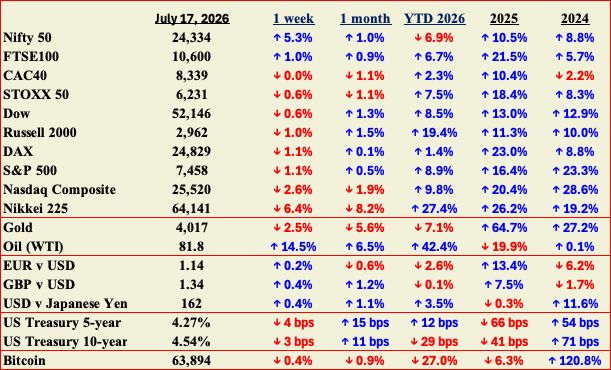
The Nasdaq and S&P 500 gave up the most ground among major benchmarks while the Dow and Russell 2000, both lighter on that exposure, held up better. Record results from JPMorgan, the largest quarterly profit in US banking history, and a blowout beat from Goldman Sachs barely registered against the semiconductor rout playing out alongside them. Even TSMC and ASML, which both beat expectations comfortably and raised guidance, could not stop chip and AI infrastructure shares from falling hard, a sign this reversal has more to do with how far the trade had run than with the earnings underneath it.
Escalating conflict between the US and Iran added a second front. Strikes around the Strait of Hormuz cut tanker transits through the waterway by more than half compared with the prior week, and oil jumped to its highest level in a month.
𝗘𝗻𝗲𝗿𝗴𝘆 shares were the rare bright spot, and the same risk aversion spilled into Friday's session across equities and crypto.
Inflation data good enough to send Treasury yields lower collided with a Federal Reserve chair determined not to celebrate it. Consumer prices posted their steepest monthly fall in more than six years, producer prices missed to the downside too, and futures markets responded by all but pricing out a July rate hike. Then Kevin Warsh, testifying before Congress for the first time as Fed chair, called prices "too high" and left investors to square a hawkish tone with data that argued the opposite. Yields fell anyway, just not by as much as the inflation numbers alone would have suggested.
𝗘𝘂𝗿𝗼𝗽𝗲 reflected the same divide in miniature, the FTSE 100's low technology exposure keeping it firm while the DAX, CAC and STOXX 50 slipped as Friday's tech weakness in the US and Asia crossed the Atlantic. Sterling firmed regardless, with markets looking past the imminent handover to Andy Burnham as prime minister.
𝗝𝗮𝗽𝗮𝗻'𝘀 Nikkei took the hardest fall of any major index (but still the best performer year to date), hit by the same AI valuation worries plus a yen sliding toward multi-decade lows as higher oil prices stoked concern over the country's energy import bill. India stood apart as the standout gainer, helped by a heavy week of Q1 earnings led by Reliance Industries, and by a market simply less exposed to the names selling off elsewhere.
𝗚𝗼𝗹𝗱 slipped as the softer inflation data and the Fed chair's hawkish tone pulled in opposite directions, each capping the other's effect on the metal.
This was the week the AI trade was forced to confront its own success. The sell-off was indiscriminate at the surface but revealing underneath, separating the names with genuine demand visibility from those carried largely by momentum.
𝗠𝗶𝗰𝗿𝗼𝗻 is the tell. The company reported one of the strongest quarters in the sector's history, with data-centre revenue multiplying and management locking in multi-year customer agreements worth tens of billions in committed deposits, the closest thing to revenue visibility the memory industry has ever offered. Yet the stock barely moved on the week. When fundamentals that good produce a flat tape, the constraint is no longer the business but the price already paid for it. That dynamic set the tone for everything around it.
The richest valuations took the hardest punishment, which is how these episodes usually resolve. 𝗔𝗥𝗠 was the epicentre, having entered the week trading at multiples that left no room for hesitation, and a New Street downgrade gave holders the permission they were looking for to lock in an extraordinary year-to-date run. 𝗤𝘂𝗮𝗹𝗰𝗼𝗺𝗺 and the high-multiple infrastructure names like Vertiv fell hard for the same reason. The selling was a function of how far each had travelled, not any change in thesis.
The divergences carried information. 𝗦𝗻𝗼𝘄𝗳𝗹𝗮𝗸𝗲'𝘀 gain against a falling tape stands out, a sign that software with its own demand story can decouple when the hardware-led trade rolls over. Alphabet's steep drop sat oddly against a year of strong gains and looked more like profit-taking in a crowded mega-cap than anything company-specific. 𝗔𝗹𝗶𝗯𝗮𝗯𝗮 and the China names extended their grind lower, where the issue remains sentiment and policy overhang rather than the AI cycle itself.
What the week exposed is a market that has stopped paying for the AI theme in the abstract and started discriminating by who can actually convert it into contracted revenue. Micron's customer agreements are the template the rest of the stack will increasingly be measured against. The infrastructure and power names that ran furthest on expectation, rather than booked demand, are the ones now most exposed to the reassessment.
#InsightWeekly #AI #ArtificialIntelligence #Markets
The Dow and the small-cap Russell 2000 pushed higher while the Nasdaq took a heavy hit. So some rotation. But also profit taking and some evaporation of demand as buyers held back. Investors have again been questioning whether valuations had run ahead of what even strong fundamentals could justify.
Value stocks outpaced growth by a wide margin and the equal-weighted S&P 500 beat its cap-weighted version, both signs that the market's narrow leadership is being tested.
The trigger was not bad news but good news that failed to satisfy. Micron delivered a blockbuster quarter with guidance well ahead of consensus, the kind of print that in an earlier phase of the cycle would have lifted the entire chip sector. Instead, it became a reason to take profits, with a rippling outward into memory, semis, and the infrastructure names that have led the rally all year.
Europe was quiet at the index level but masked real dispersion beneath. The FTSE 100 was the standout, helped by its heavy weighting in energy, financials, and defensives, precisely the profile investors want when the growth trade wobbles. The continental indices with more cyclical and industrial exposure fared worse, and Germany in particular continued to struggle under soft domestic activity. Friday's global tech sell-off caught European semiconductor-adjacent names alongside their US peers.
Asia bore the sharpest version of the same story. Japan and the broader Asian complex had rallied early in the week on upbeat chip-sector sentiment before the reversal hit, while Korea's market suffered an outright rout as leveraged retail positions in the memory names unwound violently. The throughline everywhere was the AI trade losing its grip, with the damage scaling to the extent to which each market had become concentrated in it.
Beneath equities, the macro backdrop turned more supportive even as stocks fell. Treasury yields eased as oil retreated toward pre-war levels amid the Iran framework (there were exchanges of strikes over the weekend), and the 10-year dropped below a threshold it had not seen in over a month. Falling energy costs and in-line inflation gave bonds room to rally, a reminder that the week's equity weakness was a story about crowded positioning in one theme, not a broad deterioration in conditions.
#InsightWeekly #Finance #Macroeconomics #Markets
Japan's Nikkei keeps making records, and here's what's actually driving it.
The rally is led by a tight cluster of companies in the AI supply chain: 𝗧𝗼𝗸𝘆𝗼 𝗘𝗹𝗲𝗰𝘁𝗿𝗼𝗻, 𝗔𝗱𝘃𝗮𝗻𝘁𝗲𝘀𝘁, 𝗟𝗮𝘀𝗲𝗿𝘁𝗲𝗰. These companies supply the equipment, testing tools, and inspection systems behind the global AI buildout, and they are reporting genuine pricing power in markets where supply cannot keep up.
𝗟𝗮𝘀𝗲𝗿𝘁𝗲𝗰 alone holds more than 90% of the market for EUV photomask inspection, a step no advanced chip can skip. Memory maker 𝗞𝗶𝗼𝘅𝗶𝗮 expects quarterly profit to rise roughly 48-fold year on year.
What amplifies their influence is structural.
𝙏𝙝𝙚 𝙉𝙞𝙠𝙠𝙚𝙞 𝙞𝙨 𝙥𝙧𝙞𝙘𝙚-𝙬𝙚𝙞𝙜𝙝𝙩𝙚𝙙, so a stock's sway depends on its share price, not the size of the company. Four names, including chip-equipment makers and the AI investment house SoftBank, carry more than a third of the entire index between them. That construction lets the benchmark print records on days when the average Japanese company is going nowhere. When the index first crossed 65,000, three stocks delivered roughly 40% of the day's gain while more than half the market fell.
𝙏𝙝𝙚 𝙎&𝙋 500 𝙞𝙨 𝙢𝙖𝙧𝙠𝙚𝙩-𝙘𝙖𝙥 𝙬𝙚𝙞𝙜𝙝𝙩𝙚𝙙, so the largest companies steer the benchmark through sheer size. Its top ten now approach 40% of the index, increasingly the chip and memory names the market watches today, from Nvidia to Micron. Two different weighting methods, the same outcome.
𝘛𝘩𝘦 𝘦𝘯𝘤𝘰𝘶𝘳𝘢𝘨𝘪𝘯𝘨 𝘴𝘩𝘪𝘧𝘵 𝘪𝘴 𝘳𝘦𝘤𝘦𝘯𝘵. 𝘑𝘶𝘯𝘦'𝘴 𝘭𝘦𝘨 𝘩𝘪𝘨𝘩𝘦𝘳 𝘱𝘶𝘭𝘭𝘦𝘥 𝘪𝘯 𝘤𝘰𝘯𝘴𝘵𝘳𝘶𝘤𝘵𝘪𝘰𝘯, 𝘮𝘢𝘤𝘩𝘪𝘯𝘦𝘳𝘺 𝘢𝘯𝘥 𝘮𝘢𝘯𝘶𝘧𝘢𝘤𝘵𝘶𝘳𝘪𝘯𝘨 𝘯𝘢𝘮𝘦𝘴 𝘵𝘩𝘢𝘵 𝘩𝘢𝘥 𝘭𝘢𝘨𝘨𝘦𝘥 𝘢𝘭𝘭 𝘺𝘦𝘢𝘳, 𝘵𝘩𝘦 𝘧𝘪𝘳𝘴𝘵 𝘴𝘪𝘨𝘯 𝘑𝘢𝘱𝘢𝘯'𝘴 𝘮𝘰𝘷𝘦 𝘪𝘴 𝘣𝘳𝘰𝘢𝘥𝘦𝘯𝘪𝘯𝘨 𝘣𝘦𝘺𝘰𝘯𝘥 𝘤𝘩𝘪𝘱𝘴.
𝘛𝘩𝘦 𝘳𝘪𝘴𝘬 𝘵𝘰 𝘩𝘰𝘭𝘥 𝘰𝘯𝘵𝘰: 𝘢 𝘣𝘦𝘯𝘤𝘩𝘮𝘢𝘳𝘬 𝘵𝘩𝘪𝘴 𝘤𝘰𝘯𝘤𝘦𝘯𝘵𝘳𝘢𝘵𝘦𝘥 𝘤𝘭𝘪𝘮𝘣𝘴 𝘧𝘢𝘴𝘵 𝘰𝘯 𝘢 𝘧𝘦𝘸 𝘯𝘢𝘮𝘦𝘴, 𝘢𝘯𝘥 𝘵𝘶𝘳𝘯𝘴 𝘫𝘶𝘴𝘵 𝘢𝘴 𝘧𝘢𝘴𝘵 𝘸𝘩𝘦𝘯 𝘵𝘩𝘦𝘺 𝘥𝘰.
#InsightWeekly #AI #ArtificialIntelligence #Markets
The semiconductor names already leading the year extended their advance, with 𝗔𝗥𝗠, 𝗜𝗻𝘁𝗲𝗹, 𝗠𝗶𝗰𝗿𝗼𝗻 and 𝗤𝘂𝗮𝗹𝗰𝗼𝗺𝗺 posting weekly moves usually reserved for earnings surprises. Notably, 𝗡𝘃𝗶𝗱𝗶𝗮 was the one that stayed behind, its modest week leaving it the relative laggard among the chipmakers - a sign that capital is broadening out across the semiconductor layer.
𝗠𝗶𝗰𝗿𝗼𝗻'𝘀 jump belongs to a slightly different driver, the memory cycle, but it pushed in the same direction.
That stack logic explains the divergence at the top. Among hyperscalers, 𝗠𝗶𝗰𝗿𝗼𝘀𝗼𝗳𝘁 was the conspicuous loser while 𝗔𝗹𝗽𝗵𝗮𝗯𝗲𝘁 extended its lead, a split that has less to do with any single week's news than with where investors now believe the returns on AI spending actually accrue. Capital is rotating away from the firms whose AI margins remain a promise and toward those where the spending shows up as revenue today. The China names moving the other way underline that this was a confidence trade in US infrastructure specifically, not a broad embrace of anything with an AI label.
The most telling action sat in physical infrastructure. The power-and-cooling names - 𝗩𝗲𝗿𝘁𝗶𝘃, 𝗘𝗮𝘁𝗼𝗻, 𝗦𝗰𝗵𝗻𝗲𝗶𝗱𝗲𝗿, 𝗖𝗼𝗻𝘀𝘁𝗲𝗹𝗹𝗮𝘁𝗶𝗼𝗻 - moved together and moved hard, which is the market pricing the unglamorous truth that AI's bottleneck is increasingly electricity and thermal capacity rather than silicon. When the same names that sell transformers and liquid cooling rally in lockstep with the chipmakers, the constraint has shifted from design to deployment.
#InsightWeekly #AI #ArtificialIntelligence #Markets
After Friday's debut, 𝗦𝗽𝗮𝗰𝗲𝗫 kept climbing into mid-week, its market value pushing past two trillion dollars before momentum broke. By Thursday the stock had given back more than a tenth of its high.
With only about 4% of shares floating and index funds mechanically forced to buy after rapid benchmark inclusion, the price reflected a scramble for a sliver of stock rather than any reassessment of the business - and the first wobble arrived fast.
Kevin Warsh's first meeting as Fed chair delivered the rate hold everyone expected, but the accompanying projections made the point. The dot plot collects rate forecasts from the nineteen FOMC participants - the Fed's governors in Washington plus the twelve regional Reserve Bank presidents - and this round ran one short because Warsh declined to submit his own. Of the eighteen who did, nine now place the year-end rate at or above the current level against a single dot below it, and the median dot moved up to a year-end rate of 3.8 percent from the 3.4 percent the March round implied.
Warsh leaned into the shift by stripping forward guidance out of a notably shorter statement.
The risk-on tone that carried equities higher came mostly from outside the Fed - a US-Iran memorandum that opens a path to reopening the Strait of Hormuz, which sent oil sharply lower and pulled an energy-inflation premium out of the market. That is the thread connecting almost everything below: cheaper crude lifted equities in Tokyo, Frankfurt and Shanghai alike.
The tension between a hawkish Fed and a disinflationary oil move is the real story of the week, and it resolved in favor of the oil move.
𝘽𝙪𝙩 𝙣𝙤𝙬, 𝙩𝙝𝙚 𝙎𝙩𝙧𝙖𝙞𝙩 𝙝𝙖𝙨 𝙘𝙡𝙤𝙨𝙚𝙙 𝙖𝙜𝙖𝙞𝙣, 𝙖𝙣𝙙 𝙢𝙖𝙧𝙠𝙚𝙩𝙨 𝙬𝙞𝙡𝙡 𝙖𝙙𝙟𝙪𝙨𝙩 𝙤𝙣 𝙈𝙤𝙣𝙙𝙖𝙮 𝙛𝙤𝙧 𝙩𝙝𝙞𝙨 𝙙𝙚𝙫𝙚𝙡𝙤𝙥𝙢𝙚𝙣𝙩.
#InsightWeekly #Finance #Macroeconomics #Markets
The demand is real, and that is no longer enough.
𝗕𝗿𝗼𝗮𝗱𝗰𝗼𝗺 forced the point open the week before, when record results and AI growth of 143% still came with guidance short of the most ambitious hopes, and a name priced for perfection was punished for being merely strong. That set the low the sector rebounded from this week, and it is the rebound the figures capture rather than any smooth ascent.
𝗜𝗻𝘁𝗲𝗹 emerged with the most consequential move. Reports that 𝗚𝗼𝗼𝗴𝗹𝗲 would route AI chip production its way, that 𝗡𝘃𝗶𝗱𝗶𝗮 is testing its 18A process, that a sell-side desk leapt from sell straight to buy, all pointed at the one thing the turnaround has lacked: outside customers willing to trust its factories. Markets spent years treating the foundry ambition as a money pit. The moment external names validate the process, the story shifts from spending to selling. 𝗠𝗶𝗰𝗿𝗼𝗻 and 𝗔𝗦𝗠𝗟 caught the same updraft on memory demand and equipment orders the build cannot do without.
The hyperscalers sat the recovery out. 𝗠𝗶𝗰𝗿𝗼𝘀𝗼𝗳𝘁 and 𝗠𝗲𝘁𝗮 fell hardest, and only part of that is rotation from a crowded trade. The rest is the question Broadcom forced open. If the giants are pouring capital into custom silicon and concrete and the money is moving down the stack toward suppliers, the platforms are left to explain when that spending turns into the returns their valuations assume.
𝘾𝙖𝙥𝙞𝙩𝙖𝙡 𝙞𝙨 𝙘𝙤𝙣𝙩𝙞𝙣𝙪𝙞𝙣𝙜 𝙩𝙤 𝙛𝙡𝙤𝙬 𝙩𝙤 𝙩𝙝𝙚 𝙥𝙞𝙘𝙠𝙨 𝙖𝙣𝙙 𝙨𝙝𝙤𝙫𝙚𝙡𝙨, 𝙣𝙤𝙩 𝙩𝙝𝙚 𝙥𝙧𝙤𝙨𝙥𝙚𝙘𝙩𝙤𝙧𝙨.
𝗦𝘂𝗽𝗲𝗿 𝗠𝗶𝗰𝗿𝗼 unveiled a $7 billion raise to buy parts for some $39 billion in orders, and the market took it apart. The backlog is real demand. It did not matter. What mattered was the dilution, and the verdict sharpens beside Dell, which barely flinched against the same backdrop. In a market growing allergic to AI companies passing the hat, the balance sheet is now the line between names that compound and ones that must sell shares to chase their own order books.
China's names had a different problem, falling after the Pentagon added 𝗔𝗹𝗶𝗯𝗮𝗯𝗮 and 𝗕𝗮𝗶𝗱𝘂 to its list of firms it ties to the military, another front in the long contest over the AI supply chain.
#InsightWeekly #AI #ArtificialIntelligence #Markets
𝗧𝗵𝗲 𝘄𝗲𝗲𝗸 𝗱𝗲𝗹𝗶𝘃𝗲𝗿𝗲𝗱 𝘁𝗵𝗲 𝗹𝗮𝗿𝗴𝗲𝘀𝘁 𝗜𝗣𝗢 𝗶𝗻 𝗵𝗶𝘀𝘁𝗼𝗿𝘆.
SpaceX began trading on Friday, raising roughly $75 billion for the company and closing its first day worth more than $2 trillion. A company carrying heavy losses and a $41 billion accumulated deficit came public at well over ninety times sales. That investors paid it says as much about appetite for anything labelled AI and space as it does about SpaceX, and the listing pulled capital out of every corner of the market to fund the subscription.
Crypto most visibly.
President Trump called off strikes on Iran, as talk of a deal began to circulate, and the geopolitical premium propping up crude and gold simply evaporated. Oil fell, Treasury yields followed inflation fears lower, and equities found their footing into the weekend.
The buying went to the Russell 2000 ( a new record), to value over growth for a second straight week, to the Dow ahead of the Nasdaq.
Europe climbed even as the ECB raised rates on Thursday for the first time since 2023, Italy out in front. A hike telegraphed well in advance and built around an energy shock the bank cannot control reads as confirmation, not threat. Germany was the exception, held back by an auto sector visibly buckling.
Japan’s Nikkei slipped while the world rallied, trapped between a central bank moving toward a hike on June 15-16 and a yen pinned near 160, the line where the Ministry of Finance has reached for its tools before. Tighter policy ahead and a currency on the edge of intervention is not a combination that lifts stocks, whatever oil is doing. But the YTD performance has been impressive.
The clearest tell was gold and oil falling together, the unwinding of a fear premium that had inflated both.
#InsightWeekly #Finance #Macroeconomics #Markets
𝗔𝗜 𝗦𝘁𝗼𝗰𝗸𝘀 𝗹𝗮𝘀𝘁 𝘄𝗲𝗲𝗸
Among 𝗵𝘆𝗽𝗲𝗿𝘀𝗰𝗮𝗹𝗲𝗿𝘀, Alphabet held up while Microsoft and Amazon took heavier losses. Alphabet's advertising business throws off cash regardless of how the AI bet resolves; Microsoft and Amazon are deeper into the infrastructure spending cycle and further from a clean answer on returns.
The 𝘀𝗲𝗺𝗶𝗰𝗼𝗻𝗱𝘂𝗰𝘁𝗼𝗿𝘀 are where the damage was, and the message there was about price, not demand. The names that had run the furthest gave back the most. These are corrections inside uptrends, not the end of the story.
𝗘𝗻𝘁𝗲𝗿𝗽𝗿𝗶𝘀𝗲 𝗔𝗜 Palantir's management has always sold a vision as much as a product, framing the company in almost ideological terms around defense and the moral stakes of AI. When confidence in that vision wavers, the stock doesn't just dip. It unravels.
#InsightWeekly #AI #ArtificialIntelligence #Markets
𝙉𝙚𝙬 𝙧𝙚𝙘𝙤𝙧𝙙𝙨 𝙝𝙞𝙜𝙝𝙡𝙞𝙜𝙝𝙩𝙚𝙙 𝙞𝙣 𝙗𝙡𝙪𝙚. 𝙏𝙝𝙚𝙧𝙚 𝙬𝙚𝙧𝙚 𝙧𝙚𝙘𝙤𝙧𝙙𝙨 𝙗𝙧𝙤𝙠𝙚𝙣 𝙚𝙖𝙧𝙡𝙞𝙚𝙧 𝙞𝙣 𝙩𝙝𝙚 𝙬𝙚𝙚𝙠 𝙗𝙚𝙛𝙤𝙧𝙚 𝙩𝙝𝙚 𝙙𝙧𝙤𝙥 𝙤𝙣 𝙁𝙧𝙞𝙙𝙖𝙮!
The selling started inside the AI trade, at its strongest point, and spread outward. Broadcom reported a perfectly good quarter midweek and could not raise its AI outlook by enough to justify what people had paid for the stock. That was all it took. Micron, AMD, Intel, Marvell followed it down within hours, and the names that had run the furthest fell the hardest.
When a company delivers a fine quarter and the stock gets punished anyway, the market is more concerned about the price than the business.
Friday turned a chip wobble into something broader. Hiring came in more than double what economists penciled in, yields jumped, and a higher discount rate falls heaviest on exactly the long-duration, high-multiple assets the AI rally is built from.
Markets are now pricing near certainty that the Fed holds at its June 16-17 meeting, and most major banks have abandoned any forecast for a cut in 2026 at all, with some pushing their first expected reduction out to 2027.
Gold fell nearly 5% in a week. Why would gold fall? Fear is supposed to be the one thing that lifts it. When gold sells off alongside equities there is a deleveraging going on, with rising yields draining money out of everything at once and forcing sales to cover losses elsewhere.
#InsightWeekly #Finance #Macroeconomics #Markets
𝙉𝙚𝙬 𝙧𝙚𝙘𝙤𝙧𝙙𝙨 𝙝𝙞𝙜𝙝𝙡𝙞𝙜𝙝𝙩𝙚𝙙 𝙞𝙣 𝙗𝙡𝙪𝙚. 𝙏𝙝𝙚 𝙬𝙚𝙚𝙠'𝙨 𝙢𝙤𝙤𝙙 𝙬𝙖𝙨 𝙜𝙚𝙣𝙪𝙞𝙣𝙚𝙡𝙮 𝙥𝙤𝙨𝙞𝙩𝙞𝙫𝙚, 𝙗𝙪𝙩 𝙩𝙝𝙚 𝙪𝙣𝙙𝙚𝙧𝙡𝙮𝙞𝙣𝙜 𝙘𝙤𝙣𝙘𝙚𝙧𝙣𝙨 𝙧𝙚𝙢𝙖𝙞𝙣 - 𝙖 𝙘𝙚𝙖𝙨𝙚𝙛𝙞𝙧𝙚 𝙣𝙤𝙩 𝙮𝙚𝙩 𝙨𝙞𝙜𝙣𝙚𝙙, 𝙞𝙣𝙛𝙡𝙖𝙩𝙞𝙤𝙣 𝙨𝙩𝙞𝙡𝙡 𝙧𝙪𝙣𝙣𝙞𝙣𝙜 𝙖𝙗𝙤𝙫𝙚 𝙩𝙖𝙧𝙜𝙚𝙩, 𝙖𝙣𝙙 𝙘𝙚𝙣𝙩𝙧𝙖𝙡 𝙗𝙖𝙣𝙠𝙨 𝙨𝙩𝙞𝙡𝙡 𝙘𝙤𝙣𝙩𝙚𝙢𝙥𝙡𝙖𝙩𝙞𝙣𝙜 𝙝𝙞𝙠𝙚𝙨 - 𝙩𝙝𝙚 𝙤𝙥𝙩𝙞𝙢𝙞𝙨𝙢 𝙧𝙚𝙢𝙖𝙞𝙣𝙨 𝙘𝙤𝙣𝙙𝙞𝙩𝙞𝙤𝙣𝙖𝙡. 𝘽𝙪𝙩 𝘼𝙄 𝙨𝙩𝙤𝙘𝙠𝙨 𝙖𝙧𝙚 𝙣𝙤𝙩 𝙝𝙚𝙡𝙙 𝙗𝙖𝙘𝙠 𝙗𝙮 𝙘𝙤𝙣𝙘𝙚𝙧𝙣𝙨 𝙚𝙡𝙨𝙚𝙬𝙝𝙚𝙧𝙚.
Nikkei 225 surged to historic highs on optimism about the Gulf due to outsized significance for Japan's energy-import-dependent economy. Semiconductor and technology stocks led the Japanese advance, with the broader optimism rippling outward to lift most other major indices.
In the US, the holiday-shortened week still produced fresh record highs for the S&P 500, Russell 2000, and S&P MidCap 400. The Nasdaq led among the major benchmarks, buoyed by a combustible combination of geopolitical relief and AI earnings momentum - a theme addressed in detail in the AI Stocks section below. The Dow trailed, weighed by its tilt toward industrials and energy rather than technology.
European indices rose modestly in this context, though the region faces a more complicated picture than the headline gains suggest. The FTSE 100 was the lone decliner among major indices, reflecting the UK's distinct economic pressures. Bond markets were the most direct beneficiary of the Iran optimism, with the 10-year Treasury yield dropping to around 4.44% - a meaningful move driven by falling energy expectations, solid demand at the 7-year auction, and some reprieve on the near-term inflation outlook.
Gold held near elevated levels, consolidating rather than rallying, consistent with a week where risk appetite improved without the inflation narrative fundamentally changing. The yen remained effectively unchanged against the dollar, caught between geopolitical relief on one side and persistent interest rate differentials on the other.
WTI crude declined further on optimism, its steepest weekly decline this year.
#InsightWeekly #Finance #Macroeconomics #Markets
Tech stocks were impacted by the market decline.
The semiconductor group split sharply. Nvidia added nearly 5%, extending its role as the benchmark of AI infrastructure sentiment.
Intel fell the hardest - down nearly 13% - on a combination of valuation concern after more than doubling over the prior month, UBS data showing server CPU market share erosion to AMD and ARM, and a KeyBanc note flagging a 27% drop in April notebook shipments from March. Q1 results, reported earlier in April, were a beat on revenue and EPS, but trailing profitability remains negative. The market is reassessing how much foundry optimism has already been priced in at current levels.
AMD declined despite a strong first quarter reported on May 5 - revenue up 38% year over year, data center segment up 57%, Q2 guidance well above consensus. The continued drift lower reflects two concerns flagged on the earnings call: management guided H2 gaming revenue down more than 20%, and the stock's valuation had expanded aggressively in the rally following results.
The data center thesis is intact; the question is the multiple it commands.
Among infrastructure names, Vertiv was the week's standout. The stock hit an all-time high on Monday following an investor day held May 12-13 and a wave of analyst price target upgrades - Citi, RBC, BofA, and Barclays all raised targets this week. Underlying the enthusiasm: Q1 results reported April 22 showed revenue up 30% year over year, adjusted EPS up 83%, and full-year guidance raised. As the most direct beneficiary of AI data center power and cooling buildout, the investor day reinforced confidence that demand visibility extends well beyond the current year.
Constellation Energy dropped sharply after an Argus analyst cut his price target by 18% to $350, citing the need to align valuation with utility-sector comparables over semiconductor multiples. Q1 EPS guidance came in slightly below consensus and Calpine integration costs are weighing on margins, pushing the market toward utility-style pricing. The long-term demand thesis - clean baseload power for AI data centers - is unchanged.
#InsightWeekly #AI #ArtificialIntelligence #Markets
𝗧𝗵𝗶𝘀 𝘄𝗲𝗲𝗸 𝗺𝗮𝗿𝗸𝗲𝘁𝘀 𝘀𝗵𝗶𝗳𝘁𝗲𝗱 𝗳𝗼𝗰𝘂𝘀 𝗳𝗿𝗼𝗺 𝗠𝗶𝗱𝗱𝗹𝗲 𝗘𝗮𝘀𝘁 𝗲𝘃𝗲𝗻𝘁𝘀 𝘁𝗼 𝘁𝗵𝗲𝗶𝗿 𝗲𝗰𝗼𝗻𝗼𝗺𝗶𝗰 𝗰𝗼𝗻𝘀𝗲𝗾𝘂𝗲𝗻𝗰𝗲𝘀. 𝗧𝗵𝗲 𝗼𝗽𝗲𝗻 𝗾𝘂𝗲𝘀𝘁𝗶𝗼𝗻 𝗶𝘀 𝘄𝗵𝗲𝘁𝗵𝗲𝗿 𝗲𝗰𝗼𝗻𝗼𝗺𝗶𝗰 𝗻𝗲𝘄𝘀 𝘄𝗶𝗹𝗹 𝗯𝗲𝗰𝗼𝗺𝗲 𝗮 𝗽𝗲𝗿𝘀𝗶𝘀𝘁𝗲𝗻𝘁 𝗵𝗲𝗮𝗱𝘄𝗶𝗻𝗱.
US equities largely treaded water. The S&P 500 and Nasdaq briefly set records before pulling back Friday on inflation data. Energy led gains; consumer discretionary and real estate bore the brunt of rate-driven pressure. Small-caps underperformed, reflecting smaller businesses' sensitivity to borrowing conditions.
European indices fell as rising energy costs amplified already sluggish growth. Eurozone industrial output missed forecast in March, France's unemployment hit its highest since 2021, and Germany's ZEW sentiment remained negative.
Japan's Nikkei slipped on profit-taking in semiconductor names after strong recent gains. The more significant signal came from bonds: the 10-year JGB yield reached its highest since 1997, firming expectations of an imminent BoJ hike. The yen weakened further, erasing late-April intervention gains.
India's Nifty was the standout, recovering from a four-session losing streak on metals strength and improved sentiment around the Trump-Xi summit, before giving back some gains Friday as Brent crossed $109 and the rupee hit a record low.
Gold pulled back sharply as real yields rose.
#InsightWeekly #Finance #Macroeconomics #Markets
𝙈𝙚𝙢𝙤𝙧𝙮, 𝘾𝙋𝙐𝙨 𝙖𝙣𝙙 𝙨𝙚𝙘𝙤𝙣𝙙-𝙩𝙞𝙚𝙧 𝙨𝙚𝙢𝙞𝙘𝙤𝙣𝙙𝙪𝙘𝙩𝙤𝙧 𝙚𝙭𝙥𝙤𝙨𝙪𝙧𝙚 𝙖𝙡𝙡 𝙙𝙚𝙡𝙞𝙫𝙚𝙧𝙚𝙙 𝙚𝙭𝙩𝙧𝙖𝙤𝙧𝙙𝙞𝙣𝙖𝙧𝙮 𝙬𝙚𝙚𝙠𝙡𝙮 𝙧𝙚𝙩𝙪𝙧𝙣𝙨, 𝙬𝙝𝙞𝙡𝙚 𝙣𝙚𝙩𝙬𝙤𝙧𝙠𝙞𝙣𝙜 - 𝙬𝙝𝙞𝙘𝙝 𝙝𝙖𝙙 𝙗𝙚𝙚𝙣 𝙤𝙣𝙚 𝙤𝙛 𝙩𝙝𝙚 𝙨𝙩𝙧𝙤𝙣𝙜𝙚𝙨𝙩 𝙥𝙚𝙧𝙛𝙤𝙧𝙢𝙚𝙧𝙨 - 𝙩𝙤𝙤𝙠 𝙞𝙩𝙨 𝙛𝙞𝙧𝙨𝙩 𝙨𝙚𝙧𝙞𝙤𝙪𝙨 𝙝𝙞𝙩.
𝗠𝗶𝗰𝗿𝗼𝗻'𝘀 surge was the most striking single move, extending what has now become one of the most aggressive year-on-year rallies in the entire S&P 500. The story is high-bandwidth memory: supply remains tight, customer commitments are at record levels, and the cyclical memory market is being repriced as a structural AI infrastructure play.
𝗜𝗻𝘁𝗲𝗹'𝘀 gain reflected the durability of its late-April Q1 print, with the data center segment finally showing real traction and the foundry strategy gaining customer momentum.
𝗔𝗠𝗗 followed up with its own beat-and-raise, with data center revenue accelerating sharply and the Helios rack-scale system winning early commitments from OpenAI and Meta.
𝗔𝗹𝗽𝗵𝗮𝗯𝗲𝘁 was the standout among hyperscalers, continuing to outperform Microsoft as investors rotate from the OpenAI bet toward the Anthropic-and-TPU bet.
𝗠𝗲𝘁𝗮 and 𝗠𝗶𝗰𝗿𝗼𝘀𝗼𝗳𝘁 were essentially flat, with one major hedge fund publicly exiting Microsoft on AI disruption concerns at the same moment 𝘼𝙣𝙩𝙝𝙧𝙤𝙥𝙞𝙘 𝙡𝙖𝙪𝙣𝙘𝙝𝙚𝙙 𝘾𝙡𝙖𝙪𝙙𝙚 𝙞𝙣𝙨𝙞𝙙𝙚 𝙒𝙤𝙧𝙙, 𝙀𝙭𝙘𝙚𝙡 𝙖𝙣𝙙 𝙋𝙤𝙬𝙚𝙧𝙋𝙤𝙞𝙣𝙩.
The week's notable decliner was 𝗔𝗿𝗶𝘀𝘁𝗮 Networks, which fell sharply despite a clean Q1 beat. After an 87% rally over the prior twelve months, in-line guidance and management commentary on multi-year supply constraints proved insufficient for a stock priced for perfection.
Within infrastructure, 𝗦𝘂𝗽𝗲𝗿 𝗠𝗶𝗰𝗿𝗼 and 𝗗𝗲𝗹𝗹 delivered standout gains, reflecting the broader market's growing willingness to pay for the AI server build-out beyond the headline GPU names.
#InsightWeekly #AI #ArtificialIntelligence #Markets
The week ending May 8 saw markets rally on two converging tailwinds: meaningful de-escalation in the US-Iran standoff and a Q1 earnings season firmly ahead of expectations. With around 85% of the S&P 500 reported, both the beat rate and the size of the positive surprises ran well above historical norms.
One reading of the price action is that 𝗺𝗮𝗿𝗸𝗲𝘁𝘀 𝗮𝗿𝗲 𝘁𝗿𝗲𝗮𝘁𝗶𝗻𝗴 𝘁𝗵𝗲 𝗠𝗶𝗱𝗱𝗹𝗲 𝗘𝗮𝘀𝘁 𝗰𝗼𝗻𝗳𝗹𝗶𝗰𝘁 𝗮𝘀 𝘂𝗻𝘀𝘂𝘀𝘁𝗮𝗶𝗻𝗮𝗯𝗹𝗲 𝗳𝗼𝗿 𝗮𝗹𝗹 𝘀𝗶𝗱𝗲𝘀, 𝘄𝗶𝘁𝗵 𝗮 𝗰𝗲𝗮𝘀𝗲𝗳𝗶𝗿𝗲 𝗮𝗻𝗱 𝘀𝗼𝗺𝗲 𝗳𝗼𝗿𝗺 𝗼𝗳 𝗮𝗴𝗿𝗲𝗲𝗺𝗲𝗻𝘁 𝘀𝗲𝗲𝗻 𝗮𝘀 𝘁𝗵𝗲 𝗹𝗶𝗸𝗲𝗹𝘆 𝗲𝗻𝗱𝗽𝗼𝗶𝗻𝘁.
The reasoning is structural: there is no realistic substitute for Strait of Hormuz volumes, and the global economy cannot run for long on a sharply restricted Gulf supply.
It is a strong assumption, and not the only one. Charles Schwab has characterised the move as a relief rally driven more by short-covering and hedge unwinds than by any fundamental resolution.
Others argue equity markets are showing signs of euphoria that downplay both the economic damage already done and how long energy infrastructure will take to come back online.
The Nikkei led developed markets with its sharpest weekly gain in years, hitting a record high in a holiday-shortened session - falling oil, a stable yen and AI semiconductor enthusiasm a near-perfect setup. India's Nifty 50 bounced strongly but remains the YTD laggard.
#InsightWeekly #Finance #Macroeconomics #Markets