Annualised UK GDP growth so far in 2026, with two-thirds of the year gone, is 2.7-2.8%
Is expected to slow in q4, but that was also expected in q3. And q2.
City economists (eg Pantheon) say “we have to shift from describing UK growth as resilient to calling it strong”.
Money spent on interest is money that can't go to public investment, social spending, or support during downturns. In low-income countries, interest payments today consume over 15% of tax revenues. Read more in the latest Fiscal Monitor blog: https://t.co/e8ipnToESs
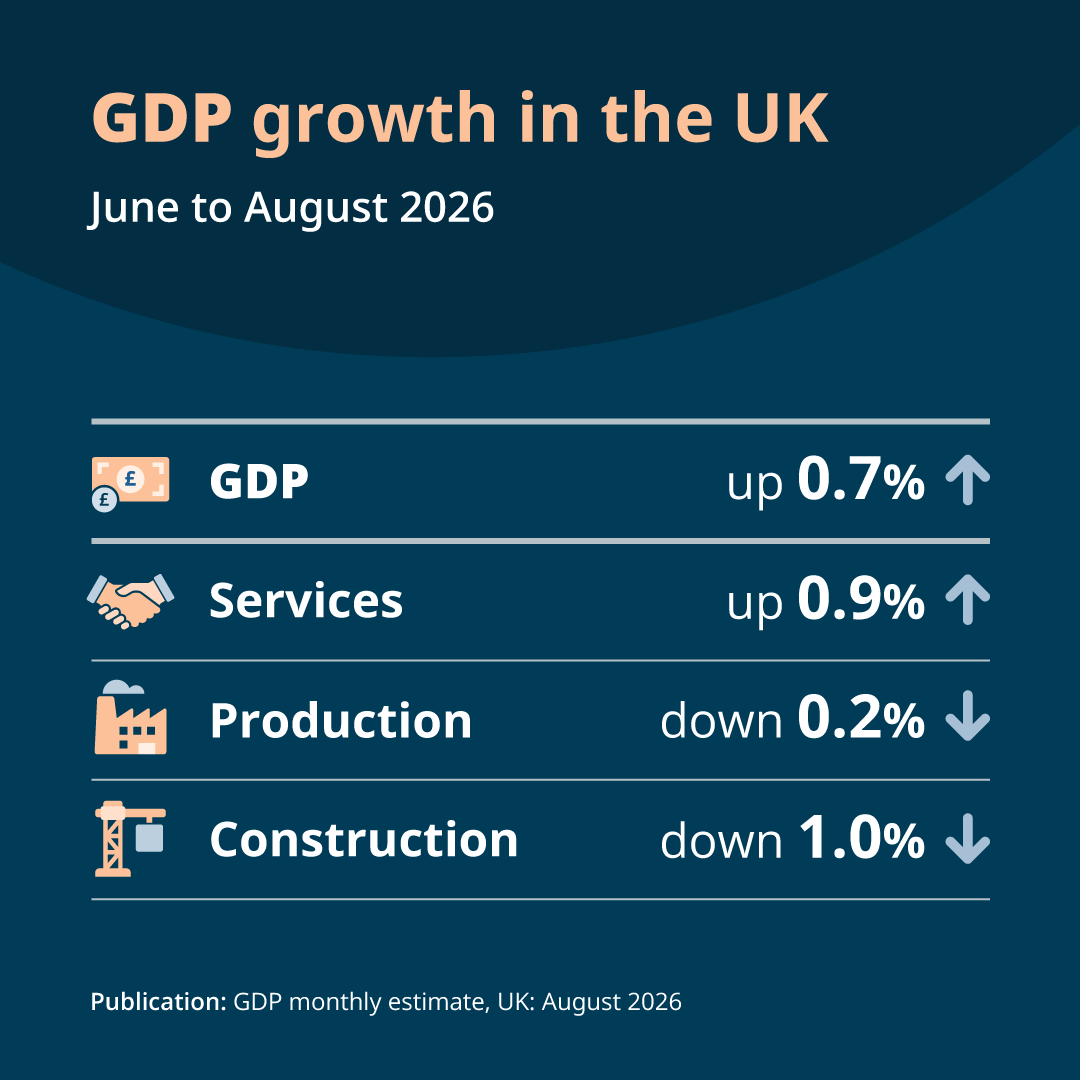
GDP grew 0.7% in the three months to August 2026, following revised growth of 0.5% in the three months to July.
Services grew (+0.9%) while production (-0.2%) and construction (-1.0%) both fell.
Read the full article ➡️ https://t.co/Cx45uRuVoN
This year's economics Nobel went to Robert Hall and Michael Woodford.
The 1970s showed that the Phillips curve could fall apart when policy changed.
Hall and Woodford rebuilt macro from choices with households planning ahead, firms setting prices, to help avoid this problem
NEW:
From Bangkok, IMF World Economic Outlook released…
- Upgrades UK growth this year by 0.3% to 1.3%, joint second highest in G7, defying the idea the UK would be hardest hit by Iran war… but inflation higher and growth trimmed next year
- UK “stands out” on deficit reduction, IMF Chief economist tells me, as its figures show a 3.9% point fall in deficit from 2025-2031, significantly more than other G7 nations, with 3 of them actually increasing their deficits over this time.
- IMF says UK should “stay course” on fiscal plans, Chancellor arrives tomorrow
- overall story of resilience in world economy, despite the clouds from the Gulf, as AI boosts US, Asia and UK to some degree… energy and trade proving flexible in dealing with shocks
Borrowing costs are rising everywhere, but especially in France over the last month.
Sky's @WilfredFrost takes you through the numbers and their relevance ⬇️
Hunter-gatherer societies are often put on a pedestal as paragons of equality – but the reality is more complicated. Hunter-gatherers do not always seek total equality, but that doesn’t mean they aren’t egalitarian. https://t.co/JoTgbnYhjW
This is the clearest and most complete exposition of Keynesian economics (and its contrast with neoliberal and Marxist econ) for the thinking layperson that I’ve ever seen Should be in higher secondary economics textbooks!
https://t.co/fFtXpHrNH6
What is the economic legacy of austerity?
Mariana Mazzucato, economics professor at University College London and author of 'Common Good Economy', debates this question with Michael Gove, a former senior Conservative minister and now Editor of The Spectator.
Wolfers: "There are deep concerns about the competence of the [Trump] administration. This is the worst economic team I've ever seen in my lifetime, and it's not even close. The president's understanding of economics probably at the University of Michigan would not earn him a passing grade."
Today’s public finance figures show debt interest spending was £33 billion in the first quarter of the 2026–27 financial year, equivalent to 4.3% of GDP.
Debt interest spending is set to remain high, leaving the new PM and Chancellor in a tight fiscal situation going forward:
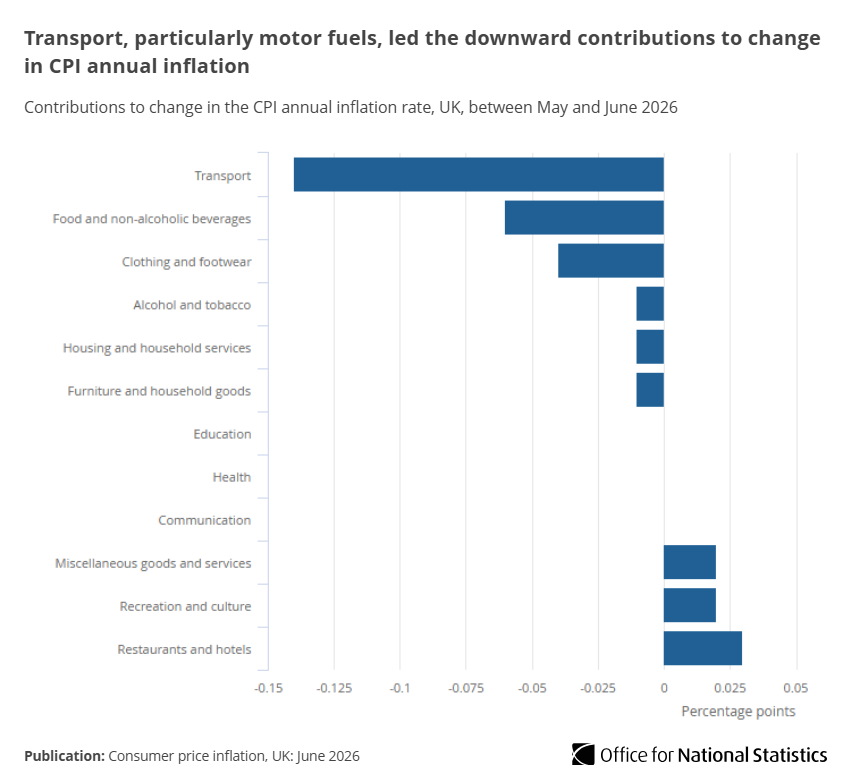
The Consumer Prices Index (CPI) rose by 2.6% in the 12 months to June 2026, down from 2.8% in the 12 months to May 2026.
Read the full article ️➡️ https://t.co/tEsyKjjlXA
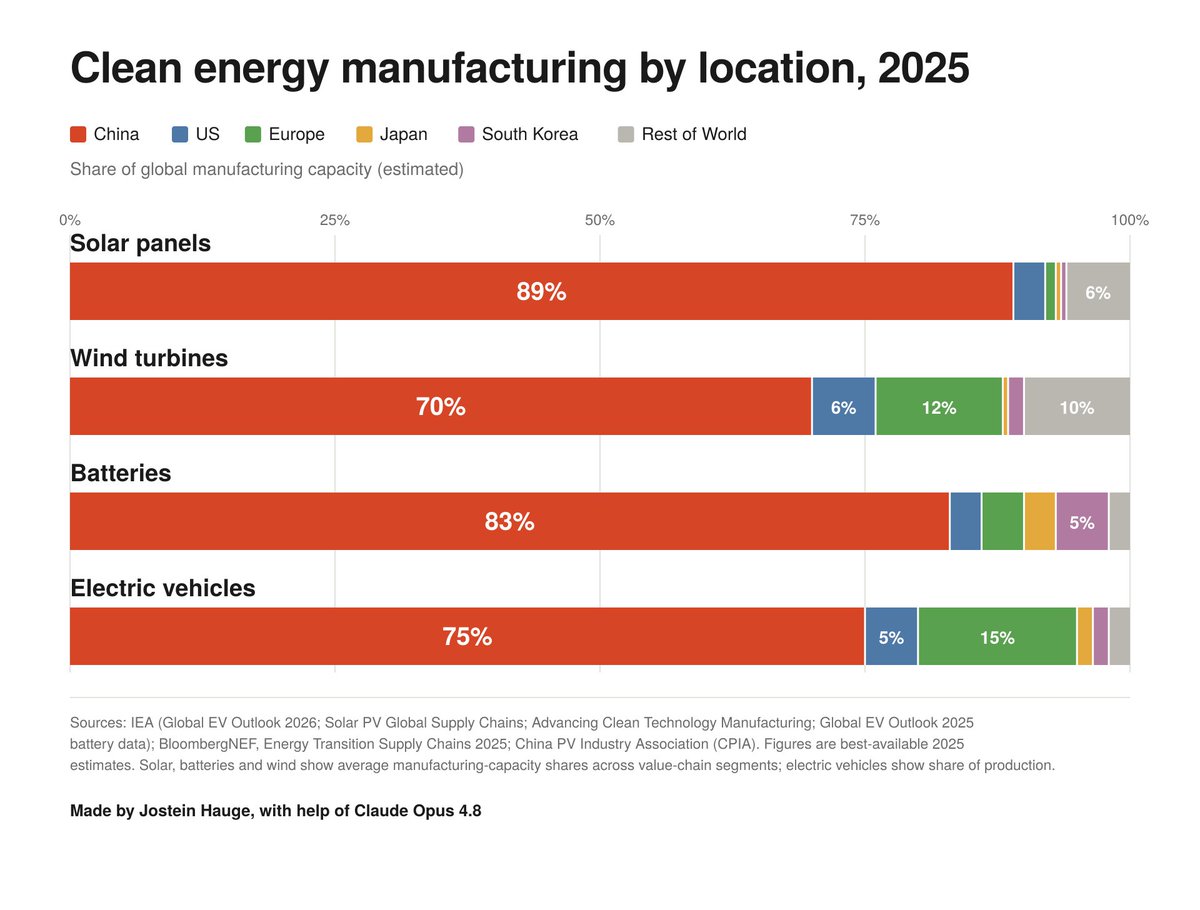
China now manufactures 89% of the world’s solar panels, 70% of the world’s wind turbines, 83% of the world’s batteries, and 75% of the world’s electric vehicles — all at a lower cost than the West.