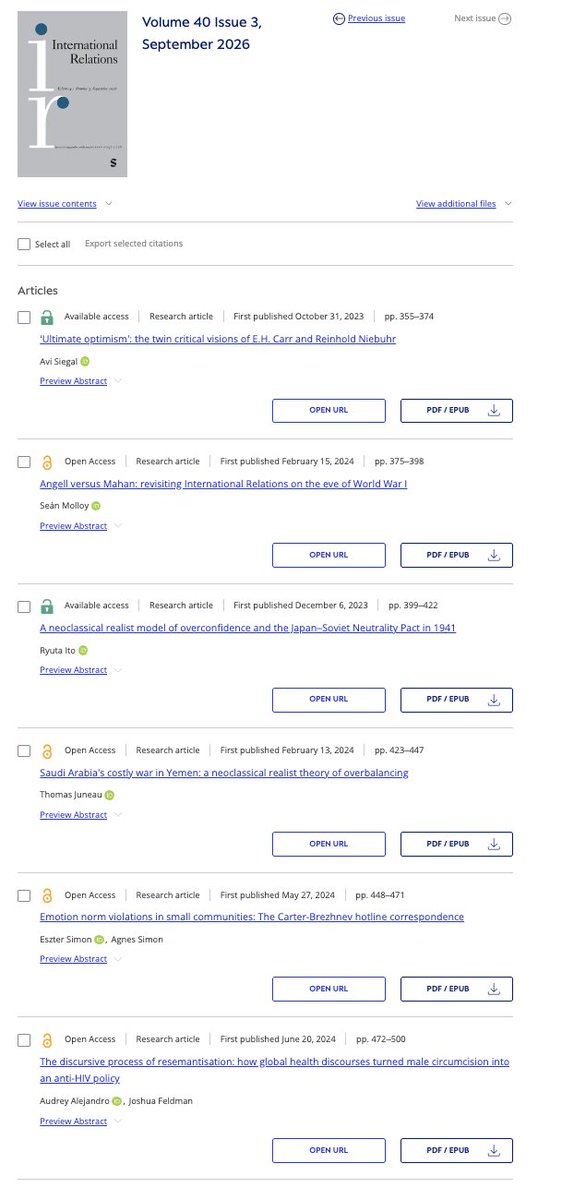
The 2026 EH Carr Annual Memorial Public Lecture is coming!
Join us at the International Politics Department, Main Hall at 6pm on Thursday the 8th of October to learn and discuss how grievances are shaping today's democratic politics.
The 2026 EH Carr Annual Memorial Public Lecture is coming!
Join us at the International Politics Department, Main Hall at 6pm on Thursday the 8th of October to learn and discuss how grievances are shaping today's democratic politics.
The 2026 EH Carr Annual Memorial Public Lecture is coming!
Join us at the International Politics Department, Main Hall at 6pm on Thursday the 8th of October to learn and discuss how grievances are shaping today's democratic politics.
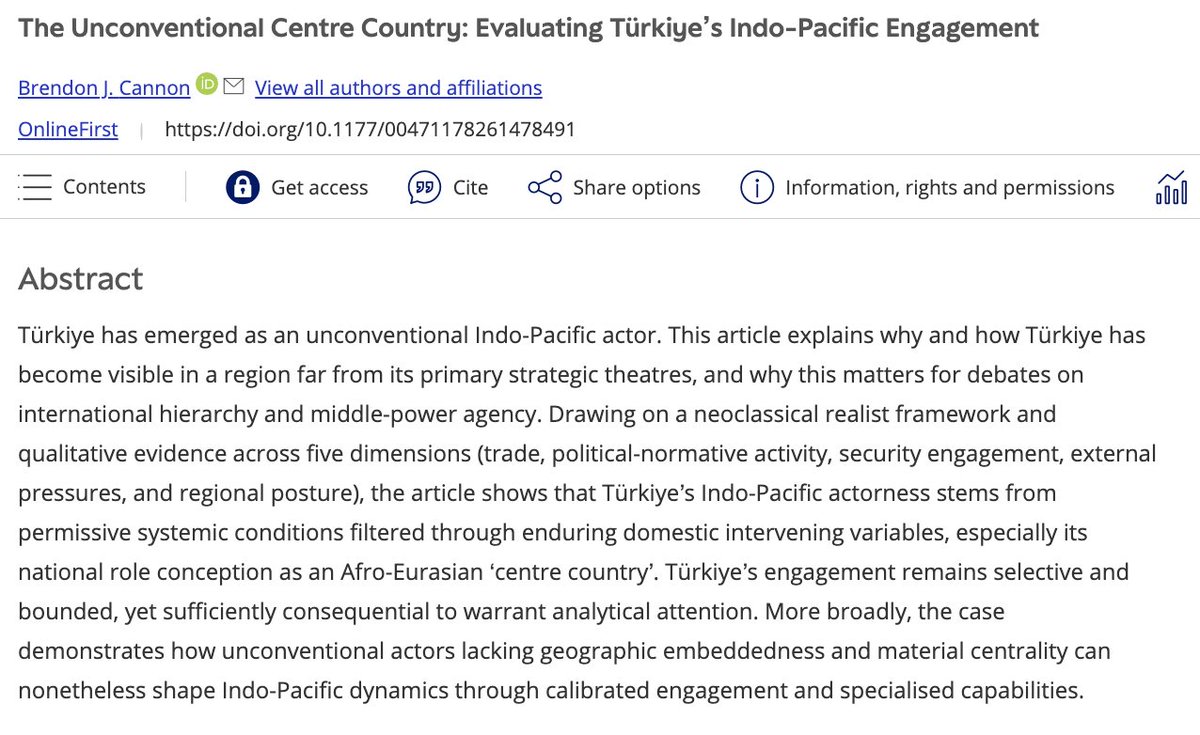
New online first forum article:
The Unconventional Centre Country: Evaluating Türkiye’s Indo-Pacific Engagement
Authored by Brendon J. Cannon
⤵️⤵️⤵️
https://t.co/2qy52jwffI
New online first forum article:
The Unconventional Centre Country: Evaluating Türkiye’s Indo-Pacific Engagement
Authored by Brendon J. Cannon
⤵️
https://t.co/2qy52jwffI
The 2026 EH Carr Annual Memorial Public Lecture is coming!
Join us at the International Politics Department, Main Hall at 6pm on Thursday the 8th of October to learn and discuss how grievances are shaping today's politics.
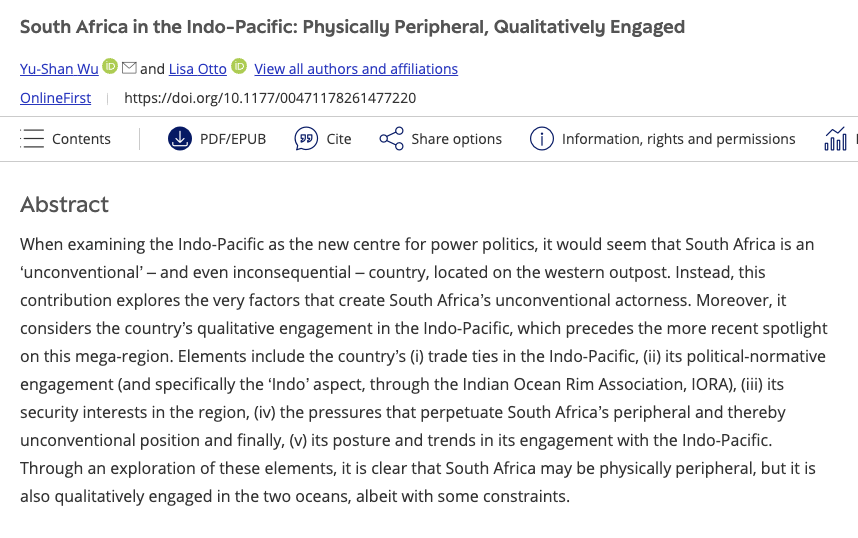
New online first article available #OpenAccess:
South Africa in the Indo-Pacific: Physically Peripheral, Qualitatively Engaged
Authored by Yu-Shan Wu and Lisa Otto
⤵️⤵️⤵️
https://t.co/vZM7bNgW8h
New online first article available #OpenAccess:
South Africa in the Indo-Pacific: Physically Peripheral, Qualitatively Engaged
Authored by Yu-Shan Wu and Lisa Otto
https://t.co/vZM7bNgW8h
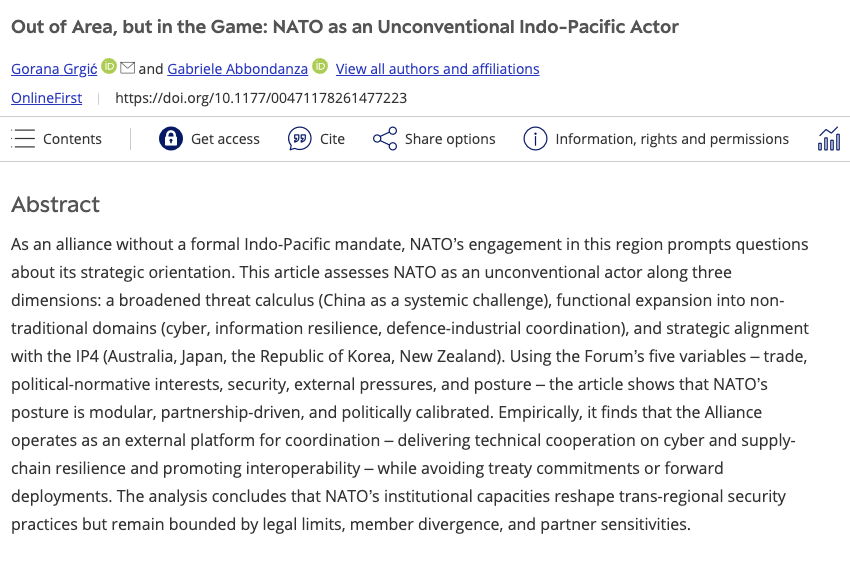
New online first article available:
Out of Area, but in the Game: NATO as an Unconventional Indo-Pacific Actor
Authored by Gorana Grgić and Gabriele Abbondanza
⤵️⤵️⤵️
https://t.co/JV0DtkRRMX
New online first article available:
Out of Area, but in the Game: NATO as an Unconventional Indo-Pacific Actor
Authored by Gorana Grgić and Gabriele Abbondanza
⤵️⤵️⤵️
https://t.co/JV0DtkRRMX
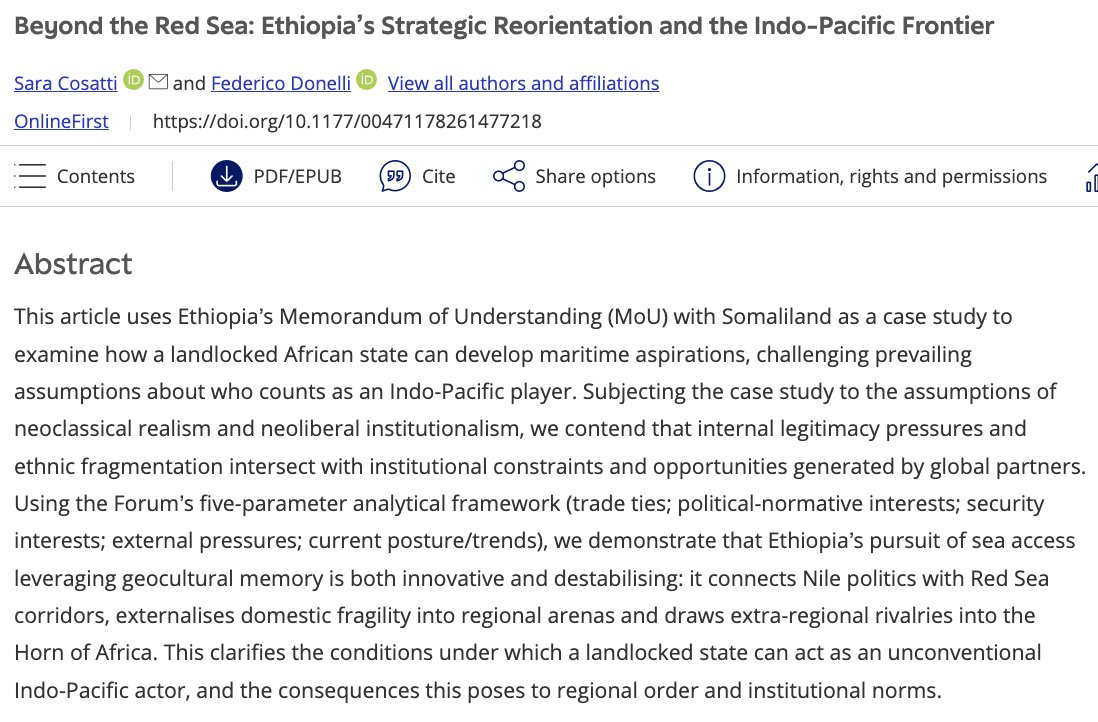
New online first article available:
Beyond the Red Sea: Ethiopia’s Strategic Reorientation and the Indo-Pacific Frontier
Authored by Sara Cosatti and Federico Donelli
⤵️⤵️⤵️
https://t.co/jjh1K3lDwm
New online first article available:
Beyond the Red Sea: Ethiopia’s Strategic Reorientation and the Indo-Pacific Frontier
Authored by Sara Cosatti and Federico Donelli
⤵️⤵️⤵️
https://t.co/jjh1K3lDwm
New online first article available:
Beyond the Red Sea: Ethiopia’s Strategic Reorientation and the Indo-Pacific Frontier
Authored by Sara Cosatti and Federico Donelli
https://t.co/jjh1K3lDwm
New online first article available:
Unconventional Indo-Pacific Actors: Emerging Patterns of Regional Engagement
Authored by Gabriele Abbondanza, Gorana Grgić and Luigi Martino
⤵️⤵️⤵️
https://t.co/Q9THOR0G0X
New online first article available:
Unconventional Indo-Pacific Actors: Emerging Patterns of Regional Engagement
Authored by Gabriele Abbondanza, Gorana Grgić and Luigi Martino
➡️ https://t.co/Q9THOR0G0X
New online first article available #OpenAccess:
On misperceptions and misunderstandings: rhetoric, global disorder, and the Global South
Authored by Sasikumar Sundaram
⤵️⤵️⤵️
https://t.co/t3XX6V7gkP
New online first article available #OpenAccess:
On misperceptions and misunderstandings: rhetoric, global disorder, and the Global South
Authored by Sasikumar Sundaram
https://t.co/t3XX6V7gkP