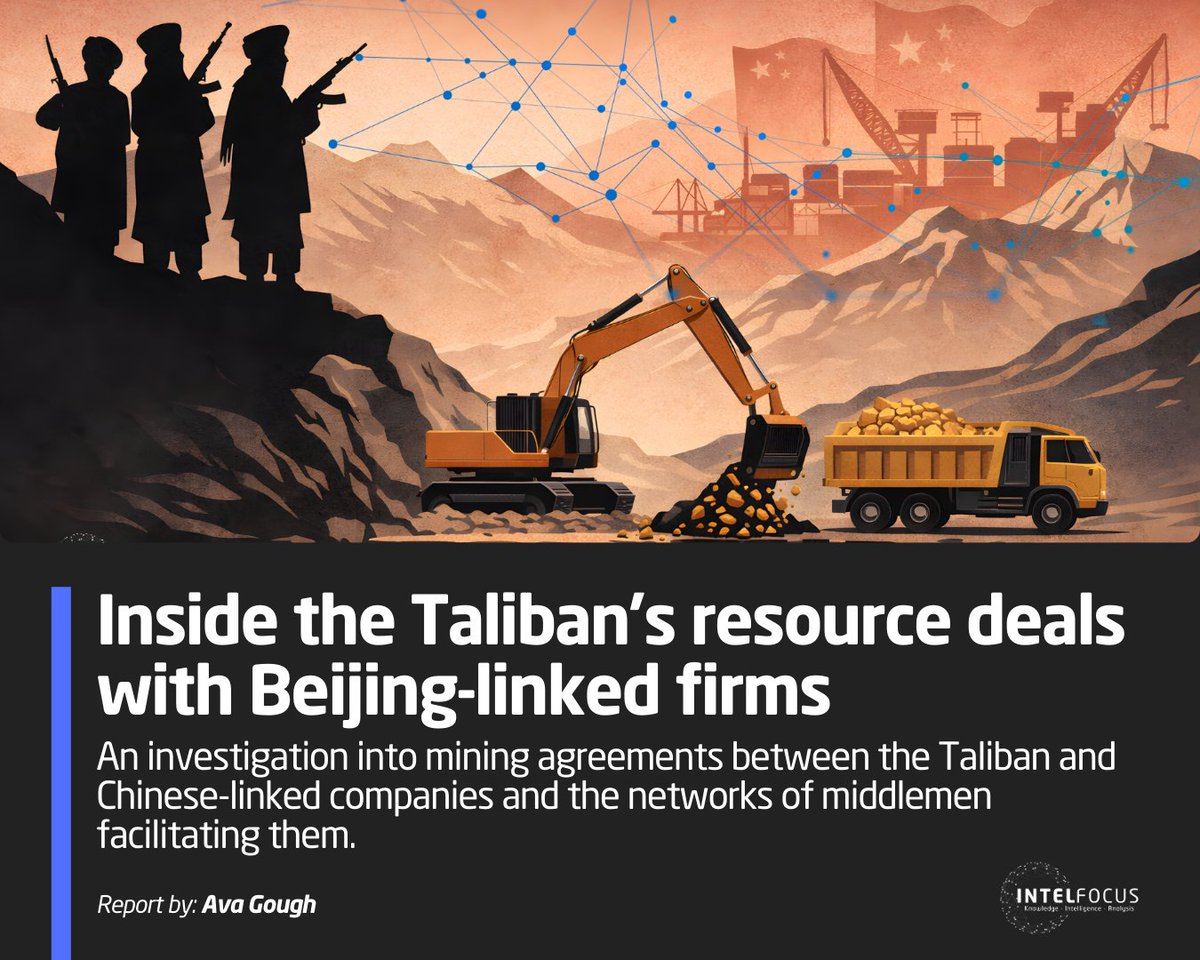
🚨 NEW INVESTIGATION
#Afghanistan is believed to sit on more than $1 trillion worth of mineral resources, including gold, lithium, copper and iron ore.
Since the US withdrawal in 2021, this vast wealth has drawn the attention of several foreign actors seeking access to the country’s mining sector.
🧵 Thread 1/3
In the upcoming episode of The Intelligence Spotlight, Olivia Pirie-Griffiths joins us to discuss press freedom, open-source investigation, the attention economy, AI, and why protecting democracy must not come at the cost of the public’s right to know.
Look out for the full episode release next Monday, July 6.
🚨 Gold mining in northern Afghanistan is reshaping rivers, damaging farmland, draining wells and fuelling unrest.
Drawing on satellite imagery, local testimony and open-source reporting, this investigation examines the mining networks operating across Badakhshan and Takhar, the extraction methods linked to environmental harm, and the communities bearing the cost.
From Samti to the Panj and Amu Darya rivers, the issue is no longer only who controls Afghanistan’s gold, but who will pay for what the mining leaves behind.
Read the full report by Ava Gough here:
🔗 https://t.co/RgRQoFCysJ
🚨 Our latest Intel Focus report looks at how legacy telecom infrastructure, particularly SS7, can be exploited to track mobile phones through systems such as Altamides, linked to the Indonesia-based company First Wap.
Co-authored by Denice V. and Anni Lindén, the report examines how location-tracking tools, reseller networks, leaked documents, and telecom access points expose a wider surveillance ecosystem operating across borders, often with limited public scrutiny.
This report is accessible on our website: 🔗https://t.co/X1hTRoSCj2
👉 AI-generated law enforcement videos are becoming more convincing, more emotional, and more politically charged.
Our latest explainer piece looks at how misleading videos claiming to show federal agents, protesters, raids, or local business investigations spread online after real incidents, mixing authentic footage with AI-generated, altered, or contextless material.
Read more here: 🔗 https://t.co/eWBQ1jvFqo
🟢 Clean energy is often marketed through images of progress, innovation and climate responsibility. Yet behind this green branding, the extraction and processing of critical minerals can leave behind polluted water, toxic waste, damaged land and communities carrying costs that rarely appear in corporate sustainability narratives.
In our latest report, Mariana Balona examines how selective disclosure helps sustain the clean-energy transition while exporting harm elsewhere.
Read the full report: 🔗 https://t.co/B7xZQaLUGg
🚨Our latest episode of The Intelligence Spotlight is now live.
In this conversation, we are joined by Dr Berit Ebert, political scientist and faculty member at Bard College Berlin, where she also serves as Director of Public Programs and Strategic Initiatives.
We discuss the 🇪🇺 European Union’s core values, the pressures facing democracy across Europe, the rule of law, migration, political polarisation, information warfare, and the limits of EU foreign policy in times of crisis.
A timely and thoughtful conversation on whether the EU can still defend its foundational principles in practice.
Full episode here: 🔗 https://t.co/Lnf7TxXnbU
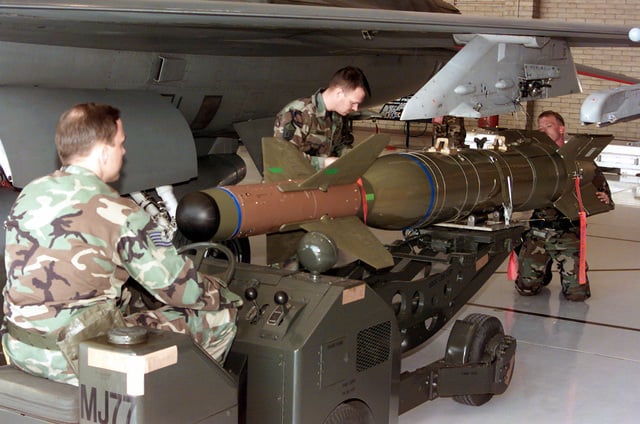
Shukria Malek Zada examines how the term evolved, why its use has grown, and how the rhetoric of “precision” can help legitimise target selection while obscuring the human cost. 3/3
Read full report here:👇 https://t.co/rPujPtMymH
🧵Our latest report looks at how the term “precision strike” became one of the defining phrases of modern warfare, not only as a description of weapons technology, but as a framing device used to present military violence as accurate, lawful, and justified. 1/3
From the Gulf War to Gaza, Yemen, and the latest US-Iran escalations, the language of precision has increasingly shaped how attacks are communicated to the public, even when the reality on the ground includes mass casualties and destruction. 2/3
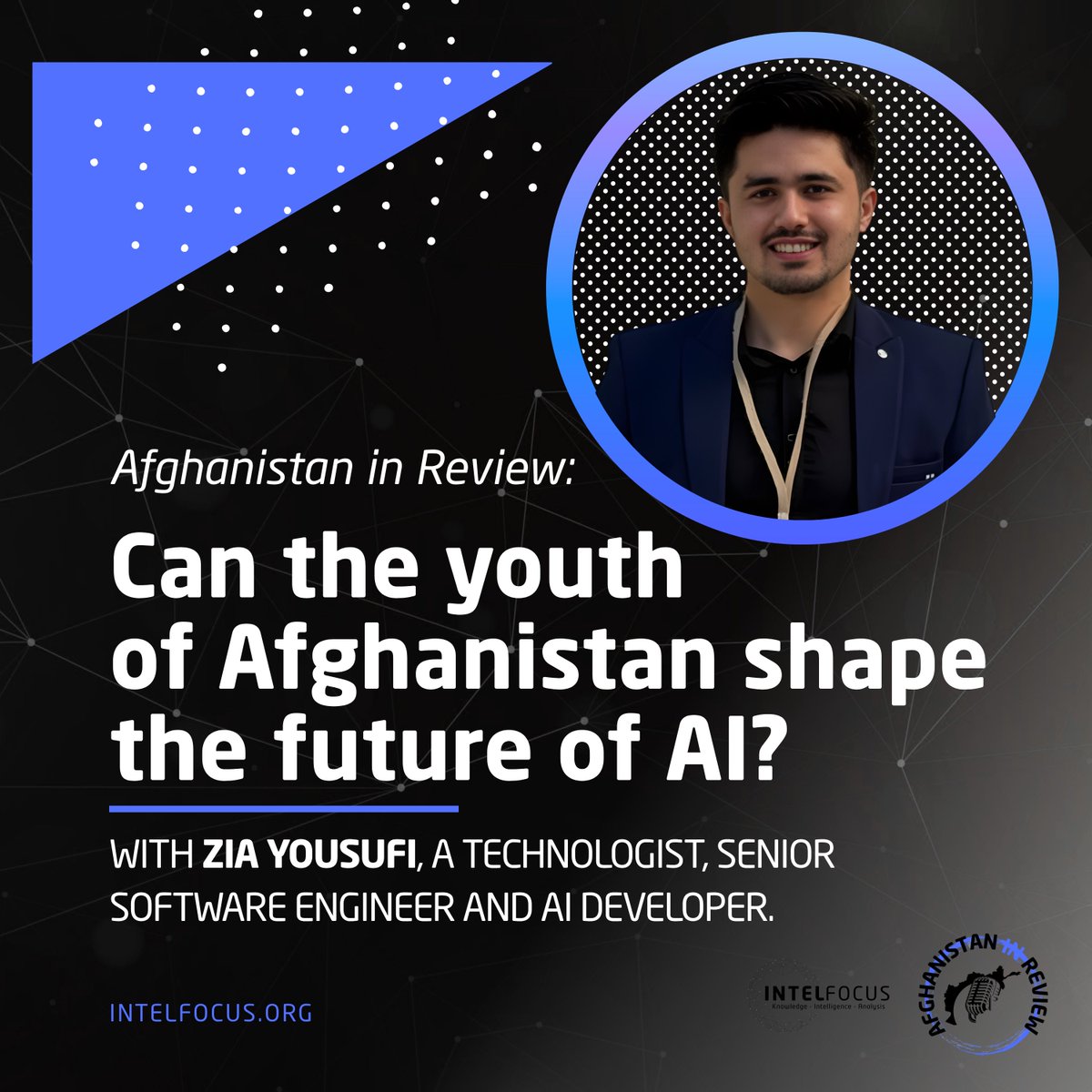
🚨 Afghanistan in Review
In this episode, we speak with @ZiaYousofi, a technologist, AI & senior software developer about his journey and the future of technology among the youths of Afghanistan.
🔗 Access this episode here: https://t.co/VQ84ucPKCH
📢 In our next episode of Afghanistan in Review, we speak with Zia Yousufi, a technologist from Afghanistan, senior software engineer and AI developer, about coding, AI, education, exile, and what it means to keep imagining a future when so much has been taken away.
The full episode will be out this Monday, 13 April.
🚨 NEW EPISODE | Afghanistan in Review
#Afghanistan’s water crisis isn’t just drought. It’s a country caught between vanishing snowmelt, collapsing groundwater, and sudden flash floods, with families paying the price.
In the new episode of Afghanistan in Review, @QaisAlamdar speaks with @NajibSadid to explain how Afghanistan’s water system actually works, why different river basins face different risks, and what a realistic strategy could look like: better groundwater rules, smarter irrigation, and planning that matches reality.
🎧 The episode is live now on all our platforms.
Access it here: 🔗 https://t.co/Ad5iZZb9zD
In the new episode of Afghanistan in Review, we speak with @NajibSadid, a civil engineer turned water resources expert and senior researcher based in Germany, to explain how Afghanistan’s water system actually works, why it’s breaking, and what a realistic five-year plan could look like, from groundwater regulation and recharge to smarter farming and better storage.
👉 Full episode drops this Friday, March 20.
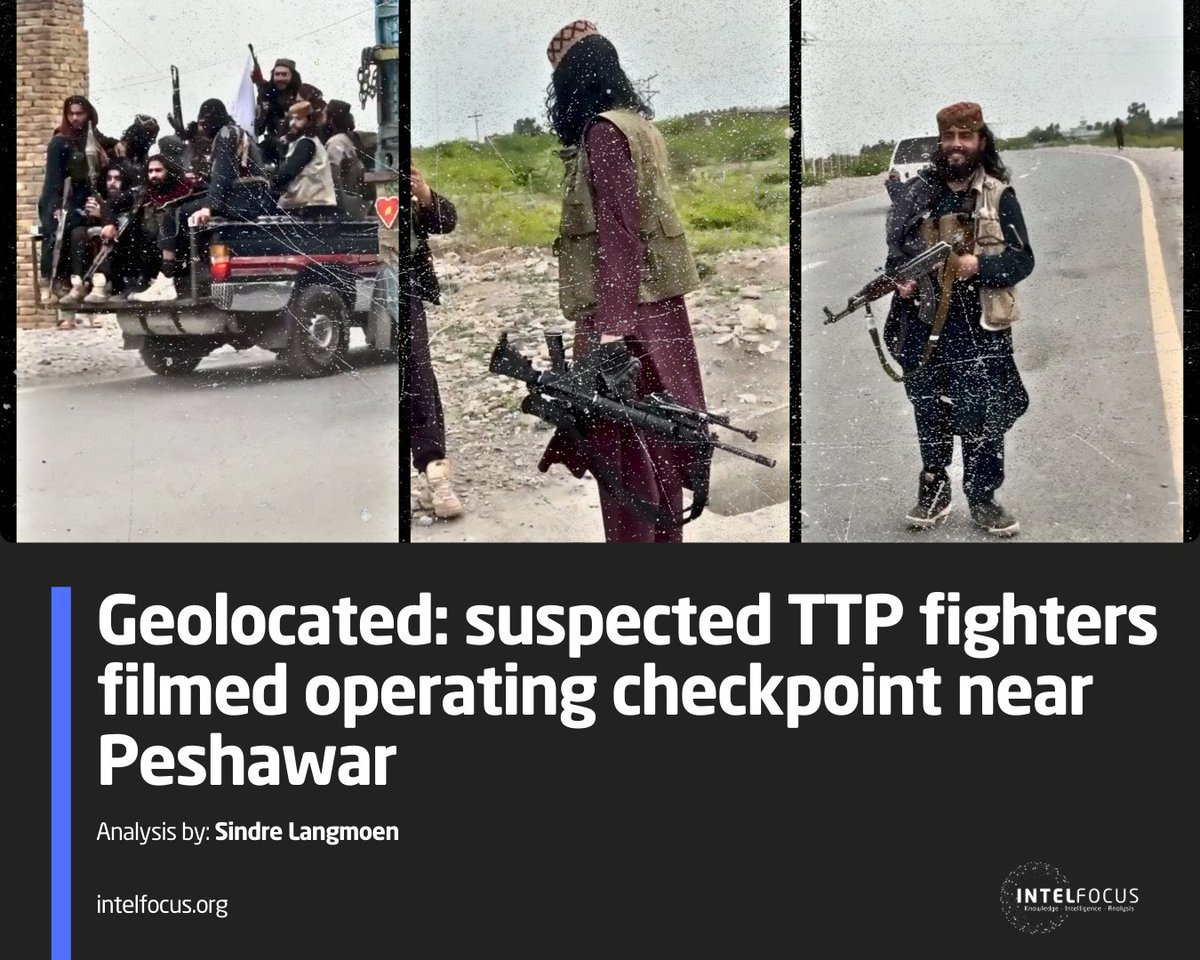
🚨 A video circulating online on 10 March 2026 appeared to show armed members of Tehreek-e-Taliban Pakistan (TTP) operating a checkpoint in broad daylight near Peshawar.
Our volunteer investigator, Sindre Langmoen, analysed the footage and geolocated the scene to the intersection of Bara Road and Bara Bypass Road in Khyber District, approximately 15 km southwest of central Peshawar.
The footage shows a group of armed men carrying assault rifles and at least one rocket launcher. A white flag bearing the Shahada, commonly used by Taliban groups, is also visible. The men appear to briefly stop vehicles before leaving the area.
Later the same day, Capital City Police Peshawar released a video from the same location showing armed police officers deployed at the intersection, stating that security measures had been established following the circulation of the footage online.
The incident comes amid rising tensions between Pakistan and Afghanistan, and follows a surge in attacks claimed by the TTP as part of its ongoing “Khyber” operation.
📍 Read the full geolocation analysis and context on our website.
🔗 https://t.co/iUjlsJPkiy
One of the most striking allegations since 2023 suggests that Haji Bashir Noorzai, a former Afghan drug trafficker and alleged Taliban financier, may have entered the sector alongside Chinese-linked entities.
While these claims remain unconfirmed, our latest report examines the networks, deals and allegations shaping Afghanistan’s resource sector. 3/3
Read the full report: 👇
https://t.co/BuaKJumU9a
🚨 NEW INVESTIGATION
#Afghanistan is believed to sit on more than $1 trillion worth of mineral resources, including gold, lithium, copper and iron ore.
Since the US withdrawal in 2021, this vast wealth has drawn the attention of several foreign actors seeking access to the country’s mining sector.
🧵 Thread 1/3
Many of these mining agreements are now overseen by the Taliban, raising concerns among analysts about potential corruption, revenue consolidation and illicit financing networks.
However, with limited press freedom and scarce open-source documentation, many claims surrounding these operations remain difficult to independently verify. 2/3
The report looks at how Afghanistan is evolving from a battlefield into a permissive ecosystem for multiple militant groups with regional and international implications.
Read here: https://t.co/wWSuUlNoOi
🚨 Our new report examines how IS-KP and Tehreek-e-Taliban Pakistan, known as TTP, are reshaping the security environment under Taliban rule. While IS-KP adapts into a decentralised network focused on external attacks, TTP has expanded its presence inside Afghanistan and intensified operations against Pakistan.
Full report on our website: [link in next post]







![IntelFocusHQ's tweet photo. 🚨 Our new report examines how IS-KP and Tehreek-e-Taliban Pakistan, known as TTP, are reshaping the security environment under Taliban rule. While IS-KP adapts into a decentralised network focused on external attacks, TTP has expanded its presence inside Afghanistan and intensified operations against Pakistan.
Full report on our website: [link in next post]](https://pbs.twimg.com/media/HDDsnN5XMAAI1YW.jpg)


