Discover the most interesting things in the world. Interesante uses AI to connect people with ideas—from lifestyle to technology, we curate meaningful stories.
La IA y periodismo en #CDMX: un encuentro esencial para entender cómo la inteligencia artificial transforma el mundo de los medios. https://t.co/2LeSgmuA0y
If you’re going to leave California, most U.S. states don’t measure up.
Sorry Miami. I still love you. But you’re not a builder city yet.
The real options are Northern Europe, Argentina, Chile, or Barcelona.
Argentina was off the list for decades: corruption, theft, inflation, instability. But Buenos Aires is different right now.
The city knows how to reinvent itself because it has never had the luxury of standing still. Every political cycle forces adaptation. Every crisis produces another layer of creativity.
Now it feels like froth mode.
Amazing food. Brutal summer. Real culture. California-level quality of life if you know how to navigate it.
But the real opportunity is underneath: a hungry ecosystem full of builders who have been waiting years for oxygen.
And when oxygen finally hits Buenos Aires, things can move fast.
Want to be successful?
Learn the language of the rooms you want to enter.
Want to be unstoppable?
Learn the language of getting things done.
Then the room matters less.
You do.
Kind of crazy for Anthropic to be approaching $1 Trillion valuations when all of Google (including search, cloud, Android and by the way Gemini), is pulling in $425 Billion in annual revenue and is only worth $4.7 Trillion
El 4 de junio nos vemos en la Universidad de la Comunicación @UC_oficial para hablar de cómo se está creando contenido hoy: con más herramientas, más velocidad y más responsabilidad.
En la mesa estarán Alejandra Villegas de BeerHunters / Punto Motor, Arturo J. Flores con historia en Playboy, Open México, TV y podcasts, Cristina Salmerón de Chilango y ex Washington Post / Vanity Fair, Armando Monsiváis con experiencia en marcas como PepsiCo, Heineken y BBVA, Rebeca Ballesteros de Crema de Cilantro, y Alejandro Mancilla moderando por Interesante IA.
Gente que no viene a teorizar desde lejos.
Viene a contar cómo se trabaja, se crea y se piensa en este nuevo presente.
📍 Universidad de la Comunicación, Roma Norte
🗓 4 junio 2026
🕚 11:00 am
🎟 Entrada libre
La IA y periodismo en #CDMX: un encuentro esencial para entender cómo la inteligencia artificial transforma el mundo de los medios. https://t.co/2LeSgmuA0y
Periodismo e Inteligencia Artificial en CDMX: periodistas, expertos en SEO y creadores debatirán el futuro de los medios https://t.co/amBpOwWWy2 via @El_Universal_Mx
best cities to live in as a digital nomad in 2026:
Medellín 🇨🇴 - perfect weather year-round, low cost, massive nomad community
Bangkok 🇹🇭 - cheap, fast internet, food paradise, easy visas
Lisbon 🇵🇹 - mild weather, EU base, great coworking scene
Mexico City 🇲🇽 - culture, food, nightlife, easy access to the US
Bali 🇮🇩 - Canggu and Ubud still deliver, KITAS makes it sustainable
Asunción 🇵🇾 - cheapest residency in the Americas, territorial tax, slept on
Tbilisi 🇬🇪 - one year visa-free, low cost, easy banking
Chiang Mai 🇹🇭 - the OG nomad city, still unbeatable cost of living
Buenos Aires 🇦🇷 - European vibe at South American prices, world-class steak
Istanbul 🇹🇷 - two continents, low cost, underrated tech scene
Da Nang 🇻🇳 - beach city, fast wifi, ridiculously cheap
Tallinn 🇪🇪 - e-residency, EU access, great for remote founders
did I miss any?
The iPhone was not the first convergence device. It was the first object that made convergence the default condition of the economy.
That is the difference.
Before the iPhone, industries were already becoming digital: music, publishing, photography, maps, search, video, messaging, commerce. But they were still moving through different channels, different devices, different habits.
Steve Jobs aligned them into one surface.
Hardware, software, telecom, media, music, photography, social media, Google, YouTube, payments, navigation — all of it suddenly had the same doorway: a piece of glass in your hand.
That is why the world moved so fast.
The iPhone did not just make the phone better. It turned the phone into the default economic interface. It fixed multiple weak links at once: distribution, access, identity, attention, payment, creation, and consumption.
Music no longer needed a store. Publishing no longer needed paper. YouTube no longer needed a laptop. Search no longer needed a desktop browser. Social media no longer needed a home computer. Photography no longer needed a camera.
The iPhone absorbed the internet into the body.
That had never happened before at global scale: one object, carried voluntarily all day, becoming the shared channel through which every other industry had to move.
AI is disrupting religion.
Not by replacing God, but by entering the space where humans have always searched for guidance.
For centuries, religion gave people structure in the face of fear: confession, discipline, moral clarity, ritual, story, community, and the courage to keep going when life made no sense.
Now AI offers a different kind of presence.
It is tireless. Nonjudgmental. Always available. It can sit with your doubt, organize your pain, challenge your excuses, and help turn confusion into language.
For many people, religion was the only place where suffering could become meaning.
Now a machine can do part of that work.
The question is not whether AI replaces religion. The question is what religion becomes when guidance is no longer scarce.
What remains sacred when anyone, anywhere, can ask for clarity and receive an answer?
Michigan has a Lawnmower Economy.
That is my phrase for a low-road economy: plenty of real work, but not enough work that compounds.
Grass grows. Snow falls. Machines break. Houses need maintenance. Restaurants need hourly workers. Factories need hands. The work is necessary. But too much of it resets every day, every season, every winter.
The data matches the feeling. Michigan ranks 50th in household income growth over the past 25 years. Real median household income is 35th. Per-capita GDP is 36th. Educational attainment is 35th. Fourth-grade reading fell from 16th to 44th. High-wage professional service jobs grew 35% nationally while staying flat in Michigan.
That is not an immigration problem. It is a ladder problem.
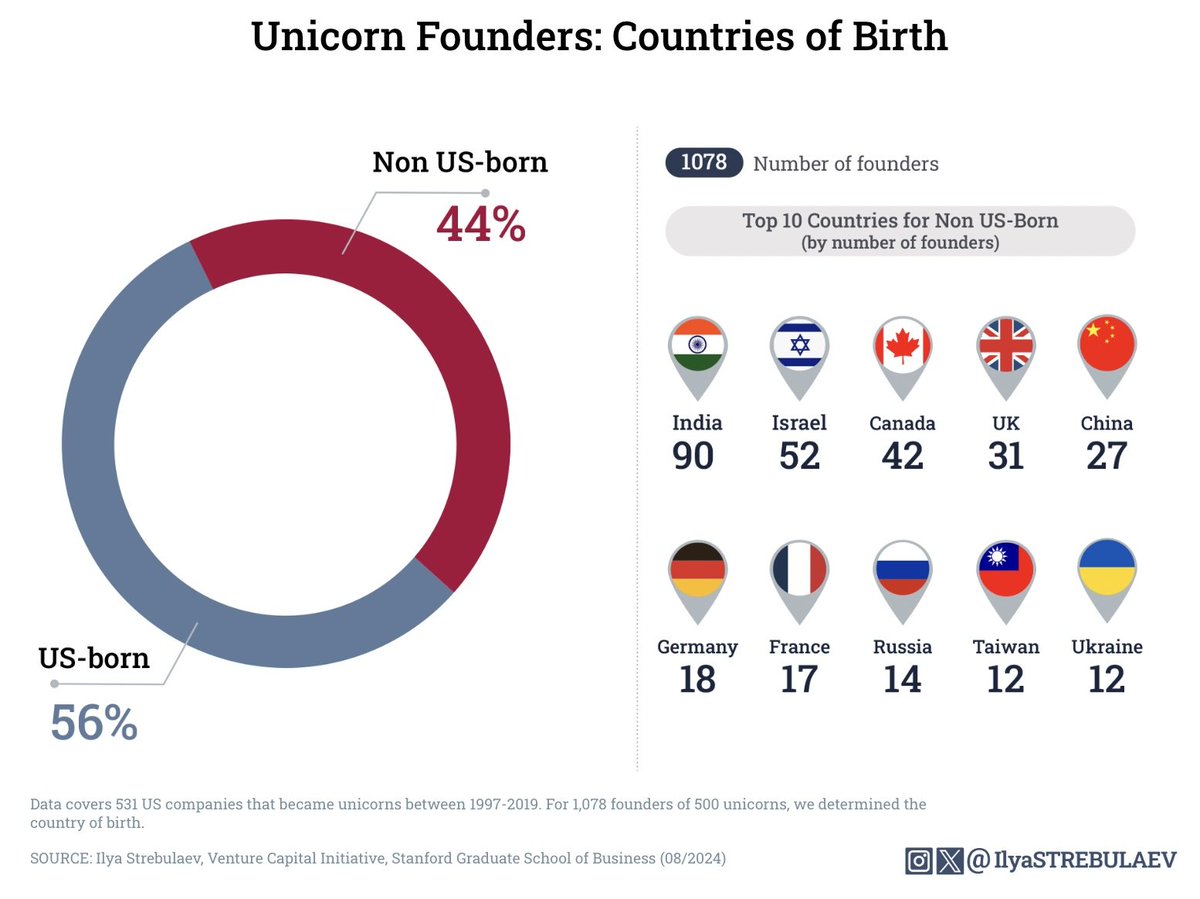
When immigrants do not show up, Michigan does not win. An aging state with more deaths than births needs people, talent, risk, and ambition.
Michigan has too few ladders.
Agreed. Politics slowed down everyone else. OpenAI, Google, and xAI thought that deals with the government would make them unbeatable; And while Dario Amodei stood firm against pressure from The Pentagon, the rest of the labs kissed the ring and vowed down to the President.
Anthropic pulled ahead as if propelled by lighting while the rest kept their juicy morally obscure government contracts.
Anthropic is on builder mode — with seven co-founders pushing fear aside and portraying Claude as the fair — some would call it woke — AI lab building for the people.
The Apple I wasn’t built. It was discovered, one novel error at a time.
@stevewoz gave the commencement at @GVSU, fifteen minutes from where I live now. He told the graduates they had actual intelligence, and that the only thing he’d ever seen actually make a brain takes nine months. The room laughed. He wasn’t joking.
Brains aren’t assembled. They’re grown into their own error surface — wired by a sequence of accidents no other brain has run.
That’s what he was doing in the garage at twenty-five. Not refining a known machine but generating the first instances of problems the field would spend a decade learning to name.
Most engineering since has been the opposite. Pattern-matching against a known surface.
AI is better at that than we are now, and the gap is widening. What’s left is the garage work. Hitting the bug as the invention, because the bug has never existed before.
Think different. Generate errors no one has seen. Everyone else is debugging against yesterday.
President Daniel Noboa's participation in the March 7, 2026, "Shield of the Americas" summit at Trump National Doral marks a constructive move for Ecuador. It reinforces bilateral ties with the United States on critical issues: combating drug cartels, curbing Chinese economic and strategic influence in the region, and coordinating migration controls. These priorities align with many Ecuadorians' frustration over escalating violence and external pressures, and Noboa's engagement could yield benefits like improved intelligence sharing, joint anti-narcotics operations, training support, and potential economic incentives through stronger U.S. partnerships.
Historically, the U.S. presence at the Manta base (1999–2009) delivered concrete gains—enhanced security monitoring, infrastructure aid, and a sense of stability in affected communities. Many Ecuadorians link American involvement with progress, freedom in daily life, and a counterweight to the perceived threats of authoritarian or communist models, which generate real fears of control and instability.
However, caution is warranted. The November 16, 2025, referendum saw over 60% of voters reject lifting the constitutional ban on foreign military bases—a clear setback for Noboa and a reaffirmation of sovereignty concerns, even amid security crises. While cooperation on non-base matters remains viable and welcome, any push toward permanent U.S. military infrastructure would clash with this decisive public will. Success depends on pragmatic, sovereignty-respecting collaboration rather than assuming broad endorsement for deeper footprints. The outlook is promising yet constrained by domestic realities.
Mañana arrancan los Enhanced Games en Las Vegas y son la conversación más interesante que el deporte ha tenido en décadas. Por primera vez en la historia, una competencia olímpica permite a los atletas usar abiertamente testosterona, hormona del crecimiento, EPO, esteroides y estimulantes bajo supervisión médica. Hay transparencia total sobre lo que cada atleta toma, hay controles médicos rigurosos, hay un marco legal claro.
Los números de los participantes son reveladores. El 91% usa testosterona, el 79% hormona del crecimiento, el 62% estimulantes tipo Adderall, el 50% moduladores metabólicos, el 41% EPO y el 29% esteroides anabólicos. Estos atletas declaran lo que el resto del deporte de élite esconde. Cualquiera que haya seguido el ciclismo, el atletismo o la natación durante las últimas cuatro décadas sabe que el dopaje está en todas partes. Lance Armstrong, Marion Jones, los laboratorios de Alemania Oriental, el escándalo ruso, BALCO, Operación Puerto. La diferencia es que aquí los atletas dicen la verdad.
El proyecto va más allá del deporte. Es una apuesta médica y filosófica sobre el futuro del cuerpo humano. Detrás están Peter Thiel y 1789 Capital, el fondo de Donald Trump Jr., y la lógica es exactamente la misma que la de la Fórmula 1. La tecnología que hoy permite a un coche de carreras frenar a 5G mañana está en el coche familiar. La medicina que mañana permite a un nadador batir el récord mundial de los 50 metros libres dentro de diez años permitirá a un hombre de 70 años subir escaleras sin dolor.
Esto es lo que la prensa convencional pasa por alto. Los Enhanced Games son un laboratorio. El nadador griego Kristian Gkolomeev, que nunca subió al podio en cuatro Juegos Olímpicos, superó el récord mundial de los 50 libres bajo el programa Enhanced. Ese dato debería hacer pensar a cualquiera que crea en el potencial humano. La diferencia entre la medalla y la nada, en muchos deportes, ya es química. Lo que los Enhanced Games proponen es democratizar y supervisar lo que hoy ocurre clandestinamente.
La crítica habitual es que normaliza el dopaje y pone en riesgo la salud de los atletas. El argumento ignora que el dopaje ya está normalizado en el deporte de alto rendimiento. Lo único que cambia es que ahora se hace con cardiólogos deportivos, análisis de sangre semanales y dosis calibradas, en lugar de con dealers anónimos en hoteles de Bucarest. El cardiólogo Aaron Baggish comparó el modelo con supervisar a un fumador para hacer el tabaco seguro. La metáfora suena bien pero falla. La testosterona en dosis terapéuticas tiene otra naturaleza. Millones de hombres mayores de cincuenta años la usan hoy con receta médica para mejorar su calidad de vida.
La cita es mañana a las 18:30 hora del este de Estados Unidos, que son las 00:30 de la madrugada del lunes en Madrid y las 19:30 del domingo en Buenos Aires. Se podrá ver en YouTube, Rumble, Twitch y Kick. Cuarenta y dos atletas, tres deportes, premios de 250.000 dólares por evento y un millón de dólares para quien rompa un récord mundial. La industria del deporte tradicional va a fingir indignación. Los anunciantes van a tomar distancia pública mientras toman notas en privado. Y la ciencia de la longevidad humana va a dar un salto que las federaciones olímpicas llevan décadas frenando.
Hay que mirarlo. Aunque sea por curiosidad. Porque lo que veamos mañana va a definir cómo entendemos el cuerpo humano durante los próximos cincuenta años.