Stunning report. At this point it seems like Howard Lutnick and Jeff Kessler are just outright defying the President's orders on export controls. The President apparently ordered Secretary Lutnick to crack down on China's access to controlled AI chips in Southeast Asia--and reportedly has ordered this three separate times--and they're just...not doing it.
Why is Lutnick refusing to act? Why is he allowing China to continue to get AI chips via Southeast Asia? At this point, Lutnick isn't just protecting Nvidia, he's straight up protecting Chinese companies--reportedly against the wishes of the President and the entire rest of the Cabinet. Is Lutnick personally benefitting from China getting access to AI chips?
This is a total breakdown inside the administration on a major national security issue. There has to be accountability for this. Congress obviously will investigate, but how is it that the President's own appointees are just refusing to execute the President's orders? I've never seen anything like this.
BAAJA’s opponents are just throwing stuff at the wall now
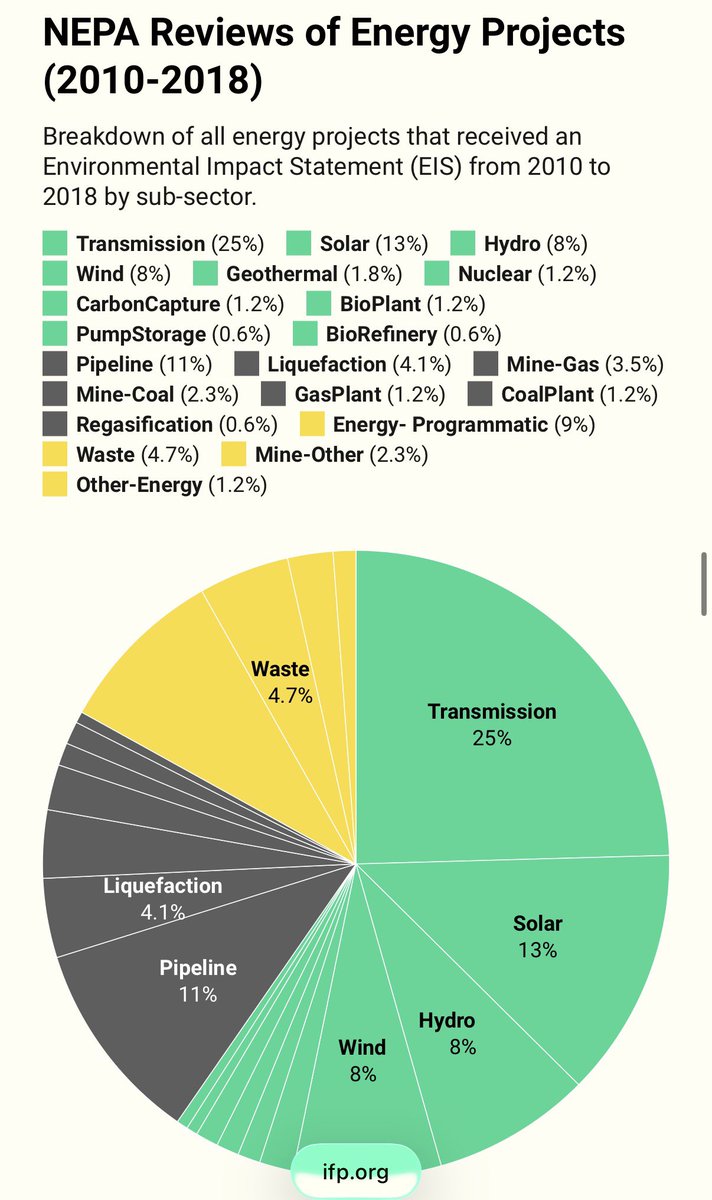
NEPA affects everything the gov does (~200k actions per year, only 0-5 for detention facilities)
Opposing BAAJA because of this tiny effect is like opposing repealing Trump’s tariffs because that would make metal for detention centers cheaper
The far greater affect of NEPA reform is faster gov action, more vital infrastructure, and disproportionate benefits for clean energy
Today on Volts: more permitting bill! The "manager's amendment" of the bill was released, with 77 pages of changes meant to address the objections of enviros, tribes, & utilities. @DanielPalken rejoins me to walk through the changes & catch us up on the legislative state of play.
https://t.co/cnT5gfUUoq
Remember, many NHPA slowdowns are not about demolishing protected buildings but whether you can see a dim smudge of a wind turbine on the horizon from the window of that protected building.
I feel like I am going crazy. The Q will not be getting four Republican senators next year — it will be getting 10 R senators, because Trump will veto any permitting measure that can get all 56 Ds. (And of course, any bill that can get 56 Ds won’t get 10 Rs.)
Rep. Peters' analysis that the bipartisan permitting bill, BAAJA, writes Tribal consultation into law in a way it isn't now seems right to me.
To break down how I'm seeing it:
- The relevant section, Section 106 of the National Historic Preservation Act (NHPA), is currently only two sentences; neither sentence mentions Tribes nor requires Tribal involvement in the process.
- The Tribal consultation process exists today via Section 101(d) of NHPA & the Advisory Council on Historic Preservation (ACHP)'s regulations -- which can be rewritten.
- In fact, the ACHP has already voted to rewrite them in a way that strips Tribal involvement and consultation out compared to the current regs.
- BAAJA, as amended by the manager's amendment, puts much of the current Tribal consultation process that is present in the regs into statute:
- Under BAAJA, Tribes would be provided agency's findings on every project (other than ones that don't affect historic properties), and consultation begins early, at least at the start of env review.
- Agencies "shall" (not may) seek input from Tribes about sites of religious and cultural importance.
- Tribes can object to an agency's findings, the agency must respond in writing.
- Tribal historic preservation offices (THPOs) keep control of their programs, with no option for a federal takeover even of noncompliant THPOs (this was a change from the original bill).
- Sensitive information about sacred sites is exempt from FOIA.
The ACHP's draft rule goes the other way: it makes early Tribal consultation optional, has a Tribe's lack of input cause waiver of their right to consultation, and deletes the regulations' statements about government-to-government consultation, Tribal sovereignty, and ancestral lands, among other things.
That regulation (or other regulatory rollbacks of Tribal consultation rights currently in regulation) would be impossible under BAAJA.
It actually sucks that Al Gore (who has been out of policymaking for 25 years now) would come out of his cave to just shit on the work of Sheldon Whitehouse, the man who has been *the* climate hawk of the Senate for the past 20 years.
@MattZeitlin@EthanBWinter Also doesn’t seem implausible to me that we could get declining nominal gas and grocery prices, which voters seem most sensitive too, while overall inflation is in the 1-2% range
Good coverage in WaPo of the BAAJA motion to proceed vote last night, which passed 73-25 (with 22 Democrats voting yes).
It nails the three most important factors at play:
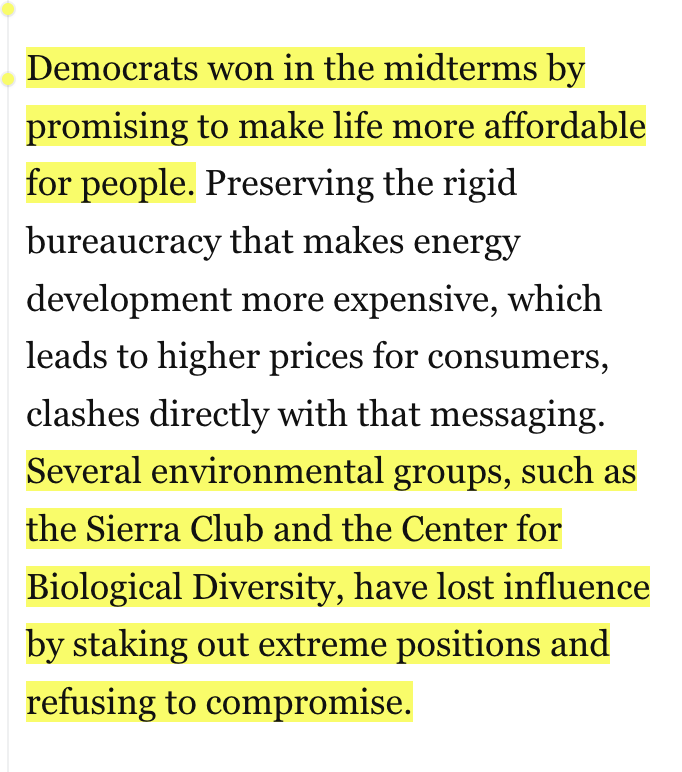
1. Democrats just won in a tsunami election on an affordability message, not a mandate for more activist litigation
2. BAAJA earned support from a broad coalition, including major unions and climate groups
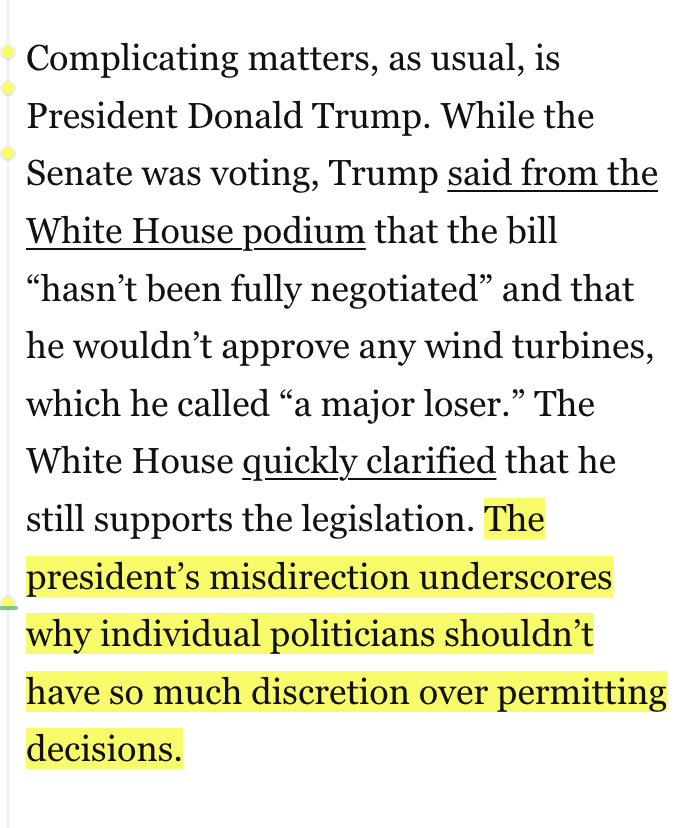
3. President Trump's counterproductive comments on wind energy only underscore the need for statutory reforms to the permitting process