On this day in 1862, President Abraham Lincoln signed the Homestead Act, opening the door to land ownership across the American frontier.
The Act granted up to 160 acres of public land to anyone willing to live on and improve it for five years. Millions answered the call, building farms, towns, and communities that would shape the nation.
This monumental effort was led by the U.S. General Land Office, which merged with the U.S. Grazing Service nearly 80 years ago to form the Bureau of Land Management!
📸 A family poses for a picture in Loup Valley, Nebraska, on their journey to a homestead in 1886; Courtesy of the National Archives
The U.S. Fish and Wildlife Service - Office of Law Enforcement is responsible for upholding federal laws to safeguard plants and wildlife. Key collaborations are with conservation groups and local, State, Federal, Tribal, and international law enforcement officers. Their work includes combating wildlife trafficking, recovering endangered species, conserving migratory birds, preventing the spread of invasive species, preserving habitats, and securing fisheries. For our final National Police Week post, here are examples of items seized by special agents for violating wildlife trafficking regulations.
📷 Boots made with sea turtle leather (INTR 07275), a caiman handbag (INTR 07268) and a display of butterfly specimens (INTR 07287)
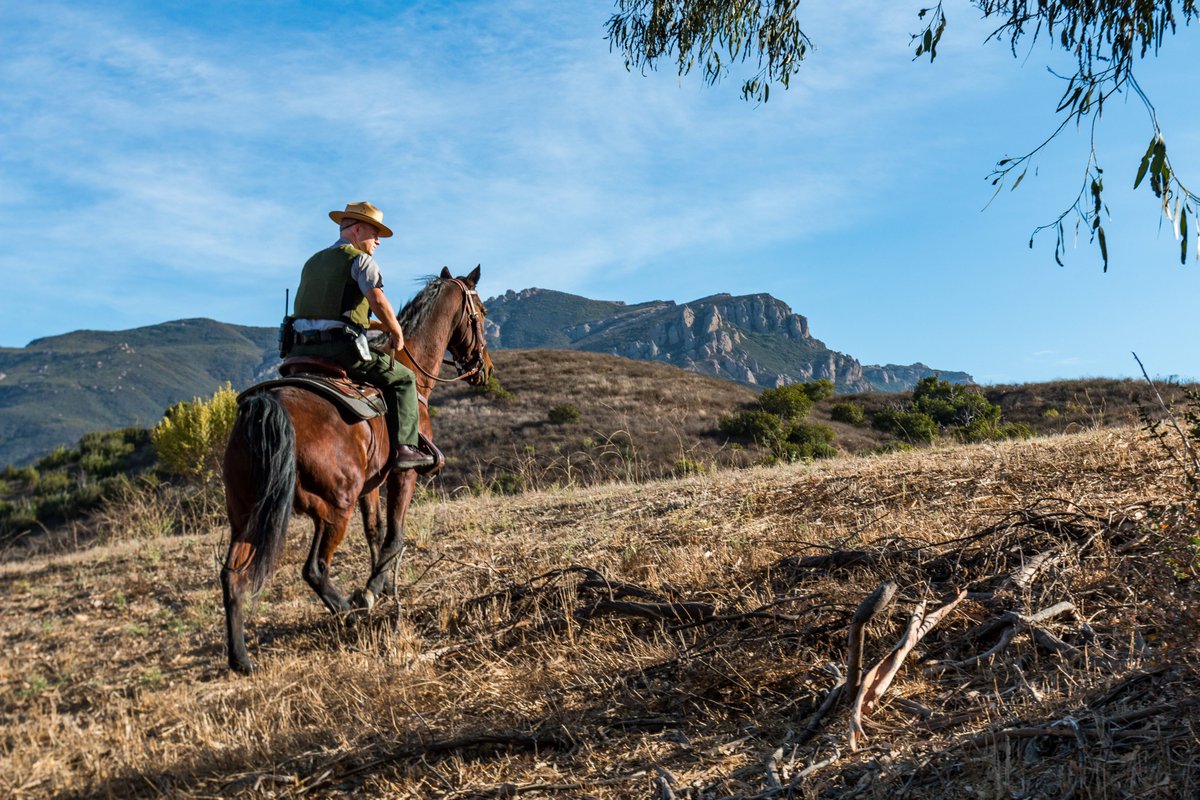
Our National Police Week salute continues with this 1960s protective helmet. While intended for motorcyclists, it was ultimately used by some of the original equestrian riders in Virginia’s Manassas National Battlefield Park Mounted Patrol Unit. Today, it’s the only National Park Service entity in the eastern United States that uses horses for law enforcement. The equine program not only patrols the park’s extensive 5,000 acres but also supports educational and interpretive programs. (INTR 07942)
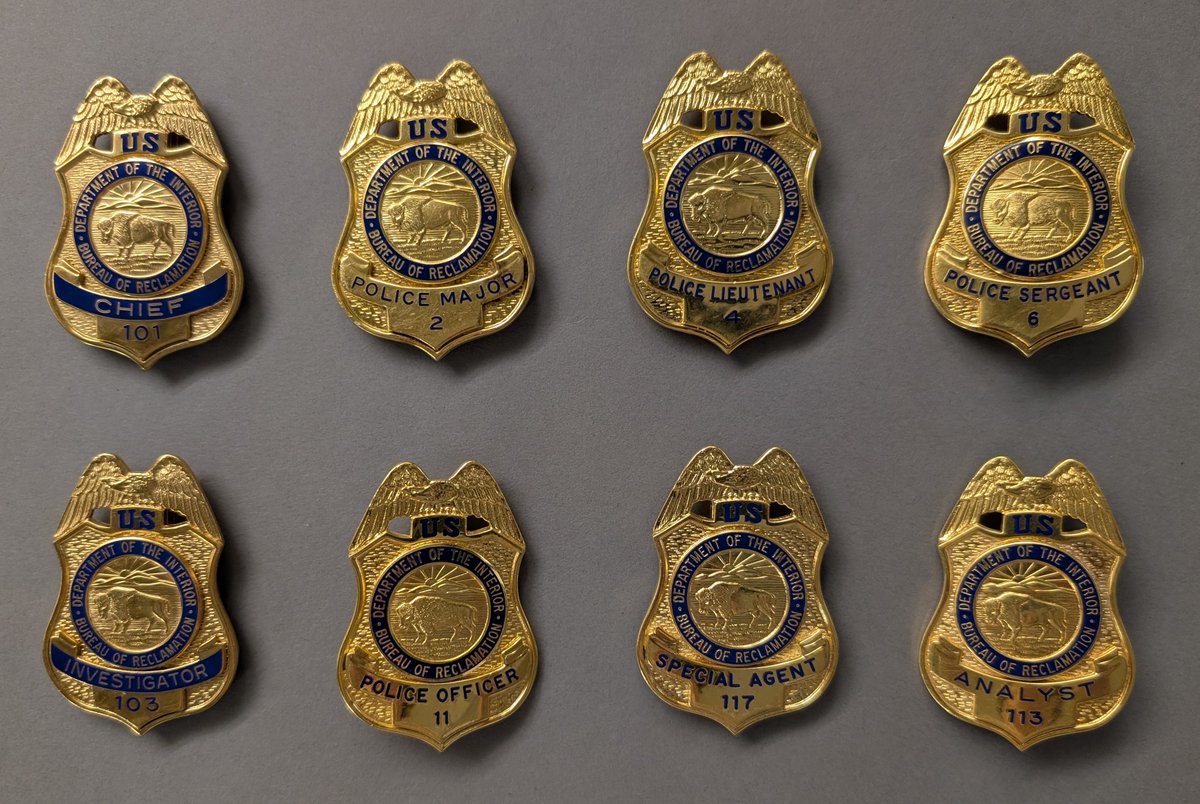
We’re sharing more of the museum’s law enforcement artifacts in honor of National Police Week: From 1931 through 2017, the Hoover Dam Police Department protected the dam ecosystem that straddles the Arizona-Nevada border. Today, National Park Service law enforcement rangers provide area security, and a separate Bureau of Reclamation Security Response Force stationed at Hoover Dam itself ensures the uninterrupted delivery of water and hydropower.
📷 Eight badges from the former Bureau of Reclamation Hoover Dam Police Department, INTR 07932 – INTR 07939.
Our National Police Week focus on our law enforcement-related objects continues! This 2017 depiction of “Ranger Ryan” is believed to be the first instance of a National Park Service law enforcement ranger in a Junior Ranger activity guide. It was produced for the Kahuku Unit of Hawai'i Volcanoes National Park. (INTR 07931)
For National Police Week, we're sharing objects from our collection related to law enforcement history at the U.S. Department of the Interior. This stirrup is from the U.S. Park Police Horse Mounted Patrol. Long considered “ambassadors for safety,” the Mounted Patrol was formally established in 1934, making it one of the oldest equestrian units in the country. Learn more: https://t.co/kWpBOeLLmX
(INTR 07944)
During Police Week, we honor the courage and sacrifice of the law enforcement officers who protect America’s public lands and communities.
From some of the most remote and challenging landscapes in the country, Interior law enforcement officers serve every day to keep visitors safe and safeguard irreplaceable natural and cultural resources.
Their service reflects a commitment to safety and stewardship. We’re grateful for all they do.
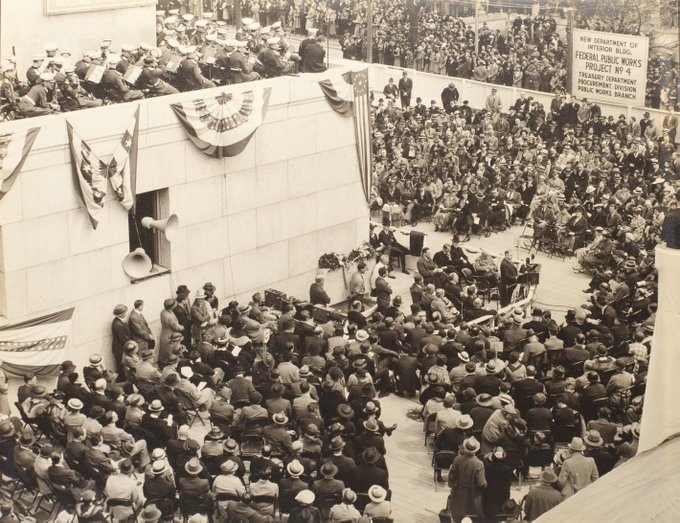
Ninety years ago today was the dedication ceremony for our present-day @Interior headquarters building (Federal Works Project No. 4)! President Franklin Delano Roosevelt spoke at the event, calling the building "symbolical of the Nation's vast resources." With the same trowel that George Washington used to lay the U.S. Capitol's cornerstone in 1793, Roosevelt sealed in our cornerstone a time capsule containing mementos and documents related to the Department's history. (INTR 07466)
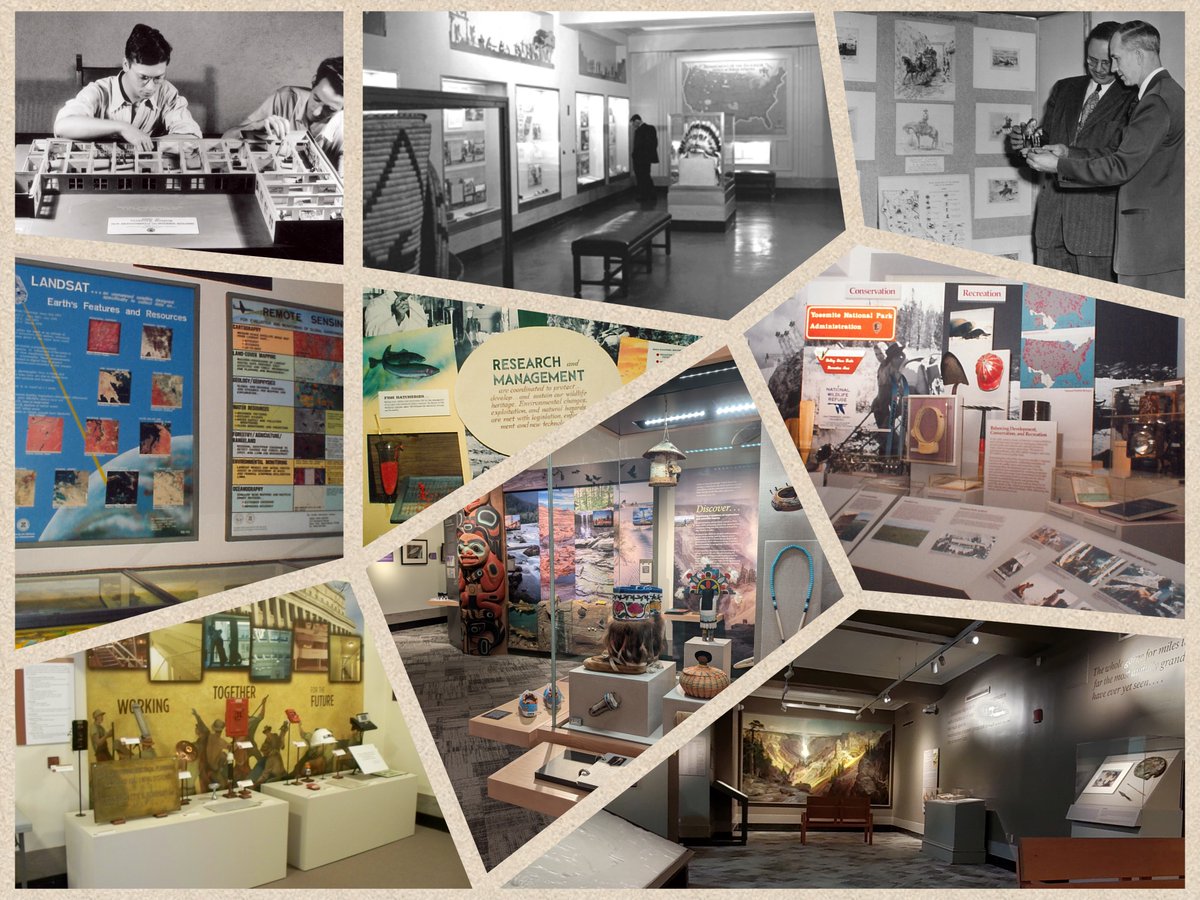
While our look has changed throughout the decades, we continue to preserve and share the Department of the Interior’s history. On this 88th anniversary of the @InteriorMuseum, we thank you for being part of our journey! 🎉
.
.
.
📷Images by row from the top left: creating a scale model for planning the museum in the 1930s; 1940s displays; museum administrator Theodore Drummond in 1951; 1980s; 1990s; 2007; 2009, 2017; 2020
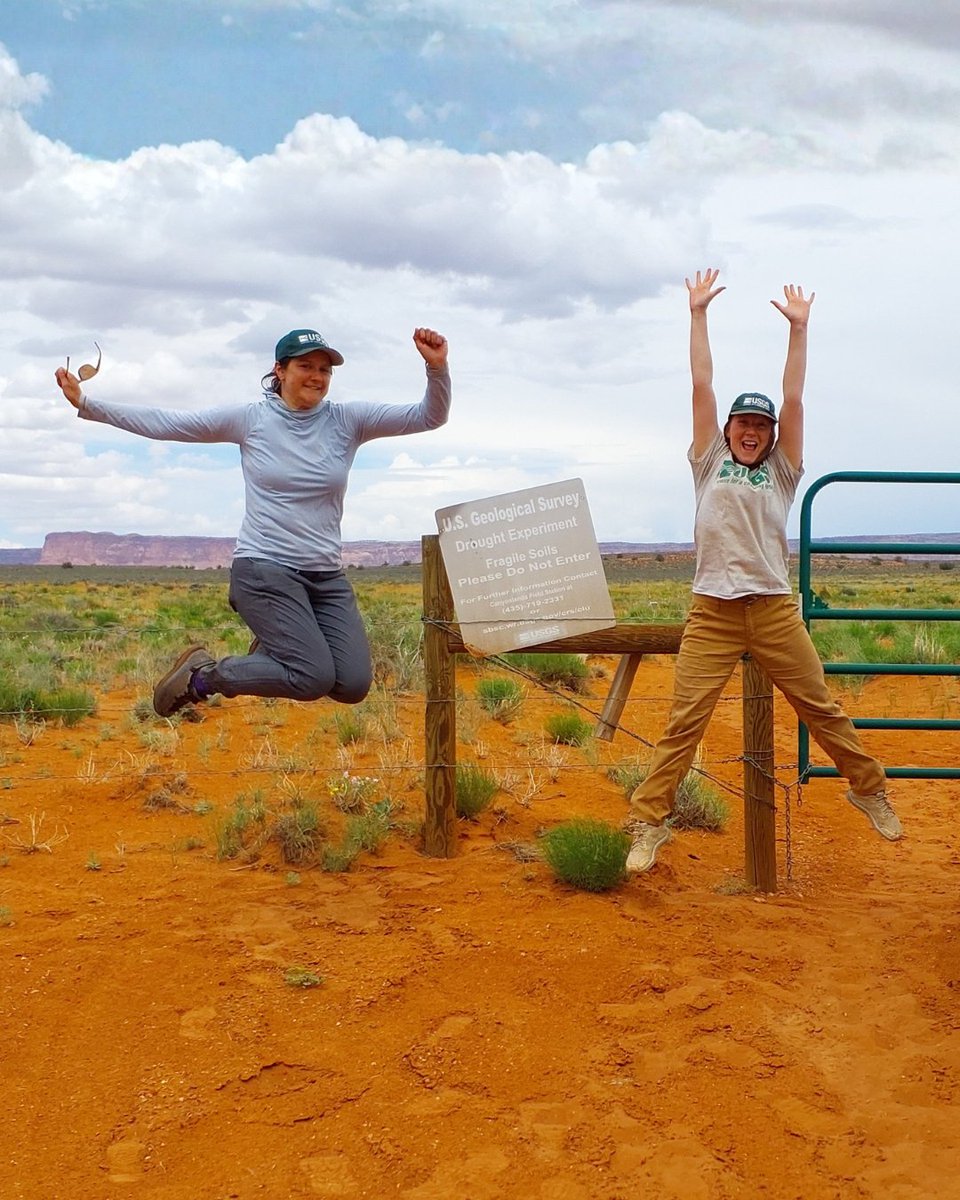
Happy 147th birthday to us! 🎉 We know, we know...we don’t look a day over 146 — but hey, that’s super young in geologic time! Mapping, measuring, and discovering since 1879. 🌎
#Freedom250#America250
❄️❄️ Due to remaining effects from the winter storm, the U.S. Office of Personnel Management has extended the closure of Federal offices in the Washington, DC, area. As a result, the @InteriorMuseum is not open today (Tuesday, January 27, 2026). ❄️❄️
https://t.co/3gg5FFjgtB
❄️❄️ Due to the winter storm, the U.S. Office of Personnel Management has closed Federal offices in the Washington, DC, area. As a result, the @InteriorMuseum is not open today (Monday, January 26, 2026). We encourage you to browse our website at https://t.co/Cy5njsVvZk to view virtually our online collections and exhibition portals.❄️❄️
https://t.co/wuz6ctmkJl
As 2025 draws to a close, we're taking one last look at some of the year's highlights at the Interior Museum:
📷 New to our museum collection is one of the original RCA microphones from the historic north penthouse of the Department of the Interior's headquarters building. From 1938 to 1945, that space served as the nation's first radio recording studio in a Federal office building.
📷 "Mindfulness with Moran: Chasm of the Colorado" was released as a companion piece to our earlier video, "Mindfulness with Moran: Grand Canyon of the Yellowstone," to complement our "Thomas Moran and the 'Big Picture'" exhibition. Give them both a listen on the museum's YouTube channel. (https://t.co/ajj2RUy53X)
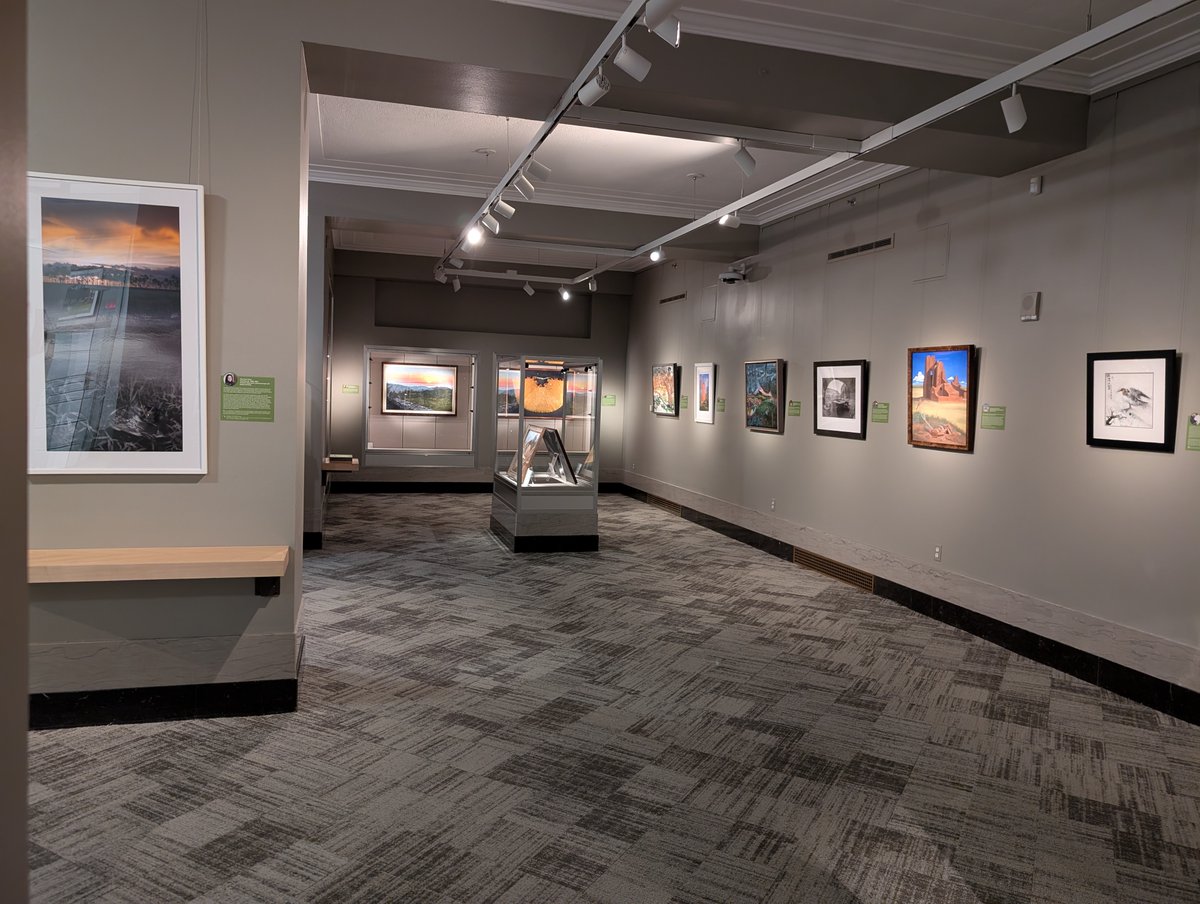
📷 "A Gift to All: Artists in Residence at Interior" took guests on a visual journey through the wonders of public lands as interpreted by more than 20 different artists nationwide. (https://t.co/sNhGljeQ0o)
📷 The Bureau of Land Management's Seymour Antelope and the National Park Trust's Buddy Bison welcomed children to the museum on Bring a Kid to Work Day.
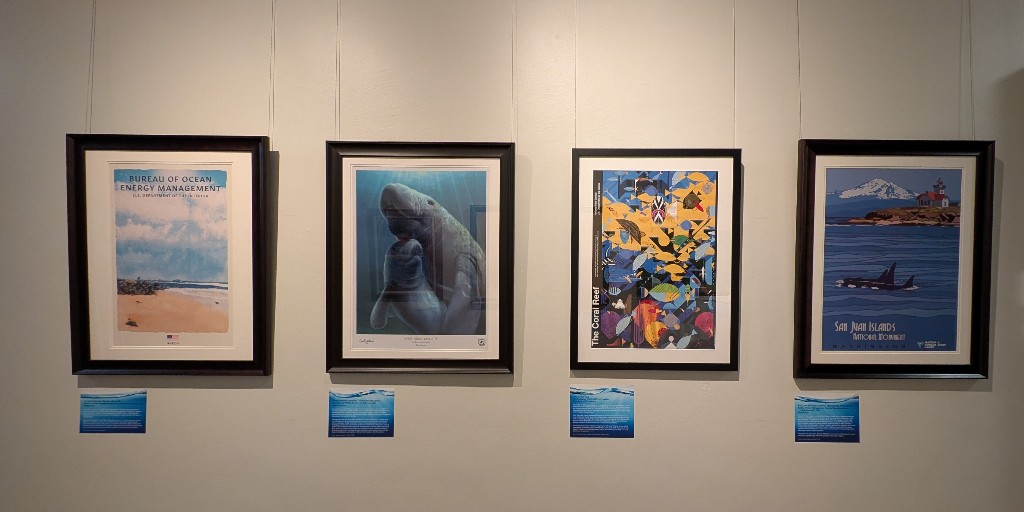
📷 Visitors got to dive into art inspired by the Interior's connections to the sea with our "Exploring the Depths" exhibition. (https://t.co/u5rKAbDJFz)
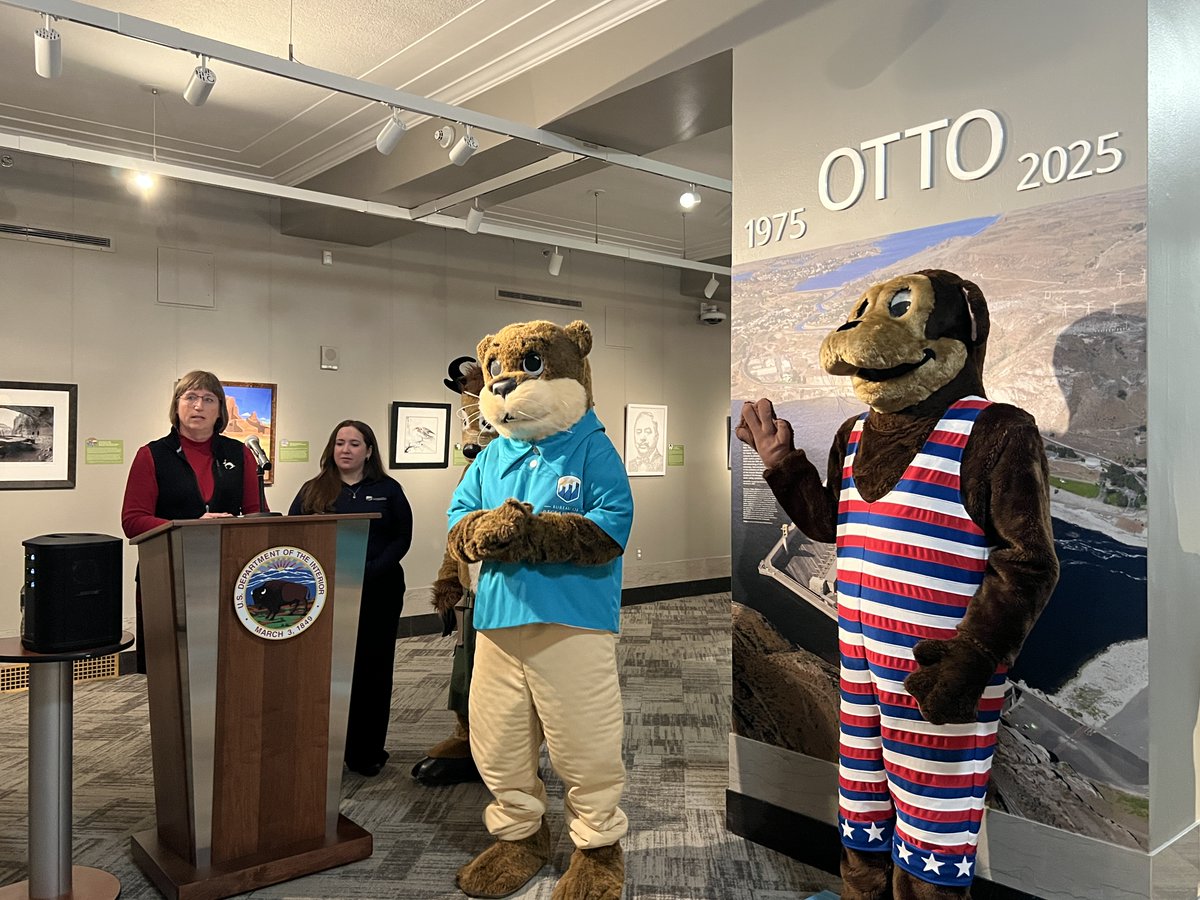
📷The Bureau of Reclamation's Otto Otter celebrated his 50th anniversary with a special visit and display at the museum. (https://t.co/TbGWZ8TX3B)
We look forward to making new memories in 2026 and hope to see you soon! Happy New Year!
Wishing you and yours all the joys of the holiday season!
The museum reopens on Monday, December 29, and we look forward to seeing you then!
🎨 "Symbols of Freedom: Season of Lights III" by Thomas Kinkade, Collection of the Interior Museum, OSAC 02641. This signed, limited edition print was presented to Department of the Interior Secretary Gale Norton in 2004. It depicts the National Christmas Tree in President's Park, managed by the National Park Service.
We couldn't be more pleased to help in commemorating Otto Otter's continuing legacy. Stop by the @InteriorMuseum to see and learn more about the @usbr's iconic face of water safety! 🦦 🛟
https://t.co/7EyhMxZZ84
🦦 As part of the yearlong #America250 celebration, we marked a major Reclamation milestone in Washington, D.C., at the @InteriorMuseum—retiring one of Otto Otter’s historic costumes and unveiling his modern redesign.
Otto now represents safety across canals, dams and reservoirs, reflecting Reclamation’s mission.
Special thanks to @BLMNational's Seymour Antelope for joining his buddy Otto and highlighting our shared commitment to public safety and stewardship on public lands. 💧⚡
#OttoOtter50 #Reclamation #WaterSafety #Infrastructure #PublicService
Due to the federal government shutdown, this account is not being actively updated. For more information, please visit: https://t.co/XlryCBw6Nu
Please note that the Interior Museum is closed for the duration of the shutdown, and there will be no access, building/murals tours, or tour reservations taken.
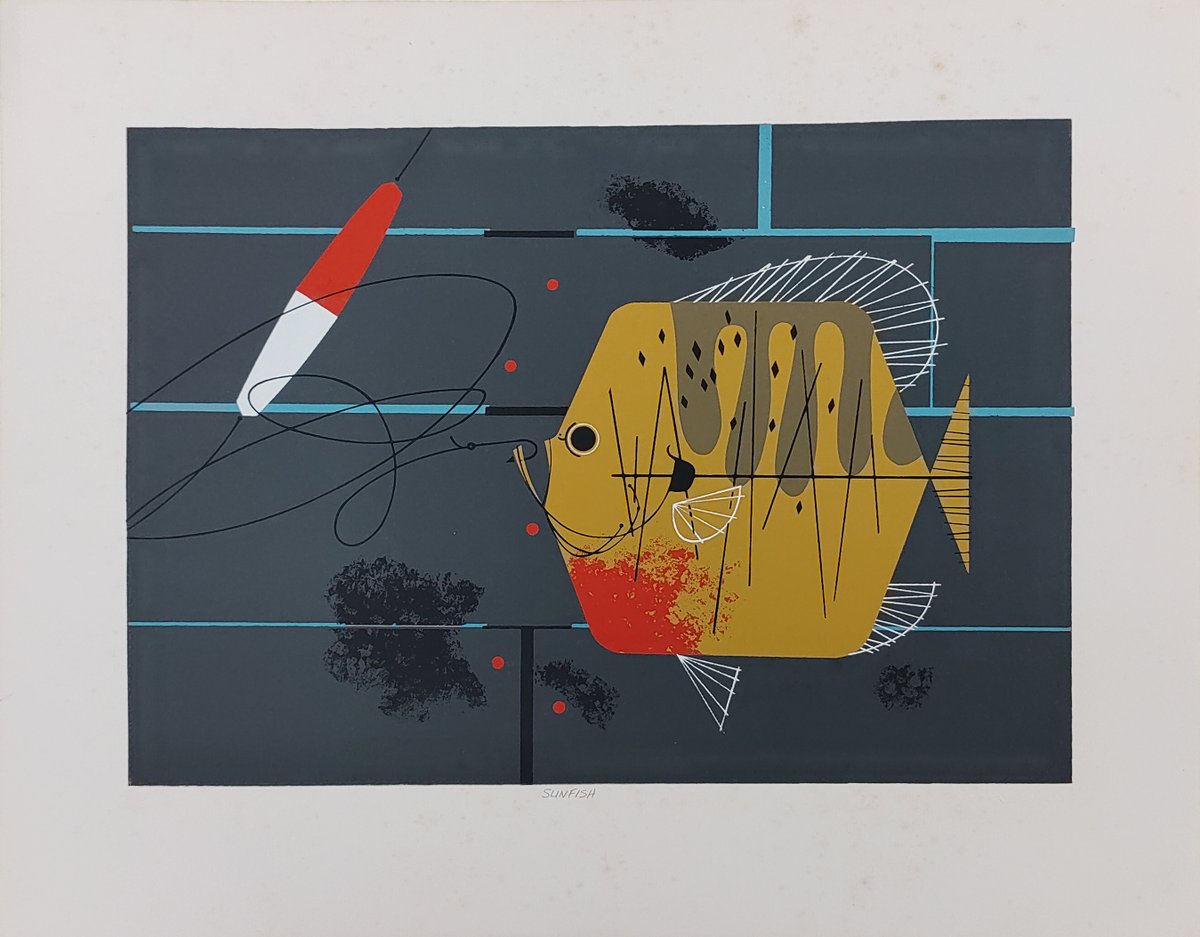
Did you know? 🎣Since 1972, today (the 4th Saturday in September) is National Hunting and Fishing Day. It's an annual celebration of the nationwide impact that anglers and hunters have made on wildlife conservation efforts and outdoor recreation.
🎨 "Sunfish," by Charley Harper (1922-2007), serigraph, 1952. Collection of the U.S. Department of the Interior Museum, OSAC 07394.
This illustration accompanied the article, "“Eight Familiar Fish” in the March 1952 issue of the Ford Times, a lifestyle magazine in which Harper's artwork appeared extensively.
Happy National Public Lands Day!
To celebrate, we are waiving entrance fees across the country today. Whether you spend the day exploring your public lands or volunteering at one, thank you for your love and support of these inspiring places.
Photo by Adam Jewell
September is Color Blind Awareness Month. If you’re among > 350 million people with color vision deficiency (CVD), the image on the right is how our famous 1874 painting “Chasm of the Colorado” by Thomas Moran may look to you. But did you know you can freely borrow EnChroma-enhanced eyewear during your next Interior Museum visit?
☀️With the final hours of summer upon us, we're providing one more "beach vibes" image to carry us into autumn. 🍂 William Henry Traher's 1970 acrylic painting "Pacific Slopes" incorporates several composite views of the California coastline, from Morrow Bay to the Oregon border—including Black Sands Beach on the Lost Coast within the King Range National Conservation Area—with the Sierra Nevada range in the background. This painting was one in a series of four commissioned by the National Park Service in the 1960s for the visitor center at the Gateway Arch to represent different geographic regions in the American West. (INTR 03786)