We are honored to announce the establishment of a #partnership with the #NewEuropeanBauhaus (#NEB).
We believe that this partnership will significantly enhance our efforts and contribute to meaningful advancements in these critical areas.
Interior https://t.co/pN87OIrue6
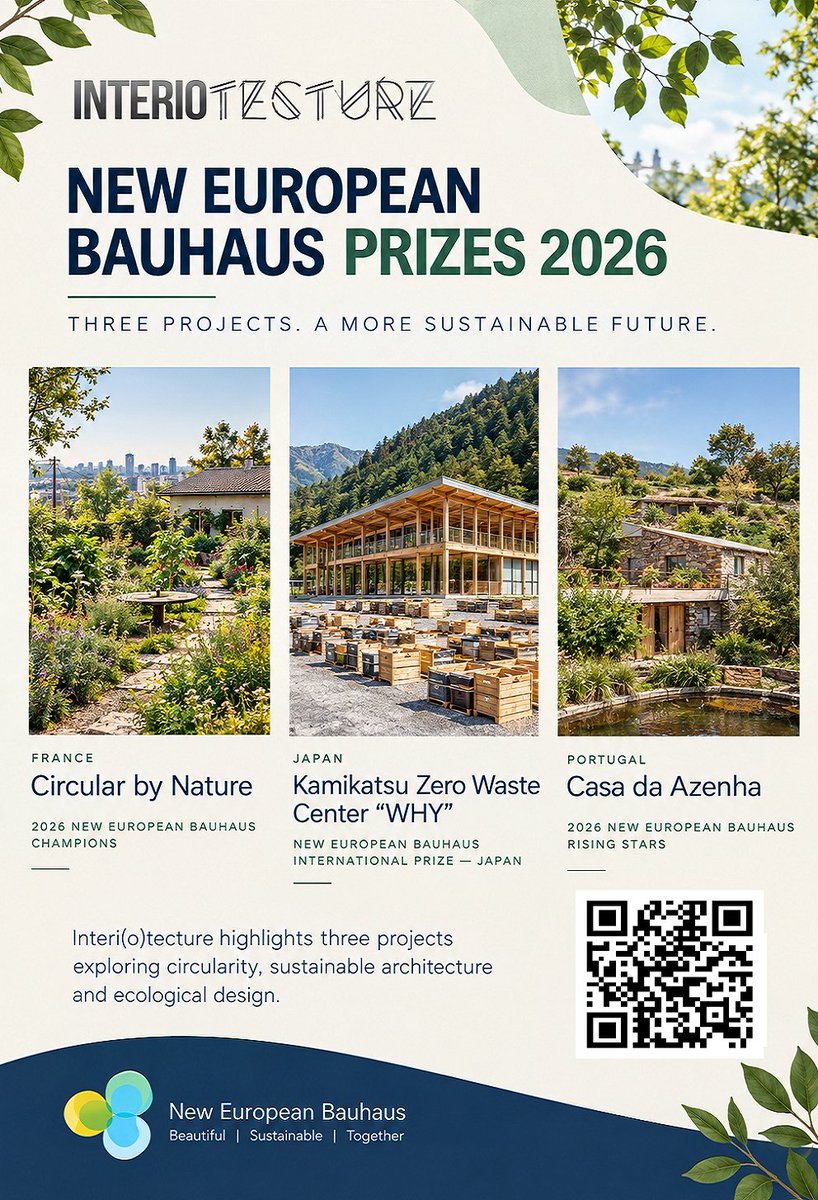
🏆 Congratulations to all the winners of the New European Bauhaus Prizes 2026.
Interiotecture spotlights 3 winners:
🌿 Circular by Nature
🏡 Casa da Azenha
♻️ Kamikatsu Zero Waste Center
Discover our articles: https://t.co/pN87OIrue6
#NEB2026#Architecture
🌍 Design without borders!
The 2026 New European Bauhaus Prizes extend connecting sustainability, beauty & social inclusion through architecture and design.
📱 Scan the QR code or read more:
https://t.co/kz880n4vBj
#NewEuropeanBauhaus#SustainableArchitecture#InterioTecture
🌿 The #NEB call invites innovative solutions for thermal comfort—an opportunity for interior architects and designers to rethink materials, ventilation, shading & bioclimatic design.
Details: https://t.co/y39oQtlOPp
#NewEuropeanBauhaus#InteriorDesign#SustainableDesign
🎹 A timeless masterpiece: Handel’s Passacaglia (HWV 432), originally written for harpsichord, later reimagined by Johan Halvorsen for violin and viola.
🎧 Listen: https://t.co/g0W9xPYiBo
#ClassicalMusic#Passacaglia
🎹 Some melodies speak where words fall silent.
Chopin’s Waltz in A minor is delicate, romantic, and melancholic—a melody that seems to hold love, longing, and unspoken emotions within every note.
🎧 Listen: https://t.co/siIVRvsx1n
#Chopin#ClassicalMusic#Piano
Enlargement can no longer be treated separately from climate ambitions.
Early alignment of candidate countries with EU climate policies could:
🇪🇺 reduce compliance costs;
🇪🇺 strengthen energy security;
🇪🇺 give businesses & investors greater certainty.
🔗 https://t.co/AmZWDkGBfX
🌿 GREENTERIOR 2026 explores sustainable interiors, circular design, and innovative materials in Berlin on 18–19 November.
Discover how design can support a more sustainable future!
📲 Scan the QR code or visit:
https://t.co/kz880n3XLL
#SustainableDesign#GREENTERIOR#NEB
A penny auction at a foreclosed Michigan farm, 1936.
During the Great Depression, rural communities held “penny auctions” to stop farm foreclosures. Locals hung nooses to scare off outside bidders, bought the farm back for pennies, and returned it to the original family.
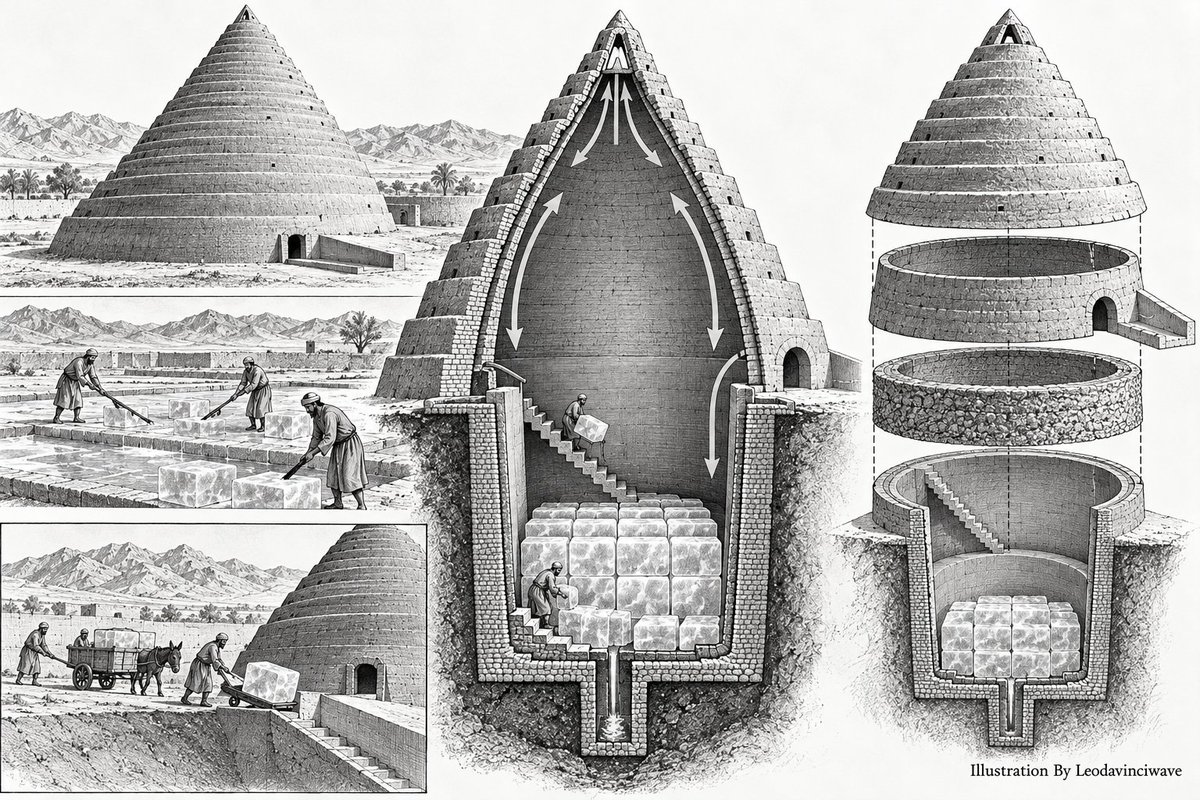
The ancient #Persian Yakhchāl is a remarkable example of climate-responsive #architecture, passive cooling, and sustainable design. A legacy worth rediscovering for the future of #sustainable#architecture. 🌱
Persians were storing ice in the desert 2,400 years ago without electricity or refrigerators.
Meet the Yakhchāl, an ingenious ancient Persian ice house that turned extreme heat into an engineering challenge.
But how did it work?
Its thick, domed walls helped reduce heat gain, while deep underground chambers used the earth’s natural insulation to keep stored ice cool. In winter, water was frozen in shallow pools, and the resulting ice blocks were stored for use during scorching summer months.
The secret also lay in sarooj, a traditional, water-resistant mortar made from materials such as clay, lime, sand and ash.
Some surviving yakhchāls still amaze architects and historians today.
No electricity. No compressors. Just a remarkable understanding of materials, climate and thermodynamics.
Ancient Persian engineers didn’t fight the desert they designed around it.
What if the future of sustainable interiors begins with what we keep, not what we replace? ♻️
📲 Scan the QR code or explore:
https://t.co/5FC0d2jR0f
#CircularDesign#NewEuropeanBauhaus#InterioTecture
His work was influenced by: #Bauhaus — especially the idea of combining art, design, materials, and industrial production. #Modernism , #Constructivism, #Abstract art, later in his career, #natural forms and #organic structures became increasingly important. (1915–1978)
His work was influenced by: #Bauhaus — especially the idea of combining art, design, materials, and industrial production. #Modernism , #Constructivism, #Abstract art, later in his career, #natural forms and #organic structures became increasingly important. (1915–1978)