Internet Archive is a non-profit research library preserving web pages, books, movies & audio for public access. Explore web history via the @waybackmachine.
The web is disappearing 🕳️
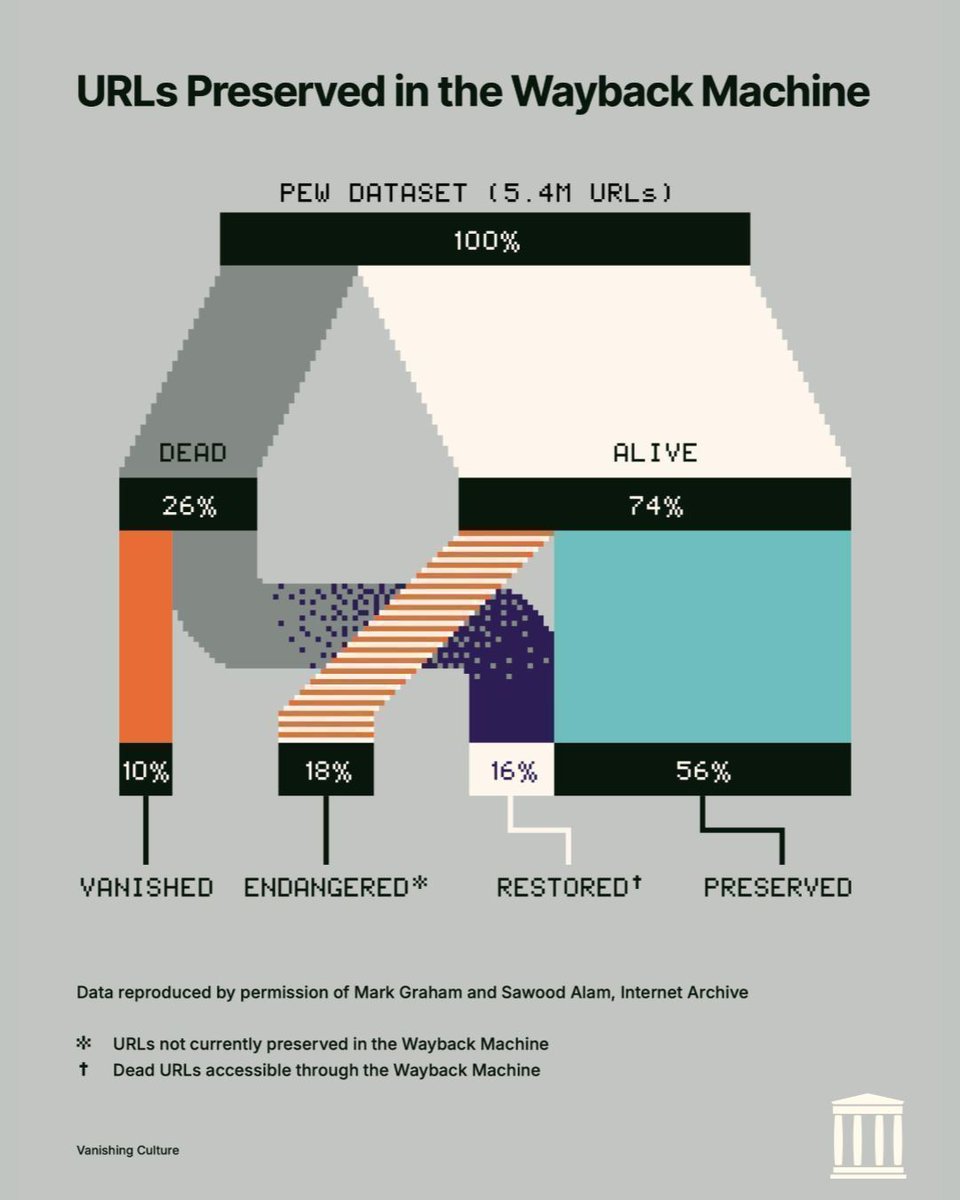
According to a Pew Research Center report, 26% of pages from 2013-2023 are no longer accessible.
But that’s not the whole story.
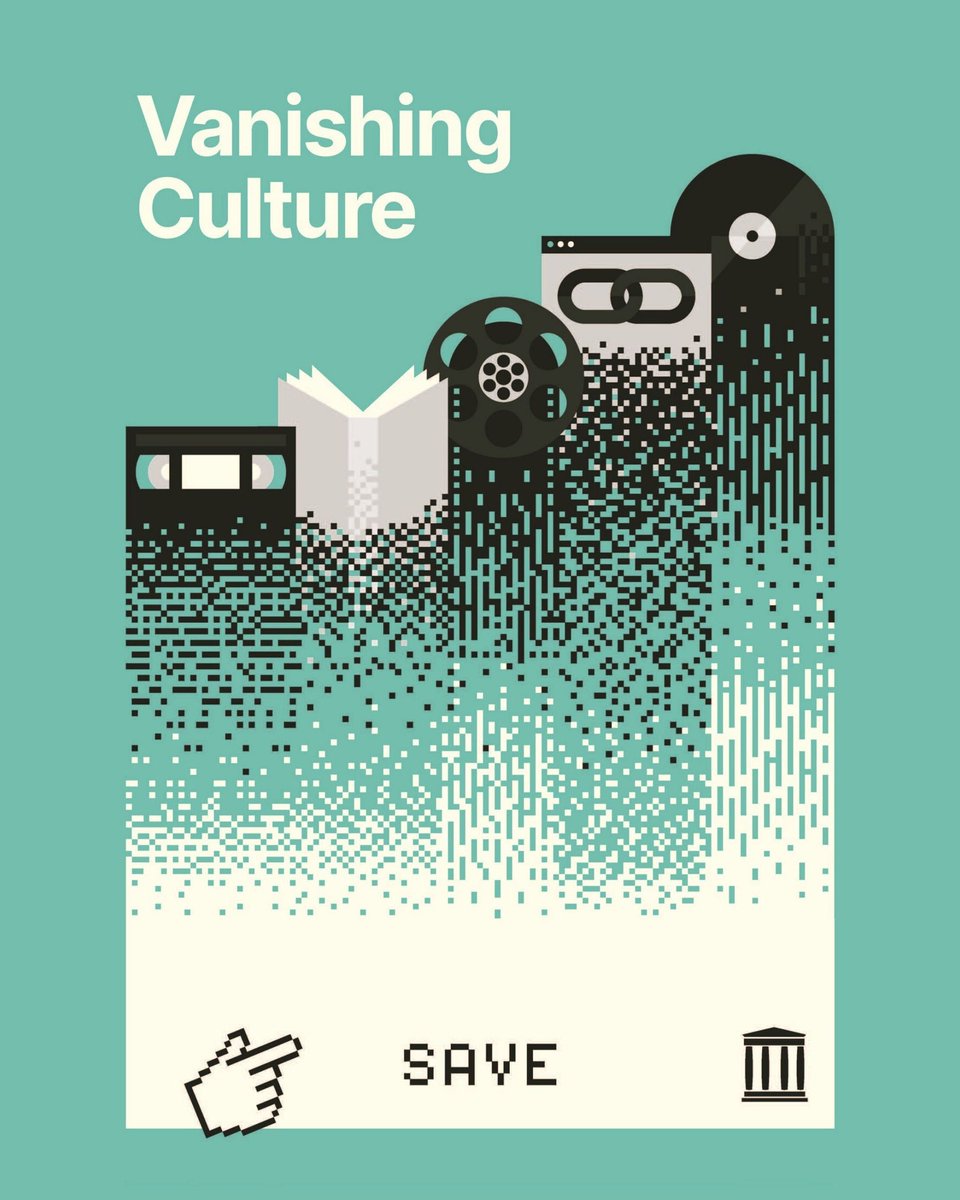
In a new study published in Internet Archive's book, VANISHING CULTURE, data scientists working with the Wayback Machine have found:
16% have been restored through the Wayback Machine.
56% are preserved before they disappear.
Preservation is the remedy for cultural loss.
📚 Read VANISHING CULTURE free from the Internet Archive
📖 Download & read: https://t.co/BrawXOwMBr
🛒 Purchase in print: https://t.co/EB58IliqDm
#VanishingCulture #DigitalMemory #InternetArchive #BookTwitter
❤️ Love the Wayback Machine? Some publishers and news organizations are blocking it from archiving journalism—cutting off access to the public record and future accountability.
Want to tell them to stop blocking web archiving? ✍️ Sign the open letter to support keeping journalism preserved in the Wayback Machine ⤵️
https://t.co/fUrdNz60RD
@fightfortheftr #SaveTheArchive #DigitalArchive #WaybackMachine #TruthMatters
AI companies keep promising world-changing futures while struggling with very present-tense problems like accuracy, labor, energy use, and trust.
Policy researcher Caroline De Cock joins Glyn Moody to unpack why AI hype is a feature of the industry’s business model — and who it serves — in AI TOOLS, NOT GODS on the Future Knowledge #podcast.
🎧 Listen & subscribe 👉 https://t.co/0qyHBcaDMn
#AI #Tech #informationlabs @Auths_Alliance
Fight for the Future is calling out publishers and news organizations that are blocking the Wayback Machine from preserving journalism meant to be part of the permanent public record.
Join the effort: sign the open letter urging them to stop blocking web archiving and keep journalism accessible for generations:
✍️ https://t.co/fUrdNz60RD
@fightfortheftr #SaveTheArchive #DigitalArchive #WaybackMachine #TruthMatters
And speaking of preserving internet history...
Today’s memes & cultural moments become tomorrow’s historical record. But some publishers are blocking the Wayback Machine from preserving their work. Help keep the web from becoming a giant 404.
Sign ⤵️
https://t.co/XJap1UG6AX
Turns out the real Backrooms were hiding in web archives. 👀
Internet sleuths tracked down the original location of the Backrooms image using the @waybackmachine, proving once again that preserving the web is important for internet history, folklore, and mysteries, too.
🎬 Backrooms (2026)
One of the internet's greatest success stories.
In May 2019, an anonymous user on 4chan posted a grainy photo of an empty room. Sickly yellow walls, harsh fluorescent lighting, damp carpet, and an overwhelming sense that something was deeply wrong. Someone added a caption claiming that if you're not careful, you can "noclip out of reality" and end up trapped in an endless maze of identical rooms known as the Backrooms.
Nobody knew where the photo was taken. For five years, the image spread across forums, Reddit, YouTube, and social media, evolving from a creepy image into one of the internet's most fascinating pieces of modern folklore.
Then, in May 2024, four users on Discord finally traced the image using the Wayback Machine. The photograph originated from a 2002 renovation photo taken inside a former furniture store at 807 Oregon Street in Oshkosh, Wisconsin. But by then, the truth hardly mattered. The myth had already become bigger than its origin.
The Backrooms entered a completely new phase in January 2022 when a 16-year-old filmmaker named Kane Parsons uploaded a nine-minute short film called The Backrooms (Found Footage). Having taught himself Blender and VFX techniques, Parsons transformed a niche internet creepypasta into something cinematic and terrifyingly believable. The video exploded in popularity and quickly became one of the defining horror projects of YouTube's generation.
Hollywood took notice.
Just a few years later, A24 greenlit a feature film adaptation and handed the project to Parsons himself. Operating under the codename Effigy, the production built a massive 30,000-square-foot Backrooms maze in Vancouver. The crew reportedly tested dozens of shades of yellow to recreate the unsettling atmosphere that made the original image so iconic, while the scale of the set became a story in itself.
Born in 2005, the same year YouTube launched Kane Parsons became A24's youngest director ever. At only 20 years old, he achieved something almost unimaginable: turning an internet urban legend into a major theatrical event.
The story of Backrooms is remarkable not because of where it started, but because of what it became. An anonymous image posted on a forum evolved into a collaborative online myth, inspired millions of viewers, launched the career of a young filmmaker, and eventually became a global horror phenomenon.
Few pieces of internet culture have made the journey from obscure message board post to mainstream cinema. The Backrooms did.
All because of a single photograph and a simple idea that tapped into a universal fear, the feeling of being lost in a place that looks familiar, yet somehow feels completely wrong.
3/3
Featuring Merrilee Proffitt of Democracy’s Library at the #InternetArchive, James Jacobs of Stanford University, and Christopher Marcum of the Federation of American Scientists.
We’ll explore digital preservation, democratic infrastructure, and how librarians, archivists, technologists, and policymakers are working to safeguard trustworthy public information in a time of rapid political and technological change. 📚🌐🗂️
Co-sponsored by @Auths_Alliance.
#FutureKnowledge #DigitalPreservation #OpenGovernment @MerrileeIAm
🧵 1/3 As the United States approaches its 250th anniversary, it's worth asking: What does democracy require of us when it comes to preserving public knowledge?
Join us for THE FIGHT FOR THE PUBLIC RECORD, a LIVE Future Knowledge #podcast recording exploring who preserves the public record…and what happens when it disappears. 🕳️
📅 Tues, Jun 23
🕙 10AM PT
📍ONLINE
🎟️ https://t.co/H8di3w3Mtc
2/3
From scientific datasets and public health information to environmental research and government websites, the infrastructure of open government and open science is under growing pressure.
Information can now be altered, removed, or lost at unprecedented speed while the systems designed to preserve it often remain fragmented, underfunded, or politically vulnerable.
CONGRATS AGAIN to "THE REALITY ENGINEER" by Konstantin, an Honorable Mention, in the Internet Archive’s 2026 Public Domain Film Remix Contest 🏅
A comedic short about a scientist who attempts to improve human life by altering reality, only to find that each well-intentioned fix deepens the chaos.
Watch the full short film ⤵️
https://t.co/K3QAyij4xf
#PublicDomain #PublicDomainDay
🧵 Some publishers and news organizations are blocking the Wayback Machine from archiving their journalism, cutting off access to the public record.
📣 If you rely on the Wayback Machine to preserve news & history, tell them not to block web archiving. ✏️ Sign the open letter to keep journalism preserved 👇
https://t.co/fUrdNz60RD
#SaveTheArchive #WaybackMachine #PressFreedom #DigitalPreservation @fightfortheftr
🎉 Welcome to the Public Domain, HELL'S ANGELS (1930) ✈️🔥
🎬 Howard Hughes’ massive aviation epic stunned audiences with spectacular aerial combat sequences, real stunt flying, and one of Jean Harlow’s breakout performances.
💥 Famous for its dangerous dogfights and extravagant production, the film became one of the most expensive movies of its era.
Watch the full film ➡️ https://t.co/auEZTDsFio
#PublicDomain #PublicDomainDay #PreCodeHollywood #ClassicFilm
Congrats to "SAVE THE HOMELAND" by Todd Tokashiki, a Finalist in the Internet Archive’s 2026 Public Domain Film Remix Contest 🎬
Haunting archival imagery of early 20th-century Palestine with powerful manipulated narration & repetition.
Watch the full short film ⤵️ https://t.co/gzqsUtnMaT
#PublicDomain #PublicDomainDay
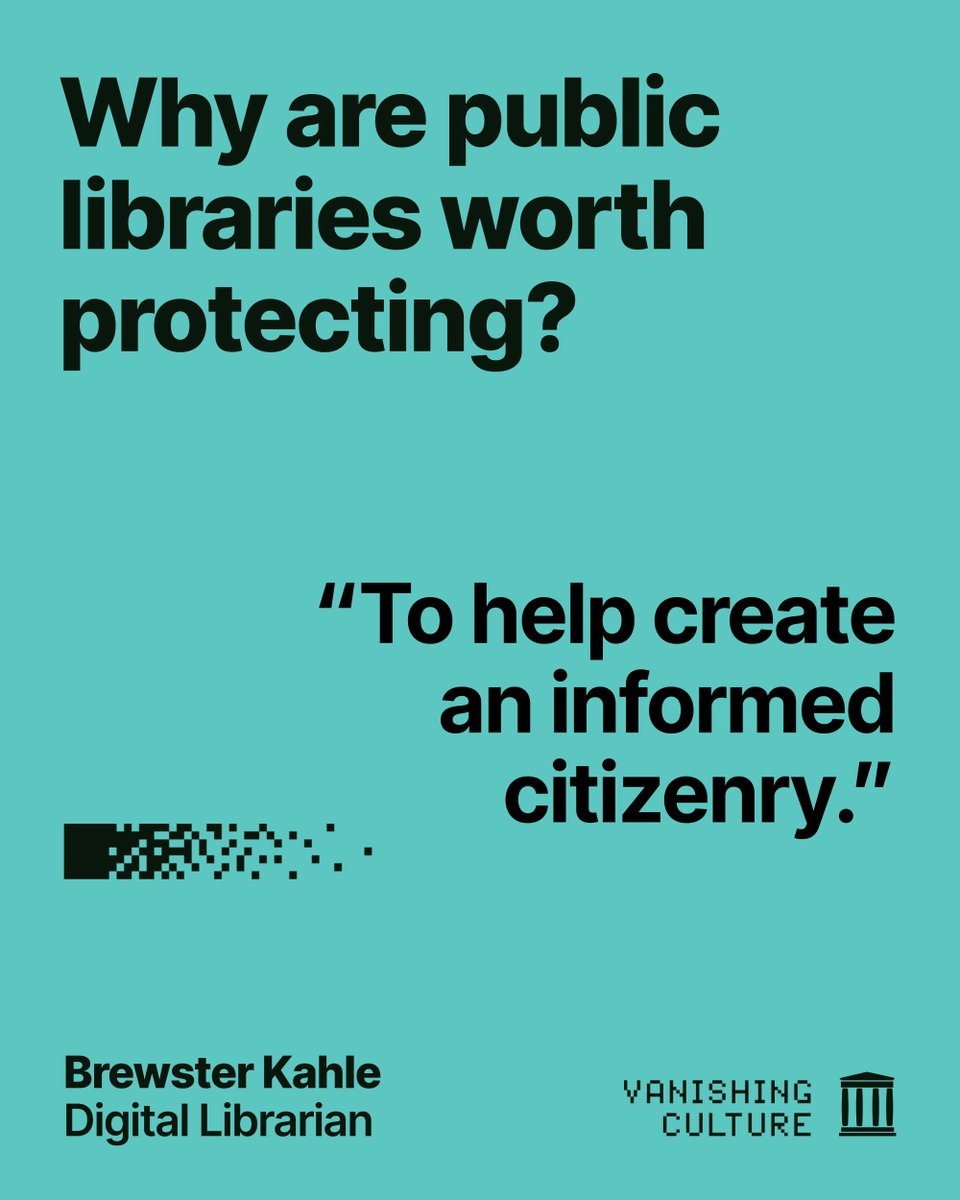
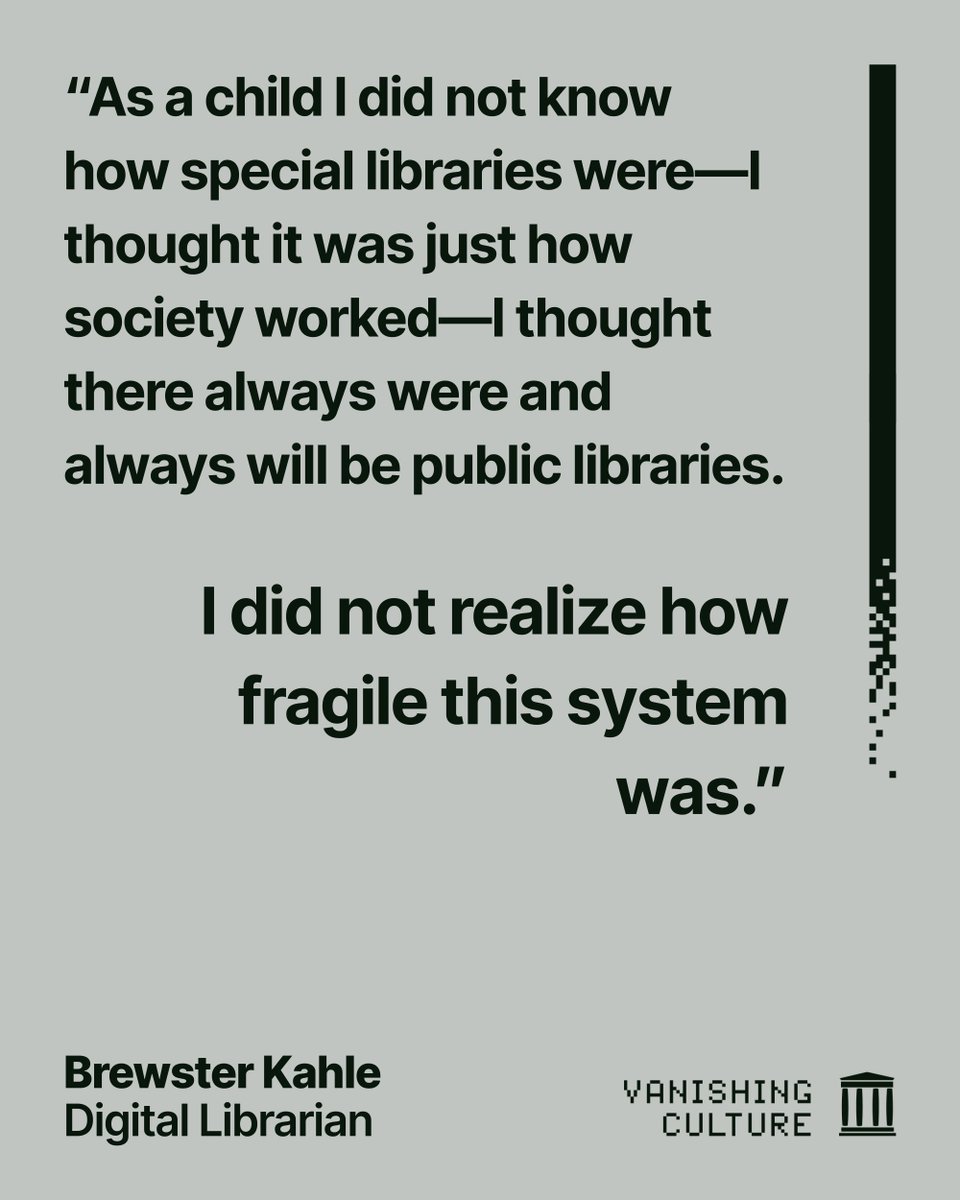
3/3 Kahle argues that libraries help create an informed citizenry by preserving books, films, music, and historical records across generations.
“Our evolving digital age can be our next Carnegie moment or it can be a Library of Alexandria moment. It is up to us.”
Read Kahle's essay and much more in VANISHING CULTURE.
📖 Download & read: https://t.co/SQPdTHqZjo
🛒 Purchase in print: https://t.co/sqAY6ckFmv
@InternetArchive@Brewster_Kahle #VanishingCulture #InternetArchive #Libraries #DigitalPreservation
🧵1/3 What happens when libraries can no longer preserve the knowledge they collect? 📚⚠️
Brewster Kahle warns that the systems connecting libraries, readers, and cultural memory are becoming dangerously fragile as publishers replace ownership with temporary access.
Read the essay Preserving the Library System by Brewster Kahle, part of VANISHING CULTURE from the Internet Archive.
🔗 https://t.co/tjoVGTQ2d6
2/3
Libraries are more than buildings filled with books. They are an interconnected public network built on preservation and sharing.
“If we don’t have the one you want, we can get it for you,” is a promise shaped generations of readers through interlibrary loan, public access, and librarians committed to making knowledge available to everyone.
Technology can become a “shell game” of responsibility, where companies push the consequences of dangerous systems onto individuals instead of the decisions made in boardrooms.
On the Future Knowledge #podcast, legal scholar Ryan Calo points to social media addiction, autonomous vehicle failures, and other technological harms as examples of why legal liability matters.
🎧 Listen & subscribe ⬇️
https://t.co/1LNkehF8EY
#AI #privacy #law #technology @RCalo@DanielleCitron
“People aren’t sure what’s true, and what libraries are here for is to help with that.”
Brewster Kahle, digital librarian of the Internet Archive, discusses the future of the Wayback Machine in ABC Radio National (🇦🇺 Australia)’s “Wayback Machine: The internet’s archive in peril,” a look at how media companies are restricting the preservation of the web itself.
🎧 Listen ⤵️
https://t.co/SylhHctSsy
#ABCRN #WaybackMachine #InternetHistory #WebArchiving #SundayExtra @abcaustralia@abcnews@Brewster_Kahle
Musician and human rights activist Peter Gabriel sent a special congratulatory message to Brewster Kahle, founder and digital librarian of the Internet Archive, on being honored as a 2026 Computer History Museum Fellow at the April 25 gala ceremony.
In his message, Gabriel speaks to the importance of preserving and sharing knowledge, work that has defined Kahle’s vision for the Internet Archive.
Watch Gabriel’s message and more on our blog ⤵️
https://t.co/y4p4oTqVKD
#BrewsterKahle #InternetArchive #ComputerHistoryMuseum #CHMFellows #DigitalPreservation #WaybackMachine #PeterGabriel @itspetergabriel@Brewster_Kahle
Memorial Day weekend calls for picnics 🧺
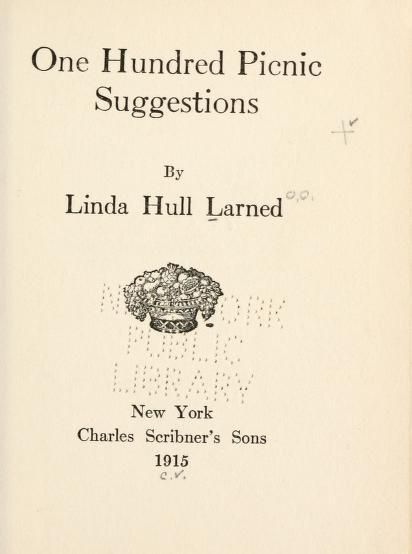
One Hundred Picnic Suggestions (1915) contains ideas both traditional and… questionable to modern tastes before you pack your picnic basket: chicken salad, roast beef sandwiches 🥪, eggs in aspic jelly 🥚, and… tongue salad 👅🥗?!
Check out this public domain culinary curiosity in our collections ⤵️
https://t.co/sTXLX172AN
#MemorialDay #picnic #cookbooks #vintagecookbooks