A first look at qVAULT.
Lock your assets and they go quantum-safe. Unlock to trade.
$qONE and $HYPE first. Q-Day ready.
The first vault built for the day quantum breaks crypto.
Opens soon.
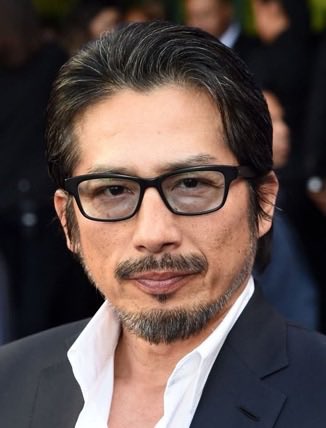
Japanese actor Hiroyuki Sanada spoke about the contradictions of human nature:
“Some people dream of having a swimming pool at home, while those who have one hardly ever use it. Those who have lost a loved one feel a profound sense of loss, while others often complain about their living relatives. Those without a partner long for one, while those who have one often don't appreciate it. The hungry would give anything for a meal, while the satiated complain about the taste of their food. Those without a car dream of owning one, while those who have a car are always looking for a better one.��
The key to happiness is gratitude: truly seeing and appreciating what we already have, and understanding that somewhere, someone would give anything for what we take for granted.
Grant Cardone reveals NOBODY would buy $10,000,000 worth of Gold at market price
“I know a guy who is trying to sell 10,000 pieces of silver and he can’t get a real offer. He’s getting a 30% discount below the market. People see it spiking like this and they’re like, ‘OMG.’ But go try to sell $10M worth of gold and see what happens. You’ll only get offers 20-30% below the market, and you won’t get the money tomorrow or in five minutes. It needs to get authenticated, checked, and validated”
“Bitcoin is a real thing. You can trade it in five minutes, and that’s real. Bitcoin, to me, is not only money, it’s also technology, unlike gold or silver”
A video game I played at age 14 helped me learn how money actually works.
Here is what I discovered:
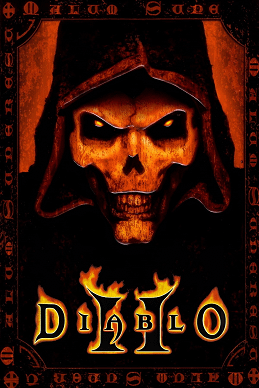
When I was in my early teens, I spent most of my free time playing Diablo II.
Like most games it had its own in-game currency, but the currency was so easy to come by that it didn’t have much value in trade.
So players did what humans have always done when their money fails them and found something else to use as money.
There was a rare ring in the game called the ''Stone of Jordan'' Ring (the SOJ) that was hard to find and useful enough that people valued it.
Although the game designers never intended this, the entire economy of Diablo II started using the SOJ as money.
Players started trading gear for SOJs, quoting prices in SOJs, and storing wealth by accumulating them.
The in-game currency was all but worthless because it was so easy to come by, but the SOJ was scarce and people recognized it.
Although I didn’t have these words at the time: I had just watched a free market select the SOJ as its own money. Witnessing this monetization process left a lasting imprint on my mind that decades later would give me an early appreciation of Bitcoin.
Once I understood what was happening I stopped dungeon slaying and started trading, instinctively following the basic principles of buy low and sell high until I had accumulated a wealth of rare items.
Then eBay became popular and I realized I could convert all that in-game wealth into actual dollars, and that was the moment something cracked open because people were spending “real money” to acquire valuable items inside a world that did not actually exist.
That was the first time the penny dropped for me.
I followed that intuition for the next two decades without knowing where it was going and it took one book to give it a name.
At 21 I read “The Creature from Jekyll Island” and learned what central banking actually was and the realization was so heavy I put it down, went back to work, and told myself there was nothing anyone could do about it.
Without knowing any other path I continued working inside the financial system despite understanding its corrupt core.
Then in 2018 I read “The Bitcoin Standard” and the two threads finally connected.
The free market digital money I watched emerge spontaneously inside a video game (the SOJ) and the free market digital money I was watching emerge spontaneously in the real world (Bitcoin) were both built on similar principles.
The common denominator? People always seek out the best tool for the job. When their money doesn’t work right, people find a better monetary tool.
Since the money people choose to hold is a matter of survival in the social world, it is extremely difficult to force people to use an inferior money when a better money is within reach.
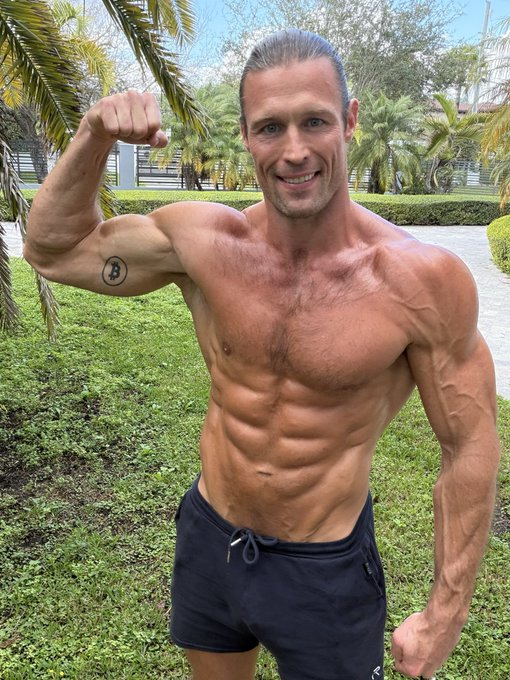
My philosophical journey into the nature of money started with a video game and ended with a Bitcoin tattoo (my first and only tattoo to this day).
To me, this Bitcoin tattoo represents my “skin in the game”: which is a principle of alignment between people and the consequences of their actions.
The problem with central bankers and their fiat currencies? They have zero skin in the game. When they print money, you lose value. Their actions, your consequence: this is the misalignment.
Bitcoin is the reverse.
Bitcoin is a system secured by miners and holders.
These incentives n Bitcoin ensure that each person bears the consequences of his own actions.
The net result of Bitcoin being a monetary network with skin in the game is that it is money that can never be printed. This is because to create more than 21M Bitcoin would require a majority of users to act against their own self interest.
By giving people an incorruptible option in a world running on corrupt money, Bitcoin is one of the most important humanitarian missions in the world.
My Bitcoin tattoo is my “skin in the game”: a visual metaphor for my commitment to this humanitarian mission.
If actions and their consequences are misaligned, it is only a matter of time before the system blows up.
Bitcoin fixes this.
Itami o kanjiro...
Itami o kangaero...
Itami o uketore...
Itami o shire...
Itami o shiranu mono ni.
Honto no heiwa wa wakaran Koko yori. sekai ni itami o
Shinra tensei!
Kids born 2000–2004:
- Corona fucked up everything
- After corona, students forgot how to write on paper
- Worst college life
- No real friends
- Unemployment arc
- War and missiles
- AI taking real jobs
- Mental health issues and depression
- Anyone can write code, real devs not needed
- No healthy life
Trading is really simple, you just need to:
1. Stop trying to get rich this month.
2. Accept that randomness exists.
3. Define one setup.
4. Delete the other five.
5. Risk less than you want to.
6. Cut size in half.
7. Then cut it again.
8. Stop watching PnL during the trade.
9. Decide risk before entry.
10. Never move a stop further away.
11. Know your win rate.
12. Know your average risk-reward.
13. Know your max historical drawdown.
14. Be emotionally prepared for double that drawdown.
15. Stop trading when tired.
16. Stop trading when emotional.
17. Stop trading after revenge impulses.
18. Stop trading to feel productive.
19. Stop trading boredom.
20. Learn to sit on your hands.
21. Learn to miss moves without emotional reaction.
22. Accept that you will never catch every move.
23. Accept that FOMO is self-sabotage.
24. Stop increasing size after a win streak.
25. Stop increasing size after a loss streak.
26. Journal emotional state, not just entries.
27. Identify your tilt pattern.
28. Identify your self-sabotage trigger.
29. Remove the trigger.
30. Build a daily routine.
31. Sleep properly.
32. Train your body.
33. Control caffeine intake.
34. Breathe before entries.
35. Separate self-worth from PnL.
36. Detach from needing to be right.
37. Accept losing trades calmly.
38. Let winners run to plan.
39. Stop micromanaging trades.
40. Backtest at least 200 samples.
41. Forward test small.
42. Prove consistency before scaling.
43. Increase size slowly.
44. Never scale emotionally.
45. Track R, not dollars.
46. Focus on process, not outcome.
47. Measure execution accuracy.
48. Grade yourself weekly.
49. Eliminate one mistake at a time.
50. Avoid strategy hopping.
51. Avoid indicator addiction.
52. Avoid over-optimization.
53. Avoid copying random traders.
54. Build conviction through data.
55. Trade one session.
56. Trade one instrument.
57. Master one timeframe.
58. Understand volatility conditions.
59. Define when not to trade.
60. Define invalidation clearly.
61. Accept missed profits.
62. Respect maximum daily loss.
63. Stop trading after hitting daily max loss.
64. Stop trading after emotional spikes.
65. Review screenshots daily.
66. Review losing trades deeper than winners.
67. Identify if you cut winners early.
68. Identify if you hold losers too long.
69. Fix asymmetry.
70. Protect capital aggressively.
71. Treat capital as inventory.
72. Understand position sizing math.
73. Respect compounding.
74. Avoid all-in mentality.
75. Avoid “this is the one” thinking.
76. Trade like a statistician.
77. Build tolerance for drawdowns.
78. Accept flat months.
79. Accept slow growth.
80. Accept boredom.
81. Build patience intentionally.
82. Train focus daily.
83. Reduce dopamine addiction.
84. Avoid constant comparison.
85. Stop looking for holy grails.
86. Accept you are the main variable.
87. Accept your psychology matters more than entries.
88. Accept uncertainty permanently.
89. Protect downside first.
90. Scale only after consistency.
91. Never trade to recover.
92. Never trade to prove.
93. Never trade to escape.
94. Trade to execute, nothing more.
95. Stay small until stable.
96. Prioritize survival over speed.
97. Build emotional stability before size.
98. Respect your system even when bored.
99. Think in years, not days.
100. Stay in the game long enough to let probability work.
Je n’ai pas l’expérience pour donner une opinion très constructive, mais au vu de ce que j’observe, et crois comprendre :
J’ai l’impression qu’on a affaire à une grosse manipulation, dans le sens où énormément d’institutions, entreprises, gouvernements accumulent du bitcoin. Et malgré tout, on entends que de la peur venant des particuliers, comme si, on les incitait à vendre, pour mieux accumuler, et en plus de ça pour moins chère.
Puis une fois que les stocks auront été faits et que les particuliers n’auront plus rien, ils vont commencer à vendre le bitcoin comme étant une monnaie divine, et la les prix vont exploser.
Tu en penses quoi ?