👉 Investigo 🔎 con el apoyo de #IA temas clave que aporten soluciones a los desafíos de hoy y siempre.
Busco pensar y ayudar a usar el🧠 para decidir mejor👍
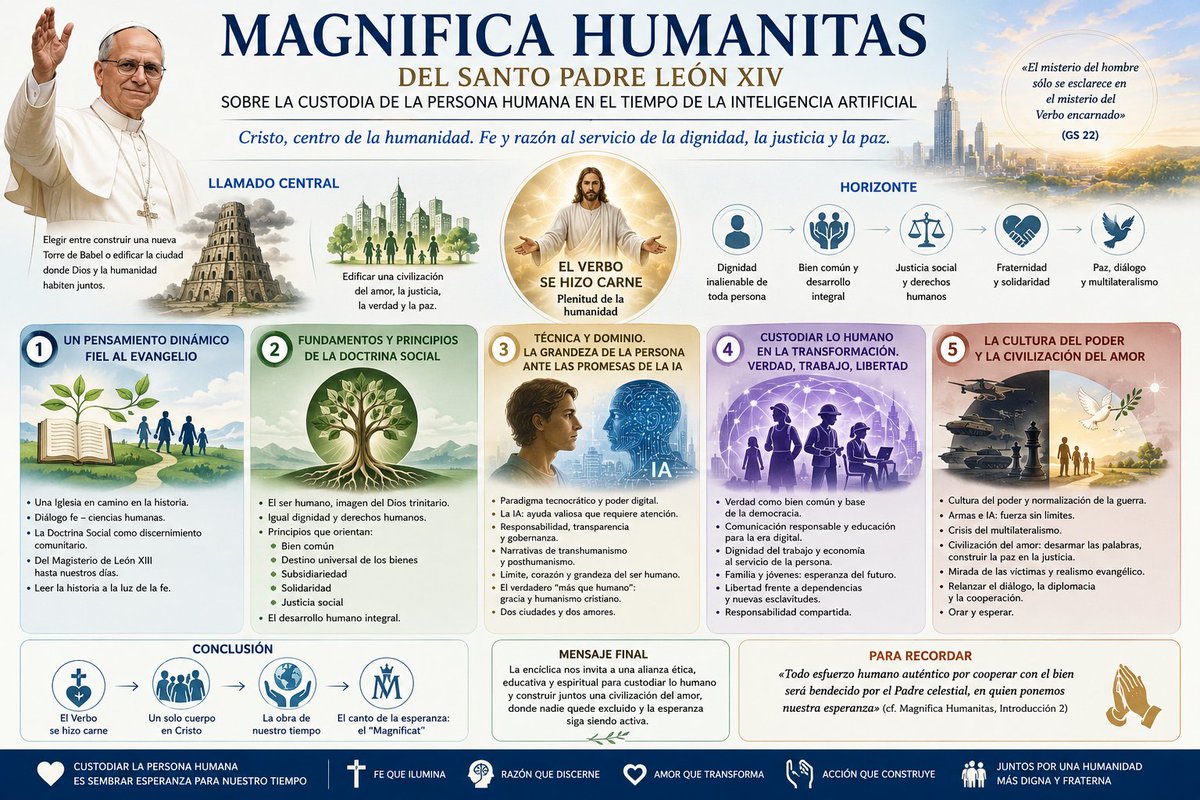
🤔¿La inteligencia artificial puede proteger la dignidad humana o terminará construyendo una nueva Babel digital?
Analizamos la impactante encíclica “Magnifica Humanitas” de León XIV 🇻🇦 en este episodio 🎧 👇
https://t.co/RTsgrGGkXA
#IA#Encíclica#LeónXIV#Humanidad
Cuando los datos contradicen las intuiciones, vale la pena investigar 🔎🕵️♂️
¿Qué funciona realmente para reducir la violencia? ⛔️
🎧Escuchá el nuevo episodio de Investigando con Inteligencia Artificial. #PolíticasPúblicas#Podcast#Investigación 🙉🙈🙊
https://t.co/zRhMnYCohe
🤔¿Más cárcel significa realmente más seguridad?
Analizamos +20 años de evidencia en Santa Fe y los resultados desafían las ideas instaladas.
🎧 Escuchá el episodio sobre datos, criminología y políticas públicas: https://t.co/zRhMnYCohe
#Seguridad#SantaFe#Criminología#Podcast
Entre 2002 y 2024 la población penitenciaria santafesina creció +340%
Sin embargo, la evidencia muestra q la reducción de homicidios de 2024 respondió a una combinación de estrategias, no simplemente a encarcelar más personas. #Datos#Justicia#Seguridad
https://t.co/j4aOpzQYn7
Scientists have created one of the most detailed 3D reconstructions of a human cell (eukaryotic cell) ever produced.
This groundbreaking model, often termed a "Cellular Landscape Cross-Section Through a Eukaryotic Cell," combines data from X-ray tomography, nuclear magnetic resonance (NMR), and cryo-electron microscopy to map molecular structures in extreme detail.
🚨 @3BLUE1BROWN DID IT AGAIN
Language compressibility is not just a neat math trick: it is the core engine of modern LLMs.
Grant's latest video boils Shannon's entropy down to a single, powerful idea:
Prediction IS compression.
→ Predict the next word better, use fewer bits to store it
→ Shannon found English is astonishingly compressible (~1 bit per character)
→ This is the exact mechanism GPT models run on
→ Under this framing, intelligence equals compression
FUN FACT: Von Neumann told Shannon to use the term "entropy" because no one really understands it.
Today, it powers the AI revolution.
Deep-dive resources in the 🧵↓
Gracias @kicoes el podcast es "Inmersión Profunda IA con inteligencia 🧠" dónde analizamos crítica y profundamente temas con la ayuda de la IA, buscando comprender y pensar mejor 🧠 👍 🎧https://t.co/8ZUBC0cK63
Y vamos x la 3° temporada
Empezamos en 2024 con #CambioClimático 🔥
Martín está aprovechando la IA en https://t.co/IE6OlW07ZJ y ha analizado el proyecto en su podcast en Spotify: https://t.co/VWDiFFEca0
Deseando escuchar próximos capítulos sobre como evoluciona su agente openclaw.
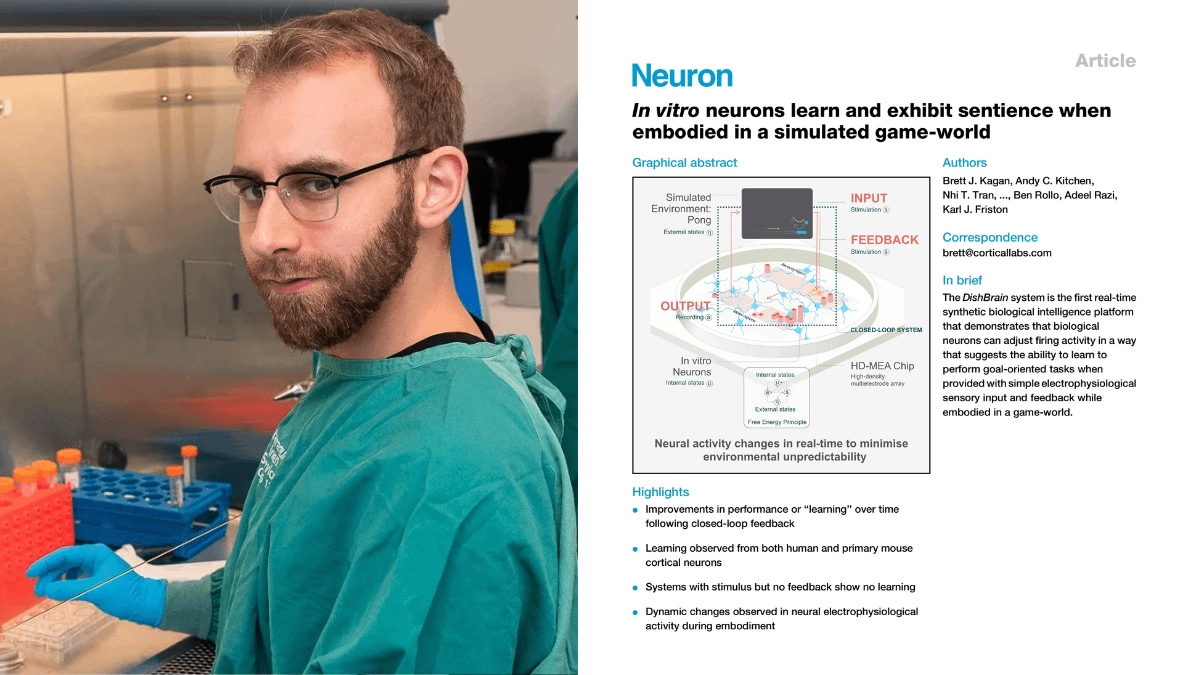
An Australian scientist took 800,000 human brain cells, kept them alive in a dish, wired them to a computer, and taught the cells to play the video game Pong in five minutes, which is faster than any AI on Earth had ever learned the same game.
His name is Brett Kagan.
He runs the science team at a Melbourne company called Cortical Labs, and the paper that broke the story was published in the journal Neuron in October 2022. The title sounds like a science fiction novel. In vitro neurons learn and exhibit sentience when embodied in a simulated game-world.
The setup was simple, and that is what made it so strange.
Kagan and his team took some brain cells from mouse embryos. They took some human brain cells grown from stem cells. They placed them on a chip covered in tiny electrodes, the size of a small coin, and they hooked the chip up to a computer running Pong.
The electrodes could do two things. They could read what the cells were doing. They could also send small bursts of electricity back into the cells.
The team used those two channels to talk to the dish.
When the ball was on the left, they fired the electrodes on the left side of the dish. When the ball was on the right, they fired the electrodes on the right. The closer the ball got to the paddle, the faster they fired. The cells could move the paddle by sending their own signals back.
That was the whole game.
Then the team added one more rule, and this is the part that changed everything.
When the cells missed the ball, they got a random, chaotic burst of electricity for four seconds. Noise. Static. Pure unpredictability. When the cells hit the ball, they got a clean, steady, predictable signal.
That was the only feedback the dish ever received.
Within five minutes, the cells started getting better at the game.
The rallies got longer. The hits got more frequent. The dish was not winning, but it was clearly playing, and it was improving, and nobody had told it the rules.
It had figured them out by itself.
The reason this worked is the part that should stop you for a second.
Brains hate surprise. That is the thing they are built to avoid. Karl Friston, who is one of the most cited neuroscientists alive and a co-author on the paper, has spent his whole career proving this. The brain is not really a thinking machine. It is a prediction machine. It runs on a single quiet rule. Make the world less surprising.
The cells in the dish were doing the same thing.
The chaotic stimulus felt like surprise. The clean stimulus felt like calm. The only way to get more calm and less chaos was to stop missing the ball. So the cells learned to stop missing the ball, not because anyone trained them, and not because they wanted a reward, but because the only way to quiet the noise was to play the game well.
They were not learning Pong. They were learning to make their own world more predictable, and Pong just happened to be the world they were stuck inside.
The same thing your brain is doing right now.
Every choice you make today, every word you reach for, every plan you build for tomorrow, is your brain trying to make the next moment less surprising than the last one. The feeling you call thinking is mostly your head doing the same thing those cells did. Trying to quiet the static.
The dish learned Pong faster than any AI had at the time, using around 800,000 cells and almost no power, while the AI systems running the same game needed thousands of times more energy and far longer training runs.
Kagan said it plainly in his interviews after the paper came out.
He said the cells were not trying to win. They were trying to feel less lost. And the moment he said that, half the room realized he was no longer just describing the dish.
He was describing them.
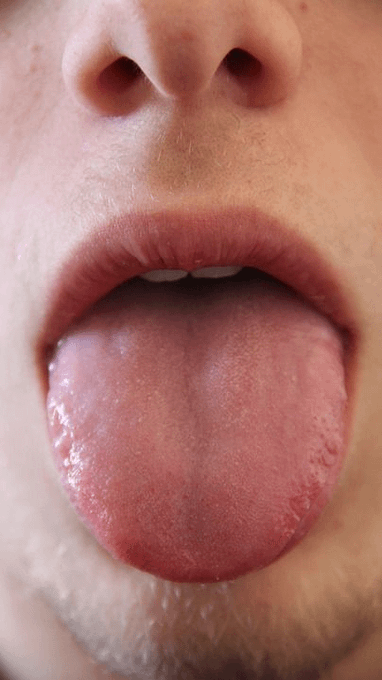
Un neurólogo dijo:
“Saca la lengua durante 40 segundos — esto elimina el cortisol más rápido que cualquier pastilla y ejercicios de respiración.
Big Pharm está en pánico:🧵
Why Jupiter Appears to Move Backward in the Sky Have you ever gazed at Jupiter and caught it doing something weird?For months at a time, the Solar System’s giant seems to defy logic — it slows to a stop, then glides backward across the stars in a motion called retrograde. It looks almost magical… or even wrong. But it’s one of the most beautiful illusions in astronomy.Right now, Jupiter is in retrograde from November 11, 2025, to March 10, 2026 — about four months of apparent backward https://t.co/HGRateI6rZ’s the real story:Earth is the faster runner, orbiting the Sun quicker than Jupiter. As we lap the giant planet (like a sports car overtaking a semi-truck on the highway), our shifting viewpoint creates the illusion. From Earth, Jupiter appears to pause, reverse direction, and loop back against the starry backdrop. Once we pull ahead far enough, it resumes its normal eastward motion.Jupiter itself never stops or turns around. It keeps cruising forward at over 47,000 km/h in its massive orbit. The backward drift exists only in our perspective.This celestial dance has mesmerized humans for millennia. Ancient skywatchers saw omens and mystery in it. We now see one of the clearest, most elegant proofs that we live on a moving planet in a moving Solar https://t.co/yebYbFuhxy next time you spot that brilliant white “star” in the night sky, remember: you’re watching Earth overtake the king of the planets in real time.
👉Dado que la inteligencia artificial cambiará el mundo, recomendamos la lectura completa y crítica de Magnifica Humanitas para formar tu propio criterio y actuar en consecuencia, contribuyendo a que el futuro sea más humano, justo y digno para todos.
🔎📘https://t.co/4HBxcpO3Jn
🤔¿La inteligencia artificial puede proteger la dignidad humana o terminará construyendo una nueva Babel digital?
Analizamos la impactante encíclica “Magnifica Humanitas” de León XIV 🇻🇦 en este episodio 🎧 👇
https://t.co/RTsgrGGkXA
#IA#Encíclica#LeónXIV#Humanidad
Interestingly, those backups weren't just within European monasteries.
Key Roman manuscripts only survived because the Eastern Roman Empire didn't collapse. The Byzantines and the later Islamic world thus enabled the Renaissance. In modern parlance, a decentralized backup preserved Euclid, Ptolemy, and Galen till they could be re-read and appreciated one thousand years later, by a group of Europeans ready to emerge from the Dark Ages.
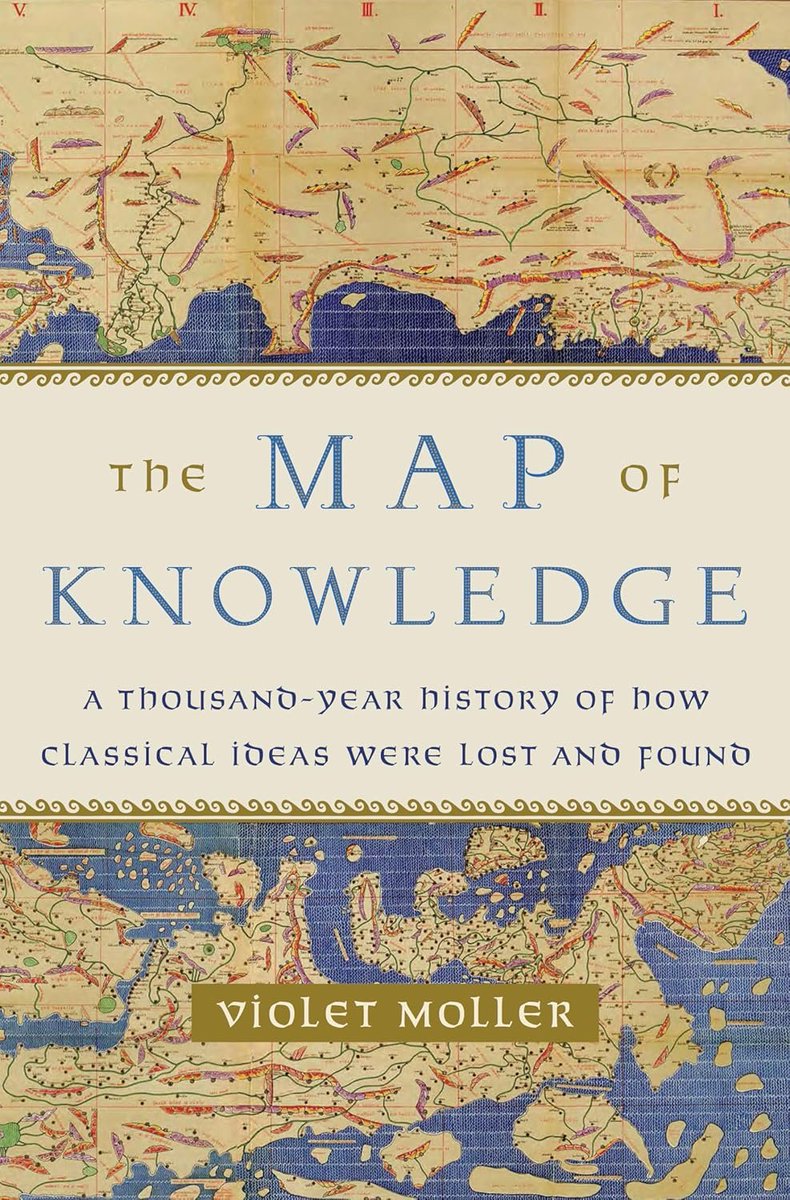
"...as the vast Roman Empire disintegrated, so did appreciation of these precious texts. Christianity cast a shadow over so-called pagan thought, books were burned, and the library of Alexandria, the greatest repository of classical knowledge, was destroyed.
Yet some texts did survive, and The Map of Knowledge explores the role played by seven cities around the Mediterranean — rare centers of knowledge in a dark world, where scholars supported by enlightened heads of state collected, translated and shared manuscripts.
In 8th century Baghdad, Arab discoveries augmented Greek learning. Exchange within the thriving Muslim world brought that knowledge to Cordoba, Spain. Toledo became a famous center of translation from Arabic into Latin, a portal through which Greek and Arab ideas reached Western Europe. Salerno, on the Italian coast, was the great center of medical studies, and Sicily, ancient colony of the Greeks, was one of the few places in the West to retain contact with Greek culture and language. Scholars in these cities helped classical ideas make their way to Venice in the 15th century, where printers thrived and the Renaissance took root.
The Map of Knowledge follows three key texts—Euclid's Elements, Ptolemy's The Almagest, and Galen's writings on medicine—on a perilous journey driven by insatiable curiosity about the world."
https://t.co/yskMVO3MXS
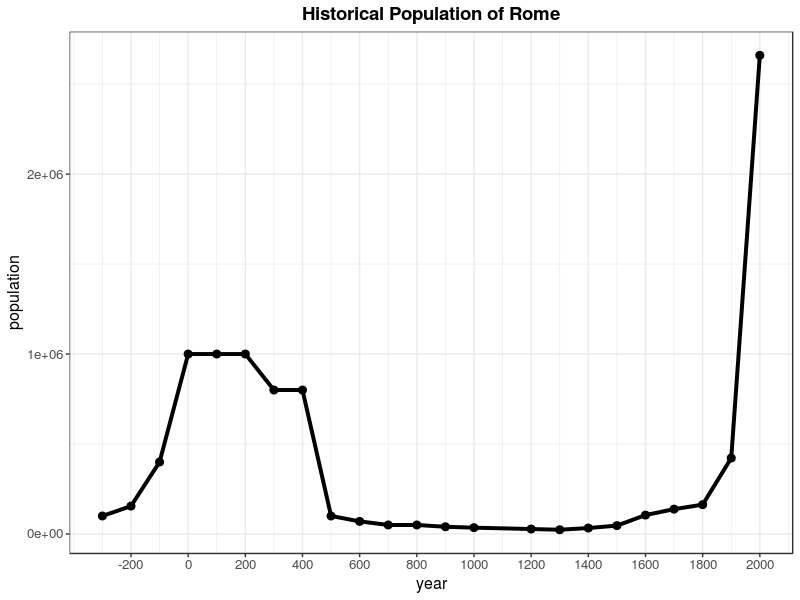
Western civilization has collapsed before.
But a few scholars preserved the ideas that once made Rome great. They made a backup, and it did eventually come all the way back.
It just took one thousand years.
@zan2434@eddiejiao_obj@drewocarr Isn't this similar to the "Neural Computers" idea recently published?
https://t.co/iYc9emx5IZ
> "Concretely, we instantiate NCs as video models that roll out screen frames from instructions, pixels, and user actions (when available) in CLI and GUI settings."