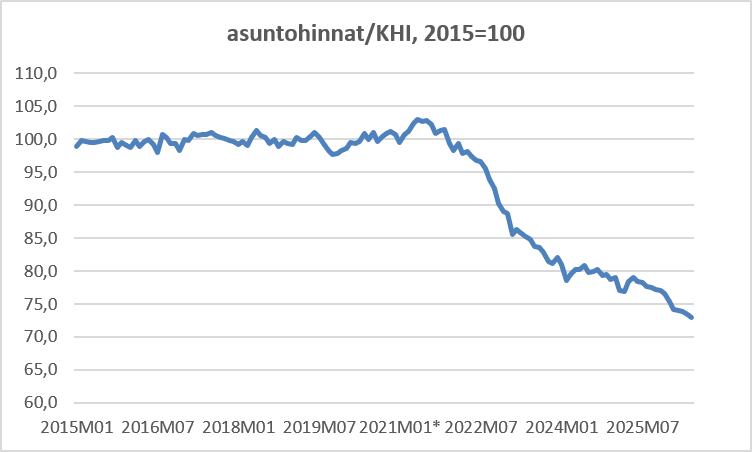
Tässä oma versio asuntojen reaalihinnoista (deflaattorina kuluttajan hintaindeksi). Uudessa 2025-2026 datassa on outoa, että esim. kauppamäärien data on ihan eri hehtaarilla kuin aiempi... Historia on hävitetty aivan kuin Orwellin 1984-kirjassa.
Kuvassa teknologiasektorin marginaalit viimeisen 20v+ ajalta.
Taloustieteen kirjat voi taas heittää roskiin. Perusopin mukaan poikkeuksellisen korkeat voittomarginaalit houkuttelevat kilpailua, joka palauttaa marginaalit takaisin matalammalle tasolle.
Nyt on kuitenkin käynyt juuri toisin ja marginaalit ovat parantuneet trendiomaisesti jo vuosikymmenien ajan.
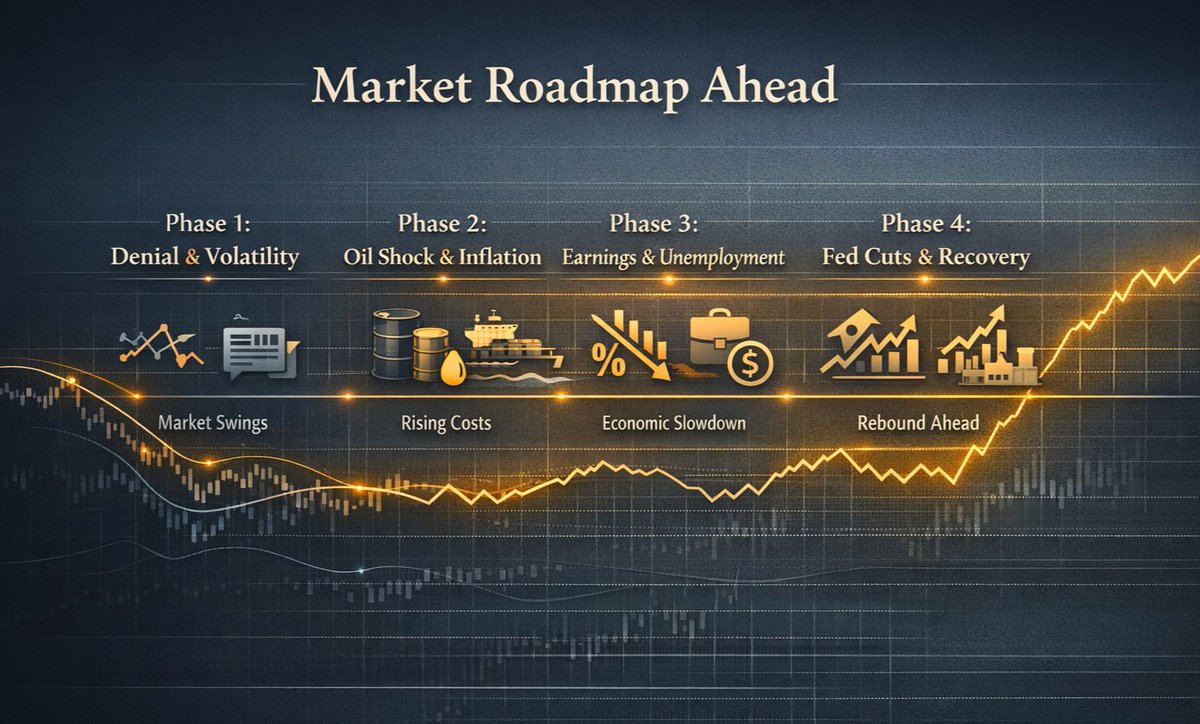
This could turn out to be bad — or very, very bad.
It could also be fine. Most investors still expect Trump to chicken out, as he has done before. That belief helps explain why the MSCI World index is down only 5% year-to-date.
There may indeed be a 50% chance that the conflict de-escalates over the coming weeks and months.
It is the other 50% that is problematic.
If the Strait of Hormuz remains disrupted for an extended period, oil could rise to $150–200 per barrel. That would likely trigger a global recession, with equities falling 20–30%.
In a more extreme scenario — where Middle Eastern oil and gas infrastructure is significantly damaged — oil could spike to $200–300. That would imply a severe global recession and a market drawdown closer to 40%.
The crash could become even worse If the conflict escalates into a US ground invasion. The US budget deficit is already running at 6% of GDP. An oil shock causing a mild recession plus the cost of the invasion could push this to 8-10% of GDP.
At that point, markets may begin to question US fiscal credibility. A sharp rise in interest rates — and the risk of a financial crisis — could not be ruled out. The likely policy response would be yield curve control, effectively capping rates at the cost of a much weaker US dollar. In such a scenario, equity losses could approach 50% — a 2008-style outcome.
None of these outcomes in the “bad” half of the distribution appear meaningfully priced into equities today, which is why the majority of the portfolio is in cash.
The priority now is simple: preserve capital, stay in the game, and be in a position to deploy the cash when the uncertainty clears.
#Markets #Investing #Macro #Geopolitics
𝘛𝘩𝘪𝘴 𝘤𝘰𝘯𝘵𝘦𝘯𝘵 𝘪𝘴 𝘧𝘰𝘳 𝘪𝘯𝘧𝘰𝘳𝘮𝘢𝘵𝘪𝘰𝘯 𝘰𝘯𝘭𝘺. 𝘐𝘵 𝘪𝘴 𝘯𝘰𝘵 𝘢𝘯 𝘰𝘧𝘧𝘦𝘳 𝘰𝘳 𝘳𝘦𝘤𝘰𝘮𝘮𝘦𝘯𝘥𝘢𝘵𝘪𝘰𝘯 𝘵𝘰 𝘣𝘶𝘺, 𝘩𝘰𝘭𝘥 𝘰𝘳 𝘴𝘦𝘭𝘭 𝘢𝘯𝘺 𝘪𝘯𝘷𝘦𝘴𝘵𝘮𝘦𝘯𝘵, 𝘯𝘰𝘳 𝘭𝘦𝘨𝘢𝘭, 𝘵𝘢𝘹, 𝘰𝘳 𝘧𝘪𝘯𝘢𝘯𝘤𝘪𝘢𝘭 𝘢𝘥𝘷𝘪𝘤𝘦. 𝘗𝘢𝘴𝘵 𝘱𝘦𝘳𝘧𝘰𝘳𝘮𝘢𝘯𝘤𝘦 𝘪𝘴 𝘯𝘰𝘵 𝘪𝘯𝘥𝘪𝘤𝘢𝘵𝘪𝘷𝘦 𝘰𝘧 𝘧𝘶𝘵𝘶𝘳𝘦 𝘳𝘦𝘴𝘶𝘭𝘵𝘴.
$GLNG Golar update:
Southern Energy has today finalized a long-term LNG supply deal for 2 million tonnes annually over 8 years, beginning in late 2027. Transitioning from a Letter of Intent (LOI) to a Letter of Agreement (LOA) fully confirms this agreement. Ongoing conflicts in the Middle East, with the Strait of Hormuz nearly closed, threaten 150 Bcm/year or 23% of the global LNG market, putting stress on Europe, notably Germany. Europe understands the importance of diversification beyond cost considerations for its security. It appears to me that Germany might consider funding future LNG projects (like those that Golar can bring) as part of its diversification efforts.
Tor Olav Troim recently discussed the importance of the upside commodity exposure Golar maintains under its contracts. I agree that this aspect is undervalued by the market. I am a fan of Golar's contract structure: on the one hand, it has a fixed tolling fee that guarantees strong returns, and on the other hand, it benefits from the commodity upside. Since LNG markets are cyclical—sometimes oversupplied, other times undersupplied—being protected by a fixed tolling fee during weaker gas prices while capturing the upside when prices spike is highly appealing. For example, TTF is currently trading around $19 MMBtu, while Golar earns approximately $70 million annually from Hilli and Fuji ships alone for every $1/MMBtu above $8/MMBtu FOB pricing. This is a significant amount if both vessels were operational today.
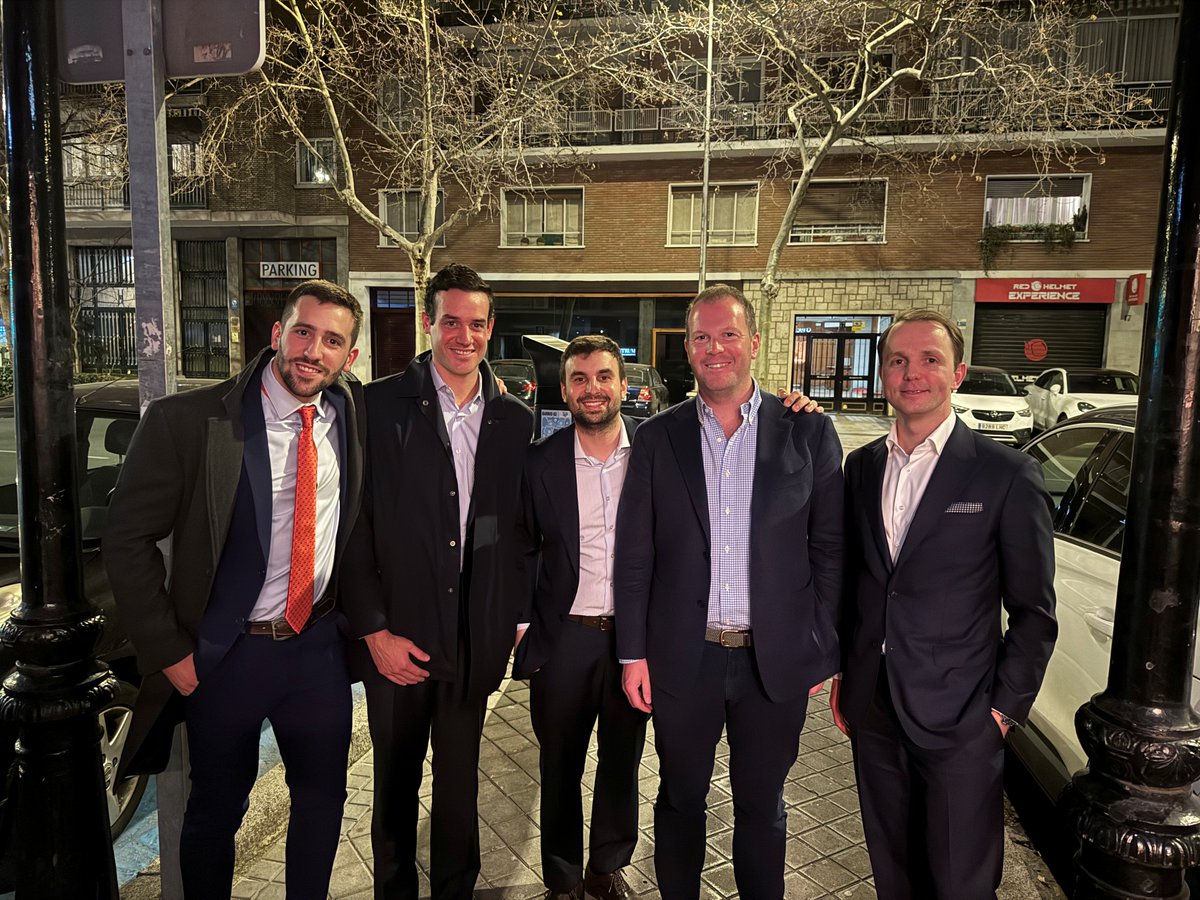
Last week, we met with Golar management in Madrid. We had a lengthy and very productive discussion, but I need to summarize our meeting: significant developments are imminent. I’ve become much more optimistic about the possibility of another FLNG this year. The fact that they are not placing on-spec orders now isn’t due to waning interest, but rather to a more cautious approach as they near their cash flow valley. From July onward, only Gimi will be operational, while Hilli and Fuji will be cash-consuming at the shipyard. I firmly believe in GLNG’s ability to leverage its position and continue to develop its business, especially given the challenging situation Europeans face with the ME disruption and Russia’s ban in place.
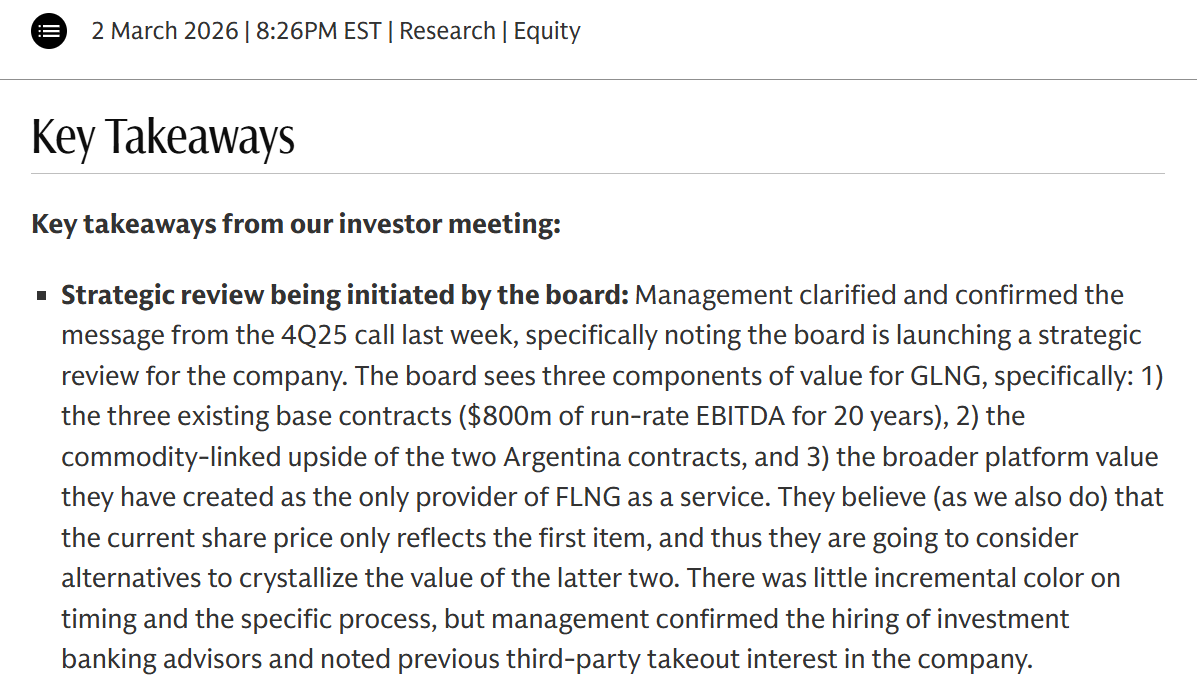
Although I am very confident in GLNG's ability to generate more business, I noticed that Tor Olav Troim is not patient. It was very clear during the conference call that Golar is conducting a strategic review that could lead to a sale. Many infrastructure funds would likely be eager to buy this business, especially since they seek predictable, solid cash flows, making it more valuable privately. I see this as a win/win scenario: if Golar can develop new business soon, the stock price will reflect this, not only valuing the current portfolio but also its potential for growth. Conversely, if they do not, the company might be sold at a significant premium compared to current prices. This view was also confirmed by Goldman Sach on its recent paper.
Having spent enough time in this sector, I've learned that these companies are usually acquired 6 to 12 months before the expected cash flow materializes. Examples include Cheniere, Var Energy, and BlueNord. However, I believe this situation differs because the risk lies in the upside potential. Primarily, the company isn't reliant on commodity markets; it’s an infrastructure investment with commodity upside but limited downside. Additionally, the potential gains are substantial, as I estimate this could be worth $65 by late 2027. Most importantly, Golar has the opportunity to secure new contracts or be sold within the next 12 months, which could significantly boost the IRR.
I have been supporting Golar since 2020, when its stock was below $10. At that time, I estimated that the company could reach $100 by 2030, and I still believe this is very likely. In fact, it is much more challenging to increase from $10 to $45 than from $45 to $100.
@AaltonenHannu Usein sama tehdas valmistaa molemmat, samalta tuotantolinalta, samoista aineksista. Ollut töissä itse sellaisella tuotantolinjalla vuoden.
Mulla ei ole aikaa, kärsivällisyyttä, eikä varmaan osaamistakaan löytää voittajaosakkeita.
Siksi peesailen muita. Tähän asti linja on toiminut kuin junan vessa.
Esimerkiksi @JarmoFriman'a ja muutamia jenkkisijoittajia seuraaminen on lyönyt leiville.