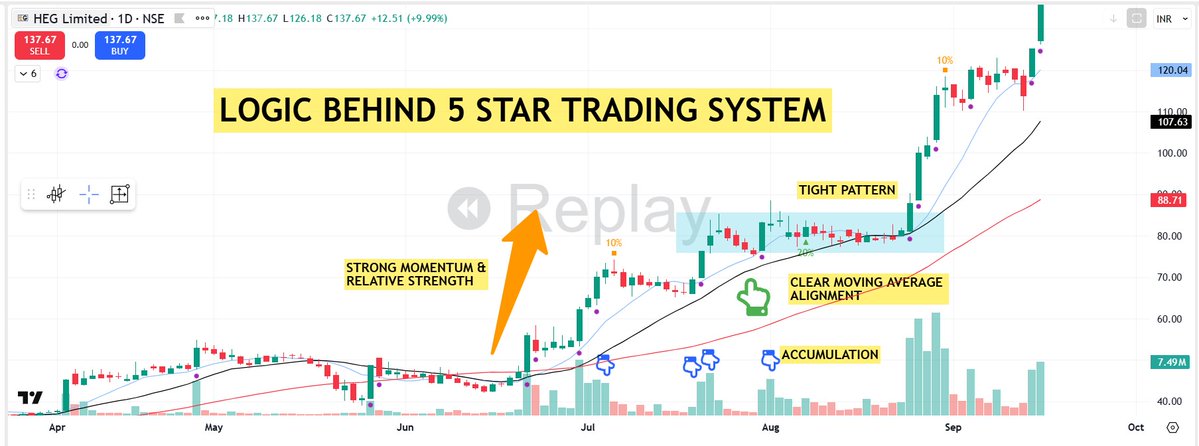
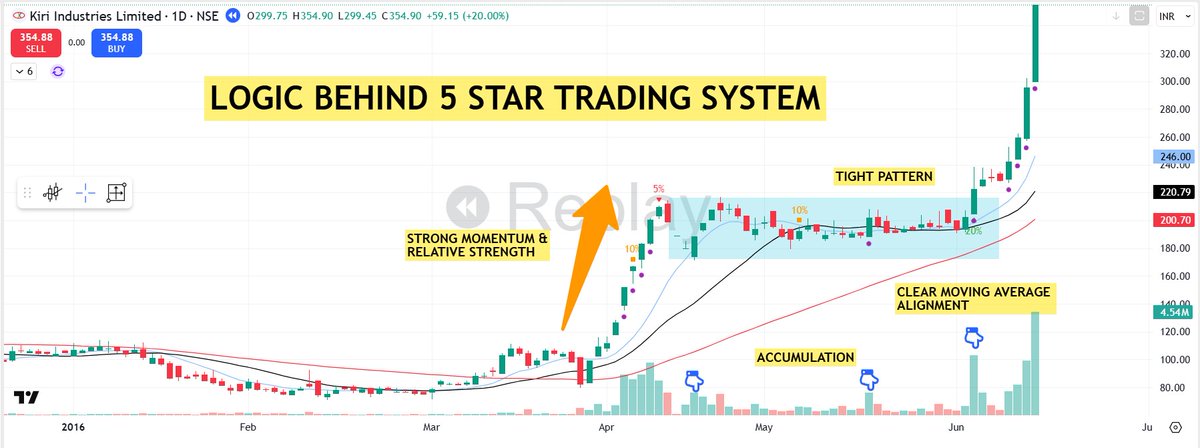
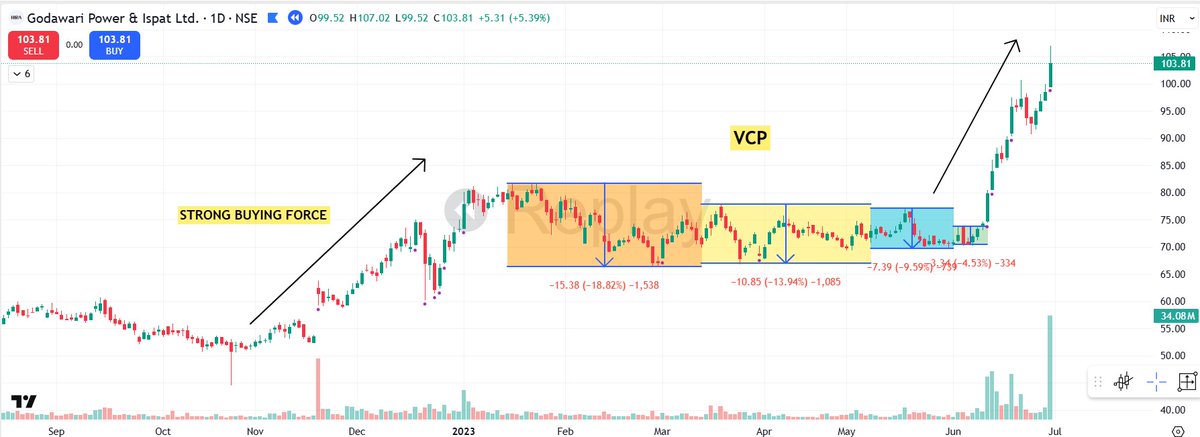
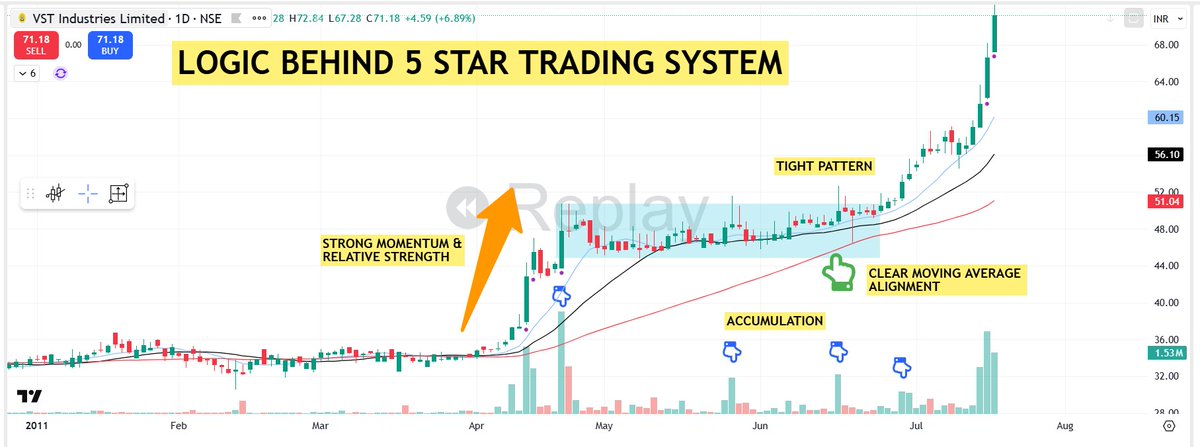
💥💥The Logic Behind 5 Star Setup System
My trading system revolves around structure. The 5 star setup is not about perfection - it's about probabilities👇
🟢Star 1 - Trend Alignment :
Price must be above MA 20 & MA 50 , with all Moving Average Rising
🟢Star 2 - Fundamentals/Story :
Quarterly EPS growth + 50% and/or sales growth + 20% OR an inspiring strong story! Institution buy growth, not hope.
🟢Star 3 - Technical Structure :
Flat bases, Tight bases or VCP'S -- Volatility must contract before expansion.
🟢Star 4 - Relative Strength :
Stock should show RS behavior. Leaders lead early
🟢Star 5 - Volume Confirmation :
Multiple 2x average volume spikes and strong volume on up days.
🟢Star 6 - Risk Filter :
No setups during choppy markets - Avoid trading against market direction.
🟢Star 7 - Liquidity Rules : Pick liquid stocks.
🟢Star 8 - Conviction Check ; If it doesn't feel obvious and structured - Skip it.
🟢Star 9 - Post Trade Review : Grade every trade on all 5 stars. Data drives consistency.
French President Macron was sitting next to Palki Sharma.
Q : How many people follow you and your interviews Palki?
PALKI 😂🔥 : 150 million a month - more than twice the France’s population. It’s your chance to get famous.
📌Detailed Thread 🧵on 6 Different type of Entry Methods.👇
1⃣Pivot Breakout Strategy :
A “pivot breakout entry strategy” combines pivot‑point levels with breakout logic: you enter when price clearly breaks above or below a key pivot level and confirms the move, aiming to ride the momentum.
2⃣Shakeout Entry Strategy:
A shakeout entry is an early-entry trade idea where price briefly undercuts a support level or prior low, then quickly reclaims it, showing demand is stepping in. Traders use it to enter before a full breakout, but it works best when the stock is already in a strong uptrend with supportive volume.
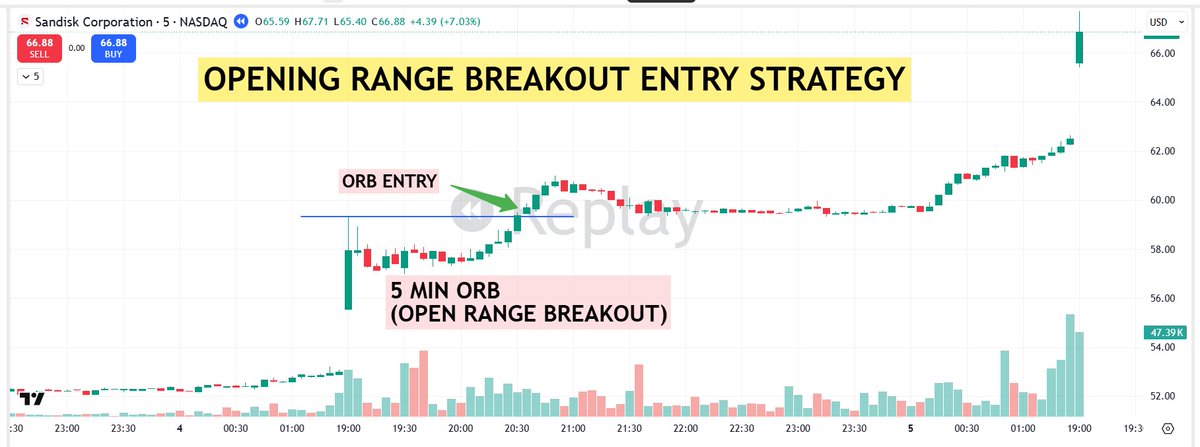
3⃣Open Range Breakout Entry Strategy:
ORB entry usually means an Opening Range Breakout entry in trading: you wait for price to break above or below the opening range, then enter on that breakout
An ORB entry is built around the first fixed time window after the market opens, such as the first 5, 15, or 30 minutes. The high and low of that range become the trigger levels.
4⃣Pullback Entry Strategy:
A Pullback Entry Strategy is a trading method where you wait for price to temporarily move against the main trend (“pull back”) before entering the trade.
Instead of buying at the top of a move, traders enter after a small retracement to get a better risk-reward ratio.
5⃣Standard Breakout Strategy:
A Standard Breakout Entry is a trading strategy where you enter a trade when price breaks above resistance or below support with momentum and volume.
7⃣ Strong Start Entry Strategy:
A Strong Start Entry is a trading setup where you enter a stock early in the session when it shows immediate strength after market open.
💫 Let’s make X a more productive platform.
✅ What’s the best trading interview you’ve watched so far that genuinely changed your approach to trading?
Share it below so we can all learn from it. 👇
I’ll start with mine:
https://t.co/Io7LtGXgso
These three videos, spaced about three years apart, show just one thing , I keep doing the same setup again and again to make money. No fancy tricks, no constant new reinvention.
2023: https://t.co/yVCaRPqZ6p
2025: https://t.co/lb5GSXWFQF
2025: https://t.co/yOLd0HYr3z
If you're serious about learning, take out time to watch them before placing any real trade.
#BroTip
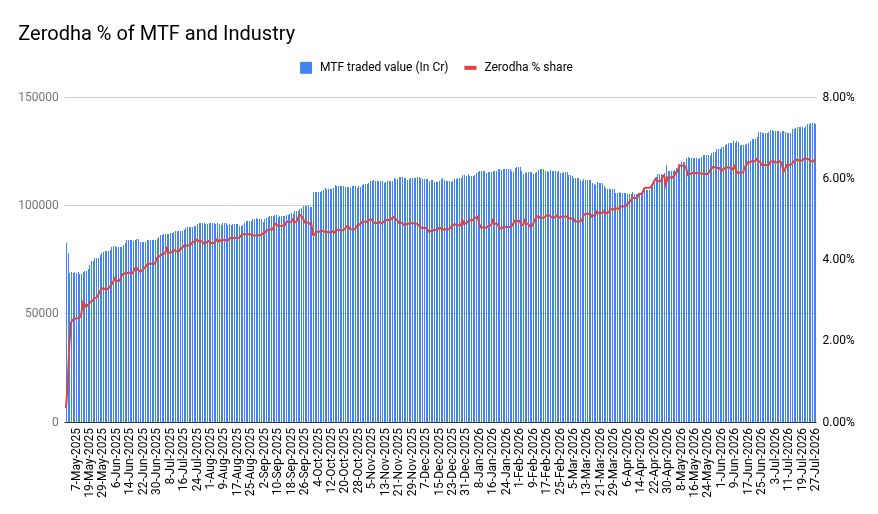
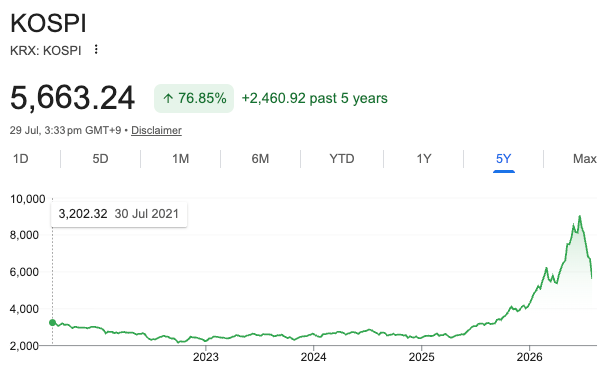
My biggest nightmare as a broker is what’s happening in the Korean markets right now. The source of my nightmare is the way our MTF book has been growing along with the industry as a whole. In terms of pure risk, MTF is by far the biggest risk we have taken since we started in 2010.
More specifically, the risk lies in our ₹9,000-crore book: at least half of it is in non-F&O stocks, which can hit lower circuits every day without offering an exit.
The problem with Korea is the one-way rally. When markets go up so sharply, leverage builds up because collateral values increase, leading to more borrowing and so on. The second layer of risk comes from the derivatives complex and leveraged ETFs, which further exacerbate moves on both the upside and downside.
When the markets fall, things get really ugly. The first leg of selling tends to be small, but as collateral and margin values drop, margin calls increase, leading to forced selling. Forced unwinding from leveraged ETFs makes this worse, and this downside move becomes a self-reinforcing loop until things stabilize.
Btw, MTF became popular only in the last 3–4 years, and we really haven’t seen a sharp market crash similar to the KOSPI since COVID. Even though MTF as a percentage of market cap is small, if the Indian markets were to fall sharply, it would cause severe sell-offs across many small- and mid-cap stocks. Brokers today typically provide MTF on ~1,500 stocks. 😬
Luckily, thanks to SEBI, we've avoided the worst excesses that typically arise from unchecked leverage.
Btw, my colleague @prayagverma maintains a site with really good market stats, including MTF, here: https://t.co/uRJrvOvbHK