Retail investor: This is the dot com bubble all over again. I’m not selling puts or buying calls into this.
Me: How are the valuations now?
Retail investor: The market is at all time highs, that’s all I need to know.
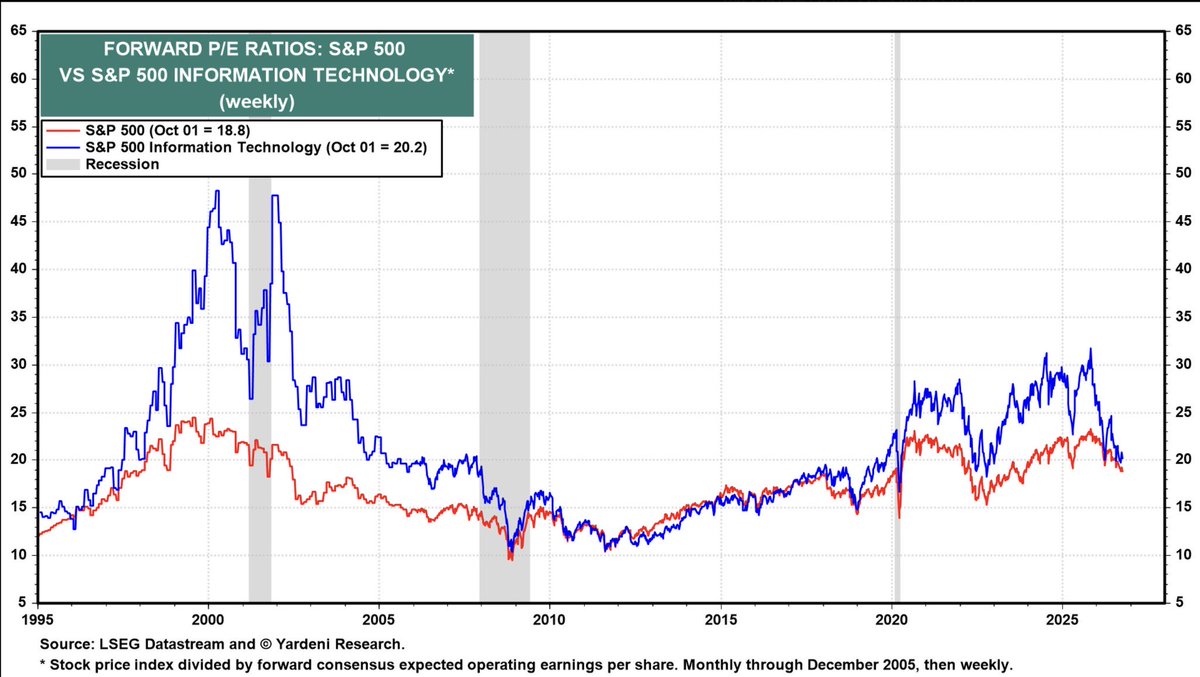
Me: In March 2000 the Nasdaq 100 traded around 100x forward
The Opportunity of A Lifetime!
75% off INSTANT access RIGHT NOW!
YOU'LL GET ACCESS TO MY STOCKS & OPTIONS TRAINING + MY DISCORD COMMUNITY + STOCK SHEET!
- HUNDREDS of 5/5 star reviews!
- No more day trading
- No more swing trading
https://t.co/dTGndGki6M
Retail investor: I got destroyed selling weekly puts on $QQQ in April 2025.
Me: What happened?
Retail investor: Tariffs... & I kept selling them right below the market price. Every week it dropped more.
Me: QQQ fell about 23% in 7 weeks from the February high.
Retail investor
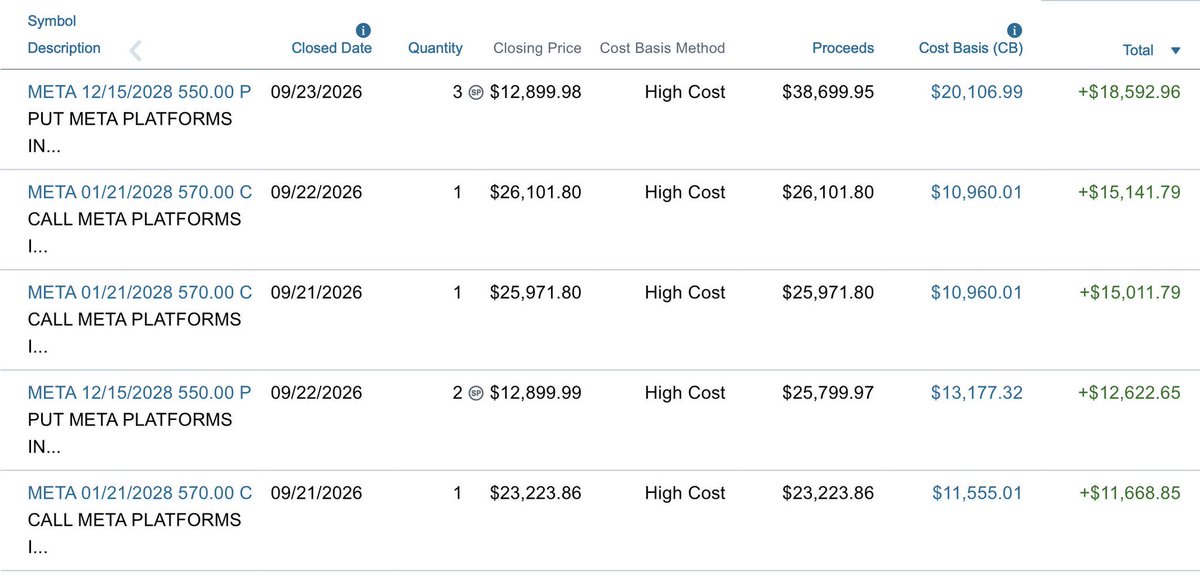
I just realized $73,038 in profit on $META.
5 long duration portfolio secured puts
3 long duration calls.
All expiring in 2028.
Sold Puts: +$31,215
Bought Calls: +$41,822
Was it smooth? No. META closed at $539 on July 30th, below my $550 strike.
Did I panic? No. I had over 2
Most people would tell me to take profits on some of my $NVDA calls.
I’m up $16,766. That’s +56%.
I honestly didn’t even know the % until I pulled up this screenshot.
Because the % doesn’t matter...
You're probably thinking... BRANDON YOU ARE CRAZY!
Listen...
Options are jus
The truth most don't wanna face about the MARKET BUBBLE...
We likely are NOT in one
How do we know?
IT sector PE in 1999 was about 50
IT sector PE in 2026 is about 20
This + solid EPS growth + interest rates in a reasonable range + good economy = good chance we see solid retur
I don't day trade... 99% of them lose. (see chart below)
I don't sell covered calls... they cap the exact upside.
I don't sell cash secured puts... I'm not parking six figures in dead cash.
I don't touch weeklies... nobody knows what a stock does in 5 days.
I don't run spreads...
DON'T COMPLICATE IT...
Buying shares
Selling 1+ year portfolio secured puts
Buying 1+ year calls
Keeping ratios in check to be find in deep crashes
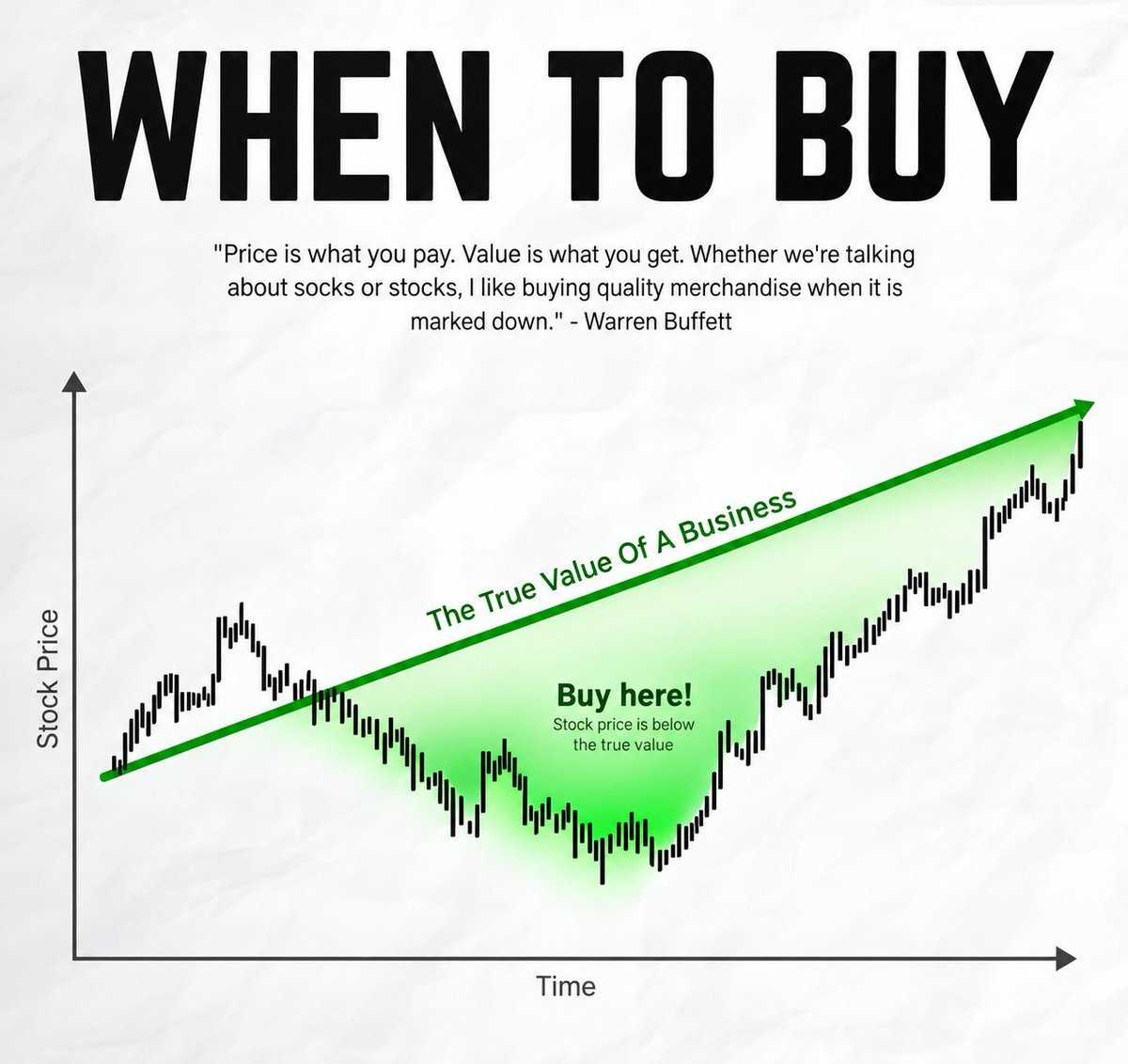
When a great company is trading below fair value is the BEST way to make money in the stock market.
If you get value from my posts, you'll love my 10 Day Stock & Options Transformation Training.
No day trading.
No swing trading.
No BS.
Just Stocks & Options the right way + access to my mastermind Discord community
Get set up here:
https://t.co/zsQRTUdier
If you get value from my posts, you'll love my 10 Day Stock & Options Transformation Training.
No day trading.
No swing trading.
No BS.
Just Stocks & Options the right way + access to my mastermind Discord community
Get set up here:
https://t.co/dTGndGki6M
I started buying $QQQ in January 2019.
Here's what those shares look like today.
Every lot here up between 236% to 362%.
I didn't sell in the COVID crash.
I didn't sell when QQQ fell 36% in 2022.
Every single lot says Long Term. Not one share sold. Not one dollar of tax
If you get value from my posts, you'll love my 10 Day Stock & Options Transformation Training.
No day trading.
No swing trading.
No BS.
Just Stocks & Options the right way + access to my mastermind Discord community
Get set up here:
https://t.co/zsQRTUdier
Retail investor: My coworker says the market is a bubble & he's been in cash for 3 years waiting for it to pop.
Me: How's that working for him?
Retail investor: Honestly he seems stressed every time we talk about it.
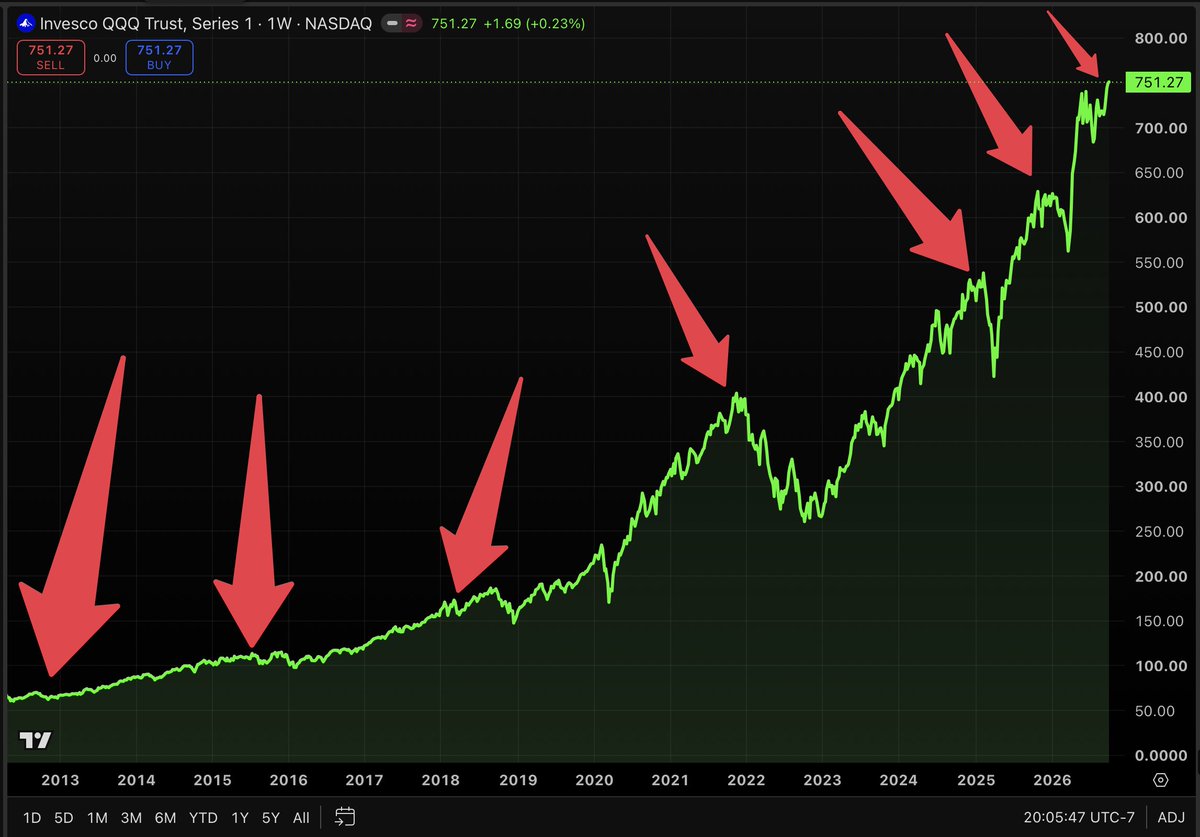
Me: Look at that chart. Find every moment somebody called a bubble. 2013, 2015, 2018, 2021, 2023. 2025. All of them.
Retail investor: They're all way below where it is now.
Me: & every one of those people felt smart for a few months & wrong ever since...
Retail investor: So bubbles aren't real?
Me: They're real. In 2000 the nasdaq $QQQ was down 75%, 13 years to break even. That was a real bubble. PE ratio was over 100. None of the arrows on this chart are anywhere near that valuation level...
Retail investor: So what do you do instead?
Me: Never overpay, only buy elite companies, keep ratios that survive a 50%+ drop, be more conservative when market is more expensive, be more aggressive when market is cheaper. Keep it simple, be patient, & Zoom out.
I had a post about portfolio secured puts blow up, and there are a bazillion questions about how this actually works, so let me explain the entire thing as simply as possible.
First off, I made many YouTube videos covering this. So looking there is always best since I can show things in the videos.
But I’ll do my best to make it make sense here.
A normal cash secured put works like this:
You sell a put and collect premium, but you keep enough cash sitting in your account to buy the shares if you get assigned.
The problem I have with that is pretty simple.
Selling a put is a bullish strategy.
So if I’m bullish enough on a company to sell puts on it, why would I want $100,000, $200,000 or more sitting in cash doing basically nothing?
That’s why I do what I call a portfolio secured put instead.
Instead of keeping that money in cash, I keep my capital invested in my base portfolio, which is primarily things like the S&P 500, Nasdaq and high quality individual companies at great valuations that I’m comfortable owning for the long term.
That portfolio gives me buying power that I can use to secure the puts, so my base portfolio stays invested AND I can collect premium from selling puts on top of it.
And simply using the buying power to secure the put does not mean I’m borrowing cash and paying margin interest.
This is where people immediately say, “Okay Brandon, but what happens when the market crashes and all these puts get assigned?”
That is literally the most important part of the strategy.
I do NOT look at how much buying power Schwab gives me and say, “Awesome, let’s use all of it.”
That would be insanely stupid.
I look at the total assignment value of every put I have open and keep that number at a controlled ratio to the size of my base portfolio.
Then I stress test the entire thing.
Based on how I’m currently allocated, I can model my base portfolio falling over 50% and I would STILL have enough remaining portfolio value to sell shares, raise the cash and take assignment on every put I currently have open.
That is how I think about “portfolio secured.”
The puts aren’t secured by a giant pile of cash sitting there doing nothing.
They’re ultimately secured by the assets I already own.
And that 50% crash scenario assumes I just sit there and take assignment on everything.
In reality, depending on the situation, I also have the ability to roll contracts down and further out in time instead of immediately taking assignment.
That gives me another potential tool, but I never build the strategy assuming a roll will magically save me.
The ratios have to work BEFORE I make the trade.
And this is why I think the capital efficiency is so powerful.
With a cash secured put, there is a massive opportunity cost because a huge amount of cash can sit there waiting for an assignment that may never happen.
With a portfolio secured put, my money stays invested and working while I collect the put premium.
So if you calculate the premium against the incremental cash I had to set aside specifically for the put, that number is essentially $0.
That’s why I say the theoritical cash on cash ROI is technically “infinite.”
Obviously that does NOT mean infinite profits, free money or zero risk. I am just saying I am collecting cash flow with no cash doing nothing. It’s like having my money in 2 places at once and paying nothing in margin interest and still always being fine if market falls 50%+
The entire reason this works is because I obsess over the risk ratios and never sell more puts than my portfolio could actually handle during a major crash.
The goal isn’t to use as much leverage as possible.
The goal is to keep as much of my money working as possible WITHOUT putting myself in a position where a 50% market crash wipes me out.
That’s the portfolio secured put in a nutshell.
so yea… this is part of the way I have been smoking the SP500 ROI in the last DECADE.
Check out my YouTube here to learn more:
https://t.co/LWdYXBasfj
Strike price selection for sold puts.
Most people overthink this completely.
Here is what I do.
I only sell puts on things I already feel are undervalued.
Then I go 10% ish below the current price.
$QQQ at $750?
I sell the $675 put.
I am already buying something cheap. (assuming this in the example)
Then I am going 10% below that.
The market has to fall 10% from an already undervalued level to put me in assignment range on expiration date. Don't forget! About 2 years time for EPS to grow too. (2 year contract)
& guess what, I always have my ratios in check to be able to take assignment no matter what! (I usually roll though)
But if I do get assigned, I will be happy to get paid to buy shares cheaper in the future and not having the cash frag of cash secured puts.
The portfolio secured put wins again.
Simple. Repeatable. Works.
Cash secured puts are a trap.
Here is the math that proves it.
You are ultra bullish on a stock.
You sell a cash secured put.
$60,000 in cash sits in your account doing nothing to secure the trade.
Meanwhile the stock you are bullish on goes up 93%.
Your cash made zero.
Your sold put made a few hundred dollars.
Now run the portfolio secured version.
Same sold put.
No cash sitting there.
Your portfolio is the collateral.
Ratios in check.
Zero margin interest.
That $60,000 is now in shares going up 93%.
You also collected the put premium on top.
You are bullish.
You should have every dollar working.
Cash secured puts punish you for being right.
Portfolio secured puts reward you for being right.
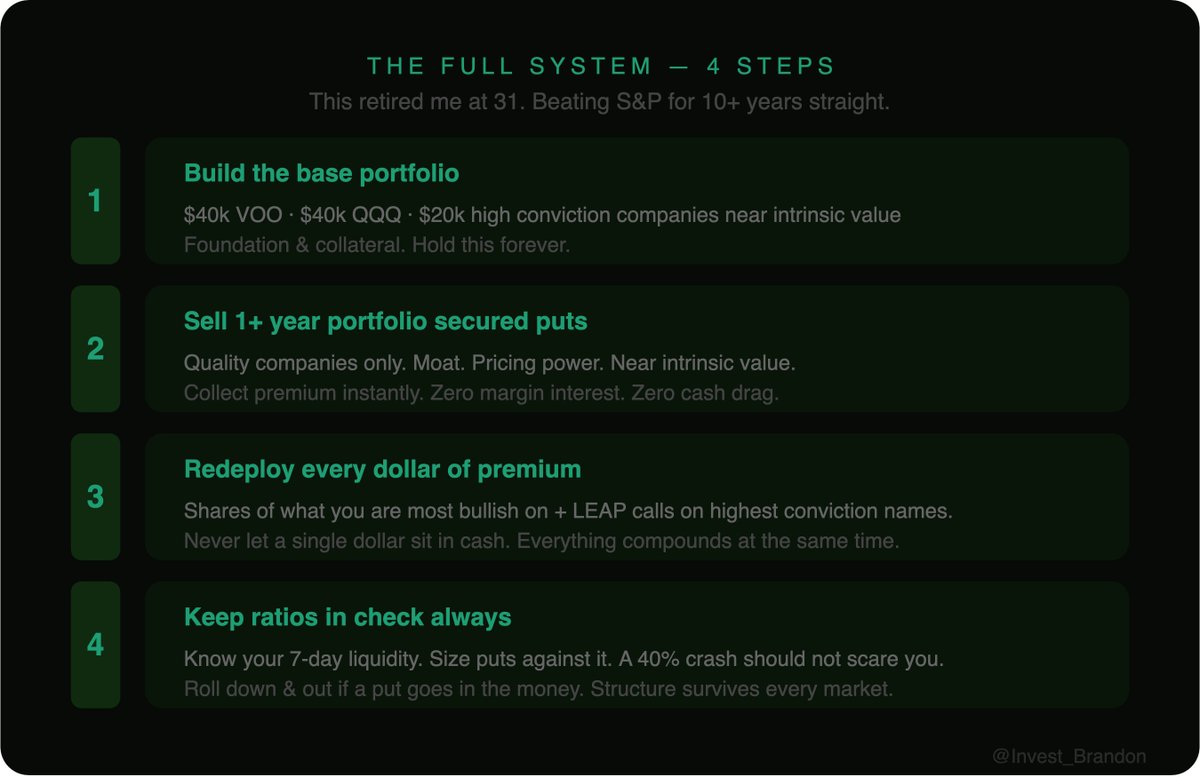
I retired at 31 doing this.
Step 1. Build your base.
$40k $VOO. $40k $QQQ. $20k high conviction companies near intrinsic value.
This is your foundation & your collateral.
Step 2. Sell 1+ year portfolio secured puts.
Quality companies only.
Moat.
Pricing power.
Good valuation.
Collect the premium.
Pay zero margin interest.
Step 3. Redeploy every dollar of premium.
More shares.
LEAPS on your highest conviction names.
Never let it sit as cash.
Step 4. Keep ratios in check.
Always know your 7-day liquidity.
A 40% crash should not keep you up at night.
That is it.
No day trading.
No covered calls.
No spreads.
No stress.
Just structure & time.
If you get value from my posts, you'll love my 10 Day Stock & Options Transformation Training.
No day trading.
No swing trading.
No BS.
Just Stocks & Options the right way + access to my mastermind Discord community
Get set up here:
https://t.co/zsQRTUdier
Monthly puts vs 2 year puts.
The math that ends the argument.
Market gets cheap.
I sell one 2 year put. Collect $20,000.
You sell monthly puts on the same company.
$1,000 per month average.
To match my $20,000 you need to hit 20 trades in a row.
But here is the problem.
As the market recovers from the dip each monthly put becomes less compelling.
Less undervalued. Less premium. Less margin of safety.
You are forcing trades as the opportunity shrinks.
Meanwhile I deployed $20k at peak fear.
Took that premium. Bought LEAPS.
Bought shares.
Done.
One trade at the right time beats 20 trades at the wrong time.
Portfolio secured put wins again.
If you get value from my posts, you'll love my 10 Day Stock & Options Transformation Training.
No day trading.
No swing trading.
No BS.
Just Stocks & Options the right way + access to my mastermind Discord community
Get set up here:
https://t.co/zsQRTUdier