HE BUILT A BRAND SITE THAT LOOKS LIKE IT COST $10,000 - IN ONE EVENING WITH CLAUDE CODE
What's on screen isn't a template with a color swap
It's a full product brand site with effects most designers reach for Figma plugins to get
What's actually on the page:
> A headline that glows like it's lit from the inside
> The product breaking out of the frame and sitting in front of the text
> Typography that stops you mid-scroll
> Depth that usually takes a motion designer to pull off
> Details so considered it looks like someone art directed every pixel
What it normally takes:
> A brand designer who knows typography at this level
> A frontend developer who knows when to reach for z-index and when not to
> Back and forth between them until the details land right
The price gap:
> Brand site at this quality: $5,000 - $8,000+
> Your cost: a Claude subscription
> Timeline: an evening
Full walkthrough in the article below
I debated keeping this to myself, but screw it...
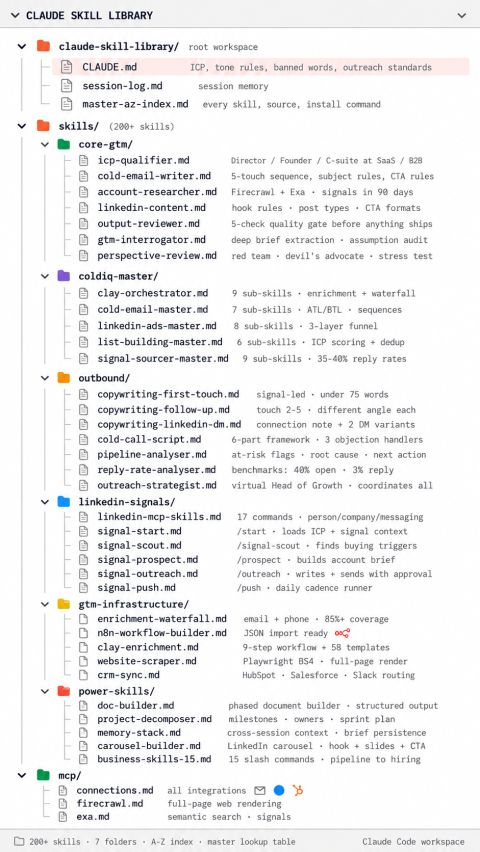
With the Complete Claude Skills Library, anyone can replace hours of manual outbound, pipeline management, and client reporting with a single session setup.
If you start now, you can have all 215 skills installed, your CLAUDE.md built, and your first agentic workflow running by end of this week.
So I put together every SKILL.md file across all 8 groups, written out in full and copy-paste ready. GTM operations, outreach, agents, SDR, business, Claude Code installs, plugin skills, and LinkedIn carousels. Nothing abbreviated. Nothing left for you to figure out.
Like this + Comment "SKILLS" & I'll DM the guide to you
Must Follow
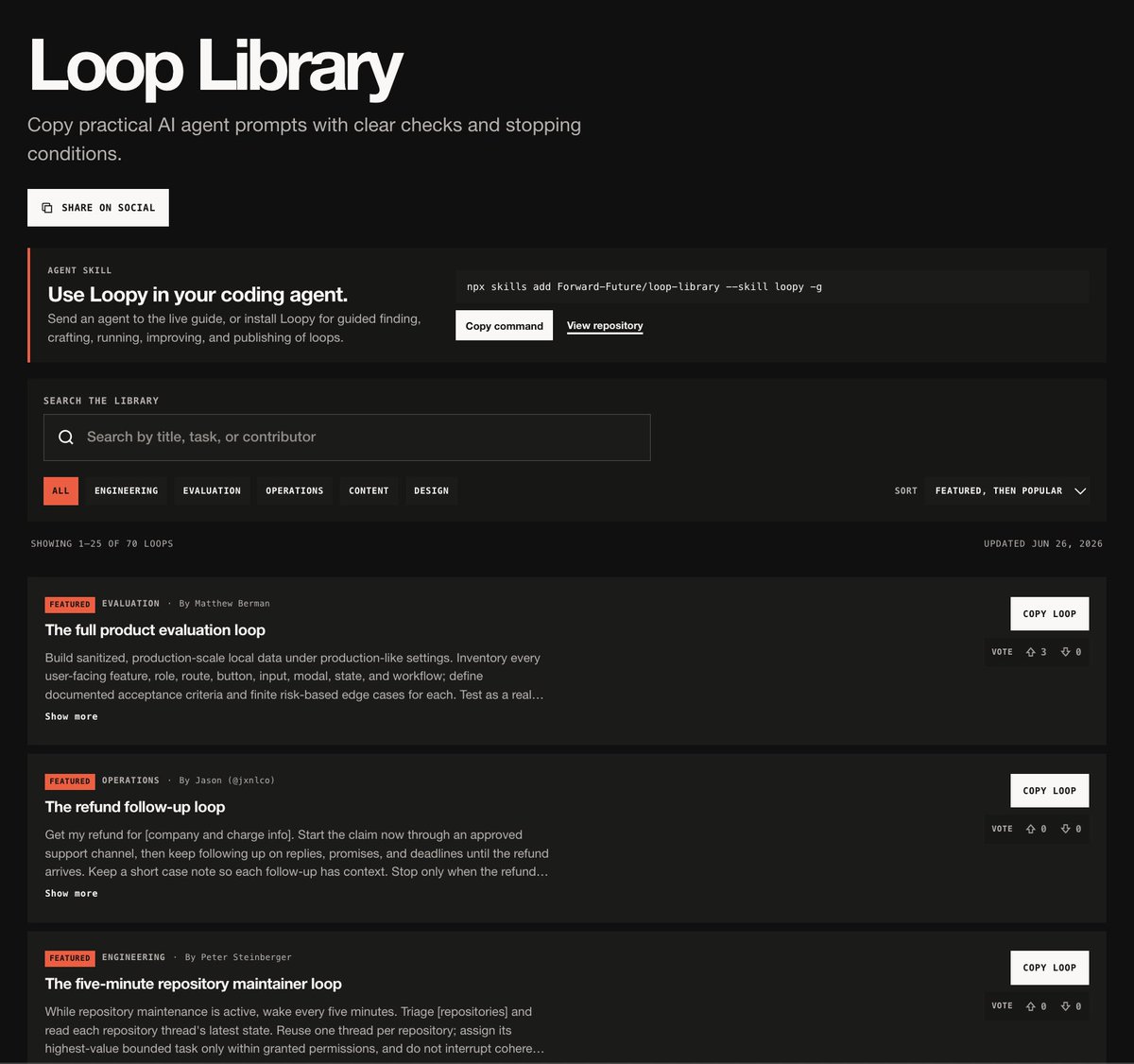
This is the best site on the internet to find agent loops you can use right now.
Free. Completely.
Most AI engineers are still writing these from scratch.
https://t.co/FHDHGXam6Z
Bookmark this site.
Then read this ↓
ANTHROPIC JUST DROPPED THE OFFICIAL GUIDE TO PROMPTING FABLE 5.
This is the most important prompting framework I've seen.
Bookmark this before you forget.
Most people treat Fable 5 like a chatbot. That's the mistake.
> don't over-engineer prompts — it degrades output.
> use /loop for autonomous multi-step work.
> give it the goal, not step-by-step commands.
> add a memory file. it learns from past runs.
> spin up 50+ subagents for complex tasks.
Fable 5 isn't an assistant. it's a consultant that leads the work.
Read it before you write another prompt.
Claude → Fable 5 → Autonomous Work → Real Output → Money
You could literally:
> open Claude
> paste these 20 prompts
> Claude becomes your Chief of SEO
> pay $20/month instead of $10k
> make $100k/month
Why are people still not doing this?
SOMEONE WIRED 2,000 OF THEIR NOTES INTO A 3D BRAIN CLAUDE CAN READ - AND IT RUNS ON THE SAME TRICK I USE 23 TIMES
most people send Claude 100+ messages a week re-explaining who they are - and it forgets 100% of it the second the tab closes
this is the opposite. 1 file. written 1 time. read by Claude before every single task, forever
it's called SKILL.md. each one teaches Claude exactly 1 job - your voice, your research, your planning - and it never asks twice
the 3D brain in the video is just 1 skill maxed out: a memory pulled from 2,000 of your own notes, not a billion pages of internet sludge
i run 23 of them. same model everyone else opens - mine just shows up already knowing the work, 10x sharper
30 minutes for the first one. 5 minutes each after. 23 files, and the model turns into a different one
a prompt helps for 1 message. a skill pays you back every session, for life
the article below is the full folder - all 23, start to finish
this is f*cking gold
How to build your first AI agent (Full guide)
if I had this a year ago, I would've shipped my first app in a day instead of 2 weeks
in the right hands, this changes everything:
HE BUILT A $35,000-TIER ANIMATED WEBSITE WITH CLAUDE CODE + HIGGSFIELD - FOR A SUBSCRIPTION AND A FEW DOLLARS OF CREDITS
What’s on screen isn’t a basic landing page.
It’s a fully animated, scroll-driven site generated end to end in one agentic session.
What’s actually on the page:
→ Cinematic motion clips pulled from 30+ generative models
→ Scroll animations written automatically - no hand-coded keyframes
→ 6 cinematic effects baked in with zero config: film grain, particles, vignette, glass cards, color tints, scroll pacing
Scrolling the demo is one question: did Claude really assemble all of this?
For boutique studios billing $100-149/hr, that lands like a verdict.
What it normally takes:
→ A designer, a motion artist, and a developer
→ Weeks of handoffs between them
→ 6 separate systems wired by hand - GSAP ScrollTrigger, Lenis smooth-scroll, frame extraction, asset optimization, layout, copy
That pipeline was the moat.
It’s what justified the invoice.
Here’s the part studios and their clients won’t enjoy hearing.
The price gap:
→ Boutique agency build: $6,000-$35,000+
→ Industry average project: ~$5,280
→ Your cost: a Claude subscription + a few dollars of Higgsfield credits
→ Timeline: weeks of production → a single session
One creator can now run all six systems in one pass and ship a working site - without touching a frame extractor or writing a CSS keyframe by hand.
Full breakdown of how it was built in the article below.
Save it & read today 👇
THIS GUY WIRED A CAMERA INTO HIS JARVIS AND NOW IT SEES THE REAL WORLD IN REAL TIME
A camera over the desk. A Raspberry Pi next to the keyboard. He points it at a pile of parts, asks what they are - and JARVIS answers out loud, in real time, like it's right there in the room with him
This isn't the voice demo everyone's seen. This one can actually see
The voice was just step one. Eyes, memory, a hand on your calendar and inbox - every sense you add turns JARVIS from a party trick into something that runs your day
You can start with the part that talks. Mine takes 30 minutes and about $4 a month
The full build is below
stop asking Claude one question and thinking you understand the topic. you don't.
Stanford proved a better way. it's called STORM. peer reviewed. 25% more organized output. open source.
the trick: don't ask one question. ask five. from five different experts.
>the practitioner: what do they know that academics miss?
>the skeptic: what's the strongest counterargument?
>the economist: who profits from the current narrative?
>the historian: what pattern has played out before?
>the academic: what does the evidence actually say?
4 prompts. 5 minutes. no software. no GitHub. just paste into Claude.
single prompts give you what everyone already knows.
STORM gives you what nobody else found.
this article has all 4 prompts ready to copy. pick your hardest topic. paste prompt 1. you'll know more in 5 minutes than people who spent days reading.
How to set up Claude so it runs like a $10k SEO team:
$20/month is all you need.
But only if you stop using it like a beginner.
1: You give Claude vague prompts.
Fix: "Analyze my site, find gaps vs competitors, and give me a plan to get more leads."
2: You don't load your full business context first.
Fix: Paste your services, locations, keywords, competitors, and ideal customers before anything else.
3: You treat Claude like a chatbot not a strategist.
Fix: Ask "What's blocking our organic growth right now?" not "Improve my SEO."
4: You skip competitor gap analysis.
Fix: "Compare my website with my top 3 competitors. Show me what they rank for that I don't."
5: You cluster keywords by volume not intent.
Fix: Group by informational, commercial, and transactional. Intent drives conversions.
6: You ignore AI search optimization.
Fix: "Why would AI recommend this business over competitors? What should I clarify or add?"
the full Claude SEO system is in the infographic below.
save it before your competitors do.
KARPATHY JUST HANDED EVERY DEVELOPER THE EXACT FILE CLAUDE CODE NEEDED FROM DAY ONE.
65 lines. 110K stars. the cheat code for every broken workflow you've been blaming on the model.
if I had this a year ago, I would've shipped twice as fast.
make sure to bookmark it before it gets lost in your feed.
I was losing 2 hours a day to Claude rewriting code I didn't ask it to touch.
then I found CLAUDE. md.
90 seconds to set up. changed everything.
Karpathy identified 4 failure patterns Claude Code repeats constantly, in his own words:
→ silent assumptions: Claude makes decisions without checking with you
→ code bloat: 1000 lines written when 100 would do
→ collateral damage: Claude edits code unrelated to the task
→ no success criteria: Claude loops with no finish line
these aren't model failures. they're missing instructions.
CLAUDE. md gives Claude the 4 rules it needed from day one:
→ think before coding, state assumptions. ask before assuming.
→ simplicity first, minimum code. nothing speculative.
→ surgical changes, touch only what is required. nothing adjacent.
→ goal-driven execution, define success before starting. loop until verified.
65 lines. no build step. no framework. no dependencies.
just the 4 principles every developer already knew, but needed Karpathy to write down.
ClaudeKit is the only team you need to build something like this (https://t.co/aW94IVKzGN)
the guide on how to learn Claude below (every resource you need)
https://t.co/8pon0x7bcI
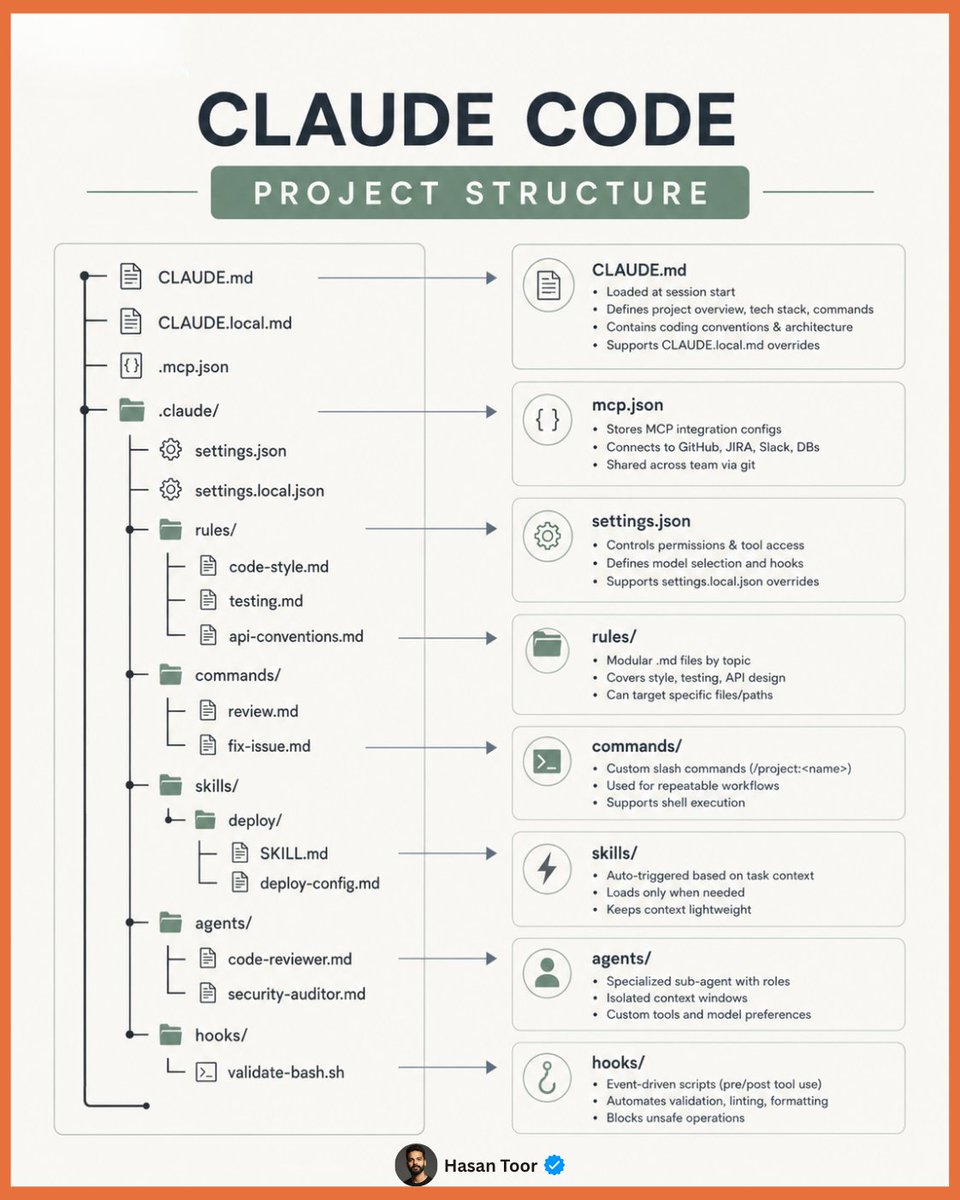
Claude Code feels completely different once you install this.
Anthropic quietly released an official plugin called claude-code-setup and it basically turns Claude Code from “pretty good” into an actual AI dev environment.
It scans your project and recommends:
→ hooks
→ skills
→ MCP servers
→ subagents
→ automations
Then sets everything up step-by-step for you.
Most people are using Claude Code completely vanilla…
which is why their experience feels messy.
The real power comes from the ecosystem around it.
Install:
/plugin install claude-code-setup@claude-plugins-official
Bookmark this before you forget it.