This is the official X handle of the Technical Adviser to the Benue State Governor on Media, Publicity, and Strategic Communication.
Kindly Follow @IorpevSol for up-to-date information on the activities, news, programs and official statements of His Excellency, Rev. Fr. Dr. Hyacinth Iormem Alia, the Executive Governor of Benue State.
What You Need to Know About Benue’s Flagship Agro-Industrial Partnership Project NFCC As Government Signs Deal Tomorrow.
Sunday, 6th September, 2026
On the 2nd of September 2026, the Benue State Executive Council, chaired by His Excellency, Rev. Fr. Dr. Hyacinth Iormem Alia, the Executive Governor of Benue State, Approved the National Food City Complex project spanning 30 hecters of land across Otukpo, Obi and Ado local government areas which is part of its equity contribution to the over two hundred and fifty million dollar Agro-Industrial Partnership.
What Is the NFCC?
The National Food City Complex (NFCC) is a large-scale Public-Private Partnership (PPP) between the Benue State Government and Rexzodeneh Group Limited (RGL), designed to transform Otukpo Local Government Area and environs into an integrated agro-industrial hub. Backed by a technical partnership with M.K International Inc. of South Korea, the project is positioned as a flagship response to Nigeria's National Emergency on Food Security and a replicable model for agro-industrial development across the country.
It is the first formal PPP agreement in Benue State's 50-year history, a landmark shift from subsistence farming toward mechanised, value-added agricultural production.
How the Deal Came Together
On April 8th 2025, A Memorandum of Understanding (MoU) was signed between the parties. On the 9th of May 2025, Exactly one month later, the formal PPP Agreement was signed at the Ministry of Agriculture and Food Security in Makurdi. In between that, BENIPA (the Benue Investment Promotion Agency) ran a due-diligence process covering technical appraisals, regulatory clearances, and financial verification, including confirming the funding capacity of participating banks.
The agreement was signed by the Honourable Commissioner for Agriculture on behalf of Benue State, and by the Chairman of Rexzodeneh Group for the private sector, with BENIPA's Executive Secretary and RGL's Group Managing Director serving as affirming parties.
The Structure: Design-Build-Operate-Transfer (DBOT)
The project runs on a 25-year DBOT concession: The responsibility of the Benue State Government is to provide land and critical infrastructure. Rexzodeneh Group finances, builds, and operates the complex. At the end of 25 years, full ownership transfers to the State, free of encumbrances. This structure is central to the project's pitch: ‘the State gains a fully industrialised asset without carrying the debt or construction risk’.
The Numbers at a Glance:
For one to fully understand the numbers involved , it is imperative to explain in simple terms:
Total private investment: 250M+ (USD)
Site size 30,000 hectares in all across 3 LGAs (Otukpo, Obi, Ado)
Take off (Phase I) 12,000 hectares located at Ogyoma-Akpa, Otukpo
Direct/permanent jobs are estimated at 20,000+
Smallholder farmers to be integrated is estimated 40,000+
Power generation within that region is placed at 20–25 MW (gas, solar, bioenergy hybrid)
Access road that has been awarded to the complex is 12 km.
Security architecture budget for the location and environs is put at 30M (USD)
State equity stake is 10% (zero cash outlay — covered by land/infrastructure)
Community equity stake is 5% rolled up in scholarships etc
Local hiring rule is placed at 70%
Concession length is 25 years
What Will Actually Be Built
The complex is designed as a farm-to-industry ecosystem with five core processing lines:
Rice mill — 300 tonnes per day (paddy)
Corn (maize) milling & packaging — 250 TPD
Cassava processing unit — 300 TPD
Soybean mill — 250 TPD, plus a 50 TPD soybean oil refinery
Poultry feed mill — 300 TPD
Supporting this is a 20–25 MW independent hybrid power plant (gas, solar, and bioenergy), plus staff housing, clinics, internal roads, and warehousing infrastructure meant to make the zone self-sustaining rather than dependent on the wider grid or external services.
Mechanised cultivation across the 30,000-hectare zone will supply the mills directly, feeding staple crops — rice, cassava, maize, and soybeans — into on-site processing rather than exporting raw produce.
Why It Matters: The Economic Case
The Project materials frame six main dividends for the State:
- Capital at zero cost — $250M+ in private capital with no debt, guarantee, or cash outlay from government.
- Mass employment — 20,000 permanent jobs with a 70% local-hiring rule, plus skills and technology transfer.
- Farmer prosperity — 40,000+ smallholders integrated with guaranteed offtake and market access.
- State equity returns — a protected 10% stake, with full asset transfer at concession end.
- Fiscal resilience — expanding the State's internally generated revenue while easing pressure on the treasury.
- Industrial transformation — five processing lines and a hybrid power plant positioning Benue as a national food hub.
The Alia led administration is not just committed to transforming every sector in the state but restoring its status as the food basket of the nation and ultimately turning Benue into the Agricultural Hub of Africa.
Hon. Chief Solomon Iorpev
Honourable Commissioner, Information and Orientation,
Benue State.
One Voice, Two Constituencies: Buruku and Gboko/Tarka Endorse the Alia Administration
Wednesday, 26th August 2026
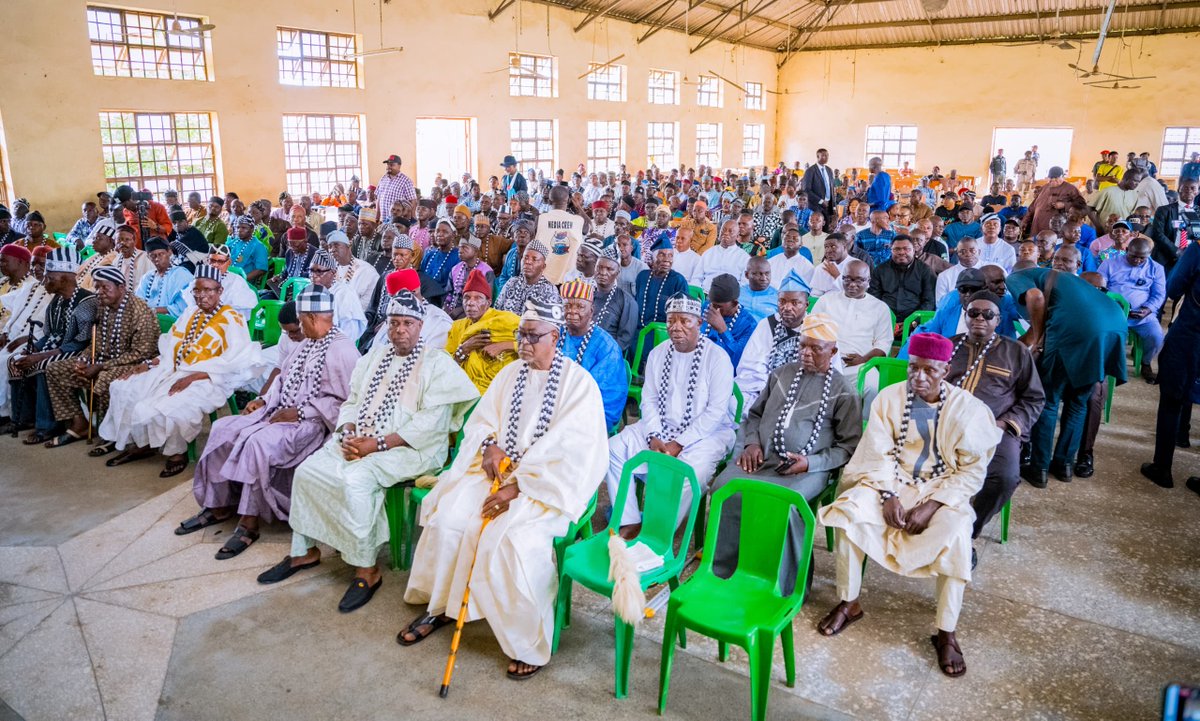
The town hall train rolled into the Benue North West Senatorial Zone (Zone B)yesterday, touching down in Buruku and Gboko/Tarka federal constituencies. Different terrains, different traditions, different local concerns — yet from the palaces to the pews, from the youth clusters to the women’s associations, and from the political class to the ordinary market woman, one message rang out with striking uniformity: the administration of His Excellency, Rev. Fr. Dr. Hyacinth Iormem Alia has performed, and performed well. It was less a meeting than a declaration. And the people, in their own words, made clear that what the administration had done was beyond par.
Traditional rulers across both constituencies took turns to catalogue the transformation they have witnessed under the Alia administration. They pointed with particular pride to the Gboko underpass — a project many said had eluded the zone for years and now stands as tangible proof of a government that listens and delivers. The royal fathers also drew attention to the storey buildings rising in government-owned primary schools across the zone, describing them as a departure from the dilapidated classrooms that once defined public education in the area.
Beyond the physical structures, the monarchs spoke of dignity restored. They noted the consistency in the payment of salaries and pensions, stressing that this singular act of fiscal discipline had brought relief to civil servants and retirees who, in the recent past, had been all but written off. Many pensioners, they said, had been resuscitated, not medically, but economically and psychologically, by a government that keeps faith with its workers.
Clergy and church leaders present at both town halls were equally effusive. For the church, the administration’s investment in education carried special weight. The recruitment of over 9,700 teachers into the primary school system was repeatedly cited as a turning point, a decisive intervention that has brought life back into a sector many had feared was on its deathbed. Empty classrooms are filling again, and with them, the hope that a new generation of Benue children will not be shortchanged.
Religious leaders also commended the collaborative security architecture the administration has built with the federal government, describing peace and security as the foundation upon which every other development, schools, roads, salaries, ultimately rests.
For the young people of Buruku and Gboko/Tarka, the conversation centred on opportunity. They spoke enthusiastically about the training programmes in Information and Communication Technology that the administration has rolled out, describing them as a timely response to youth unemployment and a genuine investment in the future workforce of the state.
The youths also praised the introduction of Anyam Nyor, the security initiative designed to address insecurity at the grassroots. For a demographic that has borne the brunt of communal violence and banditry in recent years, the youths said the initiative, combined with the broader federal-state security collaboration, represented a government finally taking their safety seriously.
Women’s associations across both constituencies echoed similar sentiments, linking the steady payment of salaries and pensions directly to household stability. For many women who manage the daily economics of the family, they said, a civil servant husband or a pensioner father receiving regular income has meant fewer hardships at home and greater peace within their communities.
The women also commended the education recruitment drive, noting that many of the newly employed teachers were drawn from within their own communities, a detail that, to them, underscored the administration’s commitment to local empowerment alongside infrastructural development.
Political leaders and stakeholders at the town halls were unanimous in their endorsement. They pointed to the over 198 kilometers of ongoing and completed road networks within the zone as evidence of an administration methodically opening up Benue’s hinterland to commerce and mobility. For a zone long constrained by poor road infrastructure, they said, this was not incremental progress but a fundamental shift.
They further commended the administration’s holistic approach, tying road construction, education recruitment, security intervention, and welfare payments into a single, coherent development agenda rather than a scattering of disconnected projects.
By the close of the town hall sessions, a common thread had emerged across every group that spoke — royal fathers, clergy, youths, women, and politicians alike. Each, from their own vantage point, described gains they called unprecedented in the recent history of the zone.
On the whole, Buruku and Gboko/Tarka federal constituencies left no room for ambiguity: they are satisfied with the performance of the Alia-led government, and in one voice, they are declaring their support for a governor they describe simply as the best performing governor in Nigeria.
Hon. Chief Solomon Iorpev
Honorable commissioner for information and orientation.
PRESS STATEMENT
BENUE STATE MINISTRY OF INFORMATION AND ORIENTATION
MAKURDI, BENUE STATE
Tuesday 25, August 2026
COMMISSIONER FOR INFORMATION URGES BENUE PEOPLE TO PARTICIPATE IN APC MEMBERSHIP RE-REGISTRATION, RENEW MANDATE FOR GOV. ALIA IN 2027
The Benue State Commissioner for Information and Orientation Hon. Chief Solomon Iorpev has commended the All Progressives Congress (APC) for reopening its Membership Electronic-Registration Exercise nationwide, and has called on party members, supporters, and eligible electorates across the State to key into the exercise ahead of the 2027 General Elections.
The exercise, which begins Monday, August 31, 2026, will hold in all wards across the country. Existing members are to validate their membership, while new and intending members are encouraged to register. Registrants must be 18 years and above and must possess a valid National Identification Number (NIN).
Chief Iorpev described the exercise as a timely opportunity for Benue citizens to strengthen their voice in the democratic process and to actively position themselves ahead of the polls. He urged party faithful, supporters and well-meaning residents of the State, irrespective of political leaning, to visit their designated ward registration centres, validate or register their membership, and ensure they are captured in the process.
He further used the opportunity to appeal to Benue people to rally behind the administration of His Excellency, Rev. Fr. Dr. Hyacinth Iormem Alia, citing the Governor's programmes in security, agriculture, infrastructure and human capital development as reasons the mandate deserves to be renewed for a second term in 2027.
The Commissioner assured that the State Government, through the Ministry of Information and Orientation, will continue to sensitise and mobilise citizens at the grassroots to ensure massive participation in the registration exercise and in the electoral process ahead.
He therefore called on all eligible Benue citizens to come out en masse, register or validate their membership, obtain their voter's cards where applicable, and prepare to vote massively for the continuity of good governance under Governor Alia's leadership.
Mathew Har
Media/Technical Aide to Honorable Commissioner for Information and Orientation
FELICITATION WITH THE MUSLIM FAITHFUL ON THE OCCASION OF MAWLID AL-NABI (EID MILAD-UN-NABI)
Tuesday, 25th August 2026
On behalf of His Excellency, the Governor of Benue State, His Excellency , Rev. Fr. Dr. Hyacinth Iormem Alia and the entire Government of Benue State, I extend warm felicitations to our Muslim brothers and sisters across the State as they mark this year's Mawlid al-Nabi, commemorating the birth of the Holy Prophet Muhammad (peace be upon him).
This occasion offers an opportunity for reflection on the enduring values of compassion, humility, honesty, and service to humanity exemplified by the Prophet's life, values that resonate deeply with the peaceful coexistence we cherish as a State. We recognise that Mawlid is observed with great devotion by many within the Muslim community through gatherings, recitations, charitable acts, and communal fellowship, while others guided by their own religious convictions, may not mark the occasion.
The Government respects this diversity of practice and reaffirms its commitment to the religious freedom and dignity of all citizens of Benue State.
As Benue State continues to pride itself on the harmonious relationship among its diverse religious and ethnic communities, we call on all citizens, Muslims and Christians alike, to continue to nurture the bonds of unity, tolerance, and mutual respect that have long defined our dear State.
We wish the Muslim community a peaceful and reflective celebration, and we pray for continued harmony, progress, and prosperity for all people of Benue State.
Hon. Chief Solomon Iorpev
Honourable Commissioner
Ministry of Information and Orientation
ZONE A SPEAKS: From Sankera to Kwande to Jechira, North East Benue Endorses the Alia Administration's Development Agenda
Tuesday, 25th August 2026
A wave of goodwill has swept across Benue State's North East Senatorial Zone, as traditional rulers, clergymen, elders and community leaders converged at a series of town hall meetings to declare their overwhelming support for the administration of His Excellency, Rev. Fr. Dr. Hyacinth Iormem Alia, the Executive Governor of Benue state.
From Sankera through Kwande to Jechira, the message was uniform and unmistakable: the people of Zone A are satisfied with the pace and quality of governance under the Alia administration, and they are asking for more of the same.
The town hall meetings, convened specifically to hear directly from the people, turned into an outpouring of appreciation. Traditional rulers spoke of roads that had been impassable for a generation now taking shape. Clergymen commended the renewed attention to education and health. Elders, many of whom have watched successive administrations come and go, said this one was different, an administration, they noted, that plans with intention and delivers with consistency.
Central to the applause was the ongoing construction of over 176 kilometres of roads across the zone, a scale of road investment residents say the North East has not witnessed in living memory. Community after community used the town halls to point to specific stretches now under construction, describing them as long overdue arteries that will finally connect farms to markets, students to schools and families to healthcare.
On education, the administration's decision to construct high-rise, storey buildings for government-owned primary schools across the zone drew particular praise. Parents and elders described dilapidated, overcrowded classrooms as a defining frustration of the past; the sight of modern, multi-storey school buildings rising in their communities was repeatedly cited as proof of a government that sees children as a priority, not an afterthought.
That commitment has been matched with people. The administration's employment of teachers drawn from the sons and daughters of the zone into the primary education system was singled out for commendation, both as a boost to local livelihoods and as a guarantee that the classrooms being built will not stand empty for lack of hands to run them.
Residents also welcomed visible improvement in the primary healthcare sector, alongside progress on the long-anticipated Katsina Ala Water Works, a project many communities have waited years to see move forward. For a zone where access to potable water has remained a persistent challenge, movement on the waterworks was received as one of the clearest signals yet that the administration listens and acts.
On security, elders and community leaders acknowledged the administration's ongoing collaboration with the Federal Government to confront insecurity in parts of the region, describing it as a necessary and welcome partnership at a time when peace remains the foundation on which every other development stands.
Across every session, one appeal echoed loudest: that Governor Alia sustain the momentum until Benue State is decisively led out of the woods of underdevelopment. The people of Zone A made clear that what they have seen so far, roads, schools, teachers, water, security cooperation, and more, is not merely a checklist of projects but evidence of an administration that is people-oriented, people-centred and development-bound.
For a zone once associated more with neglect than with progress, the tone from Sankera to Kwande to Jechira has shifted decisively. The verdict from the town halls is clear: an administration this intentional, residents say, deserves nothing less than the continued support of the people it serves.
Hon. Chief Solomon Iorpev
Honorable Commissioner for information and Orientation.
GOVERNOR ALIA DEPLOYS SEVEN NEW COMMISSIONERS, CHARGES THEM TO HIT THE GROUND RUNNING
Monday, 24th August 2026
The Executive Governor of Benue State, His Excellency, Rev. Fr. Dr. Hyacinth Iormem Alia, has approved the deployment of the seven new Commissioners recently sworn into office, assigning each to a substantive ministry with a firm charge to hit the ground running and deliver measurable results to the people of Benue State.
The newly deployed Commissioners, along with their respective ministries, are as follows:
1. Hon. Mrs Elizabeth Onma — Ministry of Special Duties and Related Matters
2. Hon. Kuma Aii Yenge — Ministry of Works
3. Hon. Roy Ashirga — Ministry of Housing and Urban Development
4. Hon. Angwa Egbe Monday — Ministry of Science and Technology (with a mandate to establish the Ministry of Natural Resources)
5. Hon. Amo Ankwa II — Ministry of Commerce and Industry
6. Rt. Hon. Nick Eworo — Ministry of Youths, Sports and Creativity
7. Hon. Chief Solomon Iorpev — Ministry of Information and Orientation
His Excellency charged the new Commissioners to bring diligence, transparency and a strong sense of urgency to their respective portfolios, and directed that the assignments take immediate effect.
Meanwhile, His Excellency, Rev. Fr. Dr. Hyacinth Iormem Alia, will today, Monday, 24th August, 2026, commence a Thank-You Tour across the eleven (11) Federal Constituencies of Benue State.
The tour which is the second since inception, is designed to convey His Excellency's profound appreciation to APC party faithful, political stakeholders, traditional rulers, Government appointees and other critical stakeholders across the State for their unwavering support and commitment to his administration.
All stakeholders and members of the public are cordially invited to join in receiving His Excellency and participating in this historic exercise of appreciation and engagement.
Hon. Chief Solomon Iorpev
Commissioner for Information and Orientation.
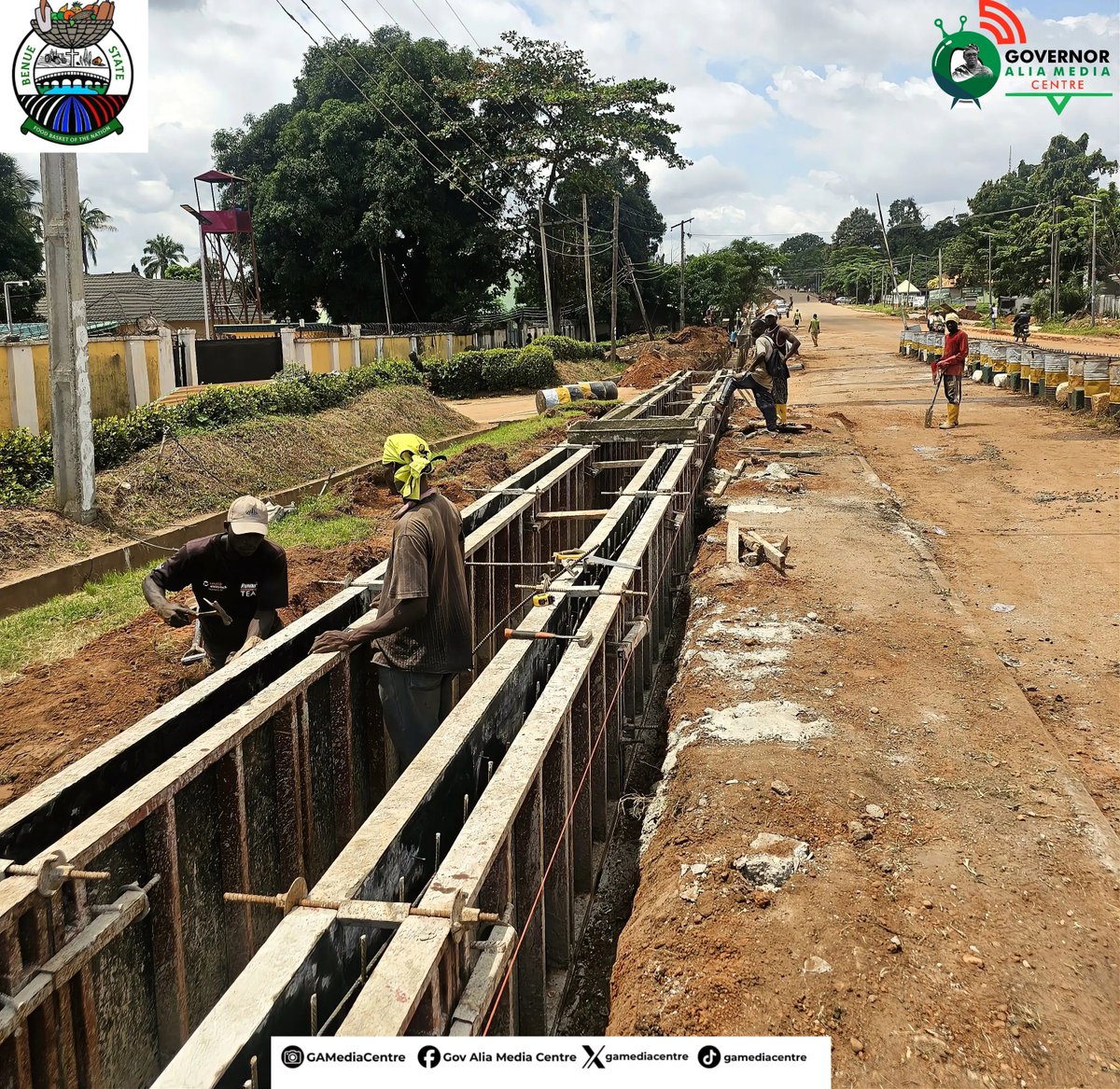
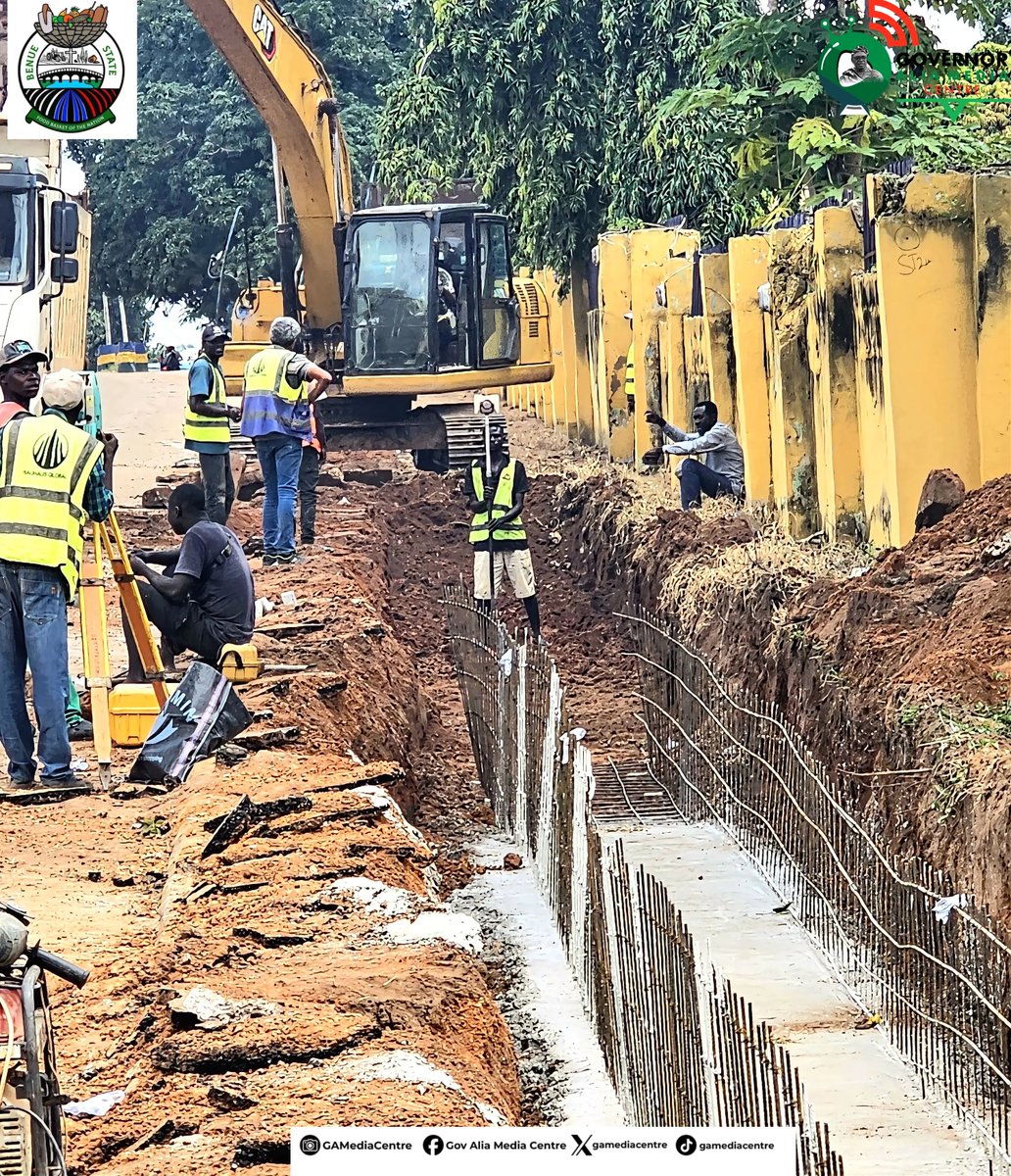
GOVERNOR ALIA’S ADMINISTRATION COMMENCES RECONSTRUCTION OF JOE AKAAHAN/OGIRI OKO ROAD
As part of his administration’s ongoing urban renewal efforts, the Executive Governor of @benuestategovt, His Excellency, Rev. Fr. Dr. Hyacinth Iormem Alia has commenced the reconstruction of the Joe Akaahan/Ogiri Oko Road in Makurdi, beginning with the construction of high-quality and durable drainages for erosion/flood control.
When completed, this road will link the 98% completed Kashim Ibrahim Road (Government House Road) to the newly constructed High-Level Underpass from the CBN Junction, further improving connectivity and easing movement within the State Capital.
Despite the series of activities associated with the campaign season, Governor Alia has remained fully focused on delivering his campaign promises to the good people of Benue, while urging citizens to judge his administration’s worthiness of a second tenure by the verifiable results it continues to deliver.
Indeed, The Alia... The Better!
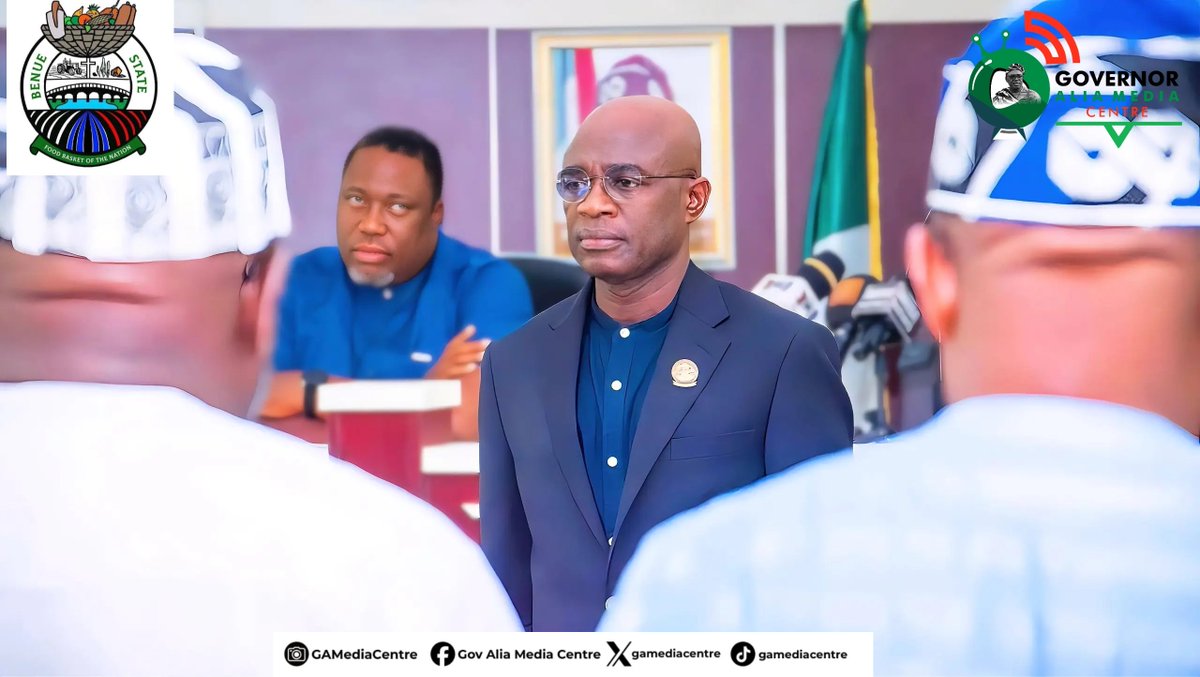
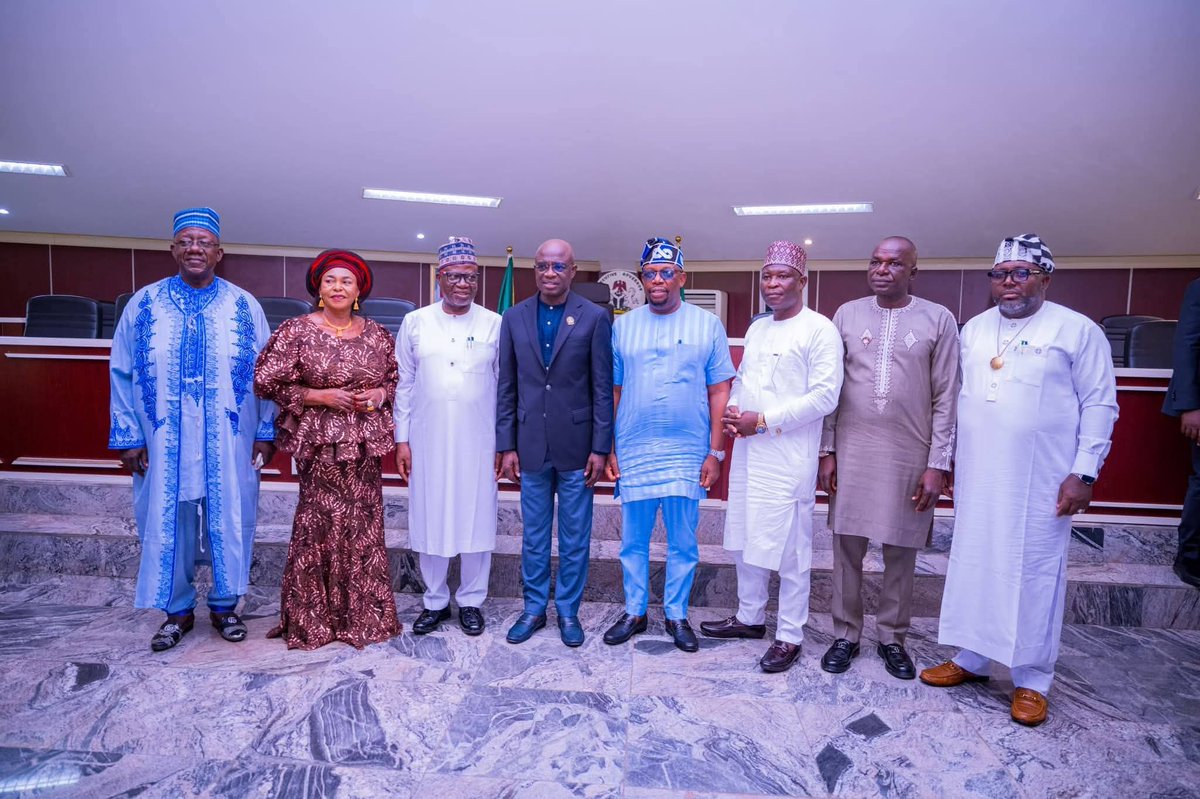
GOVERNOR ALIA INAUGURATES SEVEN COMMISIONERS INTO THE STATE EXECUTIVE COUNCIL
The Executive Governor of @benuestategovt, His Excellency, Rev. Fr. Dr. Hyacinth Iormem Alia, has inaugurated seven Commissioners into the State Executive Council.
The newly inaugurated Commissioners are;
• Hon. Kuma Aii Yenge
• Hon. Solomon Iorpev
• Hon. Roy Ashirga Terna
• Hon. Angwa Egbe Monday
• Hon. Elizabeth Onma Ogenyi
• Hon. Nick Eworo
• Hon. Ankwa Amo
During the ceremony held at the Old Banquet Hall, Government House, Makurdi, the Governor described the inauguration as an important step in the shared effort to build a better Benue. He thanked the State House of Assembly for the swift confirmation of the nominees and urged the new Commissioners to prioritise the public interest over personal or sectional concerns.
While congratulating the new Commissioners, the Governor Alia reminded them that although they will serve in different ministries, their common goal is the development of Benue State. He called on them to work as one team, collaborate across ministries, exchange ideas and support one another, noting that the success of any single ministry strengthens the entire administration, while cautioning that the path ahead would involve challenges, tough decisions and criticism, advising the appointees to stay focused, seek wise counsel, examine issues carefully and always put the people first.
The Governor pledged his support and charged them to deliver results through accountability, integrity, innovation and effective service, expressing confidence that a transformed Benue is achievable through collective commitment.
To round off the Renewed Hope Presidential Media Tour in Benue, the team held a media parley with His Excellency, the Executive Governor of @benuestategovt, Rev. Fr. Dr. Hyacinth Iormem Alia.
During the interaction, the Governor highlighted where Benue was coming from and the progress the state has made today. He emphasised the importance of the state’s alignment with the reforms of the President Tinubu-led Federal Government, which have served as a catalyst for the progress recorded so far, particularly in education, healthcare, social welfare, road infrastructure, and civil service reforms.
Governor @HyacinthAlia concluded by noting that his administration is implementing a long-term developmental Master Plan for Benue, drawing inspiration from President Tinubu’s 25-year Master Plan for Lagos during his tenure as Governor. The plan, he said, will provide a clear and progressive roadmap for the state’s sustainable development.
Watch the full video ⤵️
Happy birthday son. You are a gift daddy is proud of God. It's amazing to watch you gradually becoming a man. You are a pure testimony of God's blessings. Happy 15th birthday Torkuma Solomon Iorpev.
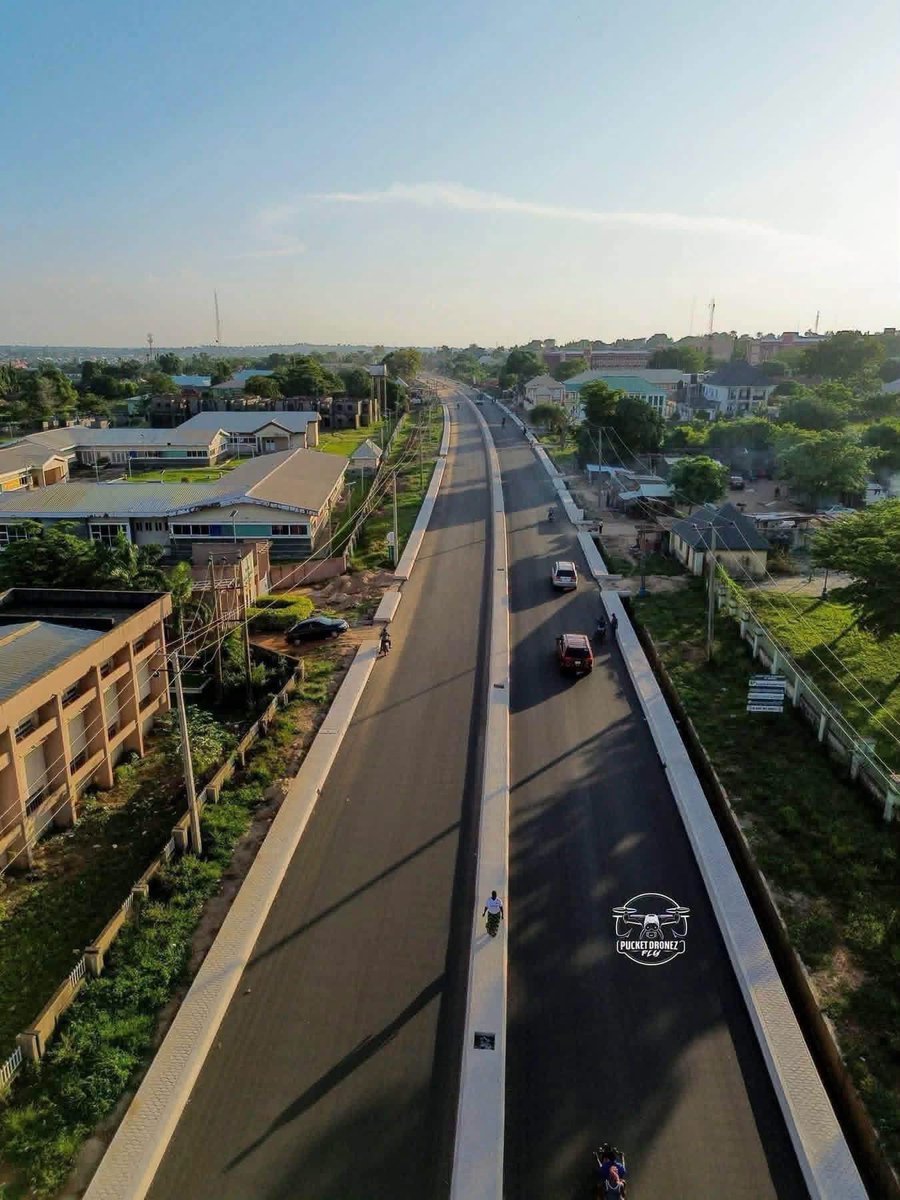
This is no AI, this is the transformed Jonah Jang Road in Makurdi the Benue State capital. From a single impassible route to a dual carriage way. The transformation is massive.
Indeed the Alia the better!!
GOV. ALIA COMMENDS PRESIDENT TINUBU FOR APPROVING NIGERIAN ARMY 5 DIVISION HEADQUARTERS IN MAKURDI, PLEDGES FULL SUPPORT
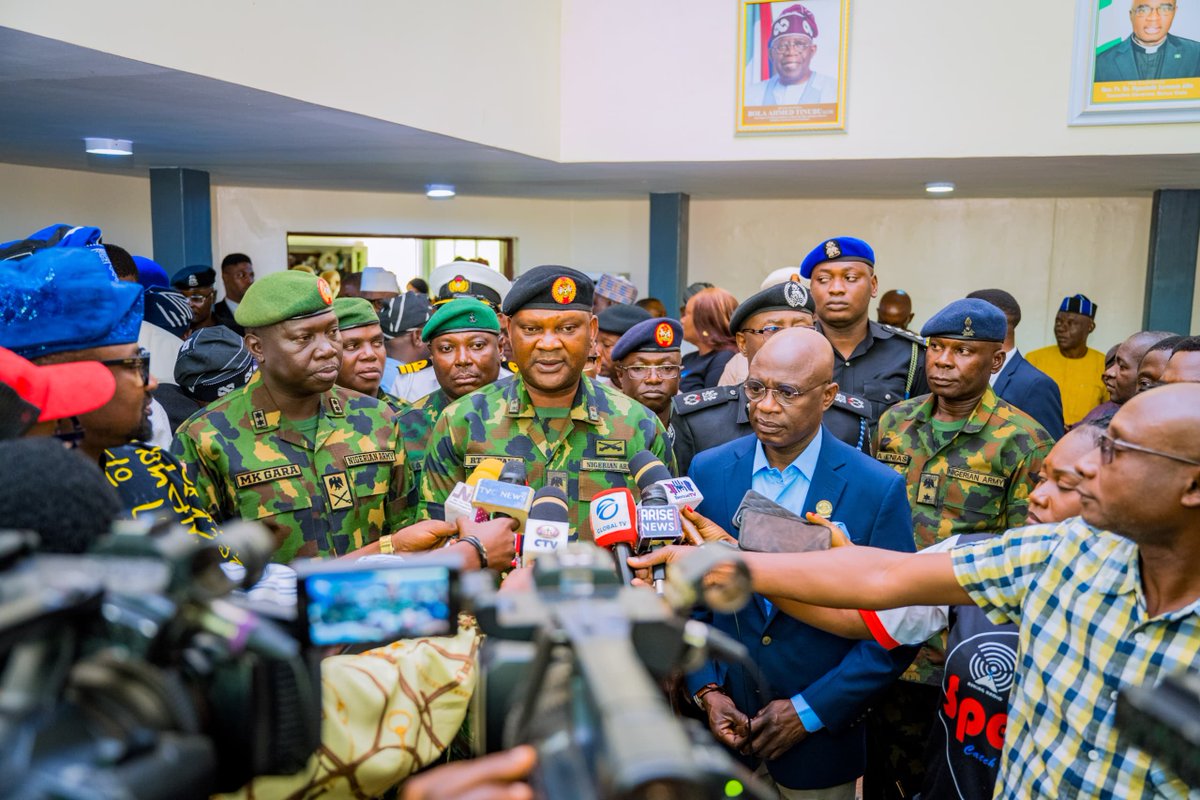
The Executive Governor of Benue State, Rev. Fr. Dr. Hyacinth Iormem Alia, commends President and Commander-in-Chief of the Armed Forces, President Bola Ahmed Tinubu, GCFR, for approving the establishment of the @HQNigerianArmy 5 Division Headquarters in Makurdi, describing the decision as a strategic intervention that will significantly strengthen security across Benue, Nasarawa and Kogi States. Speaking on Tuesday while receiving the Army Headquarters Committee on the operationalisation of the new Division at Government House, Makurdi, the Governor says the President's decision reflects his commitment to addressing the security challenges confronting Benue and the North Central region.
Governor Alia expresses appreciation to the officers and men of the Armed Forces for their sacrifices in safeguarding the nation and pays tribute to those who lose their lives in the line of duty. He assures the committee of the Benue State Government's full support, pledging to provide adequate land for all military formations and units to be established in the state, as well as other necessary assistance to ensure the seamless take-off of the Division. He notes that beyond strengthening security, the new formation will stimulate economic growth through the establishment of military infrastructure, including schools, hospitals, residential facilities and other support services.
Earlier, the leader of the Army Headquarters Committee, Major General Raymond Utsaha, says the team is in Benue to facilitate the implementation of President Tinubu's directive establishing the new Division. He discloses that the formation, to be headquartered in Makurdi under the command of Major General Moses Gara, Force Commander of Operation Whirl Stroke, is scheduled to become operational by September 2026. According to him, the new Division will enhance operational effectiveness, improve response time to security threats and bring additional personnel, infrastructure and socio-economic benefits to Benue State.
The establishment of the Nigerian Army 5 Division Headquarters forms part of President Bola Ahmed Tinubu's approval for the expansion of the Nigerian Army from eight to twelve divisions, alongside the recruitment of 28,000 additional personnel, as part of ongoing efforts to strengthen Nigeria's security architecture. Governor Alia reaffirms his administration's commitment to sustained collaboration with the Armed Forces and other security agencies to ensure lasting peace, security and development in Benue State.
Chief Solomon Iorpev
Technical Adviser to the Governor on Media, Publicity and Strategic Communication
BUILDING BENUE’S TOMORROW ON THE STRENGTH OF SOUND MINDS: Benue’s Economic and Policy Advisory Council and the Fifty-Year Vision of Governor Alia
Friday, 31/07/2026
There is a quiet but profound truth that runs through the history of every society that has ever transformed itself: ‘no state rises higher than the quality of counsel that guides it’. Nations are not built by good intentions alone, nor by the passion of leadership in isolation. They are built when visionary leadership marries itself to competence, when power sits at the same table as expertise, and when policy is shaped not by guesswork but by the disciplined rigour of knowledge. It is this timeless truth that His Excellency, Rev. Fr. Dr. Hyacinth Iormem Alia has formally embedded into the architecture of governance in Benue State, with the inauguration of the Economic and Policy Advisory Council.
To inaugurate an Economic and Policy Advisory Council is not a ceremonial gesture. It is a deliberate act of statesmanship. It is a decision by a leader secure enough in his vision to seek out the sharpest minds available and place them close to the machinery of decision-making. Governor Alia’s choice to do so signals something important about the character of his administration. It shows that governance in Benue will not be left to intuition or political convenience alone, but will be anchored in evidence, in strategy, and in the accumulated wisdom of Benue’s finest economic and policy minds, drawn from within the state and from the diaspora of Benue talent scattered across Nigeria and the world.
The Council’s composition tells its own story. Led by Mr Nick Agule as Team Lead and Mrs Carolyn Okoh Folami as Co-Team Lead, and comprising Prof Naomi Onyeje Doki, Dr Andrew Ayabam, Dr Adukwu Emmanuel Ogbole, Mr Patrick Okigbo, Dr Fanen Ade, Mr Alex Tarka, Dr Jane Asagh, Mr Basil Jev, Dr Joseph Ogebe, Mr Emmanuel Makeri, Mr Micheal Oglegba, and Mrs Theresa Nyitse, with Prof Jerome Andohol serving as Secretary, this is a body assembled with intention. It brings together academic depth, private sector rigour, development expertise, and public policy experience. A fusion of perspectives that no single office, however capable, could replicate alone.
Governance, at its core, is the management of scarce resources in service of unlimited human needs. Every state is confronted with hard choices: which sectors to prioritise, which investments will yield the greatest returns, how to sequence reforms, how to attract capital, how to protect the vulnerable while pursuing growth. These are not questions that can be answered by political will alone. They require data. They require modelling. They require people who have spent careers studying how economies grow, how policies succeed or fail, and how development compounds over decades rather than election cycles.
This is precisely the gap an Economic and Policy Advisory Council is designed to fill. It functions as a bridge between the technical world of economic scholarship and the practical world of governance, thus translating research into policy, and policy into programmes that touch the lives of ordinary Benue people. It provides the Governor with an independent, expert lens through which to stress-test ideas before they become budgets, laws, or projects. In this sense, the Council is not a substitute for political leadership; it is the amplifier of it, ensuring that the Governor’s vision is pursued with the discipline of evidence and the foresight of long-range planning.
For a state like Benue, endowed with vast agricultural land, a youthful population, and untapped potential in agro-processing, solid minerals, and trade, the margin between average performance and transformative growth often lies in the quality of the ideas guiding investment and reform. A council of this calibre closes that margin.
What the Benue people need to understand is that His excellency, is not just building a team, but Laying a Foundation for the next phase of the state’s development . What distinguishes this initiative is its horizon. Governor Alia has been unambiguous in tying the work of this Council not to the tenure of an administration, but to the trajectory of a state across the next fifty years. This is a significant departure from the short-termism that has too often defined governance in many parts of Nigeria, where projects are conceived and executed within the narrow window of an election cycle, with little regard for what comes after.
By contrast, the Governor’s approach recognises that true development is generational. The roads built today, the industries seeded now, the human capital invested in this decade, are the foundations upon which Benue’s children and grandchildren will stand. The Economic and Policy Advisory Council, will ensures that today’s decisions are stress-tested against tomorrow’s realities: shifting demographics, climate pressures on agriculture, the future of work, and the competitiveness of subnational economies in an increasingly interconnected Nigeria.
This is the essence of foundation-laying leadership. It asks not “what can be achieved before the next election” but “what must be true fifty years from now for Benue to be prosperous, secure, and self-reliant and what must we do today to make it so.”
There is a line that captures the spirit of this moment: positive change is brought about by those with requisite knowledge. It is a simple statement, but it carries the weight of historical proof. Every state and nation that has transformed its fortunes within a generation, from the agricultural revolutions of Asia to the industrial leaps of smaller economies, did so by empowering knowledge to sit beside power, by trusting technocrats to translate vision into workable strategy.
Governor Alia’s inauguration of this Council is, therefore, more than an administrative appointment. It is a philosophy of governance made visible: that Benue’s growth will be planned, not improvised; that its policies will be evidence-driven, not reactionary; and that its leadership will actively seek out excellence rather than govern in isolation from it.
As the Council begins its work, the task before all of Benue is clear: to support this vision, to hold it to its promise, and to recognise that the foundation being laid today is an inheritance for the Benue of 2076.
Governor Alia has chosen to build not just for now, but for forever. In doing so, he joins the ranks of leaders who understood that the truest measure of governance is not what is achieved in a term, but what is bequeathed to generations yet unborn. And on that note we are sure, that Benue’s next fifty years have found their architects.
Hon. Chief Solomon Iorpev,
Technical Adviser to the Benue State Governor
On Media, Publicity and Strategic communication.
ANOTHER MASTERSTROKE OF THE SILENT ACHIEVER—Governor Alia Moves From Building Roads to SafeGuarding Them.
Thursday, 30/07/2026
There is a peculiar kind of leadership that does not announce itself with noise, but with structure. It does not seek applause for laying a foundation, it seeks assurance that the foundation will hold. This is the leadership style that has come to define His Excellency, Rev. Fr. Dr. Hyacinth Iormem Alia, the Executive Governor of Benue State, a man history will remember, not for the volume of his rhetoric, but for the quiet permanence of his works.
On Wednesday, July 29, 2026, the Governor once again demonstrated why he has earned the enduring title of “the Silent Achiever,” with the approval of two far-reaching institutional interventions: the creation of the Benue Road Maintenance Agency and the constitution of the Benue State Project Monitoring Team. On the surface, these may read as routine administrative actions. Beneath the surface, however, lies a governance philosophy that is rewriting the very grammar of public accountability in Benue State.
There is what is known as the wisdom of maintenance beyond construction. It is a culture that is clearly lacking in Nigeria. The truth is, ANY government can pour asphalt. But few governments think about what happens to that asphalt five years later. The Alia led administration has, since inception, embarked on one of the most ambitious road construction drives in the state’s history; dualizing failed roads, opening up rural communities, and reconnecting a state that had, for years, been held hostage by neglect and impassable terrains. But roads, like all infrastructure, are living assets. They erode no matter how well constructed. They crack under rain and tonnage. Without deliberate, sustained maintenance, even the finest construction becomes, in time, a monument to wasted resources.
It is this understanding, the understanding that construction without maintenance is merely a delayed decay, that birthed the Benue Road Maintenance Agency. Governor Alia has entrusted its leadership to Engr. Thaddeus Terngu Tarzomon as pioneer General Manager, a clear signal that the task ahead demands technical rigour, not political convenience. This is governance thinking several steps ahead. It is the difference between a builder and an architect of legacy. Where others would cut ribbons and move on, Governor Alia is institutionalizing the culture of upkeep, ensuring that the roads his administration is building today will not become tomorrow’s monuments to abandonment. It is, in every sense, a masterstroke, one that protects public investment long after the cameras have left the commissioning ceremony.
Another innovative stroke is the constitution of Independent Eyes of Government, the Benue State Project Monitoring Team. If the Road Maintenance Agency answers the question of durability, the Benue State Project Monitoring Team answers the far more searching question of value.
Governor Alia has constituted a team of seasoned, credentialed professionals to serve, in his own words, as the independent eyes of government headed by the former Registrar of COREN, A fellow of the Nigerian Society of Engineers, Engr. Dr. Engr. Felix Atume, mni FNSE. Other members include: Engr. Cephas Suswam, Surveyor Bartholemew Feese, Engr. Terna Ibi, Engr. S. A. Baba, Arch. Idu John Adakole, Engr. Jijingi Emmanuel and Engr. Mlumun Ikpaahindi as Secretary.
This is no ceremonial committee assembled to decorate a government gazette. Its mandate is deliberately weighty: to oversee and track the implementation of government projects across every sector; to ensure strict compliance with approved specifications, timelines, and budgets; to conduct periodic, unannounced inspections and report directly to the Office of the Governor; to flag delays, substandard work, or deviations and recommend corrective action; and, crucially, to advise government on the true cost and value-for-money of every project undertaken.
In a political culture where monitoring teams are too often symbolic and populated by loyalists and designed to rubber-stamp rather than scrutinize, Governor Alia has chosen a different, more courageous path. He has assembled engineers, architects, and surveyors: men whose professional training obligates them to specifications, not sentiments. Now, this is a Governor inviting scrutiny of his own government’s projects, not shielding them from it. That, my friend, in Nigerian political culture, is rare! But that, in the Alia lexicon, is normal.
Most people if not all will agree with that The Real Dividend of Good Governance is value for money. And this is where the philosophical heart of this latest intervention lie. His Excellency, Governor Hyacinth Ioryem Alia has repeatedly shown, through action rather than slogan, that his interest is not in the spectacle of infrastructure but in its substance. It is not enough that a road exists; it must be built to specification. It is not enough that a project is commissioned; the state must know, with precision, what value the people received for every naira expended. This is what separates governance from mere activity. Many administrations across Nigeria have built roads that failed within a single rainy season, erected structures that crumbled before completion, and disbursed public funds against projects that existed more on paper than on ground. Governor Alia, by creating an independent monitoring architecture with the explicit mandate of guarding value for money, is inoculating Benue State against this all-too-familiar tragedy.
It is a statement, quiet but unmistakable: that the resources of Benue State (scarce, hard-earned, and belonging to no man but the people) will not be squandered on his watch, and will not be squandered by those who come after him either, so long as the institutions he is building today remain standing.
I’m sure by the Signature of the Silent Achiever is coming clearer to one and all. Those who have followed the trajectory of this administration will recognize the pattern by now. Governor Alia does not chase headlines; he builds systems. He does not seek to be praised for good intentions; he seeks to be measured by verifiable outcomes. The creation of the Benue Road Maintenance Agency and the Benue State Project Monitoring Team are not isolated administrative decisions, they are the latest strokes in a larger portrait of a leader determined to institutionalize accountability, sustainability, and excellence in public service delivery and While critics search for controversy and distraction dressed as commentary, the Governor continues, unbothered, to lay down the structures that will outlive news cycles and outlast political seasons. This is what distinguishes a builder from a mere occupant of office, the willingness to create institutions that guard the future, even when no one is watching, even when no applause is guaranteed.
Once again, Governor Hyacinth Iormem Alia has proven that true leadership is not loud. It is deliberate. It is structural. It is intentional. And this is unmistakably, another masterstroke of the Silent Achiever.
Hon. Chief Solomon Iorpev
Technical Adviser to the Benue State Governor
on Media, Publicity and Strategic Communication.
His Excellency, Rev. Fr. Dr. Hyacinth Iormem Alia, inaugurates Economic and policy advisory council. Lays the foundation for Benue’s path to development for the next 50 years.
Those inaugurated include;
1. Mr Nick Agule - Team Lead
2. Mrs Carolyn Okoh Folami - Co-Team Lead
3. Prof Naomi Onyeje Doki
4. Dr Andrew Ayabam
5. Dr Adukwu Emmanuel Ogbole
6. Mr Patrick Okigbo
7. Dr Fanen Ade
8. Mr Alex Tarka
9. Dr Jane Asagh
10. Mr Basil Jev
11. Dr Joseph Ogebe
12. Mr Emmanuel Makeri
13. Mr Micheal Oglegba
14. Mrs Theresa Nyitse
15. Prof Jerome Andohol - Secretary.
Positive Change is brought about by those with requisite knowledge. Indeed, the Alia the Better.
His Excellency, Rev. Fr. Dr. Hyacinth Iormem Alia, receives the Inspector General of Police, Olatunji Rilwan Disu in Makurdi today as he works harder on ending insecurity in Benue state.
Indeed, the Alia the better.
BETWEEN TWO ATTORNEYS-GENERAL, ONE FRUSTRATED THE VICTIMS, ONE FREED THEM: The timeline Chief Aondoakaa’s aide doesn’t want Benue to see.
Mr. James Ian, Media Assistant to Chief Michael Kaase Aondoakaa, SAN, has written at length to defend his principal’s record on the Zaki-Biam and Gbeji compensation matter. And instead of telling Benue what truly matters, he chose to say I’m obsessed with his principal which is very laughable. Unfortunately, for him, the entire defence rests on a claim that does not survive contact with the public record: that the out-of-court settlement process “predated” Chief Aondoakaa’s tenure as Attorney-General of the Federation. Really? This automatically sends red flags. What is he trying so hard to hide?
Truth is the out of court settlement did not predate his boss. The dates completely disagree with him and they are not in dispute. So it’s either a display of ignorance or a ploy to hide the truth.
The record, plainly stated Chief Michael Aondoakaa served as Attorney-General of the Federation from July 2007 to February 2010. It was during this exact window, in 2007, that Justice Lewis Alagoa of the Federal High Court entered the ₦41.8 billion judgment against the Federal Government in favour of the Zaki-Biam and Gbeji victims. The Federal Government, under Aondoakaa’s watch as its chief law officer, chose to appeal that judgment rather than negotiate a settlement.
Chief Aondoakaa left office in February 2010. He was succeeded, after a brief interlude, by Mohammed Bello Adoke, who served as AGF from April 2010 to May 2015. It was Adoke, a total stranger to the Tiv people, not Aondoakaa , a kinsman, who eventually engaged the victims’ representatives and signed the compromise agreement that reduced the judgment sum to ₦8 billion, with the consent judgment entered in February 2015.
These dates come from public records and from the victims’ own representatives, who identified Adoke as the Attorney-General who signed the final settlement with them.
Why is this important? Mr. Ian’s argument depends entirely on the sequence being the other way around. If the settlement had genuinely been arranged before Aondoakaa took office, then his choice to pursue an appeal instead would be understandable , he would simply have been continuing an existing legal strategy inherited from his predecessor. But that is not what happened. The settlement came after Aondoakaa, brought by the very man who succeeded him. This is not a minor detail. It means an alternative to appealing the judgment clearly existed within the machinery of the Attorney-General’s office , because Adoke found and used it.
The question Mr. Ian must now answer is why his own principal, when the same judgment sat before him for over two years, chose appeal over negotiation, when negotiation was demonstrably available as a path.
The uncomfortable admission
By insisting the settlement “predated” Aondoakaa, Mr. Ian has, whether he realizes it or not, tried to erase the very fact that damages his principal’s position, that a workable alternative to prolonging the victims’ suffering existed and was eventually used by someone else. That is not a defence. It is a rewriting of the timeline to avoid an uncomfortable question: why did the people of Zaki-Biam and Gbeji wait years longer than they needed to for compensation to even begin moving?
Mr. Ian is entitled to defend his principal but he is NOT entitled to invent a chronology that the record does not support. Benue people are capable of checking dates, and when they do, they will find that it was an outsider to the tragedy, a successor from another part of the country, who moved first to bring relief, while the man from home, a kinsman, chose to fight the victims in court.
That is the record. No amount of rhetorical repositioning changes it.
Chief Solomon Iorpev
Technical Adviser to the Benue State Governor on Media Publicity and Strategic Communication
Why PDP and its candidate’s security Promises Lack Credibility in Benue
Thursday, 16/07/2026
Insecurity in Benue state can be traced to as far back as 19 to 20 years ago. This was towards the end of the second tenure of the Sen. George Akume led administration. There was a surge during the Sen. Gabriel Suswam led administration and I recall some of the efforts made by that administration to curb the situation. The problem defiled the adopted solutions and kept persisting until the end of that administration.
I recall that When Dr. Samuel Ortom campaigned across Benue State, his central message was clear and repeated at every rally: insecurity would be confronted head-on. He promised protection for farmers, an end to attacks on communities, and a government that would put the safety of citizens first. He said this at most fora in tears and for many voters weary of violence, that pledge was the reason they showed up at the polls.
Between 2015 and 2023, the administration of His Excellency Governor Samuel Ortom governed Benue under the banners of APC and PDP. The early years were defined by constant press briefings, radio appearances, and televised statements condemning attacks. The government became known for its vocal stance, often describing the crisis in strong terms and calling for federal intervention.
Yet as the years went on, the gap between the messaging and the realities on the ground widened. Communities in the Sankera axis, Guma, Gwer West, Logo, Kwande, Agatu, and other local governments continued to report incidents. At some points , distinguished Sen. George Akume described the insecurity situation under Dr Samuel Ortom as governed sponsored. Internally Displaced Persons camps remained full. Rather than a measurable decline in attacks, what many residents saw was a cycle of condemnation followed by another round of violence. For critics, the frequent media outings began to look less like a security strategy and more like a public relations response.
That approach created what Benue residents and observers came to call “insecurity propaganda”, a pattern where statements, protests, and accusations dominated the public space while concrete, coordinated security outcomes were slow to follow. Town hall meetings turned into platforms to restate the problem instead of unveiling new operational plans. By the end of that administration even PDP supporters, the platform of the governor, admitted privately that the party’s promise to “end insecurity” had become a talking point it could not deliver.
The consequence is political. Because the PDP in Benue tied its brand so directly to ending insecurity and then failed to show clear results under Governor Ortom, many voters now question any new promise from the party on the same issue. When a party spends eight years describing a crisis in the loudest terms but cannot point to safer farms, reopened markets, or resettled communities, its credibility on security suffers.
The lesson drawn here by every well meaning Benue citizen and in many quarters is simple: security cannot be run on press releases alone. Until a party shows a plan backed by action, (just like Governor Alia s doing) not just rhetoric, promises to end insecurity and taking advantage of people’s emotions with “media Visits”.
To make matters worse for the party, it has adopted a candidate that is or rather was at the center of denying the Zaki Biam and Gbeji Massacre victims of 2001 a Compensation of 41.8 Billion from a Judgment Against the Federal Government of Nigeria . The PDP candidate, Michael Kaase Aondoakaa frustrated the victims while he was the AGF. It is difficult to think that a person like truly cares about the people.
To refresh your memories, the Zaki Biam and Gbeji Massacre of October 2001 remains one of the gravest human rights tragedies in Nigeria's democratic history. Following military operations in several Tiv communities, including Zaki Biam and Gbeji, hundreds of civilians were reportedly killed, properties worth billions of naira were destroyed, and thousands of residents were displaced.
In pursuit of justice, Alexander Gaadi and thirteen others, on behalf of the victims, instituted an action against the Federal Government of Nigeria before the Federal High Court in Enugu, seeking ₦200 billion in compensation for the violation of their fundamental human rights.
On 5 July 2007, Justice Lewis Allagoa delivered a landmark judgment, holding the Federal Government liable and awarding ₦41.8 billion in damages to the victims. The judgment remains one of the largest human rights compensation awards ever entered against the Federal Government of Nigeria.
Following the judgment, Chief Michael Kaase Aondoakaa, SAN, had assumed office as the Attorney-General of the Federation and Minister of Justice. As the Federation's Chief Law Officer, he allegedly vowed that Alexander Gaadi and the victims of the Zaki Biam and Gbeji massacre would never receive the compensation. He appealed the case and, in the process, effectively frustrated the enforcement of the judgment while the appellate proceedings remained pending. Many believed that the shock and frustration caused by Aondoakaa's actions contributed to the death of Alexander Gaadi while the appeal was still pending. Gaadi had reportedly sold virtually everything, including landed properties, in his pursuit of justice for the victims of the massacre. He presented thousands of bags of pictorial evidence before the court to establish the atrocities committed against his Tiv people, while Aondoakaa was perceived as using the instrumentalities of government to frustrate the enforcement of the judgment.
It was after Aondoakaa left office in 2010 that Mohammed Bello Adoke, SAN, succeeded him as Attorney-General of the Federation. During his tenure, the Federal Government reportedly initiated discussions aimed at resolving the matter through an out-of-court settlement, with reports indicating a proposed settlement of approximately ₦8 billion. Those discussions, however, became controversial because of disputes regarding the lawful beneficiaries and the proper recipients of any compensation following the death of the lead plaintiff, Alexander Gaadi. One may ask whether this was not a deliberate attempt to frustrate his blood relatives and kinsmen. Why did Mohammed Bello Adoke, SAN, move to initiate an out-of-court settlement for the widely celebrated judgment shortly after President Goodluck Ebele Jonathan removed Michael Kaase Aondoakaa from office, while Aondoakaa had insisted on pursuing a course that appeared to prolong the suffering of his own people? As the saying goes, yesterday can always speak for today — Benue people, be wise.
To date, there is no widely reported final appellate judgment overturning the Federal High Court's award of ₦41.8 billion. Consequently, the case remains one of Nigeria's most significant constitutional and human rights decisions, highlighting both the ability of victims to obtain judicial redress against the State and the challenges associated with enforcing judgments against the Federal Government.
If the Zaki Biam and Gbeji compensation case continues to serve as an important reminder of the need for accountability, respect for the rule of law, and timely justice for victims of human rights violations, then anyone, ANYONE at all, who stood in the way of its execution, is Anti-Benue.
Chief Solomon Iorpev
Technical Adviser to the Benue State Governor on Media, Publicity and Strategic Communication.