Should AI write your team's performance reviews?
Yes, for the draft. No, for the decision.
Six inputs: scored objectives, 1-1 notes, tone and format, strategy, last year's review, a role-aware agent.
AI drafts. You review. You decide.
Every review has one sentence the person remembers: where they stand, and what comes next.
It usually sits right next to the score.
Would you let a model write that one?
Score first. Draft second.
Open the AI tool before you've scored each objective yourself, and the draft quietly starts scoring for you.
On your team, what comes first: the score or the draft?
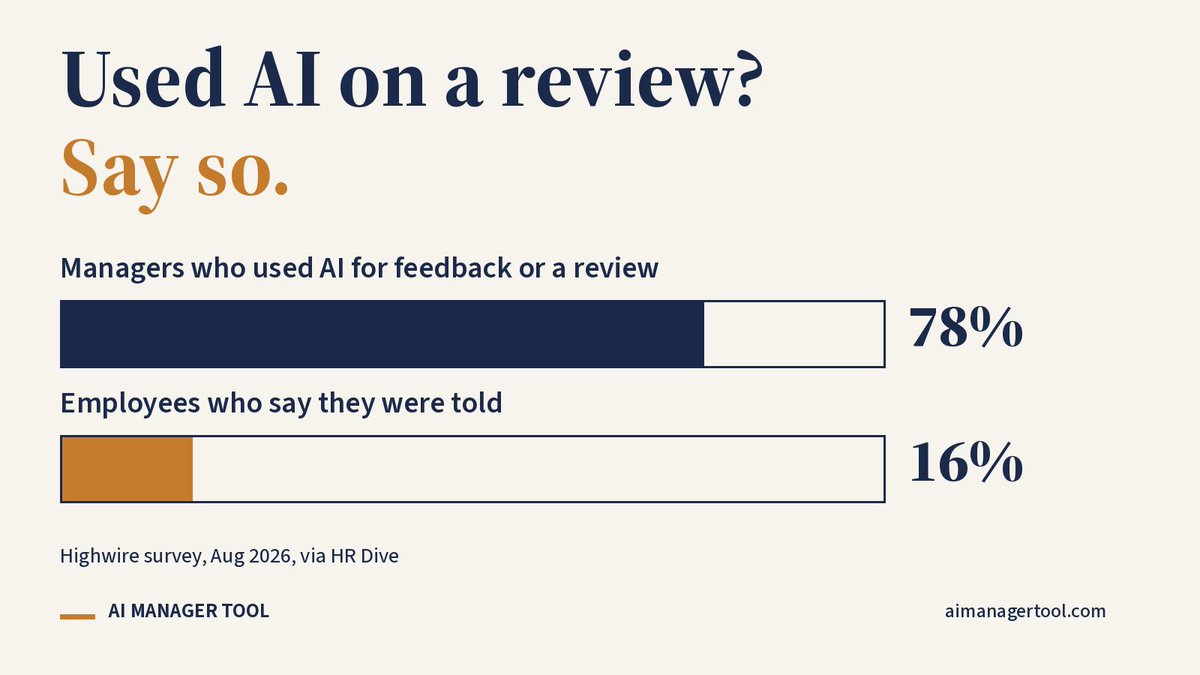
78% of managers used AI for feedback or a review in the past year. Only 16% of employees said they were told AI played a role in theirs.
If AI helped you draft a review this year, would you say so in the meeting?
(Highwire survey, Aug 2026, via HR Dive)
Fewer managers, or managers who relay less?
Tencent published notes from its anniversary all-hands calling for AI in its core products, smaller teams to build new ones, fewer layers of management and faster decisions.
The manager's view: flattening only works if decision rights move down with it. Cut layers but keep every approval at the top, and the managers who remain just get a bigger inbox and slower calls.
So what should go first in an AI reorg: the management layers, or the approvals they exist to carry?
When AI frees up time in a team, who decides where that time goes?
Ireland's Government is weighing a paper for its new Cabinet subcommittee on AI that calls for redesigning public services and "actively redirecting released capacity to service improvement". So far, AI use there is mainly drafting, summarising and processing documents.
The manager's view: freed capacity that nobody assigns quietly gets absorbed by meetings and email. Before any AI rollout, name the work the saved hours will go to.
@vanessmatz@vincent_v_p@Bart_DeWever, an idea for Belgium's AI plans: decide up front where the saved hours go. I'd be glad to help, as an engineer, team leader and AI ambassador who does exactly this with teams.
Should released capacity go back into better service, or be banked as headcount savings?
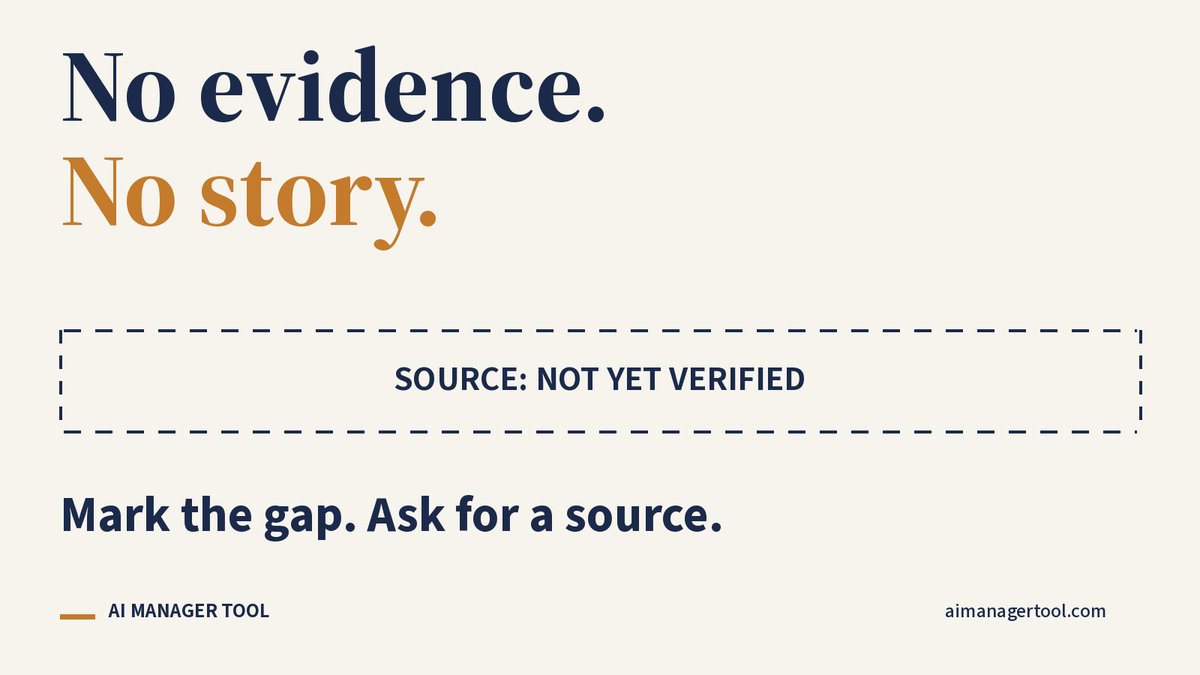
What should AI do when a review objective has no dated evidence?
Mark the gap. Ask for a source. Stop there. A polished paragraph is not a substitute for a record, and three recent examples cannot reconstruct a year.
If your AI screening tool rejects a candidate, who made the hiring decision: you or the vendor?
Workday has asked a US judge to decertify an age discrimination collective of more than 15,000 applicants over its AI screening tools, arguing that its customers make their own hiring decisions. Workday denies the allegations; the court has not ruled.
The manager's view: that defence puts the risk back on the employer. If the hiring manager owns the decision, they must be able to explain every rejection, not just accept the ranking.
Should liability for AI screening sit with the vendor or the employer?
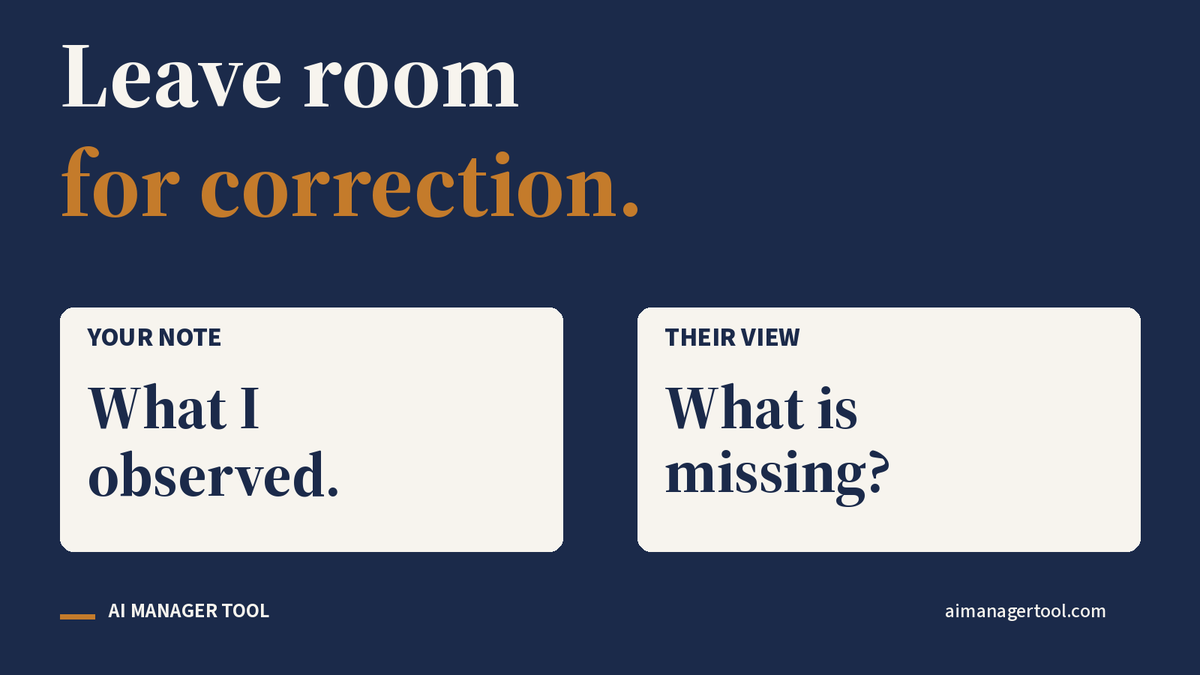
Which line in your review notes would the person correct?
Ask before it becomes a conclusion. Keep their account beside the observation, including disagreement. A blank “employee perspective” field is a question to ask, not a gap for AI to fill.
A weekly meeting means a blocked decision can wait six days.
Ro's CEO ran a daily leadership steer at 8:50 for two years. Sometimes 5 minutes, sometimes 90, until every decision was made.
"The speed of the organization, the alignment just was second to none."
Steal this for your team's status updates. Former Tesla President Jon McNeill on how they talked to Elon:
Problem. Proposed solution. Next step. Three sentences, nothing more.
"Do you think we could try to run the organization on three sentence emails?"
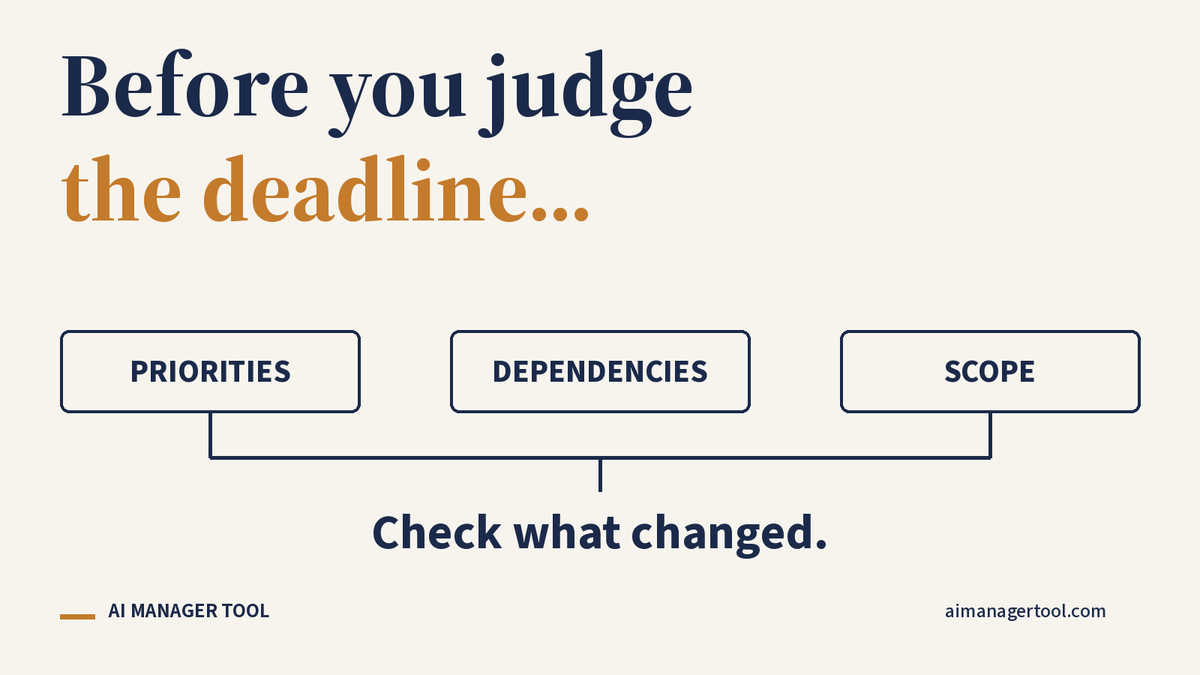
What context would change how you read a missed deadline?
A changed priority, a blocked dependency, an unclear agreement? Record the conditions beside the event. Context is something to check, not a motive for AI to invent.
Can a layoff be "performance-focused" if people never heard about their performance?
Qualcomm has started job cuts in India, with around 1,000 roles reportedly at risk, in a restructuring its CEO called performance-focused. Some affected staff reportedly said they had no prior performance feedback.
The manager's view: if the first honest feedback comes in the exit meeting, the review system failed long before the layoff. Cutting costs is a business decision. Calling it performance is a claim, and it needs a paper trail.
Should performance cuts require documented feedback first, or is that a luxury in a downturn?
A finance team built 40 to 50 agents in a month or two. About 90% are no longer used.
As an AI ambassador, I'd still call that a win. The habit is the real output.
"It got people to think, okay, instead of doing this manually, let me think automation first."
The engineer with the biggest AI bill isn't automatically your problem. Or your star.
Weave's co-founders measure cost per hour of work delivered. Same spend, wildly different outcomes, and that's the coaching conversation.
"Someone could be spending $10,000 but if they're getting 10,000 hours of work out of it... that's a really good deal."
What would turn “shows ownership” into evidence you could check?
A date, an observable action, a source, and what changed. Keep the conclusion separate from the record. If the impact is unknown, say so.
When a company cites AI to cut jobs, is the work being automated or just moved?
Qantas plans to cut 850 Australian corporate jobs, starting with finance, procurement, HR and marketing, as Accenture takes over the work, mostly from teams in India, and AI comes "in time".
The manager's view: outsource first, automate later means the people who know why the process works leave before the AI arrives. Write down the judgement calls before the handover, or you pay for them twice.
Is this an AI transformation, or classic offshoring with a new label?
A year-long project with no one-sentence point will drift. I have seen it on my own team.
Caro's fix, learned the hard way on The Power Broker: write the point down before you start, or three years later you will not know what you are doing.
"You've got to get it down to one sentence."
I see engineers take on a 50% stretch and stall, or stay inside work they already know.
Kotler's rule is smaller than it sounds. Stretch, don't snap. About 4% past current skill, then repeat.
"You want to stretch but not snap."