I know you were waiting to feel a surge of power as you entered 2026
You tried to pray this morning and it felt regular abi, probably even more cold than 2025??
And you’re wondering what is wrong? Is it just you?
No it’s not my dear
Let me even burst your bubble further
2026 is just a continuation of the calender.
2025 was literally yesterday.
We didn’t walk through any portal to get here.
The new year is a mental thing. It’s in your mind that things will become new
It’s in your intentionality that things will become different.
It’s in your rising up and insisting that things work that they will work.
There’s no magic hiding here.
The new year is a resolve to keep pushing. To take a different approach if the one you used last year did not work.
There’s no new year my people.
But there’s you. There’s you that can decide that things will be new because you get up and do the work.
Pray until you feel His presence
Stay with the word untill He breathes into it.
This year, don’t give the devil cheap victories.
Fight for your spirituality!
Blessings!
“Peace I leave with you, My peace I give to you; not as the world gives do I give to you. Let not your heart be troubled, neither let it be afraid.”
John 14:27
When I knew that something was off about some areas of the doctrine I was hearing was when one sister told me that the glossy gold buckle on my shoe was wordliness.
And she was not even joking.
She called me aside from the choir and then was talking so passionately about how that i should beware of the “things of the world”
So this was me as a young 14 year old serving God with all my might. I wasnt trying to be wordly. I just wore the fine shoe my mum bought.
I walked back inside church and i saw that the microphone the pastor was holding had gold studs on the base. I looked around more and saw sprinkles of gold here and there on gadgets in church.
So what made the gold on my shoe sin and the one on the microphone different ?
Why is a sister scolded that the flowers in her reception hall is too much and she is becoming wordly but the stage around the pulpit in that same church is “heavy laden” witn pots and pots of flowers?
I remember when one youth leader said perfumes are demonic and should not be found anywhere near a heaven bound pilgrim, but then we have powerful air fresheners in the ushering unit for the church hall and for Pastors office.
So the hall can smell good but our bodies cannot?
I asked all these questions in the corner of my heart because it wasn’t mathing.
Of course i want to go to heaven. I was not about to allow “worldliness” take me to hell.
The more I asked, the more the Holyspirit breathed on me
Then I saw religion for what it was. A demon that holds men back from really experiencing God
Where people take their own preferences and impose it on people.
Where people cherry pick scriptures and leave the one they don’t want
Where people call something “sin” instead of just saying “these are our own administrative decisions and bylaws”
Where instead of telling people the truth and trusting that the Holyspirit is able to make them disciples, we want to keep people in church by using fear, using coercion and manipulating scripture to suit our own preferences.
This was when I got my freedom. When I opened the Bible for me, when I asked the Holyspirit questions when I could not understand.
This was when I went from just being Christian to being a believer.
I’m saying all this to say “Know Jesus for yourself”
There’s no more veil.
We can now see Jesus face to face.
Blessings!
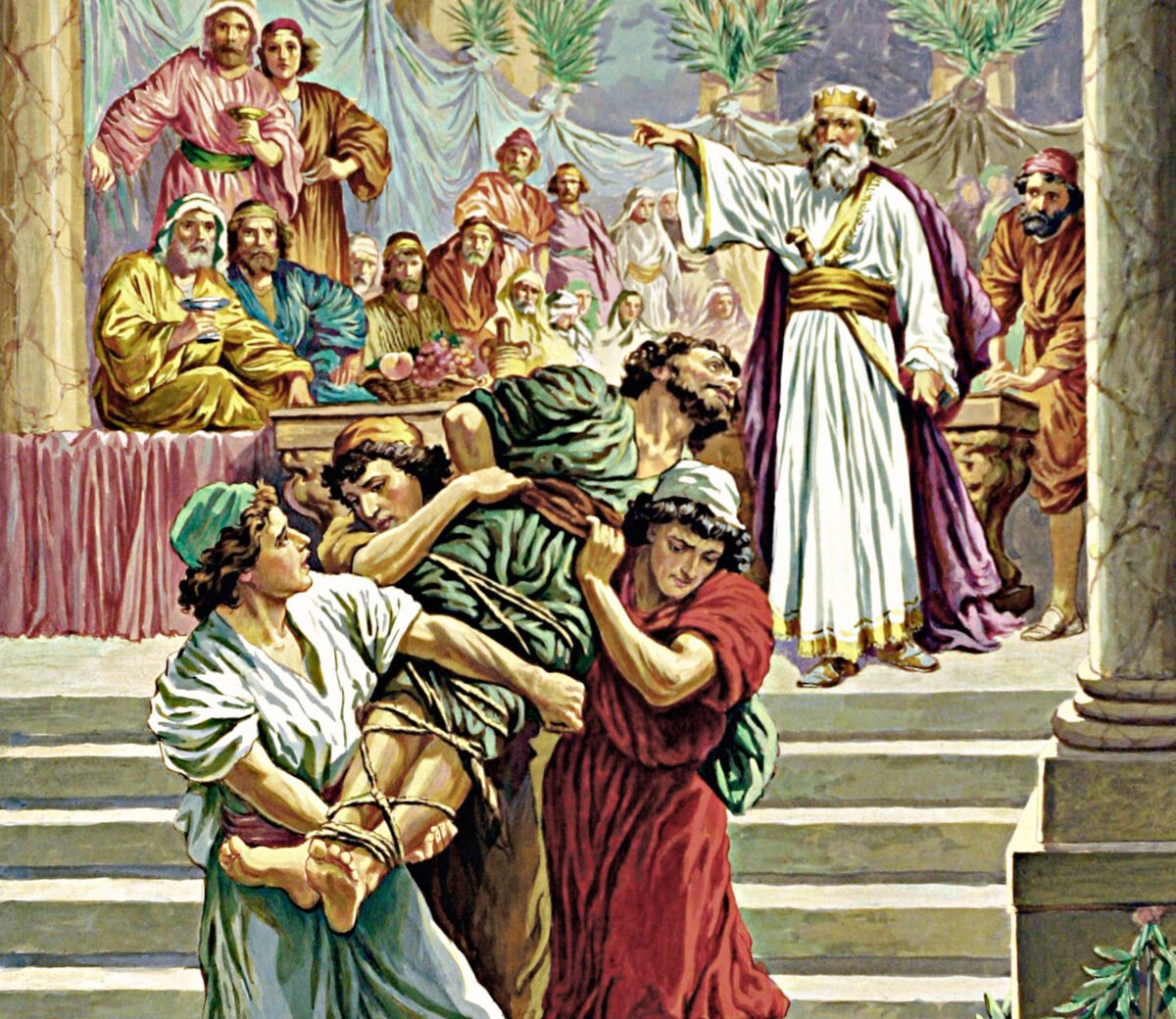
Title: The Parable of the Wedding Feast Explained Through Jewish Culture
Matthew 22:1–14
When we read the Parable of the Wedding Feast some of us feel confused, especially about the man who was thrown out for not wearing wedding garments. At first glance, it sound harsh or unfair. But when we read this parable through Jewish culture, everything becomes clear, logical, and deeply powerful.
Jesus was speaking to Jewish listeners, using Jewish wedding customs they understood very well. This parable is not about cruelty, it is about God’s grace, invitation, and righteousness.
Weddings in Jewish culture, especially the wedding of a king’s son, were among the most important and joyful events in society. Such a wedding was not a private ceremony. It was a public celebration that could last many days. The honor of attending was immense, and rejecting the invitation was seen as a serious insult.
In Jewish custom, invitations to a wedding were sent in two stages. The first invitation announced that the wedding was coming, and those invited agreed to attend. The second invitation was sent when everything was ready, telling the guests that it was time to come. When Jesus begins the parable by saying that a king prepared a wedding banquet for his son and sent servants to call those who had been invited, His Jewish listeners immediately understood that these guests had already accepted the first invitation. Their refusal to come was not ignorance, it was rebellion and dishonor.
This is why the response of the invited guests is so serious. Some ignore the invitation and go back to their farms and businesses. Others go even further and seize the servants, mistreat them, and kill them. To the Jewish mind, this clearly reflected Israel’s history. God had called Israel into covenant, and again and again He sent prophets to call them back to Him. Instead of listening, many ignored the message, and some even killed the prophets. Jesus was not telling a new story, He was retelling Israel’s story in parable form, and the religious leaders knew it.
When the king responds by judging those who rejected the invitation and destroying their city, this would not have sounded strange or cruel to a Jewish audience. In Jewish covenant theology, privilege brings responsibility. To reject a king’s invitation, especially after agreeing to attend, was an act of open rebellion. Many scholars understand this part of the parable as a prophetic warning about the coming destruction of Jerusalem, which happened in AD 70. Jesus was showing that persistent rejection of God’s grace eventually leads to judgment.
After this, the parable takes a shocking turn. The king tells his servants to go into the streets and invite everyone they can find, both good and bad. In Jewish society, especially at a royal wedding, this was unthinkable. A king’s banquet was for honored guests, not for strangers, outcasts, or morally questionable people. Yet Jesus deliberately includes this detail to show the radical nature of God’s grace. When those who were first invited rejected the call, the invitation did not disappear. It was extended to everyone. This is where the Gentiles enter the picture, along with sinners, the poor, and the socially rejected.
The wedding hall becomes full, and the story seems to end happily. But then Jesus introduces the most misunderstood moment in the parable. The king notices a man who is not wearing wedding clothes and asks him how he entered without them. The man is speechless. This detail is crucial. His silence shows that he has no excuse.
In Jewish royal weddings, it was common for the host to provide wedding garments. This was especially true when guests were invited unexpectedly from the streets. The garment was not a test of wealth or social status. It was a gift. To refuse to wear it was to dishonor the king and reject his authority. This man was not thrown out because he was poor or ignorant. He was thrown out because he deliberately rejected what the king had provided.
In Jewish thought, clothing often symbolized spiritual condition. Throughout the Old Testament, righteousness is described as a garment. Isaiah speaks of being clothed with garments of salvation and a robe of righteousness. Zechariah describes the removal of filthy garments from the high priest and the giving of clean ones. Jesus listeners would have immediately understood that the wedding garment represented a kind of righteousness that comes from God, not from human effort.
The man without the garment represents someone who accepts the invitation but refuses God’s terms. He wants to be present at the feast, but he does not want to submit to the king’s provision. In modern terms, he wants the benefits of the kingdom without honoring the King. This is why his punishment is severe. In Jewish culture, rejecting a king’s gift at his son’s wedding was a direct act of contempt.
This parable teaches that grace is free, but it must be received properly. The invitation costs nothing. The garment costs nothing. Everything is provided by the king. But it must be accepted. A person cannot stand before God on their own righteousness and expect to remain in His kingdom. The wedding garment points forward to the righteousness of Christ, which is given, not earned.
When Jesus concludes by saying that many are called but few are chosen, He is not saying that God invites many but only desires a few. In Jewish understanding, being “called” means being invited, while being “chosen” means responding rightly to the invitation. God’s call goes out to all, but only those who humble themselves and receive what He provides remain at the feast.
This parable fits perfectly with the wider biblical story. It connects with the Jewish wedding imagery found in John 14, where Jesus speaks as a bridegroom preparing a place for His bride. It connects with Revelation, where the marriage supper of the Lamb is described, and the bride is clothed in fine linen given to her. From beginning to end, Scripture presents salvation as an invitation to a wedding, where joy, covenant, and union are central.
In the end, the Parable of the Wedding Feast is not a message of fear but of honor and mercy. The door is open. The table is prepared. The garment is ready. No one is excluded because of background, past sin, or status. The only ones who are excluded are those who refuse the King’s gift and insist on standing before Him on their own terms.
The question Jesus leaves with His listeners, and with us today, is simple. Are we going to accept the invitation and humbly wear the garment the King has provided, or are we going to stand before Him clothed in our own righteousness and be found speechless?
So based on popular demand, I decided to write about it. I hope it blesses and wows you as it did to me when I pondered on it yesterday.
Now, while I was studying this particular text (Matt. 6:33) yesterday, it dawned on me that Seeking the Kingdom of God and His righteousness is like taking a road trip with a destination in view. Keeping our eyes focused on that goal ahead of us.
Now let me explain it with an analogy many of us will understand. The Christian journey is like travelling from Lagos to Abuja. With Abuja representing the final destination (Heaven) and Lagos the starting point.
In this journey, we make advancement and progress only by an ever-increasing knowledge of the Lord and in His righteousness which means knowing how to live, act, and relate with others. This knowledge comes through God’s word and from spending time in His presence.
But here’s the painful part… Many believers are not moving (progressing).
We’re sitting in Lagos, praying and crying for blessings that God has already placed on the road. We’re asking for miracles that God has arranged in specific places on our journey to the final destination, but those places are not at the starting point. They are waiting for us along the journey of seeking Him.
In Matthew 6:33, Jesus didn’t mean just to “Seek My Kingdom first.” He was also saying, “Start the journey. Move. Walk with Me. As you go, everything you need will meet you.”
In fact, according to Dr Myles Munroe, the word “Added” in “Shall be Added unto you” as seen in Matthew 6:33 (KJV) in Greek is the phrase (to magnetize). Which means, as we progress in this journey, seeking the knowledge of God and spending time in His presence, our lives begin to attract those things that we are so worried about.
Because whenever we live in God’s will and by His principles, we receive His provision and promises.
Now think of it this way, that that thing you’ve been praying about for years, God already positioned it. Imagine that in this road trip from Lagos to Abuja your international scholarship is waiting in Ibadan.
Your dream job is waiting in Akure. Your God-ordained spouse is standing in Akoko waiting. Your dream house is waiting in Obajana. And that influence and dominion you desire is waiting for you in Lokoja.
Think of picking these things up the way you pick up gems and chips in Subway Surfer or Temple Run while still continuing your journey running to the finish line.
None of these things are in Lagos. None of them are at the starting point. God put them on the way because blessings are attracted to those who are moving, not those who are sitting still praying for a miracle.
And this is what many Christians don’t know. This is where we miss it. God doesn’t respond to stagnation. He responds to movement. Destiny opens up as you go, not as you sit.
And yes, the journey may humble you. There may be flat tyres. There may be heatwaves. There may be delays. There may even be bandit attacks on the road. Times when you don’t know if you can keep driving. Times when all your strength dries up. But Jesus said, “Be of good cheer, for I have overcome.”
This means that the road may be rough, but the victory has already been sealed.
Even Jesus endured His own trip to the finish line. For the joy that was ahead of Him, He despised the shame. He despised the nails. He despised the humiliation and endured the Cross because He saw the glorious destination ahead.
But here is the most painful part of this revelation…
Many people have aborted their journey. Not because God failed them, but because they stopped moving. They parked to enjoy the gems they’ve picked up. They took detours. They got tired and sat with the wrong people at the wrong bus stop.
Some met pleasure by the roadside and never continued.
Some entered relationships with people who didn’t value Heaven, who didn’t value purpose, who didn’t value destiny and their journey ended there.
Continued below🧵
Episode 2.
So we finally started helping our mates and juniors alike
The seniors wanted to force a rivalry because we contested unopposed 😂🤷🏽♂️
Our mates chose us because they felt we were the best pair
So automatically we had won