Scientist at @HakaiInstitute investigating biological impacts of OA. Previously a @UBC postdoc and Fulbright Fellow at @OSUCEOAS Tweets my own. She/her
A new paper by Hakai Institute researchers points to bull kelp—those long whips seen on Pacific beaches—as an “ideal” biological indicator species for marine planning efforts in the Northern Shelf Bioregion. See the full paper 🔗https://t.co/tKkFbSWLLr
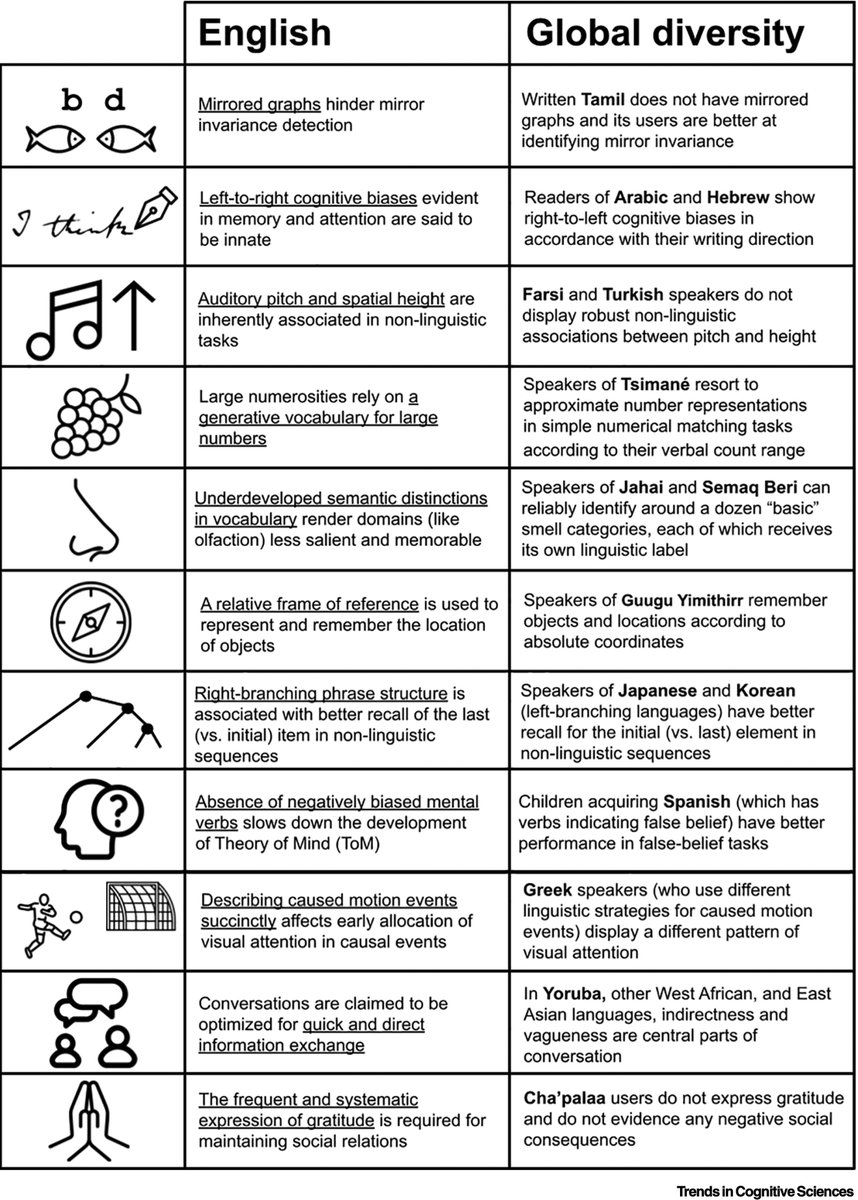
Over-reliance on English hinders cognitive science: it has led to premature claims of universality (due to over-sampling of English speakers) and limited the cognitive constructs being examined (due to the use of English as a meta-language). https://t.co/XH56AS0B8K
Water bear, moss piglet, tardigrade—whatever the name, they're all around us. Anywhere there's a thin film of water, there may be tardigrades. Including ones that are new to science.
Introducing the fifth hakaiensis species!
@RbcmHydroids@pittaro90
https://t.co/OvH3oSG5MP
@insituphile I feel very similar.
Also, as much as it is always fun to go and catch up in person, I feel like I need to cap my C footprint and reserve my flights to really go back home to my family, who also are more frail and vulnerable and can’t come to visit me.
From the Narwhal, 1 B barrels produced: https://t.co/UuX5FFjYKb. Equivalent to ~80% of Canada’s 2020 emissions spread out over 30 yr lifetime of the project. This is heading in the wrong direction and completely disregards the message from the #IPCC report out this week.
A team of female scientists at @HakaiInstitute's state-of-the-art lab on a remote B.C. island are untangling the effects of ocean acidification on shellfish and other marine organisms. #CimateCrisis#OceanAcidification#QuadraIsland https://t.co/9wVrXcluaG
Crucially important work in characterizing CO2 dynamics in the NE Pacific Inside Passage spanning BC and AK. Almost 250k observations! 😳 Read @Wiley_Evans thread to get all the details. Spoiler: things are changing FAST
British Columbia thinking about how Ocean Acidification and Hypoxia will affect our region and what can we do to prioritize science, mitigate and adapt to the future. Very honoured to be part of this highly collaborative initiative led by the BC regional government
An action plan for ocean acidification and low ocean oxygen levels is coming in British Columbia.
Emerging work from Hakai's @Wiley_Evans@IriaGimenez and a whole talented team of folks from around the province
https://t.co/TmXQrP7wK3
via @RochelleBaker1 in @NatObserver
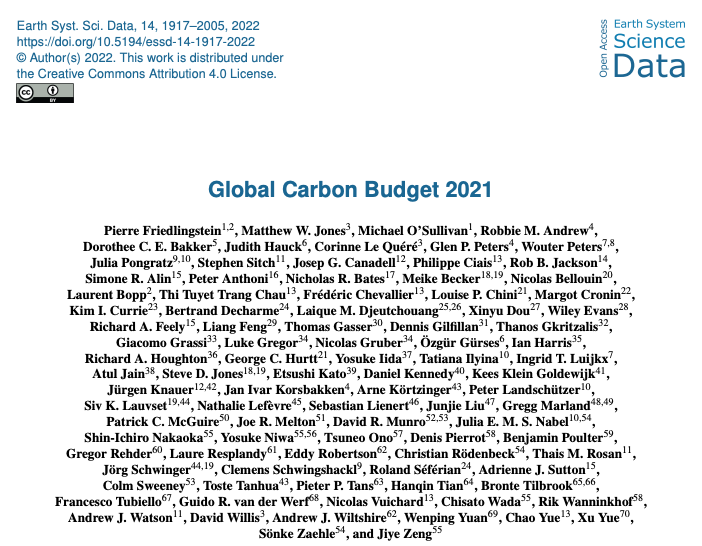
New Global Carbon Budget!
Massive effort includes data submitted by @Wiley_Evans @Katie_Pocock_ and many many others that was used to calculate the ocean carbon sink portion of the budget.
Budget gets used in IPCC synthesis reports + other policy-oriented outputs