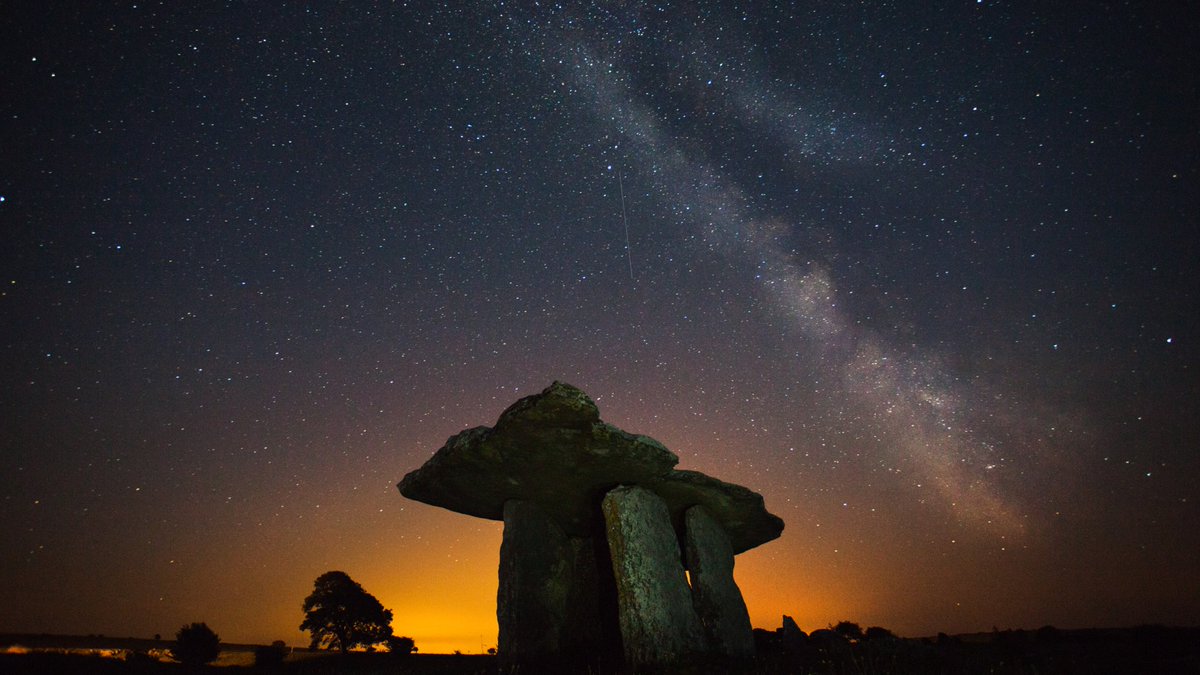
The North Star in ancient Ireland was known as N'iatha, which means "that which does not turn". It may have been a symbol of social order, as Irish society revolved about the poet, smith and seer (Áes dána) much like the heavens circle the Pole star. #Gaelic#astronomy
200 years ago today, Napoleon Bonaparte died in exile on the island of St. Helena. He was 51 years old and very ill, probably with stomach cancer. His legacy remains as controversial as ever.
French President Emmanuel Macron paid tribute to Napoleon Bonaparte, commemorating the bicentenary of the death of an emperor who overthrew the nascent Republic before expanding France's empire across Europe https://t.co/xHTGjENCey
Norman Garstin's 'The Rain it Raineth Every Day' (1889) comes to mind as I stare out my window today.. #Limerick born painter was known for his moody rain scenes. ☂️⛈️
Minister O'Donovan, the OPW and the National Monuments Service are deeply dismayed by the acts of vandalism perpetrated at the Neolithic burial monument at Loughcrew in Oldcastle, Co. Meath. READ MORE ⬇️
https://t.co/qNN8uMaBY6
It's said the druids inaugurated the procession of the heavens by sacrificing a sacred bull at Samain. The driving of cows over bonfires at #Beltane (year's half point) may correspond to the sun's movement about the Milky Way. The Irish for #MilkyWay means 'path of the white cow'
Dawn at Beltany Stone Circle, Donegal, Ireland - A monument older than the Egyptian pyramids and comprised of no less than 64 standing stones. Linked to sunrise & sunset on #Beltane. Its name shows a religious significance meaning: ‘lighting the ceremonial torch’. 🔥☀️
Beltane has been noted as a 'fire festival', but equally as important is water. Springs & wells were consecrated in May, with girls engaged in well dressing & flowering. A common story is of a witch 'stealing the flower of the well' at May Day dawn. #Sun#Water#Power#summer☀️🌊
#MayDay marks the festival of Beltane or Cétsamain: 'beginning of summer'. A holiday of blessing animals and the movement of herds to open pasture. Both land & animal were ritually purified by the scattering of ashes from #bonfires. Reflects the livestock economy of old Europe.
Booleying, meaning ‘milking-place in summer pasture’, An ancient practice were livestock were gazed in the hills so that planting could begin. The 'boolies' were the responsibility of young women as men tilled the fields. Survived in #Ireland until the 1940s.
In 1860, Jeremiah Bernard Collins left his native Cork & braved the Atlantic to start a new life in Cincinnatti, Ohio. A century later, his grandson, Michael, made his own epic voyage. Even as we mourn his loss today, we celebrate his triumph - ní bheidh a leithéid arís ann.
High King Cormac mac Airt was the prototypical European 'Wolf-man': A semi-divine leader raised by wolves, founder of the Tara-kingship, conqueror of Ireland & Britain, & wise sage who established a golden age. #Rome#Romulus#Hibernia
The Caves of Kesh, #Sligo, Ireland.
The ancient Irish believed this place a gateway to the #Otherworld and buried their dead inside to help guide them to the afterlife.
Cormac Mac Airt, the legendary High King of #Ireland, was said to have been born by a well at the foot of Keshcorran, and was raised by a she-wolf in one of the caves, echoing the story of Romulus & Remus who were also raised by a #wolf in a cave.
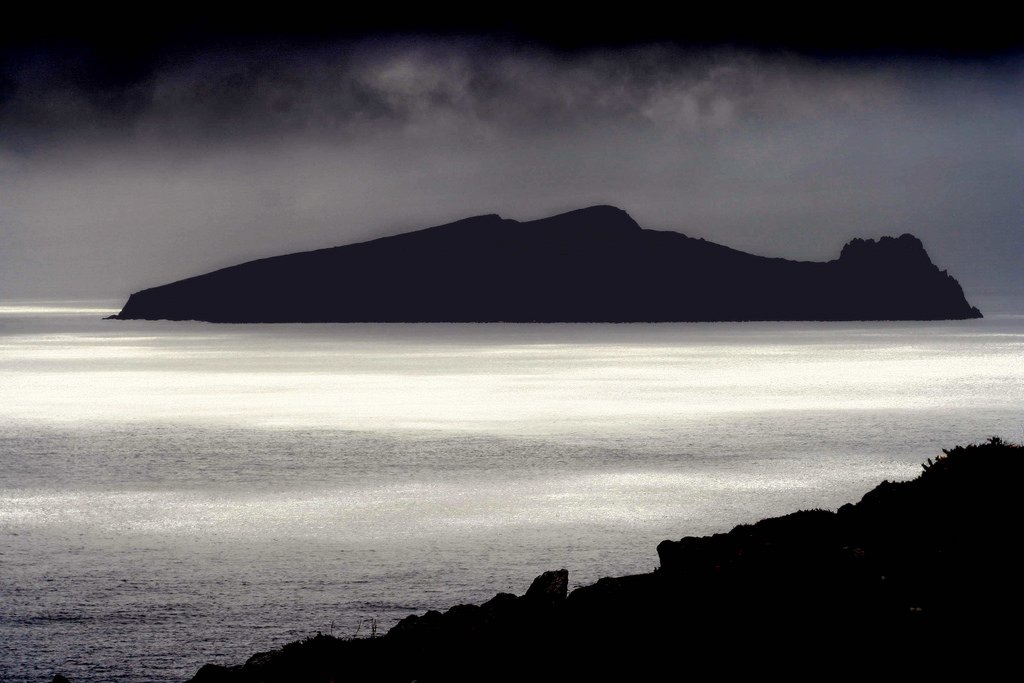
Rún - Old Irish reflecting the mystical power of language, symbol, & written word, esp. when used covertly. Meaning: a mystery, a secret purpose, a resolution, hidden. Shares its root with Norse rūnō, which was the secret knowledge [#runes] Odin received at the Yggdrasil.
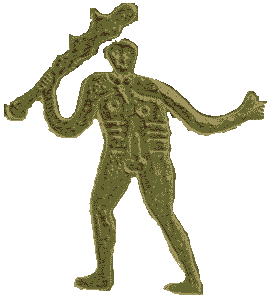
In the Irish tradition, the Long Arm / Lamhfada signifies 'power at a distance': the ability to influence via words, sorcery or magic. Also linked to supernatural or regal authority. Often depicted as a club as with hammer gods like Ogma & Thor.
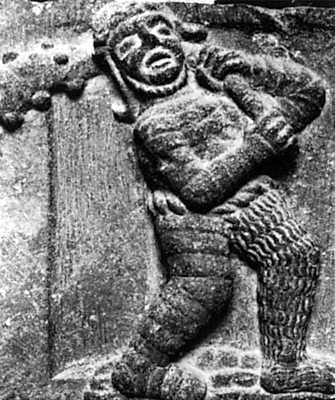
Sucellus, the hammer-god of the #Celts. His name means 'the Good Striker' or 'He who strikes to good effect'. He awoke the seasons and warded off evil with strikes from his mighty hammer.
The #Dagda is the Irish father-god. His name means 'the good god'. Like Sucellus he carried a huge club of which one end killed the living and the other revived the dead. His cauldron was used to prevent famine & disease.












![IrishStoryTime's tweet photo. Rún - Old Irish reflecting the mystical power of language, symbol, & written word, esp. when used covertly. Meaning: a mystery, a secret purpose, a resolution, hidden. Shares its root with Norse rūnō, which was the secret knowledge [#runes] Odin received at the Yggdrasil. https://t.co/8ZIC84r3JH](https://pbs.twimg.com/media/Ez2JosQXEAQhGfH.jpg)