How are the collecting ducts of the kidney formed and maintained?
This issue’s cover features work by Karen I. López-Cayuqueo & team on the role of transcription factor TFAP2A in the architecture of the adult—but not embryonic—renal collecting duct: https://t.co/tDmGPGsFTM
The image shows collecting ducts (AQP2, red), proximal tubules (LTL, green), and nuclei (DAPI, blue) from a neonatal Tfap2a conditional knockout mouse kidney.
@zentree@juancarlossaid Tiene razon no es proporcional al dinero invertido. Es mas, porque aca los salarios son mas altos (con derechos sociales) y hay mas acceso a recursos para hacer investigacion. Que es el problema para volver a Chile. La ciencia es global y usted lo sabe.
Sulfate is an important nutrient. A team from #CharitéBerlin@MDC_Berlin@LeibnizFMP@Uniklinik_Fr has made a key discovery regarding sulfate metabolism in a female patient, opening up a whole new therapeutic approach for sulfate-related diseases. https://t.co/fHT6FdALZE
Happy to share the last publication of my postdoc at @LeibnizFMP@MDC_Berlin. We demonstrated the important role of SLC26A1 (SAT1) in human sulfate homeostasis.
JCI - <i>SLC26A1</i> is a major determinant of sulfate homeostasis in humans https://t.co/aQT3tFjKvp
This year I went to Chile through the support of @MDC_Berlin(back to the roots lab project).
Thanks for giving me such a nice opportunity to share in my home country my research and experience as a Chilean scientist living in Germany.
Thanks to the nice people in Chile that made this possible, my former lab @CECs_cl(particularly to Dr. Carlos Flores Pinilla ) and @USanSebastian Valdivia (Roberto Buchhorsts Vargas, Director Asuntos Estudiantiles).
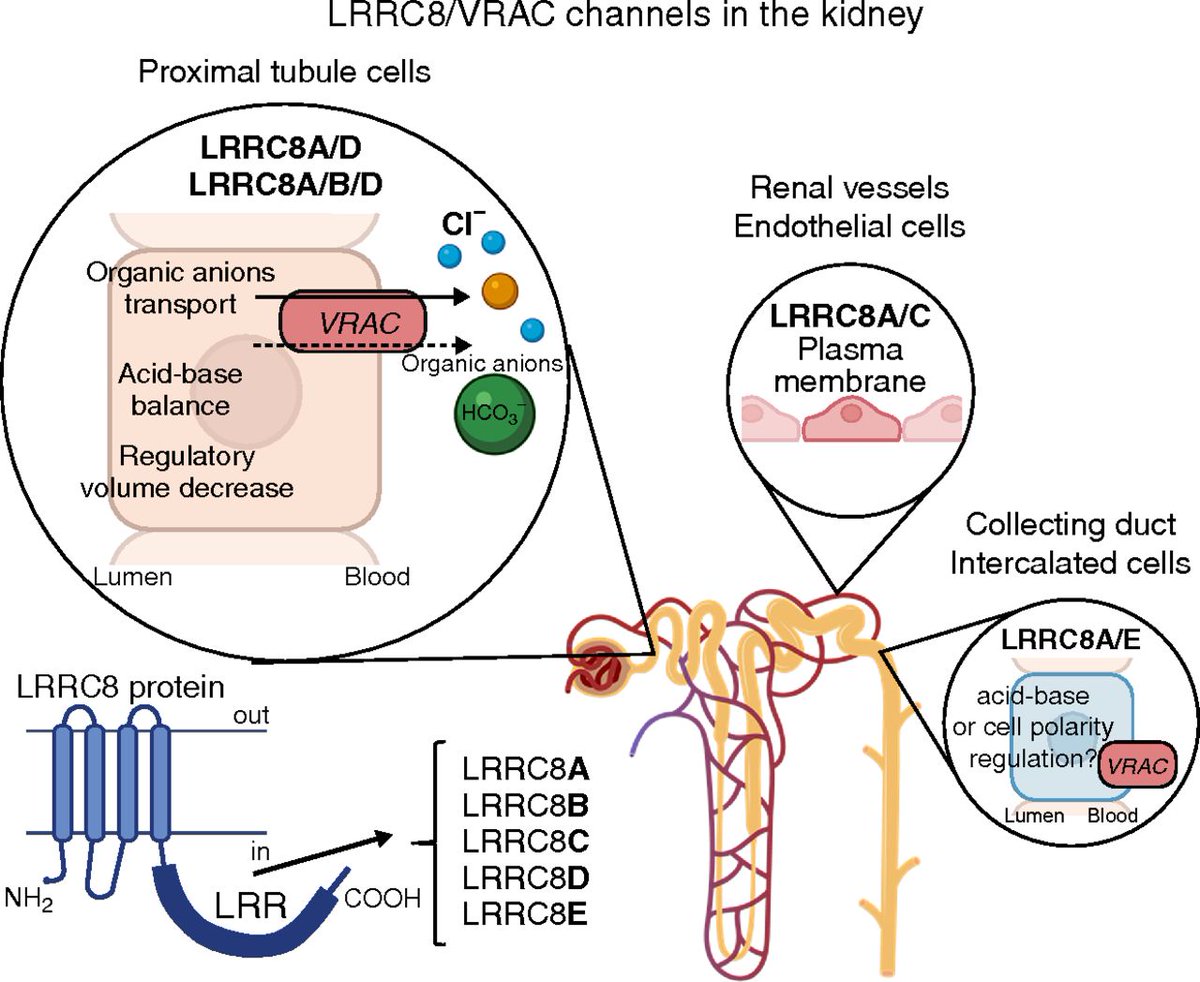
"...the article by Lopez-Cayuqueo et al. represents a breakthrough moment of pure scientific excitement." This Editorial discusses recent developments in our understanding of volume-regulated anion channels in the kidney https://t.co/qznbragEr3
Want to know more about volume-regulated anion channels in the kidney? Check these new papers about their role and potential as a therapeutic target for proximal tubular injury treatment.
https://t.co/C5xv0uAtLE
https://t.co/pAiIvwnABZ
Unfulfilled Expectations Open New Horizons: What Have We Learned about Volume-Regulated Anion Channels in the Kidney?
OP^2 editorial on the exciting Thomas Jentsch's group research manuscript.
@KidneyInCVD@JASN_News
https://t.co/QMhq8YkUcF
https://t.co/LFTl2VHfHn
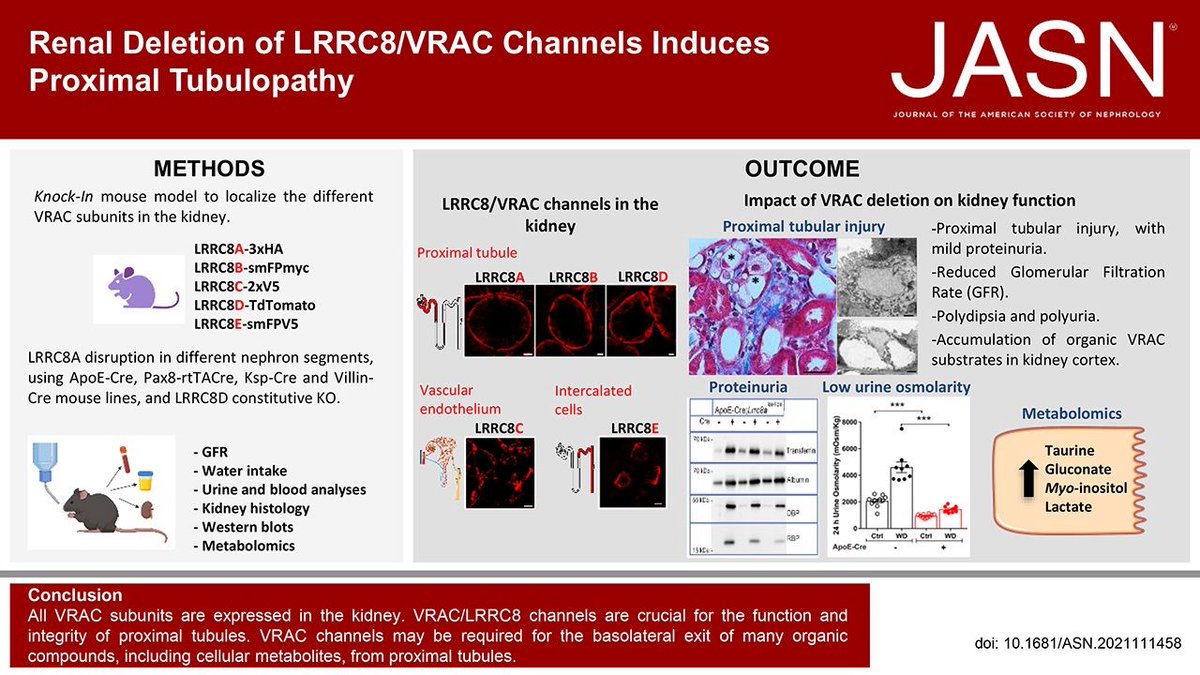
This study shows that volume-regulated anion channels are built of five types of LRRC8 proteins, four of which mediate exit of organic compounds in nephrons, mostly proximal tubules, in mouse models https://t.co/1sgyikB3PA
Happy to share our work! VRACs are amazing channels! LRRC8A/D are crucial for proximal tubule function. A big thanks to all co-authors and the important colleagues listed in acknowledgments. @MDC_Berlin@LeibnizFMP
https://t.co/d7OEfMy2DC