I’m speaking at PyTorch Day Japan 2026 in Tokyo on Dec 10! I’ll share what’s new this year for anyone running PyTorch on @Apple devices!
There’s a great speaker lineup, and registration is still open. Hope to see you there!
https://t.co/FGLnJfJcfX
3.29 million PyTorch downloads on Mac in October. Up 20.5% over September!
There’s a lot of GPU sitting in people’s laptops. We’re making it easier to put it to work. 🤗🔥
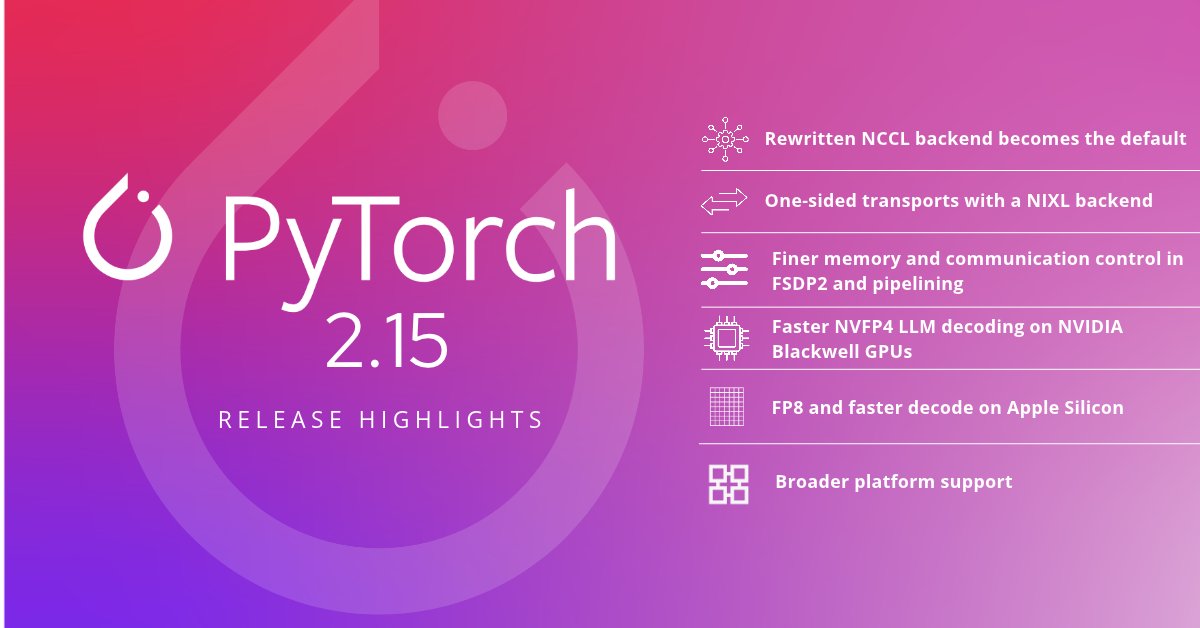
PyTorch 2.15 is here, with 3,117 commits from 583 contributors and updates across distributed training, NVGEMM, Apple Silicon, and accelerator platform support.
The release makes the rewritten NCCL backend the default and adds one-sided transports with a NIXL backend. FSDP2 and pipelining gain finer memory and communication control. It also brings faster 4-bit (NVFP4) LLM decoding on NVIDIA Blackwell GPUs, FP8 and faster decode on Apple Silicon, and broader platform support.
On Thursday, November 5, at 11 AM PST, join Tristan Rice (@rice_fry), Natalia Gimelshein, Huy Do, and Jane Xu (@janeyx99) (@Meta) for a live PyTorch 2.15 Q&A, moderated by Chris Gottbrath (Gottbrath Tech). The speakers will share an overview of the release and answer community questions about PyTorch and the new capabilities in this release.
🔗 Read the release blog and register for the live Q&A: https://t.co/PAsbeCXk0C
Lots of exciting changes coming to MPS in @PyTorch 2.15 release:
- Faster LLM decode
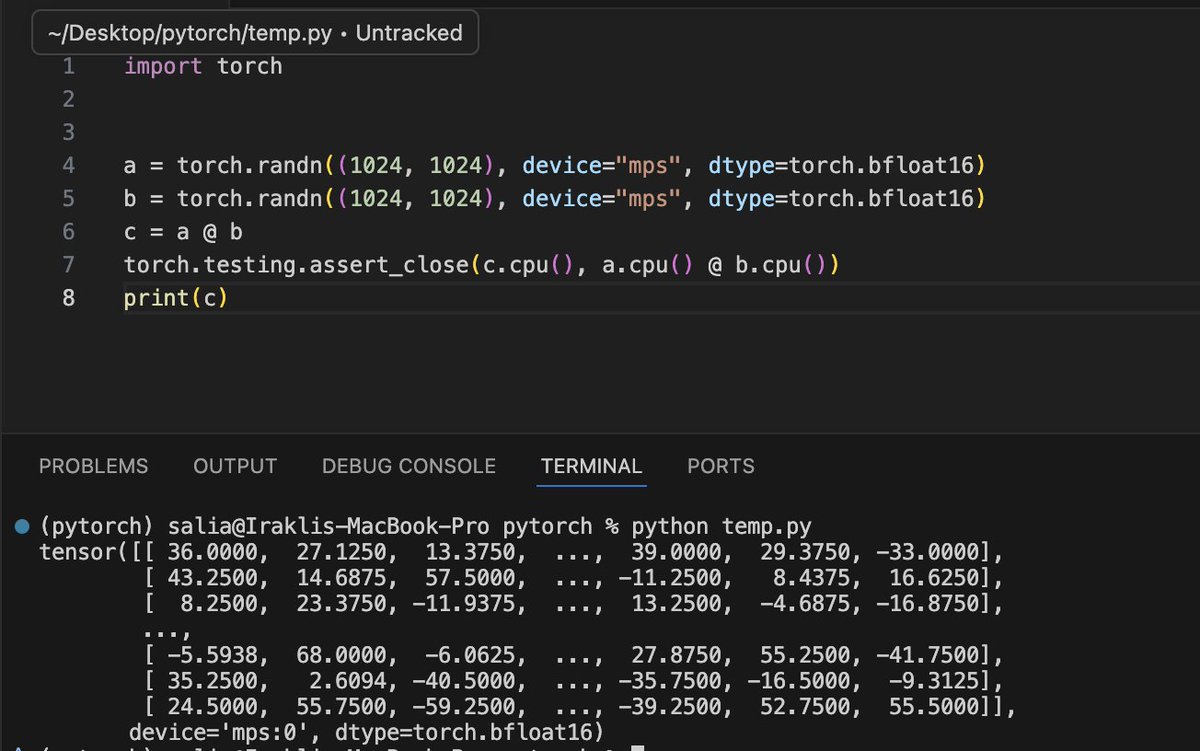
- FP8 dtype on MPS
- Better Linear Algebra support
- Less memory usage
- And plans for 2.16!
Take a look at the blog post for more details!
https://t.co/ksjJ99Gfnp
@norpadon@ducha_aiki Thanks! Yeah some of the remaining ops like matmuls/convs are harder to beat with native kernels but we are getting there :) I'll let you know once MPS Graph is gone
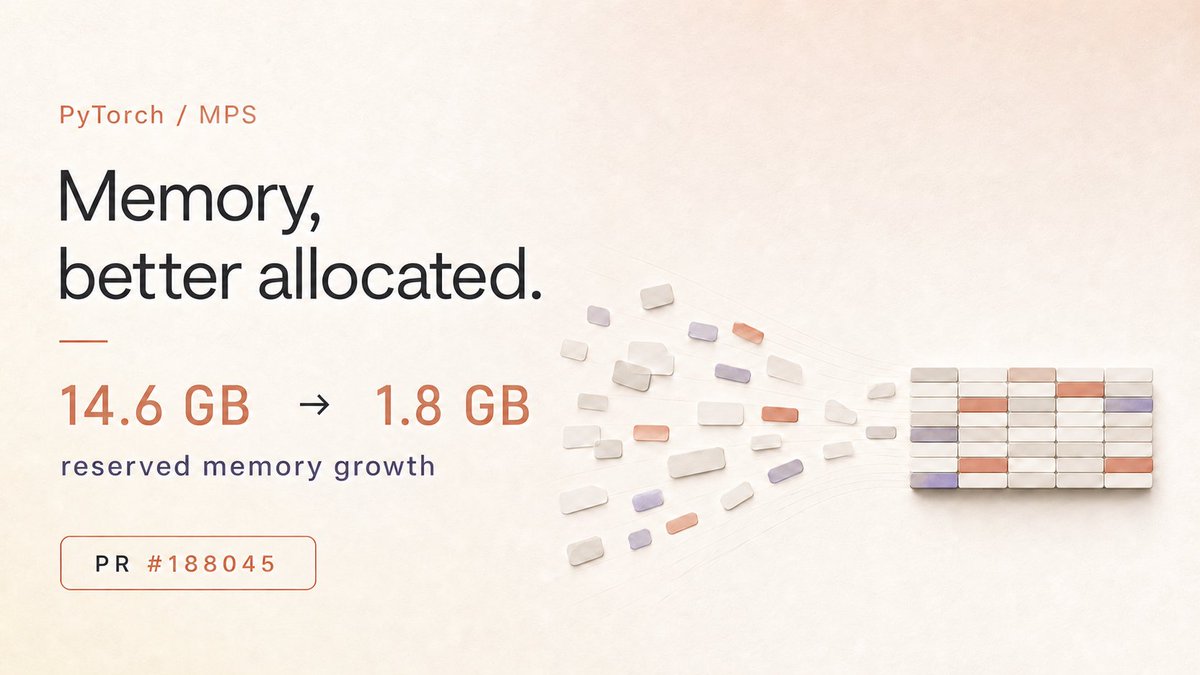
MPS memory usage has always haunted users running variable-length workloads.
This PR brings CUDA-style splitting/coalescing to MPS which leads 5 times less memory usage!