Big Debate: A school in Mukono has indefinitely suspended over 10 students...for alleged crimes ranging from drug abuse, sharing porn & taking part in house orgies. The issue though is that all these "crimes" happened during holidays. The students were not in school. Their parents are now up in arms. They argue that "sins" committed out of school time can't be punished at school. One parent says, "They were not in school, not in uniform. Those are cases for us parents to handle."
Anyway, is a school right to punish students for crimes outside school, during holidays?
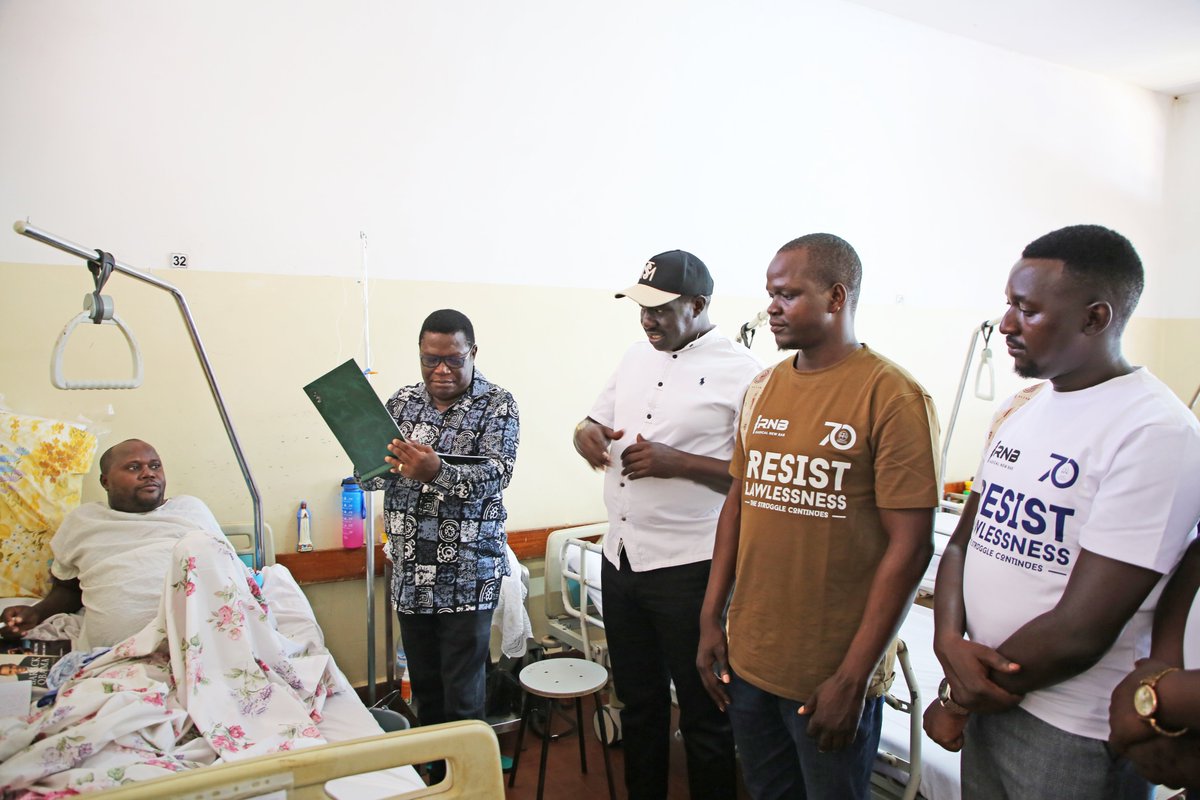
Thank you, Hon. @norbertmao and the Uganda Law Society delegation, for visiting our hospital, offering a listening ear, and showing compassion to survivors of the Opit Bus road accident. Our thoughts remain with the bereaved families, and we wish the injured a speedy recovery.
@Fatuma810132 We use that to pay the bride's entourage during traditional marriage, I mean those brought to confuse us. We even put it in an envelope 😁
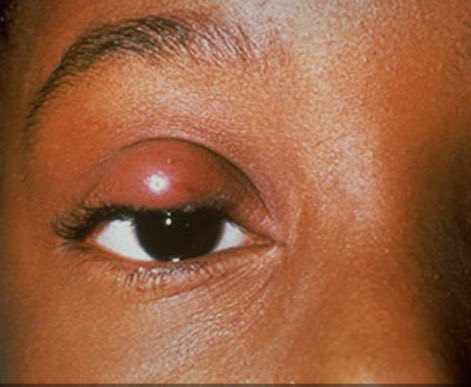
Refusing to give your dog food is not responsible for this swelling!
This is caused by a bacterial infection. Seek eye care early for treatment.
#debunking myths
I had a very funny discussion with one of the P.2 kids whose eyes I was screening today.
Me: Do you have any problem with your eyes?
Her: Yes, when I cry, they become red
Me: Do you cry a lot?
Her: yes
Me: You should consider reducing the number of times you cry so that your eyes don’t turn red.
Her: isn’t there any medicine I can put after crying ?
Me: 😂😂😂😂🙌🏿
Sometimes a patient comes to the hospital for one problem, only for the doctor to discover something far bigger, especially when what brought them in is far easier to fix than the issue staring back at you.
It’s my routine to examine both eyes whenever a patient sits at the slit lamp. I use that moment to screen the “good” eye. So, I usually start there before moving on to the eye with the complaint. If I had a dollar for every time a patient stopped me to say, “Doctor, you’re examining the wrong eye,” I would be rich by now. All my mother’s financial problems would be solved.
I bring this up after weeks of reflection. Lately, I have been beaten down. Whenever young people walk into my clinic with a simple eye problem and leave with a shuttered world, burdened by multiple diagnoses, some medically incurable, I am left with a deep sense of helplessness.
There was one such case: a vibrant young soul who had sustained an eye injury two years earlier, resulting in a cataract. As usual, I began by examining the good eye. A careful look at the optic nerve head, the nerve that connects the eye to the brain revealed a subtle change, one many would easily ignore: a small inferior notch. It was a quiet sign of glaucoma in its earliest stage.
I could have brushed it off as “normal” had it not been for the additional training I had in India. After all, the eye sees only what it knows. But I didn’t. Dr. Divya, the ophthalmologist who taught me how to detect subtle changes on the optic nerve during my stay in India would have been proud.
Often, during prayer, I question God about the things that are unclear to me. One of those questions has always been my career path. Not long ago, as I paced back and forth in my living room, I asked Him again: 'Why did I have to go to India for training? I barely have the resources to use what I learned. I’m slowly losing the skills I worked so hard to acquire. What was it all for?'
Then I thought about this patient.
I realized that God can move heaven and earth for just one person. That I was hustling in India, hating the food, the weather, and the relentless work just so that one patient, from a deep village in Kaabong, could one day save money for an entire year, board a bus, and come to see me for a seemingly simple eye problem… while God had already foreseen the much bigger one that needed attention.
After spotting the abnormality, I checked his intraocular pressure. It was 30 mmHg, well above the normal range of 10–21 mmHg. That confirmed it: what I had seen on the optic nerve was no coincidence. He had glaucoma, caught at the earliest stage I had ever encountered. I say early because most patients come when it is already too late, when the optic nerve has been irreversibly eaten away.
As part of routine care, I checked his blood pressure. It was 180/103 mmHg. Alarmingly high—especially for someone so young. I sent him for renal and liver function tests and contacted a physician for review. Hypertension in a young person raises many questions.
The lab results returned normal, but that was not a relief either. Because what was causing it then? We agreed with the physician to see him after a month and instructed him to monitor and record his blood pressures daily so that we could decide the next phase of treatment.
Definitely the eye surgery had to be put on hold, but the Glaucoma treatment was initiated immediately.
So, a young soul who came in with a “simple” traumatic cataract walked out with a diagnosis of glaucoma in his good eye and systemic hypertension, two chronic conditions requiring lifelong medication and endless hospital visits.
Cases like this remind me that taking time with a patient is never mundane. That seeing the whole person, not just the eye, is not a cliché. And that checking the “good” eye is not optional. It is essential.