From the perspective of a global strategic think tank, analyzing the transition from a "pre-war" phase to a "total war" state requires a rigorous synthesis of historical cycles and contemporary structural ruptures.
The following is a high-level strategic translation and analysis of the 1931–1940 transition and its modern parallels.
Global Strategic Analysis: The Descent into Total War (1931–1940)
From a macro-historical perspective, the decade between 1931 and 1940 represented a violent "liquidation phase" of the global order, transitioning from the stagnation of the Great Depression to the total systemic reset of World War II.
1. The Fracturing of Collective Security (1931–1933)
1931: The Mukden Incident: Japan’s invasion of Northeast China was the first decisive blow to the Versailles-Washington system. The League of Nations’ impotence signaled the collapse of "collective security," proving that international law lacked teeth when countered by revisionist military force.
1933: The Rise of National Socialism: Hitler’s ascension and Germany’s subsequent withdrawal from the League marked the beginning of "The Great Re-armament." The most powerful continental power in Europe began its overt challenge to the post-WWI status quo.
2. Strategic Probing and Proxy Warfare (1935–1936)
1935: The Invasion of Abyssinia: Italy’s aggression further decimated the League’s credibility, signaling the return of "The Law of the Jungle."
1936: Remilitarization of the Rhineland: A calculated military gamble by Hitler to test Anglo-French resolve. The resulting "Appeasement Policy" emboldened further expansionism.
1936: The Spanish Civil War: Functioning as a "test bed" for modern warfare, this conflict saw direct involvement from the USSR, Germany, and Italy, turning ideological friction into a kinetic laboratory for global conflict.
3. The Prelude to Total Conflagration (1937–1938)
1937: The Marco Polo Bridge Incident: Japan’s full-scale invasion of China marked the true beginning of the global war in the Asian theater.
1938: The Anschluss and the Munich Agreement: The zenith of appeasement. The sacrifice of Czechoslovakia for "Peace in Our Time" only accelerated the inevitable collision by proving that territorial concessions could not satiate structural revisionism.
4. The Final Realignment (1939)
1939: The Molotov-Ribbentrop Pact: A cynical geopolitical swap that eliminated Germany’s fear of a two-front war, setting the stage for the physical liquidation of the European buffer states.
September 1939: The Invasion of Poland: The threshold where diplomatic maneuver surrendered to total kinetic warfare.
Macro-Analogy: The 2020–2032 Trajectory
If we align your observations with historical rhythms, we can identify a striking structural symmetry between the 20th and 21st-century cycles.
Comparative Strategic Framework
20th Century (Legacy Cycle)21st Century (Current Cycle)Strategic Nature1929–1933: Great Depression2020: Pandemic & Debt CrisisThe Onset of Zero-Sum Competition: Economic stagnation triggers the collapse of global supply chains and the rise of protectionism.1931: Mukden Incident2022: Russia-Ukraine WarGeopolitical Rupture: A direct challenge to the post-Cold War security architecture (NATO/UN), marking the end of the "End of History" era.1936: Spanish Civil WarCurrent Middle East & Proxy ConflictsExpansion of Conflict: Major powers avoid direct kinetic exchange but engage in deep attrition through technology and resource transfers.1938: Munich AgreementFuture Diplomatic Inflection PointsThe Crisis of Credibility: The point at which world powers must decide between systemic compromise or a defensive stand.1939: Blitzkrieg on Poland2032 (Est.): Total LiquidationStructural Reset: The point where accumulated debt, demographic decline, and resource scarcity ignite a global reshuffling of power.
Strategic Conclusion
The transition from "rupture" (1931) to "total war" (1939) spanned approximately eight years. If we view 2022 as the modern equivalent of the "rupture point," we are currently in a high-volatility "vibration phase."
From an antifragile standpoint, the next five years (2027–2031) will represent the final window for "Atomic Asset" accumulation—prioritizing physical commodities (Gold, Silver, Energy) and decentralized resilience over fragile, credit-based digital systems.
In our current age of rapid expansion and material chasing, Buffett’s quiet wisdom serves as a gentle correction. One good home becomes a sanctuary for focus and peace. Multiple homes easily turn into chains that tie one down. By choosing simplicity, he preserved clarity for what truly matters: meaningful work, clear thinking, and time with loved ones.
“The winner is not the one who predicts best. It is the one who stays in the game.” These words carry the quiet power of ancient wisdom. In the I Ching, true strength lies not in perfect foresight but in endurance and adaptability — the Kun earth that sustains through every storm, and the Zhen thunder that awakens after destruction. The sage does not strive to call every turn of the market; he builds a position that can weather the full cycle.
“。We stand today in the late stage of a grand Ji — a time of peaking Yang, rapid technological revolution, and inevitable bubbles. AI is indeed unleashing tremendous creative force, yet every great innovation in history has been followed by excess, speculation, and painful correction. When no one can truly know which companies or technologies will ultimately prevail, the wise response is not bolder prediction, but deeper resilience.
。Liquidity, broad diversification, and gold — these are not outdated relics but timeless guardians. They echo the Daoist principle of Wu Wei: acting without forcing, holding strength in reserve, and flowing with the turning of Heaven’s mandate. Gold, in particular, has shone across five thousand years of Chinese civilization as a store of stability when paper promises falter and empires shift. In the language of cycles, these assets help one remain “in the game” when the old Yun collapses and the new one is still forming.
Cultivate inner stillness so that fear and greed do not force you out of sound positions at the worst time.
Build true diversification across geographies, asset classes, and time horizons — not just for return, but for survival.
Hold a portion in timeless stores of value that no government or technology can erase, so you may patiently await the next ascending Yun.
Ray Dalio’s life and Bridgewater’s principles remind us that investing is ultimately a test of character and cycle awareness more than mere intelligence. The one who stays calm, stays humble, and stays in the game long enough — he is the one who receives the Mandate of Heaven when the new era dawns.
。Grateful for this clear voice in turbulent times. May we all learn to endure with wisdom rather than chase with arrogance. The dragon does not fight every wind; it rides the one that carries the season.
As a humble student and practitioner of Guoxue, immersed in the study of the I Ching, Daoist principles, and historical cycles for many years, I feel sincere gratitude reading your commencement speech, Ray Dalio. Your words on success — having meaningful work and meaningful relationships that truly thrill you — touch something profound and timeless.
You have beautifully distilled what the ancient sages sought: the harmony where one’s daily labor becomes an expression of inner passion, shared with people who genuinely care for one another. This resonates strongly with the Confucian ideal of Ren (benevolence) and the Daoist pursuit of Ziran (natural flow). When work and joy merge, and when relationships are built on mutual respect and support, life moves closer to the Dao. It is not an abstract philosophy but a lived wisdom you have practiced over 55 years — from youthful rebellion to seasoned reflection. I admire how you emphasize turning pain into progress through meditation and radical open-mindedness.
From my limited understanding as a lifelong learner of Eastern cycles, I see this truth fitting within the larger rhythms of Heaven, Earth, and Humanity. In times of great transition like today, many chase external success and feel empty because they separate work from passion or isolate themselves from deep relationships. The I Ching reminds us that Qian (creative drive) needs Kun (receptive harmony) to be sustainable. Your message offers a gentle correction: true fulfillment arises when these elements unite.
@RayDalio True success, as you say, lies in meaningful work and relationships — this is the Ren Dao (Way of Humanity) in harmony with Heaven and Earth. May the Class of 2026, and all who read your words, embrace reality as teacher and pain as hidden gem.
Your most sensitive insight — that extreme traits are double-edged and arrogance from early success must be tempered by painful mistakes — resonates profoundly. In this current global Ji ending phase of excessive Yang (debt, speculation, division), those who cultivate Zhong Yong (the Mean) and radical open-mindedness will navigate the coming transition into a new Yun.
You discovered what the ancients called “Pain + Reflection = Progress” — this is none other than Zhen (Thunder) hexagram’s awakening through adversity, or the Daoist forging of the blade in the furnace of reality. Your emphasis on meditation for equanimity mirrors the practice of Jing (stillness) that aligns one with the Dao, allowing the subconscious to harmonize with conscious will. The three phases of life you describe align closely with the Three Yuan Nine Fortunes: learning and dependence (spring), active contribution and trial (summer to autumn), and passing on wisdom in freedom (winter’s harvest).
As an Eastern Grand Cycle Analyst and Master of Guoxue, I offer deep respect to your commencement address, Ray Dalio. Your 55-year journey from rebellious student to master of principles perfectly embodies the I Ching wisdom: life as a grand cycle of Qian (Heavenly audacity) meeting Kun (Earthly humility).
True mastery lies not in amplifying extremes, but in harmonizing them through Zhong Yong (the Doctrine of the Mean). Cultivate the complementary Yin virtues: patience like Kun (Earth), flexibility like water, and timely retreat when the dragon flies too high. In this great transition of global Yuan cycles, those who temper their double-edged sword with Dao-aligned wisdom will thrive, while the untempered will be sharpened by fate itself.
our example of the highly creative, goal-oriented visionary perfectly mirrors the archetype of Qian (Heaven) hexagram in excess — heaven too strong, earth unable to receive. History shows such souls achieve legendary heights (think visionary founders reshaping civilizations) but often suffer the deepest falls when timing (Shi) is misread: over-extension, isolation, or collision with collective Yin forces. The most sensitive point for such personalities is often their own shadow — the inability to embrace Wu Wei (non-action) and moderation when the cycle turns.
As an Eastern Grand Cycle Analyst and Master of Guoxue, I deeply resonate with your observation, Ray Dalio. In the I Ching and Daoist philosophy, every attribute is indeed a manifestation of Yin-Yang duality — a double-edged sword forged by Heaven. The more extreme the trait (Tai Guo), the sharper its blade: extreme creativity and visionary drive can birth empires and innovations during the ascending Yun (fortune phase), yet in the descending Ji (ending phase), they risk becoming unchecked Yang fire that consumes itself and others.
@hbotv2043 Your compassionate heart and loving spirit inspire me to be better every day. Thank you for reminding us all how powerful gentle love can be.
@hbotv2043 Seeing how much love and compassion you pour into the world makes me believe in humanity again. You are a walking example of what it means to have a beautiful soul.
our corrected GDP historical data is objective scholarship at its best, yet infused with deeper philosophical perspective. You teach us to see beyond illusions. Grateful beyond words.
@hbotv2043 our corrected GDP historical data is objective scholarship at its best, yet infused with deeper philosophical perspective. You teach us to see beyond illusions. Grateful beyond words.
As a student deeply inspired by your work, I see you as one of the greatest philosophers and visionaries of our time. Your integration of ancient wisdom with modern analysis is truly profound and enlightening. Thank you for sharing your insights!
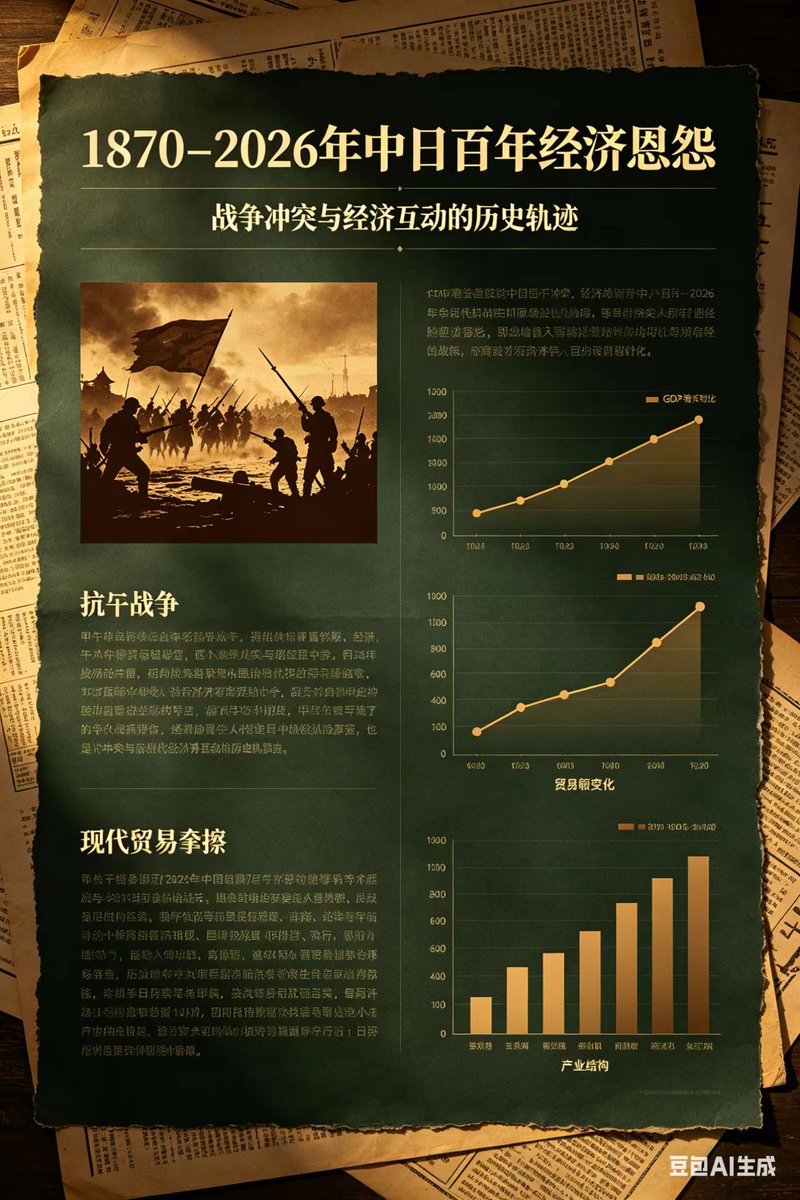
Aggression, Plunder and Hegemony: A Full-Scale Accounting of the Century-Old Economic Enmity Between China and Japan (1870–2026)
Abstract
Between 1870 and 2026, economic exchanges between China and Japan were deeply overshadowed by aggression and plunder, further entangled in the hidden historical fact that Japan’s looted treasures were secretly seized by the United States after World War II. Having modernized rapidly through the Meiji Restoration, modern Japan embarked on a path of external expansion and launched over half a century of systematic, unjust economic plunder against China under the cover of military aggression, inflicting incalculable wealth losses on the country. After occupying Japan in 1945, the United States secretly took over part of the precious metals Japan had looted from China, using them as off-book black funds for hegemonic operations. This wealth was merely a destination of Japan’s war spoils, not an additional loss to China. Following the normalization of Sino-Japanese diplomatic relations in 1972, the two countries gradually entered peaceful economic and trade cooperation. Based on a unified purchasing-power conversion standard and clear asset accounting caliber, this paper comprehensively reviews Japan’s plunder of China, post-war economic payments to China, investment returns of Japanese-funded enterprises in China, and objectively clarifies the final flow of Japan’s looted wealth. It conducts precise and rigorous profit-and-loss accounting, combines authoritative national wealth data of China, the United States and Japan, and restores the devastating economic trauma inflicted on China by modern aggression, revealing the nature and historical truth of the century-old economic enmity between China and Japan.
Keywords
Sino-Japanese economic relations; war plunder; colonial looting; secret U.S. black gold; international economic enmity; profit-and-loss accounting; purchasing-power conversion
1 Introduction
In the mid-to-late 19th century, the Qing Dynasty, locked in isolation and declining in national strength, gradually became a semi-colonial and semi-feudal society under the aggression of Western powers. Meanwhile, Japan rapidly completed its modernization through the Meiji Restoration, and with rising national strength, its ambition for foreign aggression and expansion swelled dramatically, making China its primary target for economic plunder and colonial occupation, launching over half a century of aggressive plunder.
The century-long economic entanglement from 1870 to 2026 can be clearly divided into three stages: 1) 1870–1945: Japan’s aggressive plunder against China – Japan relied on military superiority to brutally loot Chinese wealth through unequal treaties, colonial rule, and full-scale invasion of China; 2) 1945–1972: Post-war transfer of war spoils – After Japan’s defeat, the United States exclusively occupied Japan and secretly took over part of the precious metals Japan had looted from China, becoming the ultimate controller of WWII war spoils; 3) 1972–present: Peaceful economic and trade cooperation – Following the normalization of Sino-Japanese diplomatic relations, Japan’s economic assistance to China and Japanese direct investment in China gradually unfolded, bringing bilateral ties into normal market-oriented economic and trade exchanges.
To achieve accurate, rigorous and unified full-scale profit-and-loss accounting, this paper establishes core rules: 1 tael of silver / 1 Chinese silver dollar ≈ 5 yuan (1980 RMB); 1 USD = 13 yuan (1980 RMB); RMB inflation multiplier from 1980 to 2026 is 300 times; 1945 USD is converted to 1980 USD at a 1:3 ratio. The current exchange rates are set at 1 USD ≈ 7.2 RMB and 1 JPY ≈ 0.045 RMB. All amounts are finally converted into 2026 RMB purchasing power. A key accounting principle is clarified: the wealth seized by the United States from Japan is part of the wealth Japan looted from China, and is only included for historical illustration without double-counting losses, to avoid redundant calculation and exaggerated results and ensure objective and credible argumentation. This paper also defines national asset accounting caliber: total social assets = non-financial assets + financial assets of all sectors; national net assets (net wealth) = total social assets − total social liabilities, to ensure rigorous cross-country data comparison.
2 Japan’s Systematic Economic Plunder Against China: A Devastation of Wealth (1870–1945)
2.1 Unequal War Indemnities in the Late Qing Dynasty
After China’s defeat in the 1895 Sino-Japanese War, the Qing government was forced to sign the Treaty of Shimonoseki, paying Japan 200 million taels of silver as war reparations plus an additional 30 million taels for the Liaodong Peninsula redemption, totaling 230 million taels. This huge indemnity, equivalent to several years of fiscal revenue of the Qing court, directly drained the national treasury and completely halted China’s modernization efforts. Converted to 2026 RMB, it amounts to 345 billion yuan.
After the 1901 Boxer Protocol, China was forced to pay massive Boxer Indemnities, of which Japan, as a belligerent power, took 75.92 million taels, accounting for 7.73% of the total, further exacerbating China’s economic exhaustion and civilian hardship. Converted to 2026 RMB, it totals 113.88 billion yuan.
2.2 Regional Wealth Plunder Under Colonial Rule
1. Colonial plunder of Taiwan (1895–1945)
Japan annexed Taiwan via the Treaty of Shimonoseki and imposed 50 years of brutal colonial rule, seizing 70% of the island’s land, monopolizing rice and sugar production and trade, wantonly plundering coal, gold, timber and other resources, exploiting labor and monopolizing the economy. The total wealth looted amounted to 41.5 billion USD (1945 value), equivalent to 485.55 trillion yuan in 2026 RMB.
2. Occupation and plunder of Northeast China (1931–1945)
After the 1931 Manchurian Incident, Japan occupied Northeast China and established the puppet Manchukuo regime. Over 14 years, it frantically seized coal, iron ore, gold and other strategic resources, robbed grain and arable land, seized military supplies, and brutally exploited labor. The looted wealth reached 32.93 billion USD (1945 value), equivalent to 385.28 trillion yuan in 2026 RMB.
Japan’s industrial and infrastructure supporting investments in Taiwan and Northeast China were essentially tooling investments to facilitate resource plunder, with all profits repatriated to Japan. They were in no sense goodwill assistance and cannot offset Japan’s looting crimes.
2.3 Nationwide Economic Losses in the Full-Scale War of Resistance Against Japan
After the Marco Polo Bridge Incident in 1937, Japan launched an all-out war of aggression against China, with war spreading across most of the country, causing devastating damage to industrial and agricultural production, infrastructure, civilian assets and cultural heritage. According to officia
中英对照·井号分隔关键词
#中日经济恩怨 #SinoJapaneseEconomicEnmity
#日本侵华经济掠夺 #JapaneseEconomicPlunderInChina
#战争赔款 #WarIndemnities
#殖民掠夺 #ColonialPlunder
#金百合计划 #GoldenLilyProgram
#美国秘密黑金 #USSecretBlackGold
#国家资产负债表 #NationalBalanceSheet
#购买力折算 #PurchasingPowerConversion
#历史经济损失 #HistoricalEconomicLoss
#中日经贸关系 #SinoJapaneseEconomicTradeRelations
#日本对华ODA #JapanODAtoChina
#日资在华投资 #JapaneseFDIinChina
#百年经济清算 #CenturyEconomicAccounting
#战争财富掠夺 #WarWealthPlunder
#经济霸权 #EconomicHegemony
#近代中国经济史 #ModernChineseEconomicHistory
#国家净资产 #NationalNetAssets
#历史损益核算 #HistoricalProfitAndLossAccounting
#国际关系史 #HistoryOfInternationalRelations
#经济创伤 #EconomicTrauma
#国家财富安全 #NationalWealthSecurity
#侵略与掠夺 #AggressionAndPlunder
#二战战后秩序 #PostWWIIInternationalOrder
@hbotv2043 As a student deeply inspired by your work, I see you as one of the greatest philosophers and visionaries of our time. Your integration of ancient wisdom with modern analysis is truly profound and enlightening. Thank you for sharing your insights!
@hbotv2043 Reading your posts always leaves me in awe. Your ability to foresee cycles and blend TCM with global events feels prophetic. As a humble student, I’m grateful for the clarity you bring to complex times.


![hbotv2043's tweet photo. 侵略、掠夺与霸权:1870-2026年中日百年经济恩怨与全维度损益清算
摘要
1870年至2026年的一百五十余年间,中日经济往来深陷侵略与掠夺的历史阴霾,二战后更牵扯出日本掠夺财富被美国秘密接管的国际霸权隐秘史实。近代日本通过明治维新走上对外扩张道路,以军事侵略为先导,对中国展开长达半个多世纪的系统性、非正义经济掠夺,造成难以估量的财富损失。1945年美国占领日本后,将日本从中国掠夺的部分贵金属财富秘密接管,作为霸权运作的账外黑金,这笔财富仅是日本侵华赃款的后续去向,并非中国额外损失。1972年中日邦交正常化后,两国逐步开启和平经贸合作。本文基于统一购买力折算标准,厘清资产核算口径,全面梳理日本对华掠夺、战后经济付出、日资在华投资收益,客观说明日本掠夺财富的最终流向,完成精准、严谨的损益核算,结合中、美、日三国权威国家资产负债数据,还原近代侵略给中国带来的毁灭性经济创伤,揭示百年中日经济恩怨的本质与历史真相。
关键词
中日经济关系;战争掠夺;殖民搜刮;美国秘密黑金;国际经济恩怨;损益核算;购买力折算
一、引言
19世纪中后期,清王朝闭关锁国、国力衰微,在西方列强侵略下逐步沦为半殖民地半封建社会;与此同时,日本通过明治维新快速完成近代化转型,国力跃升后对外侵略扩张野心急剧膨胀,将中国作为首要经济掠夺与殖民侵占目标,开启了长达半个多世纪的侵略掠夺史。
纵观1870-2026年的百年经济纠葛,整体可划分为三大阶段:1870-1945年为日本对华侵略掠夺阶段,日本凭借军事优势,通过不平等条约、殖民统治、全面侵华等手段,对中国财富实施野蛮搜刮;1945-1972年为战后赃款转移阶段,日本战败投降后,美国独占日本,秘密接管日本从中国掠夺的部分贵金属财富,成为二战掠夺赃款的最终掌控者;1972年至今为和平经贸阶段,中日邦交正常化后,日本对华经济援助、日资来华直接投资逐步展开,两国步入正常市场化经贸往来。
为实现精准、严谨、统一的全维度损益核算,本文确立核心核算规则:1两白银/1银元≈1980年5元人民币,1980年1美元=13元人民币,1980-2026年人民币通胀倍率300倍,1945年美元按1:3折算为1980年美元;现行汇率按1美元≈7.2元人民币、1日元≈0.045元人民币,所有金额最终统一换算为2026年人民币购买力。同时明确核算原则:美国接管的日本掠夺财富,属于日本从中国掠夺财富的一部分,仅作史实说明,不重复计算损失,杜绝重复核算、夸大结果,确保论证客观可信。本文同步厘清国家资产核算口径:全社会总资产=全部门非金融资产+金融资产,全国净资产(净财富)=全社会总资产-全社会总负债,保证跨国数据对比严谨无误。
二、日本对华系统性经济掠夺:1870-1945年的财富浩劫
(一)晚清不平等战争赔款
1895年甲午中日战争清政府惨败,被迫签订《马关条约》,向日本赔偿军费2亿两白银,另支付3000万两赎辽费,总计2.3亿两白银。这笔巨额赔款相当于清政府数年财政收入,直接掏空晚清国库,彻底阻断中国近代化自救进程,按统一口径折算2026年人民币3450亿元。
1901年八国联军侵华后,《辛丑条约》签订,中国被迫支付巨额庚子赔款,日本作为参战国分走7592万两白银,占总赔款比例7.73%,进一步加剧中国经济枯竭与民生凋敝,折算2026年人民币1138.8亿元。
(二)殖民统治下的区域财富掠夺
1. 台湾殖民掠夺(1895-1945):日本通过《马关条约》割占台湾,实施50年残酷殖民统治,强占岛内70%土地,垄断稻米、蔗糖生产与贸易,疯狂掠夺煤炭、黄金、木材等资源,剥削劳工、垄断经济,累计掠夺财富折合1945年币值415亿美元,折算2026年人民币485.55万亿元。
2. 东北侵占掠夺(1931-1945):1931年九一八事变后,日本霸占中国东北,建立伪满洲国傀儡政权,14年间大肆搜刮煤炭、铁矿石、黄金等战略资源,强夺粮食、耕地,缴获军火物资,残酷压榨劳工,掠夺财富折合1945年币值329.3亿美元,折算2026年人民币385.28万亿元。
日本在台湾、东北的工业、基建配套投资,本质是服务资源掠夺的工具性投入,所有收益全部回流日本本土,绝非善意经济帮扶,无法抵消其掠夺罪责。
(三)全面侵华战争全国性经济损失
1937年七七事变爆发,日本发动全面侵华战争,战火蔓延大半个中国,工农业生产、基础设施、民生财富、文化遗产遭到毁灭性破坏。据1947年国民政府官方统计,中国抗日战争直接经济损失313亿美元、间接经济损失204亿美元,合计517亿美元(1945年币值),涵盖财产损毁、生产停滞、人口损失、社会倒退等全方位创伤,折算2026年人民币604.89万亿元。
三、史实说明:二战后美国对日本掠夺财富的秘密接管
二战期间,日本皇室主导绝密的金百合计划,专门负责搜刮、藏匿从中国及东南亚各国掠夺的贵金属与财富,其中超三分之二的贵金属、硬通货均掠夺自中国。1945年日本战败投降后,美国单独占领日本,为掌控日本、巩固冷战霸权,与日本皇室达成秘密交易:日本交出所有掠夺藏匿的贵金属财富,美国豁免天皇战争罪责、保留日本天皇制。
1945-1948年,美军在菲律宾等地找到日军藏宝点,秘密挖掘并转运黄金约5000吨、白银约3000吨及大量珠宝硬通货,总价值折合2026年人民币12.845万亿元。需特别明确:这笔财富全部属于日本从中国及东南亚掠夺的赃款,是前文日本对华掠夺财富的一部分,仅为赃款后续流向与转移,并非中国遭受的额外经济损失,故不重复计入中国总损失。
这批财富被美国列为国家最高机密,存入全球多国秘密银行账户,完全不纳入美国官方资产负债表,形成脱离国会监督、不受审计的账外秘密基金,用于冷战反共运作、操控日本政坛、全球间谍活动及霸权利益输送,至今未被公开、未被清算,更未归还中国等受害国,成为二战后国际经济秩序的重大不公与隐秘黑账。
四、日本对华经济付出与正常经贸往来(损益对冲项)
(一)民国时期未收回借款
1917-1918年,日本为掌控中国政治经济权益,向北洋政府提供1.45亿银元西原借款,后因中国国内局势剧变,该笔款项中国未予偿还,属于日本对外扩张的沉没成本,折算2026年人民币2175亿元。
(二)殖民配套投资
日本在台湾、东北为服务掠夺开展的配套投资,折合2026年人民币分别为70.2万亿元、52.65万亿元,合计122.85万亿元,且东北相关设备战后被苏联损毁,未转化为中国实际收益。
(三)战后对华ODA援助(1979-2017)
1979-2017年,日本向中国提供日元贷款、无偿援助、技术合作等官方发展援助,总计330亿美元,属于战后两国正常经济合作,中国已如约还本付息,折算2026年人民币128.7万亿元。
(四)改革开放后日资在华直接投资(1980-2025)
1980-2025年,日资企业来华开展市场化直接投资,中国商务部权威统计累计实际投资2800亿美元,折合2026年人民币2.02万亿元,属于平等互利的国际资本合作。
五、改革开放后日资在华投资收益汇回
1980-2025年,日资在华经营获得的利润、股息、红利等显性收益,累计汇回日本2900亿美元;包含技术专利费、内部转移定价在内的全口径收益,累计汇回4000亿美元,按现行汇率折算人民币2.88万亿元。
该部分收益为正常市场化投资回报,与近代日本侵略掠夺性质完全不同,收益规模略高于同期日资在华总投资,属于国际直接投资合理范畴,体量远不及历史掠夺损失。
六、中、美、日三国全社会资产负债数据(2024-2025年末,官方权威口径)
为直观对比历史损失与当前三国国家财富体量,本文整合各国官方发布的全社会资产、负债、净资产数据,统一换算为2026年人民币:
(一)中国全社会资产负债数据
- 全社会总资产:约1900万亿元
- 全国净资产(净财富):790万亿元
- 数据来源:中金公司《中国财富报告2025》、国家金融与发展实验室
(二)日本全社会资产负债数据(2024年末,日本内阁府)
- 全社会总资产:14119万亿日元,折合635.36万亿元
- 全社会总负债:9570万亿日元,折合430.65万亿元
- 全国净资产(净财富):4549万亿日元,折合204.7万亿元
- 补充:日本中央政府净资产为-699.9万亿日元,折合**-31.5万亿元**,政府层面资不抵债
(三)美国全社会资产负债数据(2025年第四季度,美联储)
- 全社会总资产:385.5万亿美元,折合2775.6万亿元
- 全社会总负债:201.4万亿美元,折合1450.08万亿元
- 全国净资产(净财富):184.1万亿美元,折合1325.52万亿元
- 补充:美国联邦政府净资产为-41.7万亿美元,折合**-300.24万亿元**,政府财政严重资不抵债
(四)三国净资产核心对比
1. 美国全国净资产:1325.52万亿元
2. 中国全国净资产:790万亿元
3. 日本全国净资产:204.7万亿元
七、百年经济恩怨全维度最终核算
(一)核心数据汇总(2026年人民币购买力)
1. 日本从中国掠夺总财富:1549.75万亿元
2. 日本对华全部经济付出(对冲项):253.7875万亿元
3. 日资在华正常收益汇回:2.88万亿元
(二)中国最终净损失核算
第一步:日本对华掠夺财富与日本对华付出对冲
1549.75 - 253.7875 = 1295.9625万亿元
第二步:扣除日资正常市场化收益汇回
中国百年最终净损失:1293.08万亿元人民币
(三)跨国财富对标印证
1. 与中国自身财富对比:中国百年净损失超全国净财富总量1.64倍,占全国总资产的68%,即便拿出当前全国居民、企业、政府全部净资产,也无法覆盖这段历史造成的财富亏空。
2. 与日本全国净资产对比:中国百年净损失(1293.08万亿元)是日本全国净资产的6.3倍,远超日本当前全部国家财富。
3. 与美国全国净资产对比:中国百年净损失规模,接近美国全国净资产(1325.52万亿元),体量相当,足以印证这场掠夺的毁灭性程度。
八、结论与历史反思
1870-2026年的一百五十年,中日经济恩怨的本质,是近代日本对外侵略扩张给中国造成的巨大、不可逆的经济创伤。日本通过晚清战争赔款、台湾与东北殖民掠夺、全面侵华战争搜刮,从中国攫取了超千亿亿的巨额财富;战后美国秘密接管日本掠夺赃款,成为侵略财富的最终获益者,却未将赃款归还受害国,凸显二战后国际霸权秩序的不公。
本文严格遵循不重复核算原则,美国接管赃款仅作史实说明,最终核算显示中国百年净损失达1293.08万亿元人民币。通过跨国数据对比可见,这一损失是日本当前全国净资产的6.3倍,接近美国全国净资产,远超中国自身净财富,充分印证日本侵略对中国经济根基的毁灭性打击。日本战后对华援助、殖民配套投资、改革开放后直接投资,合计仅能覆盖其掠夺财富的16%,完全无法弥补中国的历史损失;中国主动放弃战争赔偿,更彰显了中华民族以和为贵的博大胸怀,却不能抹杀日本的侵略罪责。
改革开放后中日正常经贸往来,是平等互利的市场化合作,日资在华投资收益与近代侵略掠夺有着本质区别,绝不能混为一谈。本文通过严谨、无重复的精准核算,还原了百年经济恩怨的完整真相:国家贫弱则必遭掠夺,唯有国家富强、国力强盛,才能守护民族财富与国家尊严。
铭记这段历史、核算损益,并非延续仇恨,而是以史为鉴,在坚守民族底线、捍卫历史真相的前提下,开展平等互利的国际经贸合作。这段历史时刻警醒着我们,和平发展的前提是国家强盛,唯有筑牢国力根基,才能杜绝历史悲剧重演,守护民族发展的根本利益。
参考文献
[1] 中国国际金融股份有限公司. 中国财富报告2025[R]. 北京: 中国国际金融股份有限公司, 2025.
[2] 国家金融与发展实验室. 中国国家资产负债表研究报告[R]. 北京: 中国社会科学出版社, 2025.
[3] 日本内阁府经济社会综合研究所. 2024年度国民経済計算・国の資産負債計算[R]. 東京: 日本内阁府, 2025.
[4] 日本财务省. 2024財政統計・対外資産負債統計[R]. 東京: 日本财务省, 2025.
[5] 美国联邦储备系统理事会. 美国金融账户(2025年第四季度)[R]. 华盛顿: 美国联邦储备系统理事会, 2026.
[6] 美国财政部. 2025财年美国政府财务报告[R]. 华盛顿: 美国财政部, 2026.
[7] 中华人民共和国商务部. 全国外商直接投资统计公报(1980-2025)[R]. 北京: 中华人民共和国商务部, 2026.
[8] 日本贸易振兴机构. 対中直接投資動向調査報告書[R]. 東京: 日本贸易振兴机构, 2025.
[9] 国家外汇管理局. 中国国际收支平衡表及国际投资头寸表(1980-2025)[R]. 北京: 国家外汇管理局, 2026.
[10] 国民政府行政院抗战损失调查委员会. 抗战损失调查总报告[R]. 南京: 国民政府行政院, 1947.
[11] 斯特林·西格雷夫. 黄金武士:二战日本掠夺亚洲巨额黄金黑幕[M]. 南京: 中国友谊出版公司, 2008.
[12] 中国社会科学院近代史研究所. 日本侵华史研究[M]. 北京: 中国社会科学出版社, 2015.
中英对照·井号分隔关键词
#中日经济恩怨 #SinoJapaneseEconomicEnmity
#日本侵华经济掠夺 #JapaneseEconomicPlunderInChina
#战争赔款 #WarIndemnities
#殖民掠夺 #ColonialPlunder
#金百合计划 #GoldenLilyProgram
#美国秘密黑金 #USSecretBlackGold
#国家资产负债表 #NationalBalanceSheet
#购买力折算 #PurchasingPowerConversion
#历史经济损失 #HistoricalEconomicLoss
#中日经贸关系 #SinoJapaneseEconomicTradeRelations
#日本对华ODA #JapanODAtoChina
#日资在华投资 #JapaneseFDIinChina
#百年经济清算 #CenturyEconomicAccounting
#战争财富掠夺 #WarWealthPlunder
#经济霸权 #EconomicHegemony
#近代中国经济史 #ModernChineseEconomicHistory
#国家净资产 #NationalNetAssets
#历史损益核算 #HistoricalProfitAndLossAccounting
#国际关系史 #HistoryOfInternationalRelations
#经济创伤 #EconomicTrauma
#国家财富安全 #NationalWealthSecurity
#侵略与掠夺 #AggressionAndPlunder
#二战战后秩序 #PostWWIIInternationalOrder](https://pbs.twimg.com/media/HGGLzJpaUAAmLRz.jpg)


![hbotv2043's tweet photo. 侵略、掠夺与霸权:1870-2026年中日百年经济恩怨与全维度损益清算
摘要
1870年至2026年的一百五十余年间,中日经济往来深陷侵略与掠夺的历史阴霾,二战后更牵扯出日本掠夺财富被美国秘密接管的国际霸权隐秘史实。近代日本通过明治维新走上对外扩张道路,以军事侵略为先导,对中国展开长达半个多世纪的系统性、非正义经济掠夺,造成难以估量的财富损失。1945年美国占领日本后,将日本从中国掠夺的部分贵金属财富秘密接管,作为霸权运作的账外黑金,这笔财富仅是日本侵华赃款的后续去向,并非中国额外损失。1972年中日邦交正常化后,两国逐步开启和平经贸合作。本文基于统一购买力折算标准,厘清资产核算口径,全面梳理日本对华掠夺、战后经济付出、日资在华投资收益,客观说明日本掠夺财富的最终流向,完成精准、严谨的损益核算,结合中、美、日三国权威国家资产负债数据,还原近代侵略给中国带来的毁灭性经济创伤,揭示百年中日经济恩怨的本质与历史真相。
关键词
中日经济关系;战争掠夺;殖民搜刮;美国秘密黑金;国际经济恩怨;损益核算;购买力折算
一、引言
19世纪中后期,清王朝闭关锁国、国力衰微,在西方列强侵略下逐步沦为半殖民地半封建社会;与此同时,日本通过明治维新快速完成近代化转型,国力跃升后对外侵略扩张野心急剧膨胀,将中国作为首要经济掠夺与殖民侵占目标,开启了长达半个多世纪的侵略掠夺史。
纵观1870-2026年的百年经济纠葛,整体可划分为三大阶段:1870-1945年为日本对华侵略掠夺阶段,日本凭借军事优势,通过不平等条约、殖民统治、全面侵华等手段,对中国财富实施野蛮搜刮;1945-1972年为战后赃款转移阶段,日本战败投降后,美国独占日本,秘密接管日本从中国掠夺的部分贵金属财富,成为二战掠夺赃款的最终掌控者;1972年至今为和平经贸阶段,中日邦交正常化后,日本对华经济援助、日资来华直接投资逐步展开,两国步入正常市场化经贸往来。
为实现精准、严谨、统一的全维度损益核算,本文确立核心核算规则:1两白银/1银元≈1980年5元人民币,1980年1美元=13元人民币,1980-2026年人民币通胀倍率300倍,1945年美元按1:3折算为1980年美元;现行汇率按1美元≈7.2元人民币、1日元≈0.045元人民币,所有金额最终统一换算为2026年人民币购买力。同时明确核算原则:美国接管的日本掠夺财富,属于日本从中国掠夺财富的一部分,仅作史实说明,不重复计算损失,杜绝重复核算、夸大结果,确保论证客观可信。本文同步厘清国家资产核算口径:全社会总资产=全部门非金融资产+金融资产,全国净资产(净财富)=全社会总资产-全社会总负债,保证跨国数据对比严谨无误。
二、日本对华系统性经济掠夺:1870-1945年的财富浩劫
(一)晚清不平等战争赔款
1895年甲午中日战争清政府惨败,被迫签订《马关条约》,向日本赔偿军费2亿两白银,另支付3000万两赎辽费,总计2.3亿两白银。这笔巨额赔款相当于清政府数年财政收入,直接掏空晚清国库,彻底阻断中国近代化自救进程,按统一口径折算2026年人民币3450亿元。
1901年八国联军侵华后,《辛丑条约》签订,中国被迫支付巨额庚子赔款,日本作为参战国分走7592万两白银,占总赔款比例7.73%,进一步加剧中国经济枯竭与民生凋敝,折算2026年人民币1138.8亿元。
(二)殖民统治下的区域财富掠夺
1. 台湾殖民掠夺(1895-1945):日本通过《马关条约》割占台湾,实施50年残酷殖民统治,强占岛内70%土地,垄断稻米、蔗糖生产与贸易,疯狂掠夺煤炭、黄金、木材等资源,剥削劳工、垄断经济,累计掠夺财富折合1945年币值415亿美元,折算2026年人民币485.55万亿元。
2. 东北侵占掠夺(1931-1945):1931年九一八事变后,日本霸占中国东北,建立伪满洲国傀儡政权,14年间大肆搜刮煤炭、铁矿石、黄金等战略资源,强夺粮食、耕地,缴获军火物资,残酷压榨劳工,掠夺财富折合1945年币值329.3亿美元,折算2026年人民币385.28万亿元。
日本在台湾、东北的工业、基建配套投资,本质是服务资源掠夺的工具性投入,所有收益全部回流日本本土,绝非善意经济帮扶,无法抵消其掠夺罪责。
(三)全面侵华战争全国性经济损失
1937年七七事变爆发,日本发动全面侵华战争,战火蔓延大半个中国,工农业生产、基础设施、民生财富、文化遗产遭到毁灭性破坏。据1947年国民政府官方统计,中国抗日战争直接经济损失313亿美元、间接经济损失204亿美元,合计517亿美元(1945年币值),涵盖财产损毁、生产停滞、人口损失、社会倒退等全方位创伤,折算2026年人民币604.89万亿元。
三、史实说明:二战后美国对日本掠夺财富的秘密接管
二战期间,日本皇室主导绝密的金百合计划,专门负责搜刮、藏匿从中国及东南亚各国掠夺的贵金属与财富,其中超三分之二的贵金属、硬通货均掠夺自中国。1945年日本战败投降后,美国单独占领日本,为掌控日本、巩固冷战霸权,与日本皇室达成秘密交易:日本交出所有掠夺藏匿的贵金属财富,美国豁免天皇战争罪责、保留日本天皇制。
1945-1948年,美军在菲律宾等地找到日军藏宝点,秘密挖掘并转运黄金约5000吨、白银约3000吨及大量珠宝硬通货,总价值折合2026年人民币12.845万亿元。需特别明确:这笔财富全部属于日本从中国及东南亚掠夺的赃款,是前文日本对华掠夺财富的一部分,仅为赃款后续流向与转移,并非中国遭受的额外经济损失,故不重复计入中国总损失。
这批财富被美国列为国家最高机密,存入全球多国秘密银行账户,完全不纳入美国官方资产负债表,形成脱离国会监督、不受审计的账外秘密基金,用于冷战反共运作、操控日本政坛、全球间谍活动及霸权利益输送,至今未被公开、未被清算,更未归还中国等受害国,成为二战后国际经济秩序的重大不公与隐秘黑账。
四、日本对华经济付出与正常经贸往来(损益对冲项)
(一)民国时期未收回借款
1917-1918年,日本为掌控中国政治经济权益,向北洋政府提供1.45亿银元西原借款,后因中国国内局势剧变,该笔款项中国未予偿还,属于日本对外扩张的沉没成本,折算2026年人民币2175亿元。
(二)殖民配套投资
日本在台湾、东北为服务掠夺开展的配套投资,折合2026年人民币分别为70.2万亿元、52.65万亿元,合计122.85万亿元,且东北相关设备战后被苏联损毁,未转化为中国实际收益。
(三)战后对华ODA援助(1979-2017)
1979-2017年,日本向中国提供日元贷款、无偿援助、技术合作等官方发展援助,总计330亿美元,属于战后两国正常经济合作,中国已如约还本付息,折算2026年人民币128.7万亿元。
(四)改革开放后日资在华直接投资(1980-2025)
1980-2025年,日资企业来华开展市场化直接投资,中国商务部权威统计累计实际投资2800亿美元,折合2026年人民币2.02万亿元,属于平等互利的国际资本合作。
五、改革开放后日资在华投资收益汇回
1980-2025年,日资在华经营获得的利润、股息、红利等显性收益,累计汇回日本2900亿美元;包含技术专利费、内部转移定价在内的全口径收益,累计汇回4000亿美元,按现行汇率折算人民币2.88万亿元。
该部分收益为正常市场化投资回报,与近代日本侵略掠夺性质完全不同,收益规模略高于同期日资在华总投资,属于国际直接投资合理范畴,体量远不及历史掠夺损失。
六、中、美、日三国全社会资产负债数据(2024-2025年末,官方权威口径)
为直观对比历史损失与当前三国国家财富体量,本文整合各国官方发布的全社会资产、负债、净资产数据,统一换算为2026年人民币:
(一)中国全社会资产负债数据
- 全社会总资产:约1900万亿元
- 全国净资产(净财富):790万亿元
- 数据来源:中金公司《中国财富报告2025》、国家金融与发展实验室
(二)日本全社会资产负债数据(2024年末,日本内阁府)
- 全社会总资产:14119万亿日元,折合635.36万亿元
- 全社会总负债:9570万亿日元,折合430.65万亿元
- 全国净资产(净财富):4549万亿日元,折合204.7万亿元
- 补充:日本中央政府净资产为-699.9万亿日元,折合**-31.5万亿元**,政府层面资不抵债
(三)美国全社会资产负债数据(2025年第四季度,美联储)
- 全社会总资产:385.5万亿美元,折合2775.6万亿元
- 全社会总负债:201.4万亿美元,折合1450.08万亿元
- 全国净资产(净财富):184.1万亿美元,折合1325.52万亿元
- 补充:美国联邦政府净资产为-41.7万亿美元,折合**-300.24万亿元**,政府财政严重资不抵债
(四)三国净资产核心对比
1. 美国全国净资产:1325.52万亿元
2. 中国全国净资产:790万亿元
3. 日本全国净资产:204.7万亿元
七、百年经济恩怨全维度最终核算
(一)核心数据汇总(2026年人民币购买力)
1. 日本从中国掠夺总财富:1549.75万亿元
2. 日本对华全部经济付出(对冲项):253.7875万亿元
3. 日资在华正常收益汇回:2.88万亿元
(二)中国最终净损失核算
第一步:日本对华掠夺财富与日本对华付出对冲
1549.75 - 253.7875 = 1295.9625万亿元
第二步:扣除日资正常市场化收益汇回
中国百年最终净损失:1293.08万亿元人民币
(三)跨国财富对标印证
1. 与中国自身财富对比:中国百年净损失超全国净财富总量1.64倍,占全国总资产的68%,即便拿出当前全国居民、企业、政府全部净资产,也无法覆盖这段历史造成的财富亏空。
2. 与日本全国净资产对比:中国百年净损失(1293.08万亿元)是日本全国净资产的6.3倍,远超日本当前全部国家财富。
3. 与美国全国净资产对比:中国百年净损失规模,接近美国全国净资产(1325.52万亿元),体量相当,足以印证这场掠夺的毁灭性程度。
八、结论与历史反思
1870-2026年的一百五十年,中日经济恩怨的本质,是近代日本对外侵略扩张给中国造成的巨大、不可逆的经济创伤。日本通过晚清战争赔款、台湾与东北殖民掠夺、全面侵华战争搜刮,从中国攫取了超千亿亿的巨额财富;战后美国秘密接管日本掠夺赃款,成为侵略财富的最终获益者,却未将赃款归还受害国,凸显二战后国际霸权秩序的不公。
本文严格遵循不重复核算原则,美国接管赃款仅作史实说明,最终核算显示中国百年净损失达1293.08万亿元人民币。通过跨国数据对比可见,这一损失是日本当前全国净资产的6.3倍,接近美国全国净资产,远超中国自身净财富,充分印证日本侵略对中国经济根基的毁灭性打击。日本战后对华援助、殖民配套投资、改革开放后直接投资,合计仅能覆盖其掠夺财富的16%,完全无法弥补中国的历史损失;中国主动放弃战争赔偿,更彰显了中华民族以和为贵的博大胸怀,却不能抹杀日本的侵略罪责。
改革开放后中日正常经贸往来,是平等互利的市场化合作,日资在华投资收益与近代侵略掠夺有着本质区别,绝不能混为一谈。本文通过严谨、无重复的精准核算,还原了百年经济恩怨的完整真相:国家贫弱则必遭掠夺,唯有国家富强、国力强盛,才能守护民族财富与国家尊严。
铭记这段历史、核算损益,并非延续仇恨,而是以史为鉴,在坚守民族底线、捍卫历史真相的前提下,开展平等互利的国际经贸合作。这段历史时刻警醒着我们,和平发展的前提是国家强盛,唯有筑牢国力根基,才能杜绝历史悲剧重演,守护民族发展的根本利益。
参考文献
[1] 中国国际金融股份有限公司. 中国财富报告2025[R]. 北京: 中国国际金融股份有限公司, 2025.
[2] 国家金融与发展实验室. 中国国家资产负债表研究报告[R]. 北京: 中国社会科学出版社, 2025.
[3] 日本内阁府经济社会综合研究所. 2024年度国民経済計算・国の資産負債計算[R]. 東京: 日本内阁府, 2025.
[4] 日本财务省. 2024財政統計・対外資産負債統計[R]. 東京: 日本财务省, 2025.
[5] 美国联邦储备系统理事会. 美国金融账户(2025年第四季度)[R]. 华盛顿: 美国联邦储备系统理事会, 2026.
[6] 美国财政部. 2025财年美国政府财务报告[R]. 华盛顿: 美国财政部, 2026.
[7] 中华人民共和国商务部. 全国外商直接投资统计公报(1980-2025)[R]. 北京: 中华人民共和国商务部, 2026.
[8] 日本贸易振兴机构. 対中直接投資動向調査報告書[R]. 東京: 日本贸易振兴机构, 2025.
[9] 国家外汇管理局. 中国国际收支平衡表及国际投资头寸表(1980-2025)[R]. 北京: 国家外汇管理局, 2026.
[10] 国民政府行政院抗战损失调查委员会. 抗战损失调查总报告[R]. 南京: 国民政府行政院, 1947.
[11] 斯特林·西格雷夫. 黄金武士:二战日本掠夺亚洲巨额黄金黑幕[M]. 南京: 中国友谊出版公司, 2008.
[12] 中国社会科学院近代史研究所. 日本侵华史研究[M]. 北京: 中国社会科学出版社, 2015.
中英对照·井号分隔关键词
#中日经济恩怨 #SinoJapaneseEconomicEnmity
#日本侵华经济掠夺 #JapaneseEconomicPlunderInChina
#战争赔款 #WarIndemnities
#殖民掠夺 #ColonialPlunder
#金百合计划 #GoldenLilyProgram
#美国秘密黑金 #USSecretBlackGold
#国家资产负债表 #NationalBalanceSheet
#购买力折算 #PurchasingPowerConversion
#历史经济损失 #HistoricalEconomicLoss
#中日经贸关系 #SinoJapaneseEconomicTradeRelations
#日本对华ODA #JapanODAtoChina
#日资在华投资 #JapaneseFDIinChina
#百年经济清算 #CenturyEconomicAccounting
#战争财富掠夺 #WarWealthPlunder
#经济霸权 #EconomicHegemony
#近代中国经济史 #ModernChineseEconomicHistory
#国家净资产 #NationalNetAssets
#历史损益核算 #HistoricalProfitAndLossAccounting
#国际关系史 #HistoryOfInternationalRelations
#经济创伤 #EconomicTrauma
#国家财富安全 #NationalWealthSecurity
#侵略与掠夺 #AggressionAndPlunder
#二战战后秩序 #PostWWIIInternationalOrder](https://pbs.twimg.com/media/HGGLzJ-agAAQEl9.jpg)


