Really yes. The method works because the expensive part (the girl, the gym, the consistency) becomes almost free.
$150/month tools vs $4,800 real costs.
Same engagement. Same DMs asking for sessions.Lock the face once → post daily → scale.
$5k is very achievable. Many are already past it.
$4,800 a month for a real fitness girl.
$150 for the AI version.
Same saves. Same comments. Same DMs asking for private sessions.
A 25-year-old locked her face and body in one night.
Then closed the laptop.
The account has been running itself ever since.
One locker-room clip started getting saved nonstop.
Now it’s 2.8 million views every week.
No gym membership.
No trainer.
No real girl.
She's smiling straight into a lens that was never actually there.
No agency signed her. No callback ever happened. No model release form exists, because no model showed up.
The tell is what never shifts. Same strand of hair falling the same way, same angle of that smile, frame after frame, cut after cut, like her face was locked in place while the camera kept moving.
That's the whole case for AI faces over real casting. Brands want a consistent face without paying a model fee every time they rebook. A real one costs thousands per shoot. This one costs $150 a month and never changes.
Watch her smile one more time. Nobody was ever behind that camera. Nobody was ever in front of it either.
$4,800 a month for a real fitness girl.
$150 for the AI version.
Same saves. Same comments. Same DMs asking for private sessions.
A 25-year-old locked her face and body in one night.
Then closed the laptop.
The account has been running itself ever since.
One locker-room clip started getting saved nonstop.
Now it’s 2.8 million views every week.
No gym membership.
No trainer.
No real girl.
She's on the floor doing a full split against a closet door, and that's the entire production.
No studio, no ring light rig, no crew, just low ambient light and a phone propped somewhere off-frame. The real cost of a clip like this isn't equipment, it's her. New stretch, new angle, doing it again tomorrow whether her body's ready or not.
The AI version skips the body entirely. One character sheet, one flexibility reference, generated in minutes. About $150 a month. No warmup. No injury risk. No day she can't hit the split.
Here's where it gets interesting. $150 a month isn't the ceiling, it's the starting line.
Month 1: a few thousand views, the same face, the same dim room, testing which stretch holds attention longest.
Month 3: 10,000 to 15,000 followers. Flexibility content converts fast because it reads as personal training footage, not a performance.
Month 6: 40,000 to 80,000 followers. A $9.99 stretching or coaching tier pulls 250 to 500 paying fans, $2,500 to $5,000 a month before a single brand touches the account.
Add an activewear affiliate link and one paid collab, and the same account clears $4,000 to $9,000 a month, $48,000 to $108,000 a year.
A real person spends years of training to hold that split. One operator spends $150 a month to fake it in every video.
She's on the floor doing a full split against a closet door, and that's the entire production.
No studio, no ring light rig, no crew, just low ambient light and a phone propped somewhere off-frame. The real cost of a clip like this isn't equipment, it's her. New stretch, new angle, doing it again tomorrow whether her body's ready or not.
The AI version skips the body entirely. One character sheet, one flexibility reference, generated in minutes. About $150 a month. No warmup. No injury risk. No day she can't hit the split.
Here's where it gets interesting. $150 a month isn't the ceiling, it's the starting line.
Month 1: a few thousand views, the same face, the same dim room, testing which stretch holds attention longest.
Month 3: 10,000 to 15,000 followers. Flexibility content converts fast because it reads as personal training footage, not a performance.
Month 6: 40,000 to 80,000 followers. A $9.99 stretching or coaching tier pulls 250 to 500 paying fans, $2,500 to $5,000 a month before a single brand touches the account.
Add an activewear affiliate link and one paid collab, and the same account clears $4,000 to $9,000 a month, $48,000 to $108,000 a year.
A real person spends years of training to hold that split. One operator spends $150 a month to fake it in every video.
@ViceSol Agreed. Production cost collapsed, but the real moat now is distribution + narrative. The ones who win are those who treat AI visuals as raw material, not the final product.
Pink hair. White bikini. Your $15,000 travel campaign just got beaten by a balcony shot.
She walks toward the waves, turns back, sits on a white towel. The camera watches through palm leaves from a wooden terrace. Real ocean, real sun, strangers passing in the background. 17 seconds of a vlog nobody actually filmed.
No flight. No location scout. No terrace booking.
The framing gives it away, if you know what to look for. A palm leaf cuts the corner, the angle sits low behind a railing, exactly how someone would shoot from a beachfront rental with their phone off the patio table. AI beach content usually looks too clean, too centered. This one doesn't.
At 0:09, two strangers walk behind her towel. Neither one knows they just became part of someone else's content.
That's the whole pitch for voyeur-angle beach shots over studio ones. Brands want footage that feels discovered, not staged. A real shoot runs $15,000 for one location: model, flights, hotel, photographer, permits. The person who built her charges $1,500 a set and runs 10 accounts like this one in parallel.
Watch her check her phone one more time. She's on a beach she's never touched, reading messages that don't exist.
Pink hair. White bikini. Your $15,000 travel campaign just got beaten by a balcony shot.
She walks toward the waves, turns back, sits on a white towel. The camera watches through palm leaves from a wooden terrace. Real ocean, real sun, strangers passing in the background. 17 seconds of a vlog nobody actually filmed.
No flight. No location scout. No terrace booking.
The framing gives it away, if you know what to look for. A palm leaf cuts the corner, the angle sits low behind a railing, exactly how someone would shoot from a beachfront rental with their phone off the patio table. AI beach content usually looks too clean, too centered. This one doesn't.
At 0:09, two strangers walk behind her towel. Neither one knows they just became part of someone else's content.
That's the whole pitch for voyeur-angle beach shots over studio ones. Brands want footage that feels discovered, not staged. A real shoot runs $15,000 for one location: model, flights, hotel, photographer, permits. The person who built her charges $1,500 a set and runs 10 accounts like this one in parallel.
Watch her check her phone one more time. She's on a beach she's never touched, reading messages that don't exist.
A 20-year-old asked Claude how to get a million likes on TikTok.
Claude told him: build a realistic AI girl, film her through a bedroom mirror. Phone visible in the shot, her pulling faces between takes, nothing polished.
7 days, 4 videos a day, all built by hand. Not one cracked 168 views. He was about to quit.
Then he ran it back through Claude. Organized into skill folders so the same face, the same room, came back in the mirror every time instead of starting over. Posted 6 more from its ideas.
One exploded.
24 hours later: 4,200,000 views. 23,940 new followers. One clip alone passed 2,700,000 likes.
Nobody was checking her face. They were checking the mirror, and the mirror agreed.
The difference between 168 views and 4,200,000 wasn't the girl. It was the folder that kept her consistent.
A 23-year-old student from Brooklyn created 10 AI girls and set up profiles for them on OnlyFans and Fanvue.
> Revenue over $86,500 per month
> The most popular AI girl brings in $14,450 per month
> Costs of $200 per month for Claude
Set it up once and receive profit every month.
Meanwhile, almost no one has read his article.
A girl in a star-spangled bikini and a cowboy hat danced through a full Fourth of July campaign before any brand brief existed.
Blonde hair. Blue nails. Flag print tied at the hip. A sequined cowboy hat with a blue star catching the light.
The pipeline: Flux 1.1 Pro built the base character. Kling 2.6 Pro ran the motion pass. One reference image locked into 7 seconds of continuous dance with 0 frame drift.
At 0:04 she's mid-step, hands out, the hat brim shadowing her forehead. That's a swipe-ad frame, and it existed before any campaign calendar was approved.
Same hat angle every turn. Same tension on both bikini ties. Same bracelet, same wrist, every single frame. 3 things no real model could hold across a whole clip a year ago.
A real holiday collab: source a creator, negotiate usage rights, wait for the shoot, hope the aesthetic lands. 2 weeks and $2,000 minimum for one set.
The AI version: one prompt, one generation, unlimited usage, same hour. 0 casting calls. 0 contracts. 0 reshoots.
She just pointed at the camera. She has never existed.
A 26-year-old in Japan built an AI girlfriend. 567 men pay $9.99 a month to watch her.
He picked a niche with 0 competition. Claude generated the videos, massage-style content nobody else was posting.
TikTok built the audience first. Free clips, steady posting, no paywall yet.
Once the following grew, the funnel moved to Fanvue. Same character, sharper content, one link in bio.
3 weeks in: 567 subscribers. $5,664 profit. And the niche is still wide open.
The girl isn't real. The 567 payments are.
A 26-year-old in Japan built an AI girlfriend. 567 men pay $9.99 a month to watch her.
He picked a niche with 0 competition. Claude generated the videos, massage-style content nobody else was posting.
TikTok built the audience first. Free clips, steady posting, no paywall yet.
Once the following grew, the funnel moved to Fanvue. Same character, sharper content, one link in bio.
3 weeks in: 567 subscribers. $5,664 profit. And the niche is still wide open.
The girl isn't real. The 567 payments are.
Exactly this. Bandwidth is the number that gets buried under RAM specs, and it's the one that actually decides if you enjoy using the thing.
Solid summary on the 80% framing too. That's the honest ceiling — this replaces the daily grind, not the hard 20%.
Curious about the same thing you asked. Anyone running 30B on the Pro, drop your tokens/sec below. Building a real number out of actual user reports beats another benchmark chart.
$799 buys a Mac mini that replaces a $100-a-month AI subscription in 8 months.
Two numbers decide if that math actually works. Almost nobody explains them before you buy.
Memory decides what loads. 16GB runs a 7B model. 24GB stretches to a quantized 14B. 30B needs 48GB, no negotiating.
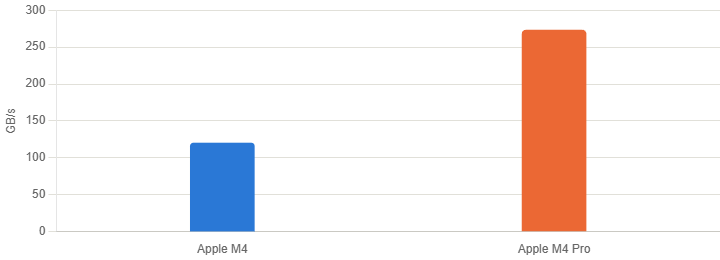
Bandwidth decides how fast it talks back. Base M4 moves at 120 GB/s. M4 Pro moves at 273 GB/s. That gap is the difference between instant and watching it think.
Base M4, 16-24GB: Llama 3.2 3B and Qwen2.5 7B hit 25 tokens a second. A 14B model drops to 10. Great for drafts and notes. Not built for anything bigger.
M4 Pro, 48GB: 30B models run at 40 tokens a second in real chat. The only config built for serious local inference in 2026.
Base price moved from $599 to $799 this year. AI data centers bought up the memory supply. The 24 and 48GB caps are Apple rationing what's left.
Setup is one terminal command. Install Ollama, pull a model sized to your RAM, point any tool you already use at localhost. The subscription meter stops.
Electricity after that: $3 to $8 a month. Forever.
The catch: frontier reasoning and hard coding still belong in the cloud. This box covers the daily 80, not all of it.
Buy for the model you actually want to run, not the number on the sticker.