Delighted to share a new preprint from our lab where we have looked at how perturbations in cellular aging early on during development can impact organ homeostasis later in life!
@biopatrika@VoicesofIndAcad
https://t.co/U87M4OXf1X
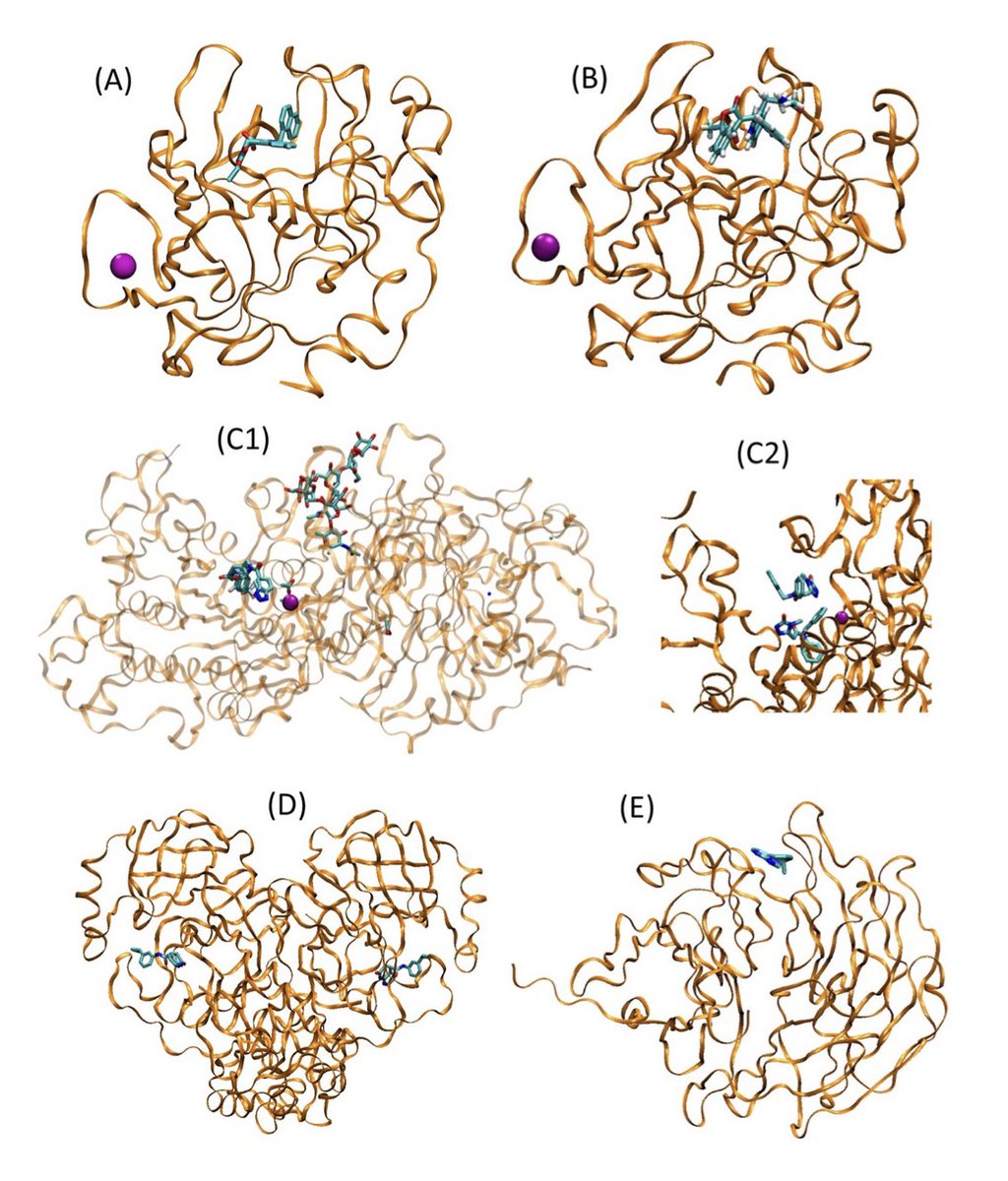
Assessment of Pharmaceutical Protein-Ligand Pose and Affinity Predictions in CASP16
1. CASP16 challenged participants to predict both protein-ligand binding poses and binding affinities for 229 pharmaceutical targets—marking a shift from traditional protein structure prediction to more application-driven drug discovery problems.
2. Template-based methods dominated the pose prediction task, with ClusPro and related methods reaching mean LDDT-PLI scores of 0.69. Notably, AlphaFold 3 outperformed all participant submissions with a mean LDDT-PLI of 0.80 when run post hoc.
3. Deep learning methods such as Boltz-1 and RoseTTAFold All-Atom showed moderate performance, but AlphaFold 3 proved exceptional, accurately modeling even unseen targets like WDR55 with no prior binding site knowledge (LDDT-PLI = 0.93).
4. Pose prediction metrics revealed a bimodal accuracy distribution among participants, and pose accuracy strongly correlated with binding site accuracy, suggesting good ligand placement remains tightly coupled to correct local structural modeling.
5. Ligand complexity (size, rotatable bonds), similarity to known structures (SuCOS), and binding affinity had surprisingly little correlation with pose prediction accuracy, implying that structure quality hinges more on method than molecular properties.
6. Binding affinity prediction proved more difficult. The best group achieved a Kendall’s tau of 0.42 in Stage 1 (no structure access), while many models failed to outperform simple baselines like molecular weight.
7. Even with access to experimental poses in Stage 2, affinity prediction performance did not improve significantly, suggesting that scoring function limitations remain a key bottleneck in binding affinity estimation.
8. Deep learning methods did not systematically outperform classical approaches in affinity prediction, and baseline models using GNINA and AutoDock Vina produced results comparable to top participants.
9. CASP16 highlighted the divergence between pose and affinity prediction performance: groups excelling in pose prediction were not necessarily strong in affinity ranking, indicating distinct challenges in modeling physical interactions versus scoring them.
10. The challenge incorporated industrial-quality, drug-like ligands from Hoffmann-La Roche, Idorsia, and the Structural Genomics Consortium, raising the biological and pharmaceutical relevance of the test set compared to previous CASP or D3R efforts.
11. Evaluation metrics like LDDT-PLI, BiSyRMSD, and BB-RMSD were used to rigorously benchmark pose accuracy, while affinity prediction was judged by correlation with experimental rankings using Kendall’s tau under realistic experimental uncertainty.
12. CASP16 establishes a new benchmark for integrated protein-ligand modeling, showcasing both advances in AI-driven structure prediction and the persistent difficulty of affinity prediction—offering a rich dataset for method development and comparison.
💻Code:
Pose and affinity assessment infrastructure available via CASP Prediction Center and GitHub repositories of participating methods
📜Paper: https://t.co/vmPhs9P8lc
#DrugDiscovery #MolecularDocking #ProteinLigand #DeepLearning #AlphaFold3 #CASP16 #StructurePrediction #BindingAffinity #CADD #PosePrediction #ClusPro #GNINA #Boltz1
After a long long time, a hindi film trailer that inpires, elevates and entertains. Hope the film lives up to the trailer #srikanth https://t.co/tVAEJdYIXN
Can we combine inhibitors of the #circadian clock and lineage correlations to detect presence of cell cycle gating by the clock? Excited about our new manuscript from @NCBS_Bangalore, @NCBStheory showing how this might be possible! A short thread (1/6) https://t.co/5HMtvsixMy