The Great Umayyad Mosque in Damascus is a pearl of the Muslim world, where legendary scholars like Al-Ghazali, Ibn Taymiyyah, and Ibn Arabi once resided. A beacon of Islamic learning and spiritual heritage.
🕌✨
#Damascus#IslamicHistory#Scholars#syria
✨You’ve seen this in every math class:
sin(a ± b) = sin a cos b ± cos a sin b
sin(2a) = 2 sin a cos a
cos(2a) = 1 − 2 sin²(a)
🚨But did you know these formulae came from a Muslim scholar 1000 years ago?
Meet Abū al-Wafā al-Būzjānī, the genius who shaped Trigonometry. 📐
Abū al-Wafā Būzhjānī (d. 998) was a Persian Muslim mathematician and astronomer from Khorasan. Born in Būzjān (near Nishapur, Iran), Būzhjānī showed early brilliance in mathematics and geometry.
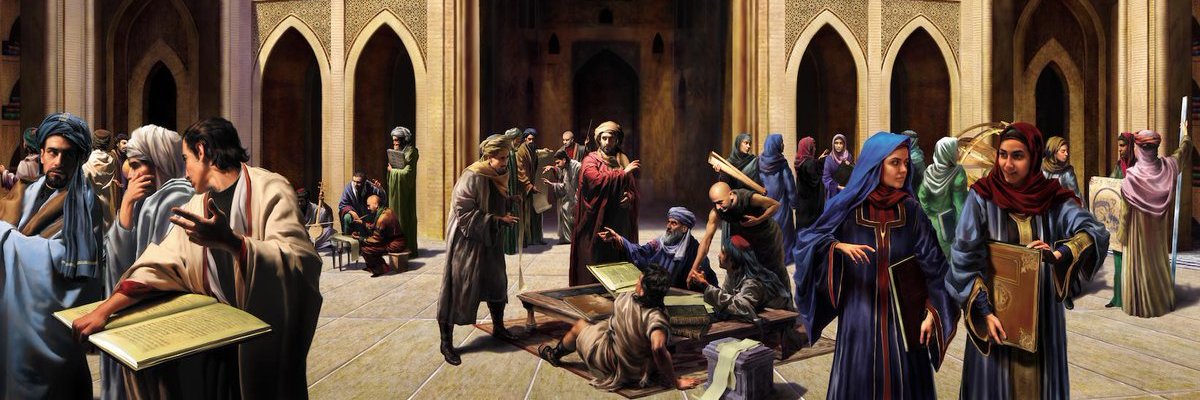
He later moved to Baghdad, then the heart of the Islamic Golden Age, a city of scholars, libraries, and observatories.
In Baghdad, he became one of the leading scientists of the House of Wisdom (Bayt al-Ḥikmah). Here, he studied Greek works like Euclid and Ptolemy, and expanded them far beyond their original limits.
📐 His Contributions to Mathematics:
He established several trigonometric identities such as [sin(a±b)] in their modern form:
{sin(α ± β)= Sinα Cosβ ± Cosα Sinβ}
{sin(a + b) = Sin(a)Cos(b) + Cos(a)Sin(b)}
{Cos(2a) = 1-2sin²(a)}
{Sin(2a) = 2Sin(a) Cos(a)}
He compiled tables of sines and tangents at 15° intervals, introduced secant and cosecant, and explored the relationships between all six trigonometric lines. His work made both mathematics and astronomy quantitatively precise.
He also studied geometry, arithmetic, and number theory, writing detailed commentaries on al-Khwārizmī and Diophantus.
Some sources suggest that he introduced the tangent function, although other sources give the credit for this innovation to al-Marwazi.
🌌 His Work in Astronomy:
Abū al-Wafā designed and built a wall quadrant, a large, fixed instrument used to measure celestial altitudes with remarkable accuracy.
This invention influenced later observatories across the Islamic world.
His masterpiece, Kitāb al-Majisṭī (“The Almagest”), improved upon Ptolemy’s astronomy, described planetary motion, and developed mathematical methods for finding the Qibla direction, the direction of prayer. 🕌
In 997, he participated in an experiment to determine the difference in local time between his location, Baghdad, and that of al-Biruni (who was living in Kath, Uzbekistan).
Their result was astonishingly accurate, within about 1 hour of modern calculations. ⏱️
Fun fact: Early Muslims like Ibn Kathir recognized Paul as one of Jesus' followers.
Later Muslims had to cook up a story of Paul "corrupting" Jesus' message because they found out that Jesus didn't teach Islam, and they needed someone to blame to account for this contradiction.
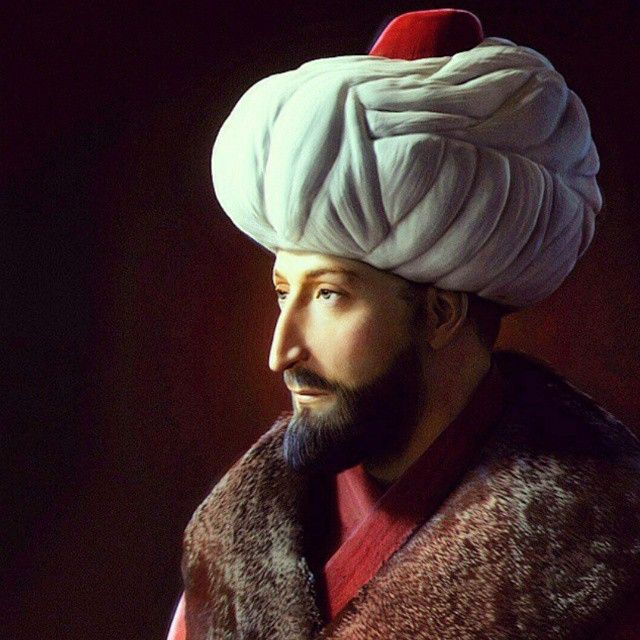
On this day (29 May) in 1453, Sultan Mehmet the Conqueror captured Constantinople at just 21 years old.
This ended the thousand-year-old Byzantine Empire.
The Prophet Muhammad ﷺ said:
“Be in this world as though you were a stranger or a traveler/wayfarer.”
Ibn ‘Umar used to say:
“When evening comes, do not expect (to live till) morning, and when morning comes, do not expect (to live till) evening. Take from your health (a preparation) for your illness, and from your life for your death.”
[Al-Bukhari]
Masjid al-Haram in the 90s.
Before the towers rose around it, the Haram felt open and serene, allowing pilgrims to focus solely on worship, reflection, and the sight of the Kaaba.
It remains so bizarre to me that the early Achaemenids had no interest in spreading their culture and language within their borders, unlike the ancient Greeks.
But after the advent of Islam, the term “Persianization” seriously came into light, where major non-Persian individuals and empires adopted Persian administration, culture and language.
It is as Ivan Aguéli رحمه الله said;
“The Persian became even more Persian after his Islam”.


![IslamicSH_'s tweet photo. ✨You’ve seen this in every math class:
sin(a ± b) = sin a cos b ± cos a sin b
sin(2a) = 2 sin a cos a
cos(2a) = 1 − 2 sin²(a)
🚨But did you know these formulae came from a Muslim scholar 1000 years ago?
Meet Abū al-Wafā al-Būzjānī, the genius who shaped Trigonometry. 📐
Abū al-Wafā Būzhjānī (d. 998) was a Persian Muslim mathematician and astronomer from Khorasan. Born in Būzjān (near Nishapur, Iran), Būzhjānī showed early brilliance in mathematics and geometry.
He later moved to Baghdad, then the heart of the Islamic Golden Age, a city of scholars, libraries, and observatories.
In Baghdad, he became one of the leading scientists of the House of Wisdom (Bayt al-Ḥikmah). Here, he studied Greek works like Euclid and Ptolemy, and expanded them far beyond their original limits.
📐 His Contributions to Mathematics:
He established several trigonometric identities such as [sin(a±b)] in their modern form:
{sin(α ± β)= Sinα Cosβ ± Cosα Sinβ}
{sin(a + b) = Sin(a)Cos(b) + Cos(a)Sin(b)}
{Cos(2a) = 1-2sin²(a)}
{Sin(2a) = 2Sin(a) Cos(a)}
He compiled tables of sines and tangents at 15° intervals, introduced secant and cosecant, and explored the relationships between all six trigonometric lines. His work made both mathematics and astronomy quantitatively precise.
He also studied geometry, arithmetic, and number theory, writing detailed commentaries on al-Khwārizmī and Diophantus.
Some sources suggest that he introduced the tangent function, although other sources give the credit for this innovation to al-Marwazi.
🌌 His Work in Astronomy:
Abū al-Wafā designed and built a wall quadrant, a large, fixed instrument used to measure celestial altitudes with remarkable accuracy.
This invention influenced later observatories across the Islamic world.
His masterpiece, Kitāb al-Majisṭī (“The Almagest”), improved upon Ptolemy’s astronomy, described planetary motion, and developed mathematical methods for finding the Qibla direction, the direction of prayer. 🕌
In 997, he participated in an experiment to determine the difference in local time between his location, Baghdad, and that of al-Biruni (who was living in Kath, Uzbekistan).
Their result was astonishingly accurate, within about 1 hour of modern calculations. ⏱️](https://pbs.twimg.com/media/HHf61X_aIAAM_05.png)







![IslamicSH_'s tweet photo. ✨You’ve seen this in every math class:
sin(a ± b) = sin a cos b ± cos a sin b
sin(2a) = 2 sin a cos a
cos(2a) = 1 − 2 sin²(a)
🚨But did you know these formulae came from a Muslim scholar 1000 years ago?
Meet Abū al-Wafā al-Būzjānī, the genius who shaped Trigonometry. 📐
Abū al-Wafā Būzhjānī (d. 998) was a Persian Muslim mathematician and astronomer from Khorasan. Born in Būzjān (near Nishapur, Iran), Būzhjānī showed early brilliance in mathematics and geometry.
He later moved to Baghdad, then the heart of the Islamic Golden Age, a city of scholars, libraries, and observatories.
In Baghdad, he became one of the leading scientists of the House of Wisdom (Bayt al-Ḥikmah). Here, he studied Greek works like Euclid and Ptolemy, and expanded them far beyond their original limits.
📐 His Contributions to Mathematics:
He established several trigonometric identities such as [sin(a±b)] in their modern form:
{sin(α ± β)= Sinα Cosβ ± Cosα Sinβ}
{sin(a + b) = Sin(a)Cos(b) + Cos(a)Sin(b)}
{Cos(2a) = 1-2sin²(a)}
{Sin(2a) = 2Sin(a) Cos(a)}
He compiled tables of sines and tangents at 15° intervals, introduced secant and cosecant, and explored the relationships between all six trigonometric lines. His work made both mathematics and astronomy quantitatively precise.
He also studied geometry, arithmetic, and number theory, writing detailed commentaries on al-Khwārizmī and Diophantus.
Some sources suggest that he introduced the tangent function, although other sources give the credit for this innovation to al-Marwazi.
🌌 His Work in Astronomy:
Abū al-Wafā designed and built a wall quadrant, a large, fixed instrument used to measure celestial altitudes with remarkable accuracy.
This invention influenced later observatories across the Islamic world.
His masterpiece, Kitāb al-Majisṭī (“The Almagest”), improved upon Ptolemy’s astronomy, described planetary motion, and developed mathematical methods for finding the Qibla direction, the direction of prayer. 🕌
In 997, he participated in an experiment to determine the difference in local time between his location, Baghdad, and that of al-Biruni (who was living in Kath, Uzbekistan).
Their result was astonishingly accurate, within about 1 hour of modern calculations. ⏱️](https://pbs.twimg.com/media/HHf669za0AErbcc.jpg)



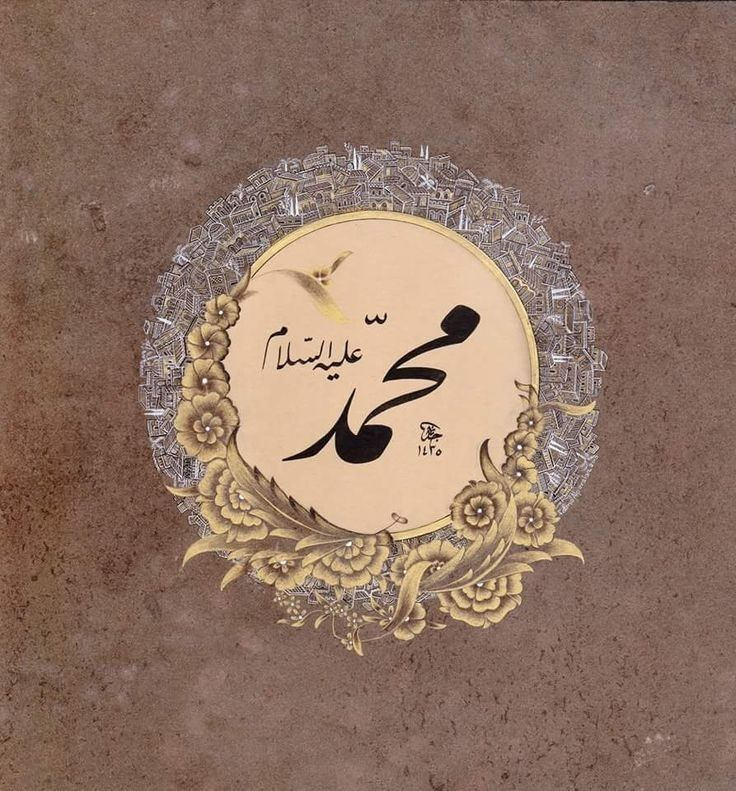

![IslamicSH_'s tweet photo. The Prophet Muhammad ﷺ said:
“Be in this world as though you were a stranger or a traveler/wayfarer.”
Ibn ‘Umar used to say:
“When evening comes, do not expect (to live till) morning, and when morning comes, do not expect (to live till) evening. Take from your health (a preparation) for your illness, and from your life for your death.”
[Al-Bukhari]](https://pbs.twimg.com/media/HJGVtTXa0AAYhjh.jpg)


![IslamicSH_'s tweet photo. “All nations on earth will be blessed through him.”
— Book of Genesis [18:18] https://t.co/UtWYG4QR0S](https://pbs.twimg.com/media/HIwVV2YakAApf1Q.jpg)


