PEXEL EXCHANGE Airdrop: PEX rewards for the community.
PEX is withdrawable instantly to any Web3 wallet.
Sign up: https://t.co/Bpmyda2eKt
Sign up, verify your email and complete the tasks
#PEXELExchange#PEX#Airdrop#Web3#Trading
A fast transaction is useful.
A trusted transaction is even more important.
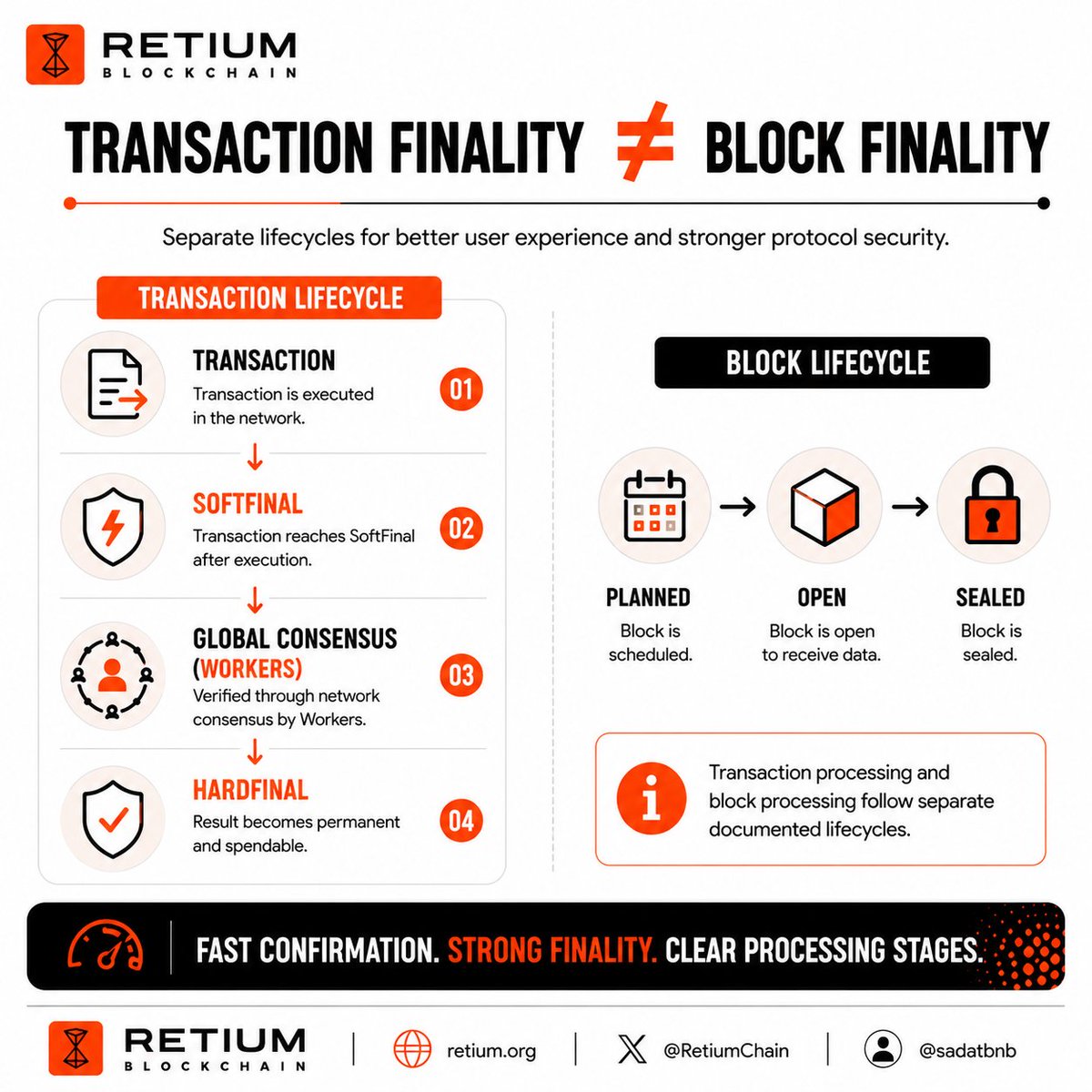
One detail I found interesting while exploring @RetiumChain is that transaction confirmation and block finality are treated as separate stages.
A transaction can reach SoftFinal immediately after execution.
It is then verified through network consensus before reaching HardFinal, where the result becomes permanent and spendable.
Meanwhile, the block itself continues through its own lifecycle.
I like this approach because it separates user experience from protocol security instead of forcing both into the same moment.
The documentation explains the architecture.
The upcoming public testnet will show how this design performs under real network conditions.
Which do you think matters more for the future of Layer-1 networks:
Faster confirmation
or
Stronger finality guarantees?
most crypto protocols focus on assets.
@Primetoken_ is building around access
a protocol that aims to make digital assets more useful
across different ecosystems can unlock better capital efficiency and a smoother DeFi experience
looking forward to seeing how the ecosystem evolves. 🚀
#PrimeProtocol $PRIME #Robinhood
everyone talks about blockchain scalability
i think a more interesting question is how work is distributed across the network
while reading about @RetiumChain
one concept that stood out to me was validator specialization
instead of expecting every validator to handle every responsibility
the architecture explores assigning specialized roles while preserving a consistent network state
that does not automatically make a blockchain better
but it can reduce unnecessary work improve resource efficiency and
create a stronger foundation for long term scalability
documentation is only the starting point
the upcoming public testnet will give the community a chance to
see how these architectural ideas perform under real network conditions
sometimes scalability is not about adding more validators
it's about giving each validator a smarter job to do
do you think validator specialization could become a common design choice
for the next generation of layer 1 networks?