BREAKING ⚠️
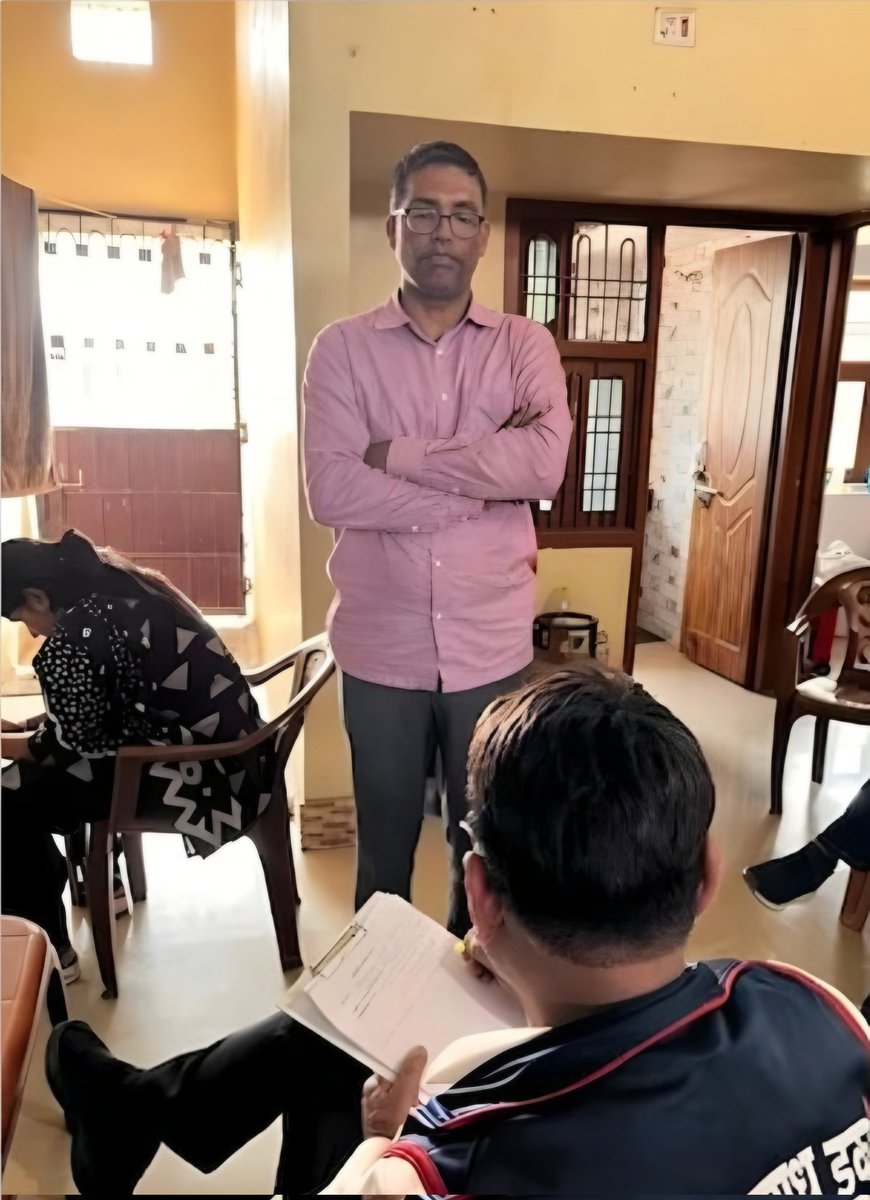
Shinde Sena thug Corporator Ramesh Mhatre gets bail from JUDGE KS KATKADE of Kalyan Court after zero time in lockup/jail.
She has given bail to a man with 18 criminal cases, his victim doctors still in hiding, fearful for their safety. https://t.co/CNZ0ruRlv9
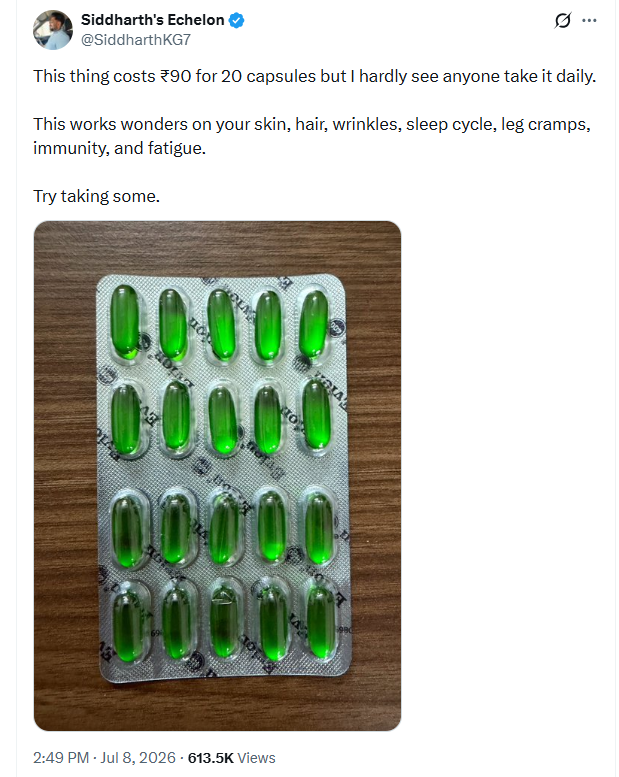
Should everyone take Evion 400 (Vitamin E 400 mg) daily?
There has been an ill-informed advice online recommending vitamin E supplements for everyone. Read this post to understand the scientific evidence regarding who needs vitamin E.
1. Everyone does not need vitamin E supplements
Despite its popularity, there is no good evidence that healthy adults should routinely take 400 mg of vitamin E every day, irrespective of symptoms or vitamin E levels.
2. What does vitamin E do?
Vitamin E is an essential fat-soluble antioxidant that protects cell membranes from oxidative damage and supports immune function. But "essential" does not mean "more is better." Most healthy people can obtain enough through a balanced diet.
3. Is there evidence that everyone benefits from Evion 400?
No.
Large randomized trials have not shown consistent benefits of high-dose vitamin E supplementation for preventing heart attack, stroke, cancer, or dementia, or for increasing longevity.
Routine supplementation is not recommended for healthy adults.
4. Who may actually need vitamin E supplements?
Only selected people need vitamin E supplements, usually under medical supervision:
✅Proven vitamin E deficiency
✅Fat-malabsorption disorders (such as cystic fibrosis, cholestatic liver disease, some intestinal disorders)
✅Rare genetic disorders affecting vitamin E metabolism
For most others, supplementation offers little or no proven benefit.
5. Could high-dose vitamin E be harmful?
Yes.
🔴Long-term high-dose supplementation has been associated with:
🔴Increased bleeding risk (especially with aspirin, clopidogrel, or anticoagulants)
🔴Higher risk of hemorrhagic stroke in some studies
🔴Increased prostate cancer risk in one large trial of men taking 400 IU/day
🔴Some meta-analyses suggested a small increase in all-cause mortality with high-dose supplementation, although this remains debated.
6. How much vitamin E do adults actually need?
🔸Adults need about 15 mg/day of alpha-tocopherol.
🔸Compare that with Evion 400, which contains 400 mg of vitamin E (over 25 times the daily requirement).
7. The best sources of vitamin E are foods, not pills.
✅Excellent natural sources include almonds, sunflower seeds, hazelnuts, peanuts, avocado, sunflower, safflower and wheat germ oils, spinach and other green leafy vegetables.
🔸Vitamin E from foods has not been linked to harm.
Bottom line
Do not confuse antioxidant with anti-aging. If you are healthy and eating a balanced diet, taking Evion 400 every day is unlikely to make you healthier, and may expose you to unnecessary risks.
Dr Sudhir Kumar @hyderabaddoctor 09.07.2026
18 women in Nagpur, Maharashtra complained about kidney problems to their doctors in the span of two years. Doctors saw a pattern and checked that all of them were using this pakistani cream sold by many Instagram pages and meesho.
FDA Maharashtra took the cream samples. Sent to lab and found out that it has 752x mercury present in it above the legal limits. yes, 752x.
Yes, This mercury (poison in this case) can make you goree in 15 days because it blocks the cell that makes melanin. But in reality thats a chemical damage that looks like fairness. And guess what, our skin absorbs mercury and keeps getting deposited in kidney all the time.
I know you might not be using this cream or meesho, but please check around, especially with your house help and your family members back in hometown, if they are using this cream, please ask them to throw it RIGHT AWAY!!!
Please, please read this news thoroughly, for your own sake. I experienced chest discomfort only when I started to run at higher speeds, and it subsided when I just walked or was at rest. That's called 'stable angina' (or stress angina). Unhealthy cholesterol levels, high(er) blood pressure, diabetes are some of the causes for this - in my case, it was unhealthy cholesterol levels, long undetected, while my blood pressure, conversely, continues to be on the lower side because of my running... which my doctor confirmed as healthy since I wasn't experiencing associated fatigue. And I'm prediabetic too, as I discovered during the blood tests for my procedure.
Rana seems to have carried his 'chest discomfort' for 3 days, after which it was too late for any intervention. This is a thin line for most people because it is very easy to mistake a 'discomfort' for stomach acidity, physical symptoms like muscle strain, or even 'heartburn' (which is quite literal!). In a way, I obsess over my daily run more so for this - to include a reasonably stress-inducing activity every day (since there is none) to see if I feel completely alright with it. This helped me identify that I did experience something unusual and it needed medical intervention. And since I felt normal if I stopped the source of stress (running at a faster speed), I ignored it for about a week. But since it persisted exactly only when I stressed, I realized that I was going through something predictably unusual and that needed a check. This 'discomfort' was not a pain at all, ironically. It felt, at best, as a steady tingling sensation on my shoulders and neck - nothing close to my heart! All the more reason to ignore it. But it occurred every single time I stressed myself by increasing the speed of my run, and subsided if I just walked at a slower pace.
Related reading - Two blocks and a second chance https://t.co/cgHCxGoqlB
Vivek Agarwal's father, 80-year-old Radheshyam Agarwal, who had been admitted to Max and for whose care the entire family was staying at the hotel, also died today due to his medical conditions.
Till his last breath, he kept asking about the absence of his family members at the hospital, who had been regularly visiting him until 03 June 2026. The hospital staff did not tell him what had happened to them.
With his death, the Agarwal family has come to an end. Not a single member is left. What a tragedy!
Indeed! To conflate a Rasgulla with an Idli is not just a culinary error; it is a profound cosmological misunderstanding.
To begin with, the comparison is practically a biological impossibility. She is comparing chhena (the delicate, squeaky, pristine curd of milk) with a meticulously fermented batter of parboiled rice and black gram (urad dal). Their compositions are from entirely different kingdoms. One is an airy, spongy lattice designed to trap light sugar syrup; the other is a dense, wholesome, steamed matrix of complex carbohydrates and proteins. Their taste, consistency, structural integrity, and existential purpose share absolutely nothing in common.
But more important, her attempt to dismiss the Idli as merely a blank canvas for sugar syrup does a grave disservice to what is arguably one of the greatest engineering marvels of the culinary world.
The Idli is not a mere "bland cake." It is a masterclass in biotechnology. To achieve the perfect Idli is to balance the delicate microflora of wild fermentation over a cold night, resulting in a steamed cloud that is a triumph of gut health, lightness, and nutritional balance. It is a savoury monolith of South Indian culinary genius, perfectly engineered to absorb the sharp tang of a well-spiced sambar or the fiery depth of a molaga-podi (gunpowder) paste infused with cold-pressed sesame oil or nutritious melted ghee.
To suggest an Idli would even consent to being drowned in sugar syrup is to fundamentally misunderstand its dignity.
If this lady finds Rasgullas overrated, argue that on the merits of their sponginess or sweetness. But please, leave the noble, perfectly fermented, steamed majesty of the Idli out of your dessert-table polemics, ma'am!
China’s first approved drug for hepatitis D! Developed by Innovative Tsinghua scientists, this breakthrough treatment blocks the virus from entering liver cells, offering new hope to patients with one of the most severe forms of viral hepatitis.
I recently had dinner with Dr Devi Shetty, the founder of Narayana Hospitals. For those who don't know him, he's the guy who figured out how to do open heart surgery for a few hundred dollars when the same procedure costs a bomb in the US. Narayana has 18,000 beds across India, and if you ask most middle-class people in Bangalore about it, they'll speak highly of it.
There was one thing I kept thinking about over and over again after meeting him.
Narayana's market cap is around ₹38,000 crore. Now compare that to pretty much any half-decent financial services business in India, and it'll be valued more than that, including Zerodha. A brokerage, worth more than a hospital chain, that has probably saved hundreds of thousands of lives.
I get the arguments. If you're a fund manager/analyst, you can immediately explain it away using margins, capex, asset-light vs asset-heavy, and all that, and I'm not saying the market is wrong.
But it's still a strange world we've built, where the businesses closest to money get valued the highest, and the ones doing the hard and essential things get priced like boring utilities. A hospital carries physical infrastructure, enormous liability, thin margins and the actual weight of keeping people alive. And somehow that's worth less than a platform for buying and selling stocks.
I don't have a clean take on this. All of this just felt odd.
Ps: Nothing here is investment advice. For that, go to @zerodhavarsity
@JayavantDr@kritikatwtss I think it’s up to the patients if they want to pay 750 consulting fee, if not then there are cheaper alternates available. However for a common cold the no. of meds shows is questionable.
@DanQayyum What an idiotic response. I didn’t know your army chief & govt is responsible for making films. Don’t you have a film industry and directors.
One of the most striking stills from Dhurandhar 2. It feels incredibly real.
Anyone who grew up in a lower and middle-class home in the ’80s or ’90s with a strict father will recognise this instantly. That quiet, composed body language, the subtle restraint to not laugh, says it all. Boys, 16-21, who’d be playful and mischievous otherwise would suddenly become measured and self-conscious in their father’s presence.
Twitter is full of mostly disappointing, negative news. So here is an inspiring, heartwarming story of rising against the odds to bring back positivity:
Manoj Kumar Rajak was a regular govt job aspirant, so poor that he was struggling to repay just an ₹85,000 education loan. But Rajak didn’t give up. He kept trying and trying, finally cracked the code, became an electrical engineer in the Bihar govt, and thus began his journey of jan-seva.
By the time Bihar’s Economic Offences Wing caught him yesterday, he had amassed more than ₹100 crore in property, with a modest salary of ₹12 lakh a year.
He built properties across Bihar, Bengal, and Nepal, land, houses, warehouses, even a tea garden, mostly routed through benami holdings in family members’ names, like a petrol pump for his wife and a gas agency for his brother, along with real estate investments.
Despite being married, he overcame those restrictions and even managed to make a Nepali girlfriend, for whom he built a luxurious bungalow in Nepal and made other investments.
Manoj’s life is a shining example that with relentless dedication, hard work, and bold vision, no dream or goal is too big.