Many people think taking one tablet is enough… but parasite control is about using the right structure and consistency.
Iv3rmect!n is widely known as a powerful antiparasitic and has been used globally for years to target parasite burden effectively.
Most people fail because they take it randomly or stop too early structure and proper steps make the real difference.
If you're dealing with ongoing fatigue, brain fog, gut discomfort, or unexplained symptoms, it may be time to look deeper.
Stay informed. Stay consistent. Take parasite control seriously
Have you ever used Ivermectin as part of a structured approach? Share your experience below 👇
Recent research interest has focused on the potential anticancer activities of certain antiparasitic drugs, particularly fenbendazole, mebendazole, and ivermectin. Below is a structured summary of what current experimental findings have explored:
🔬 Fenbendazole
Primary Use: Veterinary medicine
Proposed Mechanism in Cancer Research:
• Microtubule destabilization
• Impairment of glucose metabolism in cancer cells
Bioavailability:
• Poor water solubility
• Limited oral bioavailability
Anticancer Activity (Experimental):
• Reported activity in 5-fluorouracil–resistant colorectal cancer models
Clinical Status:
• Largely experimental in oncology
🔬 Mebendazole
Primary Use: Human parasite treatment
Proposed Mechanism in Cancer Research:
• Disrupts microtubule polymerization
• Induces apoptosis (programmed cancer cell death)
Bioavailability:
• Better bioavailability than fenbendazole
Anticancer Activity (Experimental):
• Active in ovarian cancer models
• Studied in chronic myeloid leukemia (CML)
• Investigated in glioblastoma
Clinical Status:
• Largely experimental in oncology
🔬 Ivermectin
Primary Use: Broad-spectrum antiparasitic
Proposed Mechanism in Cancer Research:
• Inhibits oncogenic signaling pathways
• Induces oxidative stress in tumor cells
Bioavailability / Safety Profile:
• Favorable safety profile at standard approved doses
Anticancer Activity (Experimental):
• Reported activity across 20+ cancer types
• Includes studies in drug-resistant tumor models
Clinical Status:
• Largely experimental in oncology
📌 Key Takeaway
The concept of drug repurposing—using established medications for new therapeutic purposes—continues to generate scientific interest. These compounds are being explored in laboratory and early-stage research settings for their potential anticancer mechanisms.
Research is ongoing, and these applications remain investigational in the field of oncology.
#DrugRepurposing
#CancerResearch
#IntegrativeOncology
#OncologyUpdates
#MedicalResearch
#TranslationalMedicine
#ScientificInnovation
#EmergingTherapies
#CancerAwareness
#HealthScience
#ClinicalResearch
#EvidenceBased
#FutureOfMedicine
#Biomedicine
#ResearchCommunity
‼️MEBENDAZOLE Patent for CANCER Treatment‼️
👏🏻JOHNS HOPKINS UNIVERSITY📃
While some still use the term "dewormer" to mock these treatments, Johns Hopkins University—one of the world’s most prestigious medical institutions—secured a patent (US 11,110,079 B2) for MEBENDAZOLE in cancer therapy! 🏛️💊
What the official Patent reveals:
1️⃣ Glioblastoma Breakthrough: Mebendazole "Polymorph C" is the superior form. It effectively reaches the brain and brain tumors in therapeutic concentrations.
2️⃣ Multi-Cancer Attack: This patent isn't just for brain tumors; it covers therapy for various cancers and even acts as a chemo-preventative agent!
3️⃣ Long-Term Vision: This breakthrough is protected until February 8, 2036 (20 years from the 2016 filing date). This proves that the scientific world views this as a vital part of oncology for the next decade! 🛡️🔬
THE JOE TIPPENS MIRACLE: More Than Just Immunotherapy?
In 2016, Joe Tippens was given 3 months to live. Today, he is a global symbol of hope.
While mainstream media often attributes his recovery solely to the clinical trial of the immunotherapy drug Pembrolizumab (Keytruda), there is a critical detail they often overlook. Out of 1,100 patients in that same clinical trial, Joe was the only one to achieve a complete, 100% cancer-free remission.
What made Joe the outlier?
Against medical advice, Joe added a repurposed veterinary medicine to his daily routine: Fenbendazole.
The Strategic Protocol:
Joe’s journey led to the creation of the now-famous protocol (see chart below), combining:
✅ Fenbendazole (The metabolic disruptor)
✅ Bioavailable Curcumin (Inflammation support)
✅ Full Spectrum CBD Oil (Cellular receptor support)
✅ Vitamin E (Oxidative protection)
The Science of Synergy:
Researchers are now asking the hard questions: Did the Fenbendazole "unmask" the cancer, allowing the immunotherapy to finally see and destroy the enemy? Was it the synergy between the repurposed drug and modern medicine that saved his life?
The Bottom Line:
Joe Tippens didn't just follow the system—he challenged it. His story remains the ultimate case study for Medical Freedom and the power of repurposed drugs.
Heavy Metals & Cancer – The Silent Saboteur of Your Health
Did you know that heavy metal toxicity (mercury, lead, cadmium) is one of the most potent triggers for chronic inflammation? In the world of 2026 metabolic oncology, the data is clear: if your body is burdened with metals, your primary protocols may face systemic resistance.
What effectively eliminates heavy metals from the body?
✅ Zeolite (Clinoptilolite): Acts like an "intelligent sieve." Its cage-like structure binds heavy metal cations in the digestive tract, preventing them from being reabsorbed. This is the absolute foundation for "cleaning" the extracellular matrix.
✅ Chlorella: This algae possesses a unique ability to bind metals within its cell wall. Crucial in breaking the so-called enterohepatic circulation of toxins—it ensures that what the liver flushes out doesn't return to the bloodstream.
✅ Modified Citrus Pectin (MCP): One of the few chelators capable of reaching the bloodstream without leaching essential minerals. It works with precision, binding metals and facilitating their excretion through the kidneys.
Why is this a priority?
Heavy metals occupy spots in cells that should belong to zinc, selenium, or magnesium. Without a detox, your immune system is fighting on two fronts. First, we remove the "blockages," then we hit the target.
Mel Gibson: "I have 3 friends. All 3 of them had stage 4 cancer…and all 3 of them…don't have cancer right now at all…"
Joe Rogan: "What did they take…? Ivermectin and Fenbendazole…"
Mel Gibson nods in agreement.
🔥THE 3-FUEL BLOCK: STARVE THE TUMOR. STRENGTHEN THE TERRAIN.
Most cancer protocols miss this. Tumors adapt fast—but so can you. When you target all three fuels—glucose, glutamine, and fatty acids—you force the disease into crisis while rebuilding the foundation of your health.
✅ 3-Fuel Terrain Protocol Overview:
1. Block Glucose
Therapeutic keto
18–72 hour fasts
Blood sugar & insulin regulation
2. Inhibit Glutamine
Avoid soy, whey, processed meats
Use quercetin, berberine, EGCG, curcumin
3. Disrupt Fatty Acid Metabolism
Prioritize MCT oil
Avoid high omega-6 seed oils
Use honokiol, resveratrol, and curcumin
Studies:
📚 Seyfried et al., 2014: Cancer is a metabolic disease that can be targeted by disrupting nutrient supply
📚 Nature Reviews Cancer (2020): Tumor adaptation is tied to fuel availability
📚 Cancer Cell, 2021: Multi-fuel targeting enhances cancer therapy outcomes and reduces relapse
🔥You’re not helpless.
Cancer doesn’t have to win.
You can target its metabolism, support your immune system, and rebuild your terrain.
That’s what I did—and that’s why I’m still here.
⚠️ DISCLAIMER: This content is for educational purposes only. Not medical advice. Always consult with your healthcare provider before starting any therapeutic protocol.
#Ivermectin #Cancer #CancerAwareness #FightCancer #CancerSupport #CancerWarrior #CancerSurvivor #BeatCancer #HopeAgainstCancer #StrongerTogether #CancerCare
Recent research has increasingly explored the potential anticancer properties of certain antiparasitic drugs, particularly fenbendazole, mebendazole, and ivermectin. Below is a structured overview of current experimental findings:
Fenbendazole
Primary Use: Veterinary medicine
Proposed Anticancer Mechanisms:
1. Disruption of microtubule dynamics
2. Interference with glucose metabolism in cancer cells
Bioavailability:
1. Poor water solubility
2. Limited absorption when taken orally
Experimental Evidence:
Demonstrated activity in models of 5-fluorouracil–resistant colorectal cancer
Clinical Status:
Remains largely experimental in oncology
Mebendazole
Primary Use: Treatment of parasitic infections in humans
Proposed Anticancer Mechanisms:
1. Inhibits microtubule polymerization
2. Triggers apoptosis (programmed cell death)
Bioavailability:
1. Higher bioavailability compared to fenbendazole
Experimental Evidence:
1. Studied in ovarian cancer models
2. Investigated in chronic myeloid leukemia (CML)
3. Explored as a potential therapy for glioblastoma
Clinical Status:
Still considered experimental in cancer treatment
Ivermectin
Primary Use: Broad-spectrum antiparasitic agent
Proposed Anticancer Mechanisms:
1. Modulation of oncogenic signaling pathways
2. Induction of oxidative stress in tumor cells
Bioavailability and Safety:
Well-established safety profile at approved therapeutic doses
Experimental Evidence:
1. Reported activity across more than 20 cancer types
2. Includes effects in drug-resistant tumor models
Clinical Status:
Remains investigational in oncology
Key Takeaway
The repurposing of existing drugs for new therapeutic uses is an active area of scientific research. While fenbendazole, mebendazole, and ivermectin have shown potential anticancer effects in laboratory and early-stage studies, their use in oncology is still experimental. Further clinical research is needed to establish their safety and effectiveness in cancer treatment.
#DrugRepurposing
#CancerResearch
#IntegrativeOncology
#OncologyUpdates
#MedicalResearch
#TranslationalMedicine
#ScientificInnovation
#EmergingTherapies
#CancerAwareness
#HealthScience
#ClinicalResearch
#EvidenceBased
#FutureOfMedicine
#Biomedicine
#ResearchCommunity
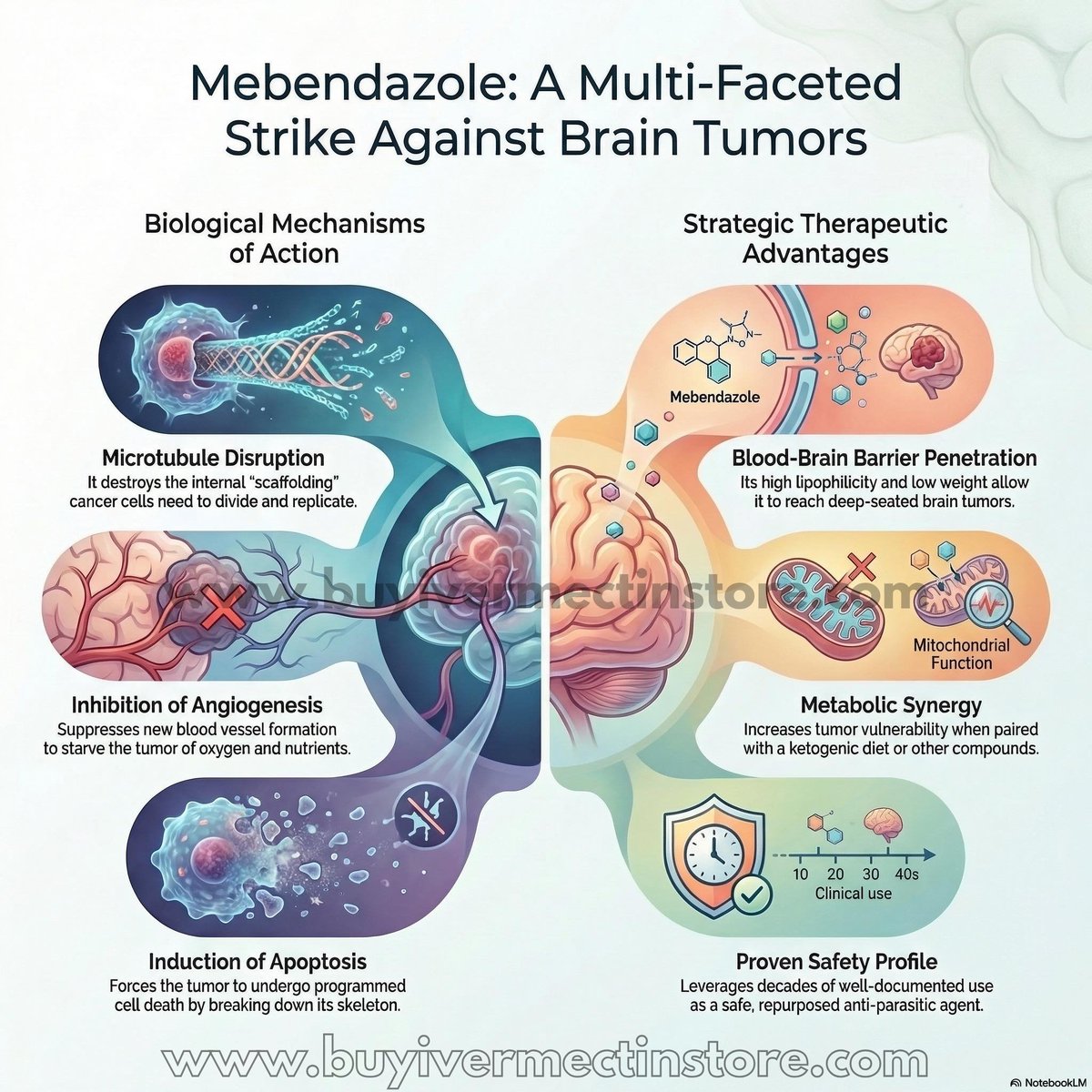
Mebendazole: A Strategic Strike Against Brain Tumors
The Blood-Brain Barrier (BBB) is often called an "impenetrable wall," but modern molecular engineering allows us to navigate this filter. Success in the most challenging cases depends on utilizing specific physical properties of molecules that can reach where standard tools often fail.
Here are the 3 pillars of action changing the narrative:
1️⃣ Breaching the Barrier (BBB):
Due to its high lipophilicity and low molecular weight, Mebendazole possesses the unique ability to penetrate the central nervous system, reaching deep-seated lesions directly.
2️⃣ Disrupting the "Scaffolding":
The mechanism of action centers on microtubule disruption—the internal skeleton of aggressive cells. Without this structural foundation, the cell cannot divide or replicate.
3️⃣ The Metabolic Siege:
Inhibition of Angiogenesis: Cutting off the tumor’s supply lines by suppressing the formation of new blood vessels.
Metabolic Synergy: Increasing tumor vulnerability when paired with a therapeutic ketogenic diet and other targeted compounds.
Induction of Apoptosis: Forcing the natural elimination of damaged cells by breaking down their internal integrity.
This strategy is built on decades of well-documented safety and hard data from elite institutions like Johns Hopkins University.
💊🦠How does fenbendazole "switch off" cancer? 6 key mechanisms
Fenbendazole is not an ordinary drug – preclinical studies show that it attacks cancer cells on multiple levels, which scientists call a "multimodal attack."
Here's how it works:
➡️1. Disintegration of the cellular "scaffold" (Microtubule Destabilization)
Cancer cells divide very rapidly. To do this, they need microtubules – small tubes that act as a framework and a highway for transport within the cell.
✅Fenbendazole works by: Binding to tubulin and blocking its structure.
✅Effect: The cancer cell cannot divide, becomes "frozen" in the division process (mitotic arrest), and ultimately dies (apoptosis). This mechanism is similar to that of powerful chemotherapeutic drugs, but often with lower toxicity to the body.
➡️2. Activation of the "gene guardian" (p53 protein)
The p53 protein is our body's natural defender, detecting DNA damage and instructing the defective cell to commit suicide. In many cancers, p53 is "dormant," allowing the cancer to grow unpunished.
✅FBZ Action: Stimulates p53 protein activity. ✅Effect: Restores the cell's ability to recognize its own errors and initiate the natural process of eliminating the tumor.
➡️3. Blocking "waste disposal" (proteasome inhibition)
Cancer cells produce a multitude of defective proteins, which they must dispose of through proteasomes (a type of cellular recycling) to survive.
✅FBZ Action: Disrupts the functioning of these "scavengers."
✅Effect: The cancer cell becomes inundated with its own protein waste, leading to its dysfunction and inhibition of tumor growth.
➡️4. Cutting off the fuel supply (Metabolic disorders)
Cancer is an "energy-hungry monster." It requires enormous amounts of glucose (sugar) and glutamine to fuel its rapid growth.
✅FBZ Action: Inhibits glucose uptake by cancer cells.
✅Effect: Cancer is literally starved. Without energy, it loses its ability to aggressively multiply.
➡️5. Blocking the formation of "pipelines" (Anti-angiogenesis)
To grow, a tumor forces the body to build new blood vessels that supply it with oxygen and nutrients.
✅FBZ Action: Limits the formation of these vessels.
✅Effect: The tumor cannot grow beyond a certain size because it has no "supply" source.
➡️6. Attacking the "roots" of cancer (Cancer stem cells)
This is the most difficult part of the fight. Classic chemotherapy often kills the "leaves" (normal cancer cells) but leaves the "roots" (stem cells) from which the cancer grows back.
✅How Fenbendazole works: Studies suggest that fenbendazole can eliminate the most resistant cancer-initiating cells.
✅Effect: Reduces the risk of relapse and metastasis by attacking the very source of the disease.
Why is this groundbreaking?
Most cancer drugs focus on one of these points. Fenbendazole seems to combine them all in a single molecule. This multi-pronged approach may explain the spectacular cases of remission in patients for whom conventional medicine had given up hope.
#Fenbendazole #cancersurvivor #Cancer
🌿💊 Cancer Protocols Using Ivermectin & Fenbendazole 💊🌿 (Shared from community experiences & alt-health research 💬🧠)
Many people are exploring integrative protocols for different types of cancer using ivermectin and fenbendazole — both repurposed medications originally used in veterinary or anti-parasitic settings, now gaining traction for their potential anti-cancer effects.
Here’s a general overview of how they’re being used in various protocols shared by patients and advocates:
🧠 Brain, Lung & Pancreatic Cancer
🧪 Ivermectin: 12mg daily for 5 days on, 2 days off 🦠 Fenbendazole (fenben): 222mg once daily, 3 days on / 4 days off, with a fatty meal (eggs, nuts, avocado)
💗 Breast Cancer
🧪 Ivermectin: 12mg every other day or 5 days on / 2 off
🦠 Fenben: 222mg daily for 5 days on / 2 days off (repeated weekly)
💡 Some also add turmeric/curcumin + vitamin E or CBD oil for synergy
⚡ Colorectal, Prostate, Liver
🧪 Ivermectin: 12mg every evening after a fatty meal (some cycle 4 weeks on, 1 week off)
🦠 Fenben: 222mg daily with breaks (usually 3 on / 4 off)
🧬 Melanoma, Lymphoma, Metastatic types
🧪 Ivermectin: 12mg daily for 2–4 weeks straight (then assess response)
🦠 Fenben: Continuous micro-dosing OR 3 days on / 4 days off
💡 Other users include quercetin, vitamin D3, zinc, or resveratrol
👉 Tips from the community:
🍳 Always take both meds with a fatty meal for better absorption
🌀 Detox support like milk thistle or binders may help 🧼 Cycle your protocol: give your body time to reset
⚠️ Always research, track your response, and ideally work with an integrative or open-minded health practitioner. These protocols are NOT a replacement for medical advice but are shared to empower personal choice and informed experimentation.
👇 If you’ve tried fenbendazole or ivermectin for cancer, share your experience below. Your story might help someone else 💛
🦠How Ivermectin Works Against Parasites
Ivermectin helps the body fight parasites by targeting their nerve and muscle cells.
Here’s the basic process:
• It binds to specific channels in the parasite’s nervous system
• This opens chloride channels and paralyzes the parasite
• The parasite can no longer move, attach, or feed
• The body then expels or eliminates the weakened parasite
Once immobilized, parasites are typically cleared by the digestive system or immune response.
Ivermectin has been used worldwide for decades as a trusted anti-parasitic medication
#Ivermectin #CancerCare
#HealthAwareness #alternativehealth
Ivermectin vs. Fenbendazole vs. Mebendazole
🔬Ivermectin vs. Fenbendazole vs. Mebendazole: 12 Powerful Anti-Cancer Mechanisms Each Uses to Attack Tumors
These repurposed medications were originally designed to fight parasites — but research and real-world use have shown they do much more. Each one attacks cancer on multiple biological fronts, helping shut down tumor growth, starve cancer cells, boost the immune system, and more.
Here’s a breakdown of how each works:
✅ IVERMECTIN – 12 Known Anti-Cancer Actions
1. Inhibits WNT/β-catenin pathway – stops cancer cell proliferation
2. Induces apoptosis – triggers programmed cancer cell death
3. Blocks importin α/β transport proteins – prevents cancer cell replication
4. Inhibits PAK1 enzyme – reduces inflammation and tumor progression
5. Anti-angiogenic – stops formation of new blood vessels in tumors
6. Immune system modulator – enhances recognition of cancer cells
7. Autophagy disruptor– interferes with cancer cell survival strategies
8. Targets glioblastoma stem cells – effective in brain cancers
9. Inhibits mitochondrial respiration – cuts off energy supply to tumors
10. Disrupts mTOR signaling – slows cell growth
11. Overcomes chemotherapy resistance – makes chemo more effective
12. Antiviral properties– potentially helpful for virus-related cancers (like HPV)
✅FENBENDAZOLE– 12 Known Anti-Cancer Actions
1. Microtubule disruption – prevents cancer cells from dividing
2. nhibits glucose uptake – starves cancer cells of energy
3. Activates p53 tumor suppressor gene– helps kill damaged cells
4. Triggers apoptosis (cell death) – particularly in lung, colon, and prostate cancer
5. Inhibits metastasis – prevents cancer from spreading
6. Enhances oxidative stress in cancer cells– makes them more vulnerable
7. Immune modulator– may help immune system target tumors
8. Blocks angiogenesis – stops tumors from building blood supply
9. Depletes glutathione in tumors – weakens their defense
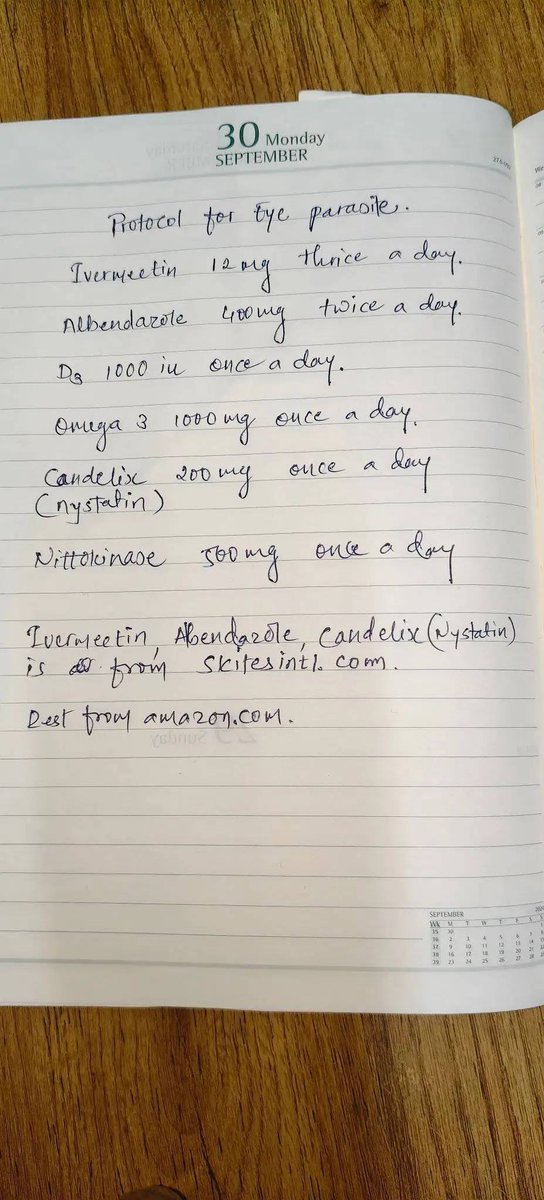
My experience with eye parasite symptoms
For a long time, I had uncomfortable eye symptoms like constant irritation, pressure around the eyes, burning, blurry vision at times, and a strange crawling or movement sensation. It was disturbing and mentally exhausting.
After exploring the parasite angle, I followed a guided protocol that included ivermectin, albendazole, and supportive supplements. The improvement was gradual, but real. The eye discomfort reduced, pressure settled, and I finally started feeling normal again.
#Cancer #Ivermectin
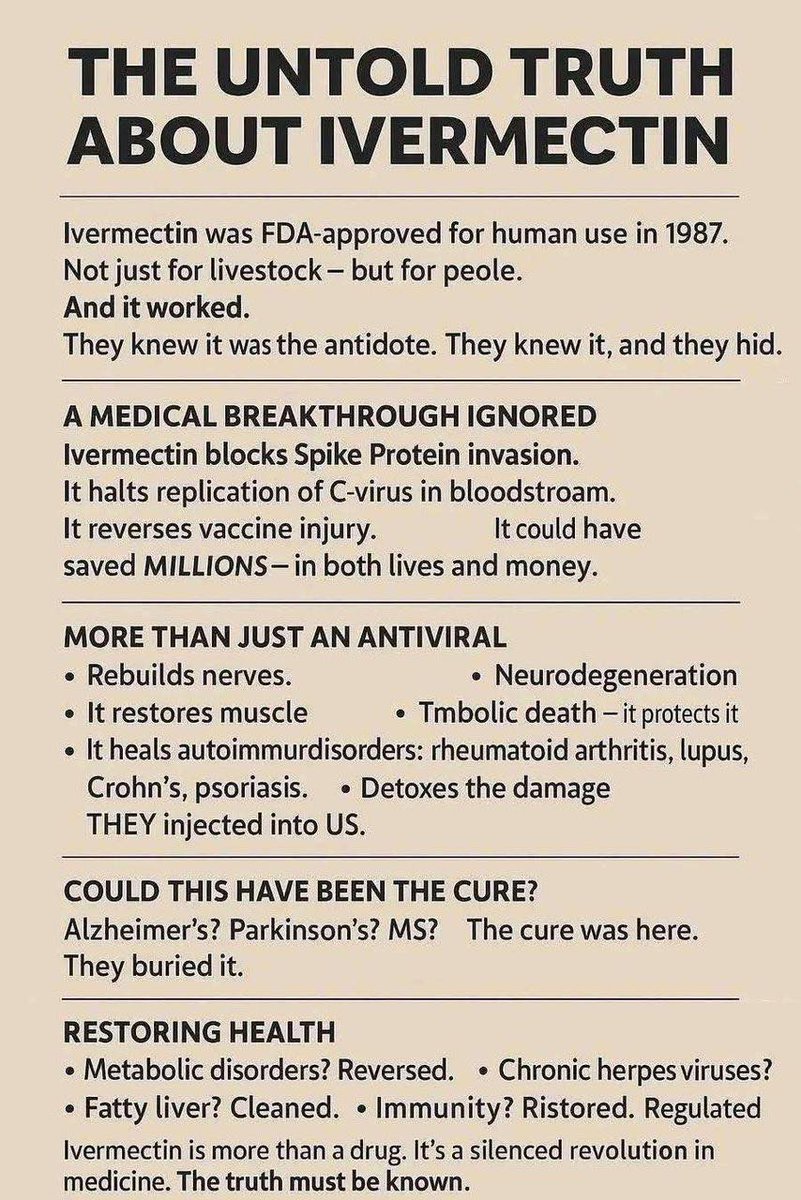
Iverm is more than a drug. It’s a silenced revolution in medicine and this truth needs to be publicized more!
1 – Iverm prevents the damage caused to RNA Vaccines.
2 – Iverm blocks the entry of Spike Protein into cells. So, if the person was vaccinated with COVID, they have hope, they have a way to treat themselves through Ivermectin.
3 – Iverm is a treatment after Covid and after vaccination, it is an effective medicine in all phases of Covid 19, even before entering the cell, Ivermectin already destroys the virus in the blood. It only has beneficial effects and no harmful effects in the treatment of the coronavirus.
4 – Iverm has a very powerful anti-inflammatory action against Coronavirus.
5 – Iverm has a powerful action for traumatic and orthopedic injuries, it strengthens muscles and has no side effects like corticosteroids.
6 – Iverm treats autoimmune ailments such as: rheumatoid arthritis, ankylosing spondylitis, fibromyalgia, psoriasis, Crohn's disease,
Joe Tippens 120 Days protocol Success Story👇
@IvermectinShop
A 58-year-old man with Stage 4 poorly differentiated neuroendocrine pancreatic cancer reportedly showed a dramatic response after ~120 days of treatment.
Initial diagnosis:
• 10 cm pancreatic tumor with liver metastases
Protocol included:
• Ivermectin 12 mg
• Fenbendazole 444 mg
• FECO (full-extract cannabis oil) 100 mg/day
• Onco adjunct pathway
• Milk thistle
• Vitamin B17
Reported results after ~3 months (PET scan Dec 21, 2025):
• Pancreatic mass: 10.4×8.2×6.2 cm → 8.3×2.4 cm (~77% tumor volume reduction)
• Liver metastasis: 4.6×4.4 cm → 1.4×1.3 cm (~97% reduction)
• Liver metastasis: 4.3×3.7 cm → 2.7×2.2 cm (~78% reduction)
• Left adrenal metastasis: 3.1 cm → 2.1 cm (~69% reduction)
• Upper abdominal lymph node (8 mm): resolved
Family statement:
“He seems to be responding exceptionally well to treatment.”
Stories like this highlight the growing interest in exploring repurposed drugs and integrative approaches in oncology.
Important: Individual cases ≠ clinical proof. Rigorous trials are essential to confirm safety and effectiveness.
#CancerResearch #RepurposedDrugs #Oncology #MedicalScience #Ivermectin
Credit: Story originally shared via Facebook (source post circulating on social media).
Disclaimer: This post shares a reported case from social media for discussion purposes only. It is not medical advice. Individual cases do not prove effectiveness. Always consult a qualified medical professional before considering any treatment.