Thanks @ERC_Research for funding my proposal OSTIA! The project will start in June 2024, with the goal to gain process understanding of #ocean heat and carbon storage under ambitious emission mitigation.
https://t.co/hZ59aVz63x
Preprint open for discussion of The High Resolution Model Intercomparison Project (HighResMIP) 2 protocol to support a coordinated set of experiments for a systematic investigation of the impact of horizontal resolution:
📢"We propose an updated #HighResMIP2 to improve and extend the previous work, to address new science questions, and to further advance our understanding of the role of horizontal resolution".
🆕 EERIE co-authored preprint open for discussion!
https://t.co/muneh4LIhl
We will be bulldozing through the unanimously, globally agreed Paris warming limits of 1.5C and „well below 2C“ if policymakers do not take them seriously.
Stop all subsidies for fossil fuels.
Phase fossil fuels out, fast.
All else will cost us and our descendants very dearly!
🚨 Postdoc Klaxon 🚨
Ocean, climate, and Earth scientists... Come work with me on the broad theme of ocean tracer dynamics, with a particular focus on high latitudes. Tons of exciting and important questions to explore!
More info or to apply: https://t.co/CdZtfY5qc7
Closing soon (March 4th): #JobOpening@GEOMAR_en for a 4-year scientific programmer in Earth system modelling associated with the @ERC_Research project OSTIA.
https://t.co/dFn0FWIjBI
In a new opinion paper, #GEOMAR climate researcher @IvyFrenger and international colleagues call for a comprehensive view of the marine #biologicalcarbonpump: https://t.co/U43AWoYHGT
Join our public lecture The ocean’s role in mitigating climate change on 28/9 at @museumnaturalis@IvyFrenger: understanding the ocean's behavior is crucial for effectively addressing future climate challenges and achieving climate goals. https://t.co/rPPgJDGcfb
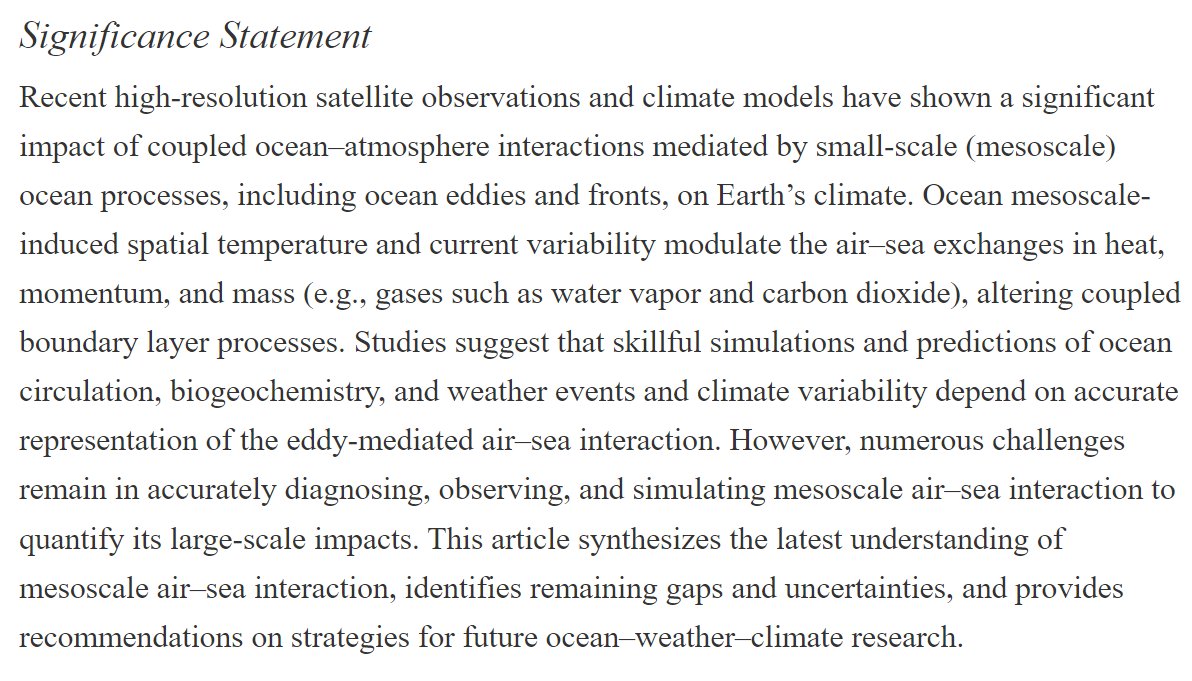
"Ocean Mesoscale and Frontal-Scale Ocean–Atmosphere Interactions and Influence on Large-Scale Climate: A Review", Journal of Climate 36, 7 (2023): 1981-2013, https://t.co/1D8oCu4g2s #JClimate
1/2
📢seminar alert📢
Biological carbon storage in the ocean interior under climate change - concepts and perceptions ⤵️📈
by Dr Ivy Frenger @IvyFrenger@GEOMAR_en
🕑2:00 p.m (UK time)
🗓️Wednesday 25/01/2023
📍online
🔗get the link by emailing liverpool_seminars @ noc. ac. uk
Where are global emissions heading and where should they be going to keep #globalwarming well below 2C and 1.5C?
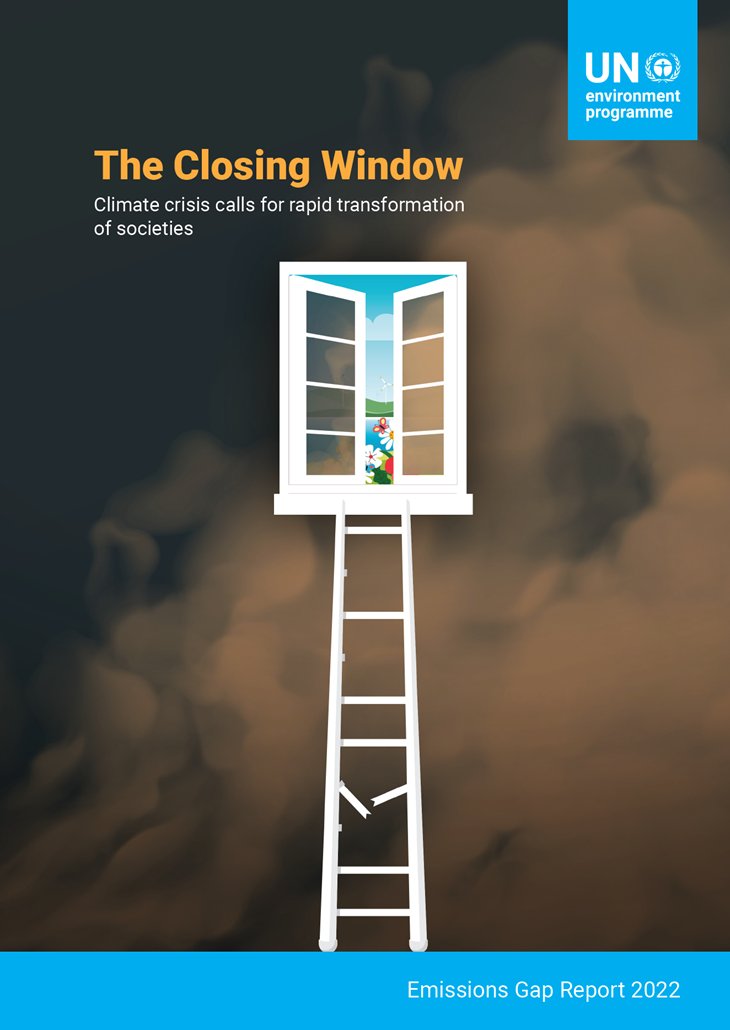
Today, @UNEP released the 2022 #emissionsgap report.
A look at the key messages
but caution, not much good news ahead 🧵/1
Finally, very often the high cost of climate action is mentioned.
We now put these estimates in perspective and show how costs compare to baseline GDP growth and gains achieved by cleaning up the economy and avoiding climate change.
A quite compelling picture if you ask me. /19
New study led by my former @cabotinstitute MScR Jamie Atkins (now @ExeterMarine) with @IvyFrenger is out now in GRL. In it we explore the contribution of mesoscale eddies to low oxygen extremes🌀 🌊
https://t.co/nfPZKlW7ZN
Modelled seasonally changing mixed layer depth affects zooplankton prey concentration, and thus grazing and energy transfer from low to higher higher trophic levels https://t.co/6i37R3Z6hc.
Interested in modelling Eastern Boundary Upwelling Systems (EBUS)? Consider to submit an abstract to Session 10 of the Open Science Conference on EBUS https://t.co/eT8spFAxLk.
Global CO2 emissions grew by the largest ever amount in 2021 – some 2GtCO2 – reaching a new all-time record high, @IEA says
"The world has not heeded the call for a sustainable recovery from the Covid-19 crisis"
https://t.co/MmfgTuMjw8
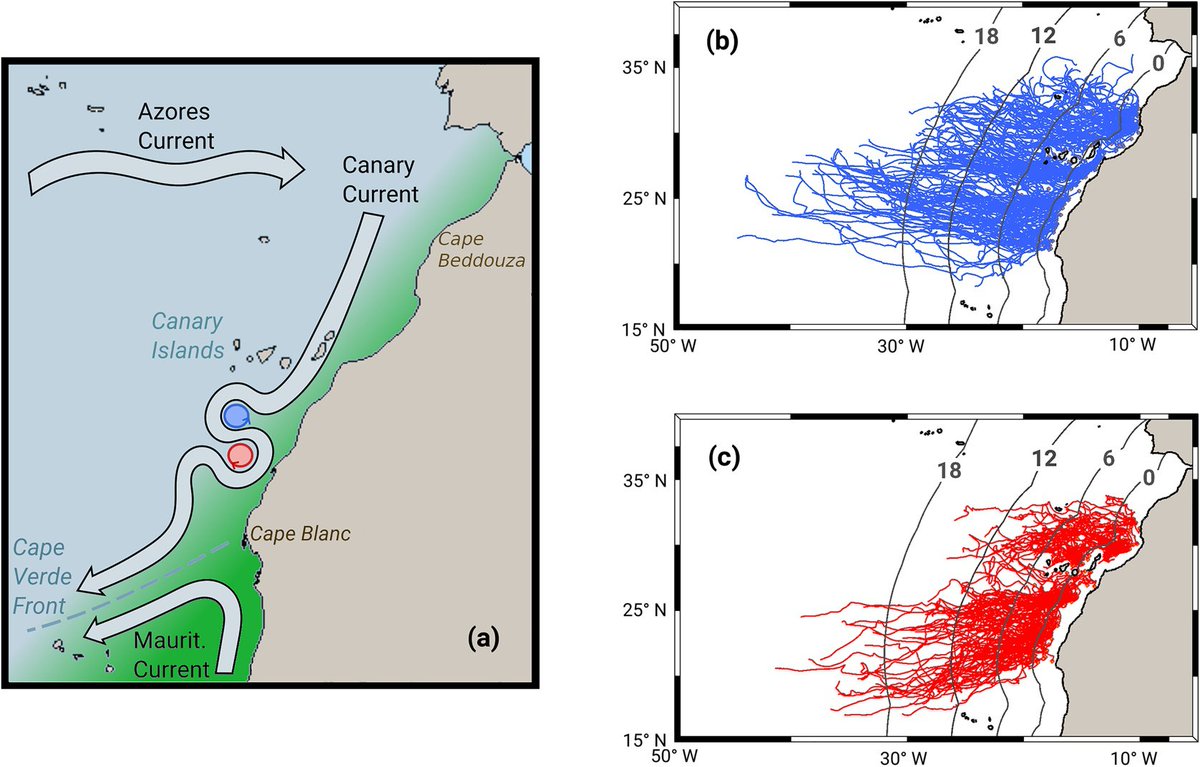
Eastern boundary upwelling eddies: Cyclones support new production by dragging along, and anticyclones by stirring up nutrients; intense recycling of organic material happens in both types of eddies; see our study published in https://t.co/IkHieUTa4w