TNF #PITvsCLE Lock🏈 {Oct 1}
FOLLOW FOR MORE LOCKS!💪@izzobets
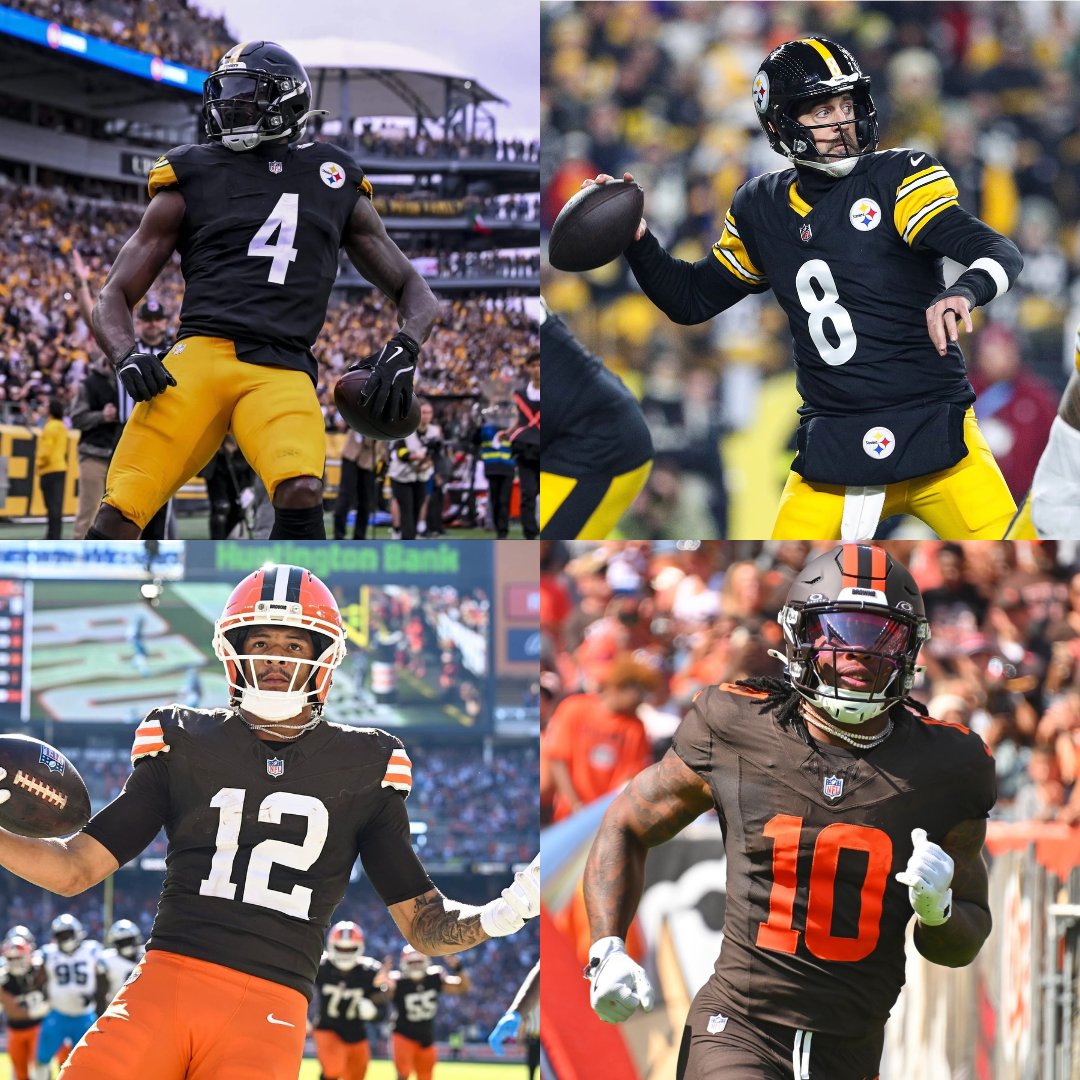
🔒Pittsburgh Steelers -2.5
{-110} FanDuel
-The Pittsburgh Steelers' defensive front, anchored by T.J. Watt and Alex Highsmith, boasts a massive schematic advantage against a highly vulnerable Cleveland offensive line. In 2026, the Steelers' defense is sacking opposing quarterbacks on a staggering 8.99% of dropbacks, ranking among the league's elite. Conversely, the Browns' offense is getting sacked on 9.78% of their passing plays, reflecting severe pass protection breakdowns. By consistently generating high-leverage pressures without needing to manufacture blitzes, Pittsburgh will force Cleveland into devastating negative-EPA (Expected Points Added) plays.
-Through early 2026, the Steelers' defense is generating an impressive 2.0 takeaways per game, contributing to a robust +0.7 overall turnover margin. In stark contrast, Cleveland's offense frequently makes turnover-worthy plays, and their defense averages just 0.7 takeaways per game, resulting in a negative margin (-0.3). By capitalizing on forced fumbles and interceptions against a chaotic Browns passing attack, the Steelers will generate short fields and convert those mistakes into vital, margin-covering points.
-In 2026, the Cleveland Browns' defense is allowing opponents to convert on 39.02% of their third-down attempts, forcing them to defend an exhausting 64 total plays and over 31 minutes of possession per game. The Steelers' offense, operating with a run-heavy, methodical West Coast scheme, is practically built to exploit this vulnerability.
-In 2026, Teryl Austin’s defensive unit operates as a suffocating bend-but-don't-break entity, allowing opposing offenses to score touchdowns on just 33.3% of their red zone trips. The Browns, already struggling with offensive efficiency and sitting at a mediocre 18.0 points per game, lack the tight-window execution required to crack this dense coverage shell.
RTs♻️+ LIKEs💜Appreciated❗️
📊powered by:@propsdotcash
#gamblingx | #gamblingtwitter
TNF #PITvsCLE Prop #4🏈 {Oct 1}
100% HIT RATE‼️💎
🔒Quinshon Judkins O 0.5 ATTD
{+130} Fanatics #Browns
FOLLOW FOR MORE LOCKS!💪@izzobets
-According to Pro Football Focus (PFF), Judkins remains one of the hardest running backs to bring down on initial contact, generating over 2.0 yards after contact per attempt in his career alongside 15 broken tackles on 272 career rushing attempts. In short-yardage and goal-line scenarios where interior lanes are clogged, his elite contact balance and lower-body drive allow him to push through arm tackles at the line of scrimmage and extend the pile into the end zone. That individual tackle-breaking ability makes his ATTD prop highly resilient against tough defensive fronts.
Despite racking up 51 touches and 177 scrimmage yards through three games in 2026, Judkins has yet to find the end zone this season. PropFinder regression models flag this as a textbook positive touchdown regression spot. A lead back commanding over 17 touches per game in a tight, low-scoring AFC North divisional clash against Pittsburgh will inevitably see high-leverage red-zone opportunities. With Cleveland projected for multiple trips inside the 20, regression dictates Judkins is due to break his 2026 touchdown drought.
-The Pittsburgh Steelers defensive line presents an exploitable matchup inside the 20-yard line. According to PFF defensive metrics through late 2025 and early 2026, Pittsburgh's front seven ranks in the bottom half of the league in goal-line rush success rate allowed and goal-to-go defensive stop percentage. Defensive line penetration weakens significantly in short-yardage power situations, where Pittsburgh linebackers struggle with gap discipline against heavy personnel sets. Judkins’ physical 6-foot, 221-pound frame is purpose-built to punish this exact front in goal-line packages.
RTs♻️+ LIKEs💜Appreciated❗️
📊powered by:@propsdotcash
#gamblingx | #gamblingtwitter
TNF #PITvsCLE Prop #3🏈 {Oct 1}
100% HIT RATE‼️💎
🔒Denzel Boston O 34.5 REC YDS
{-115} BetMGM #Browns
FOLLOW FOR MORE LOCKS!💪@izzobets
-Denzel Boston has kicked off his 2026 rookie campaign with the Cleveland Browns in explosive fashion, racking up 195 receiving yards on 9 receptions across his first three starts. Averaging a staggering 21.7 yards per catch—highlighted by a 95-yard, 1-touchdown breakout performance against Tampa Bay in Week 2—Boston is a legitimate downfield weapon. Drafted 39th overall in the 2026 NFL Draft, Boston was immediately thrust into a full-time starter's workload, starting all three games for Cleveland in Todd Monken’s revamped offense. Pro Football Focus (PFF) metrics show Boston maintaining a high route participation rate on dropbacks, lining up as the primary X-receiver on the perimeter. Operating with a high Average Depth of Target (aDOT), Deshaun Watson routinely looks Boston's way for boundary shots. This consistent snap share and high-aDOT usage ensure that his targets carry maximum yardage equity toward the Over.
-According to PFF college and NFL tracking metrics, Boston possesses an elite physical profile that makes him immune to tight coverage. In his final 2025 season at Washington (where he posted 62 catches, 881 yards, and 11 TDs), Boston caught an astounding 10 of 13 contested targets (76.9%) with just two drops all year. At 6-foot-4 and 215 pounds, his ability to box out cornerbacks and haul in back-shoulder throws allows him to produce even against tight coverage, giving quarterback Deshaun Watson ultimate trust to throw into contested windows. The Pittsburgh Steelers' secondary presents a prime matchup for a physical perimeter receiver like Boston. According to Propsdotcash situational models, Pittsburgh's defense frequently relies on single-high safety shells and aggressive press-man coverage on the boundary. While cornerback Joey Porter Jr. brings length, the Steelers have shown vulnerability against tall, physical split ends who can win at the catch point on vertical routes. Boston's physical release package and boundary size position him perfectly to exploit single coverage and log multiple big-play receptions throughout four quarters.
-Todd Monken's 2026 offensive system intentionally scripts high-percentage perimeter slants, intermediate crossers, and back-shoulder throws specifically tailored to Boston's unique catch radius. As opposing defenses commit coverage help toward Jerry Jeudy, Boston enjoys 1-on-1 matchups on third downs and drive-sustaining scenarios. Deshaun Watson's willingness to push the ball downfield into Boston's area guarantees him a steady floor of 4 to 6 targets weekly. In an intense AFC North rivalry game requiring sustained passing, Boston's target share will easily translate into clearing 35 receiving yards.
RTs♻️+ LIKEs💜Appreciated❗️
📊powered by:@propsdotcash
#gamblingx | #gamblingtwitter
TNF #PITvsCLE Prop #2🏈 {Oct 1}
67% HIT RATE‼️💎
🔒Aaron Rodgers O 209.5 PASS YDS
{-120} DraftKings #Steelers
FOLLOW FOR MORE LOCKS!💪@izzobets
-Through the first three games of the 2026 NFL season, Aaron Rodgers has accumulated 700 passing yards (221 in Week 1, 187 in Week 2, and 292 in Week 3), averaging a robust 233.3 passing yards per game. Looking across his 2025 campaign, Rodgers logged 3,322 passing yards on 498 attempts across 16 starts, averaging 207.6 yards per game even while managing conservative game scripts. Combined across 2025 and 2026, Rodgers has amassed over 4,020 passing yards on 611 pass attempts.
-The Cleveland Browns' defense under Jim Schwartz relies heavily on single-high safety shells, aggressive press-man coverage on the boundary, and heavy blitz packages. According to https://t.co/uyOWSPSN9q situational metrics, veteran quarterbacks with top-tier pre-snap reading ability historically shred this cover-1 scheme by exploiting single-coverage matchups on back-shoulder throws, slants, and quick hitches. Rodgers’ pre-snap mastery allows him to immediately identify blitzes and execute quick-release passes into soft secondary zones before pressure arrives.
-Pro Football Focus (PFF) tracking metrics highlight Rodgers’ elite pre-snap efficiency and rapid release time, which averages under 2.5 seconds to throw. This rapid trigger completely negates aggressive edge rushes and mitigates sack risks. Furthermore, his target distribution features high route participation from perimeter receivers and backfield outlets who rank in the top tier of Yards After Catch (YAC). Rodgers doesn't need to force low-percentage vertical shots; short-to-intermediate completions convert directly into chunk yardage through receiver playmaking.
RTs♻️+ LIKEs💜Appreciated❗️
📊powered by:@propsdotcash
#gamblingx | #gamblingtwitter
TNF #PITvsCLE Prop #1🏈 {Oct 1}
67% HIT RATE‼️💎
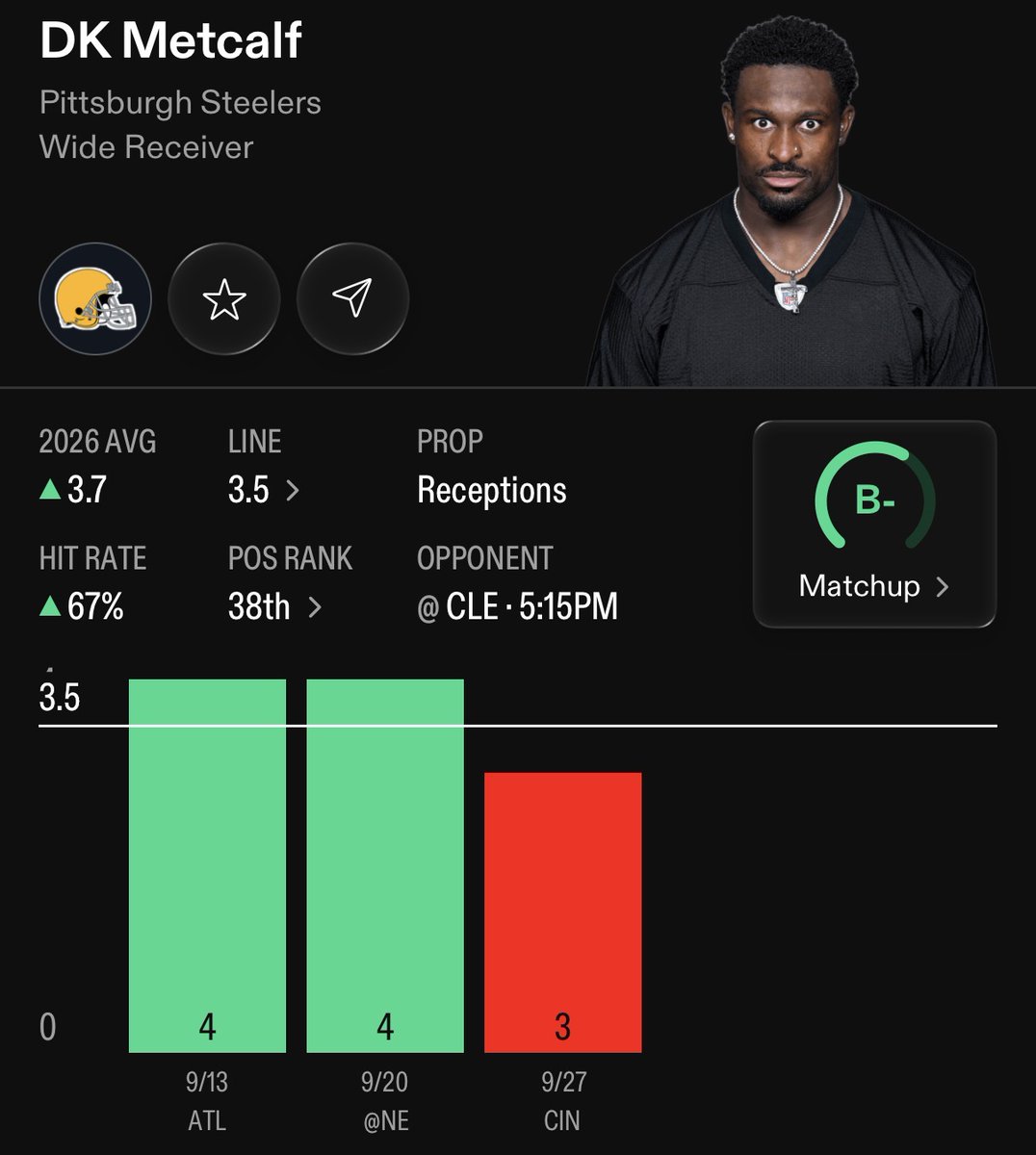
🔒DK Metcalf O 3.5 RECs
{-125} Caesars #Steelers
FOLLOW FOR MORE LOCKS!💪@izzobets
-According to PFF tracking data through the start of the 2026 season, DK Metcalf remains the undisputed primary target in Pittsburgh’s passing attack, commanding 23 targets across his first three games (7.67 targets per game) and running 125 routes (ranking 3rd among all NFL wide receivers). When a perimeter wideout runs over 40 routes a game on a high target share, commanding nearly 8 targets per contest, his baseline opportunity makes clearing a low 3.5 reception line highly probable based purely on raw target volume. Looking back at StatMuse metrics from Metcalf's 2025 campaign with Pittsburgh, he recorded 59 receptions on 99 targets across 15 games, averaging 3.93 catches and 6.6 targets per contest.
-The Cleveland Browns' defensive architecture under Jim Schwartz relies heavily on single-high, man-coverage looks with cornerbacks Denzel Ward and Martin Emerson Jr. aggressive at the line of scrimmage. While Cleveland boasts a strong pass rush, single-coverage schemes leave boundary receivers isolated in one-on-one matchups. At 6-foot-4 and 235 pounds, Metcalf possesses a physical size advantage that allows him to overpower boundary cornerbacks on quick slants, hitches, and comeback routes designed specifically to defeat press coverage and secure quick completions. Propsdotcash situational analysis flags 3.5 receptions as a deflated line for an established WR1. In 2025, Metcalf cleared the 3.5 reception mark in 10 out of 15 games (a 66.7% hit rate), including a 4-catch, 95-yard, 1-touchdown outing in his matchup against this very same Cleveland defense. Setting his line at 3.5 requires only 4 total catches—a threshold he routinely hits even in moderate passing game scripts—making this line a prime candidate for positive volume regression.
RTs♻️+ LIKEs💜Appreciated❗️
📊powered by:@propsdotcash
#gamblingx | #gamblingtwitter
MLB Prop #2⚾ {Sep 30}
80% HIT RATE‼️💎
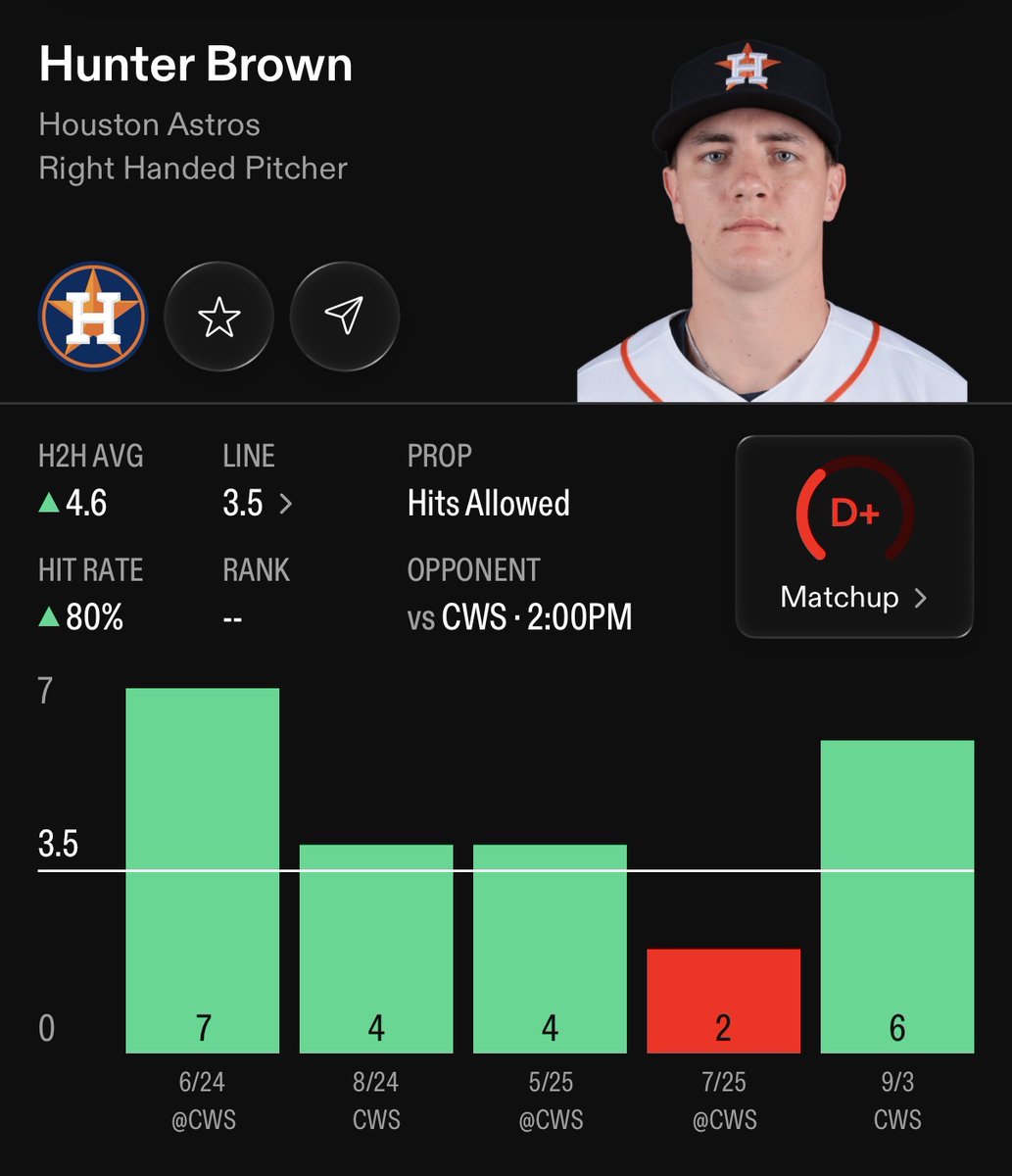
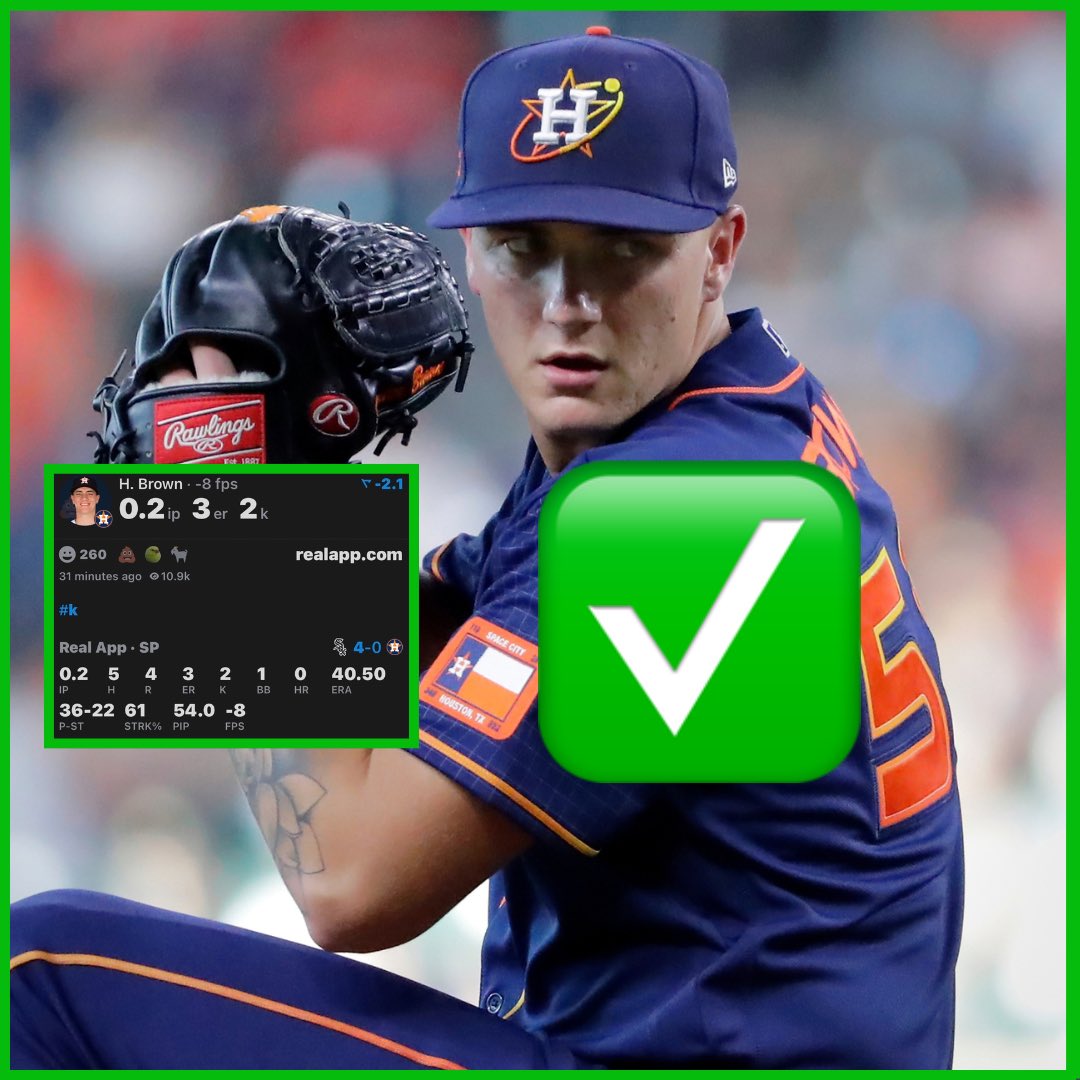
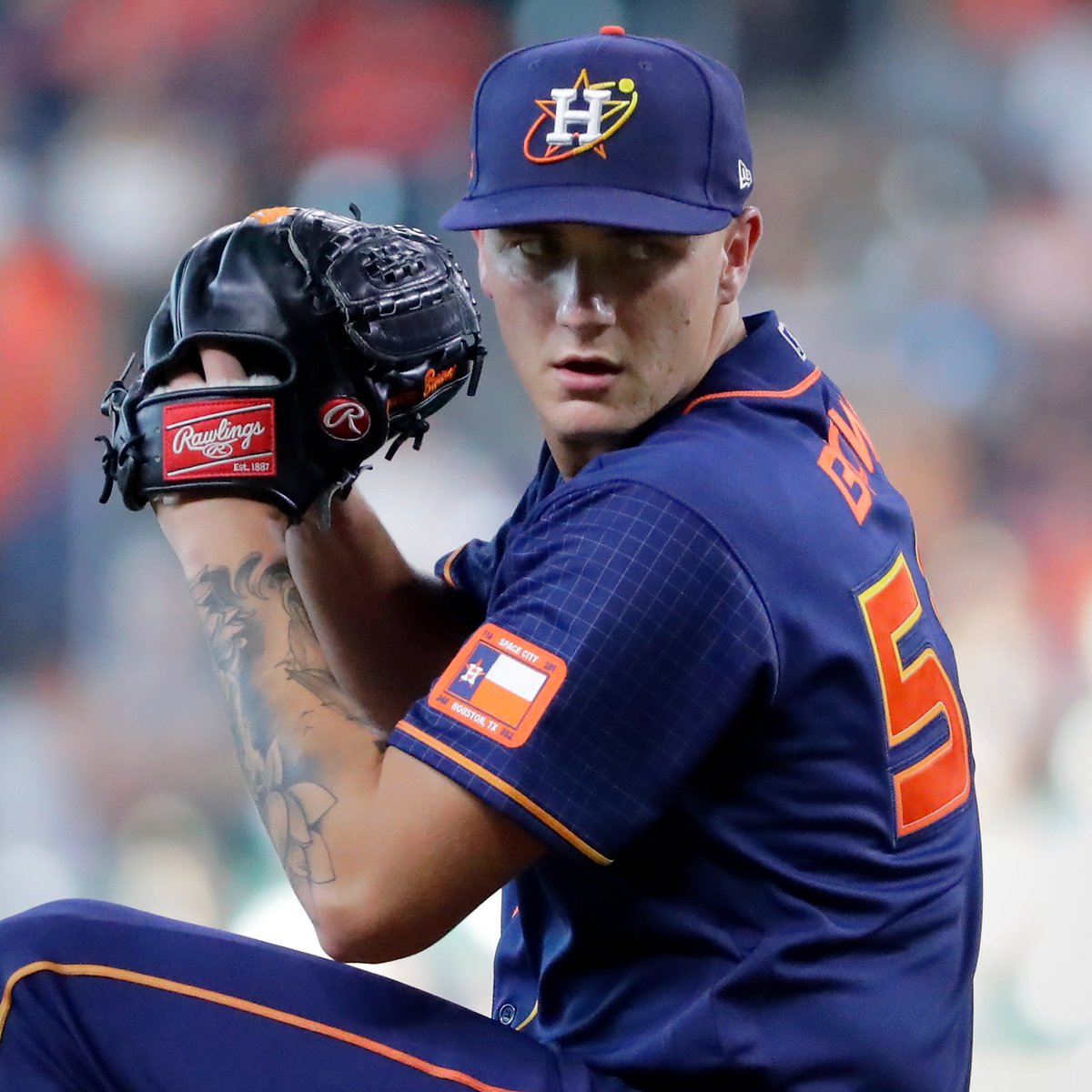
🔒Hunter Brown O 3.5 HA
{-120} Fanatics #Astros
FOLLOW FOR MORE LOCKS!💪@izzobets
-While Brown possesses elite strikeout capabilities, his hit allowance can fluctuate significantly when his pinpoint command wavers, a trend clearly visible in his late-season game logs. For instance, he yielded seven hits to the Philadelphia Phillies on September 9th, five hits to the Mets on August 28th, and seven hits to the Oakland Athletics on August 22nd. Against a disciplined playoff team, any minor decrease in velocity or lack of bite on his breaking pitches will be swiftly punished. The White Sox are capable of capitalizing on these mistakes, making the over a statistically sound proposition when his margin for error shrinks.
-Looking at his metrics since 2024, his batting average allowed against righties sits at .236, which is noticeably higher than his .202 mark against lefties. Over that span, he has allowed 189 hits to right-handed batters in fewer total batters faced. The Chicago White Sox possess a dangerous core of right-handed hitters who can directly exploit this specific split. By relying on their right-handed heavy hitters, Chicago gains a significant statistical edge in recording at least four hits.
-When evaluating Hunter Brown's recent history against the Chicago White Sox, it is crucial to look at his September 3rd start, where he surrendered six hits over six innings. Although he earned the win in that contest, the White Sox batters demonstrated a clear ability to track his arsenal and put the ball in play. Having seen his sequencing and release point so recently gives the Chicago lineup a distinct familiarity advantage. Hitters typically perform better in subsequent meetings within a short timeframe, making it highly probable they will exceed the modest 3.5 hits allowed line again.
RTs♻️+ LIKEs💜Appreciated❗️
📊powered by:@propsdotcash
#gamblingx | #gamblingtwitter
MLB Prop #4⚾ {Sep 30}
80% HIT RATE‼️💎
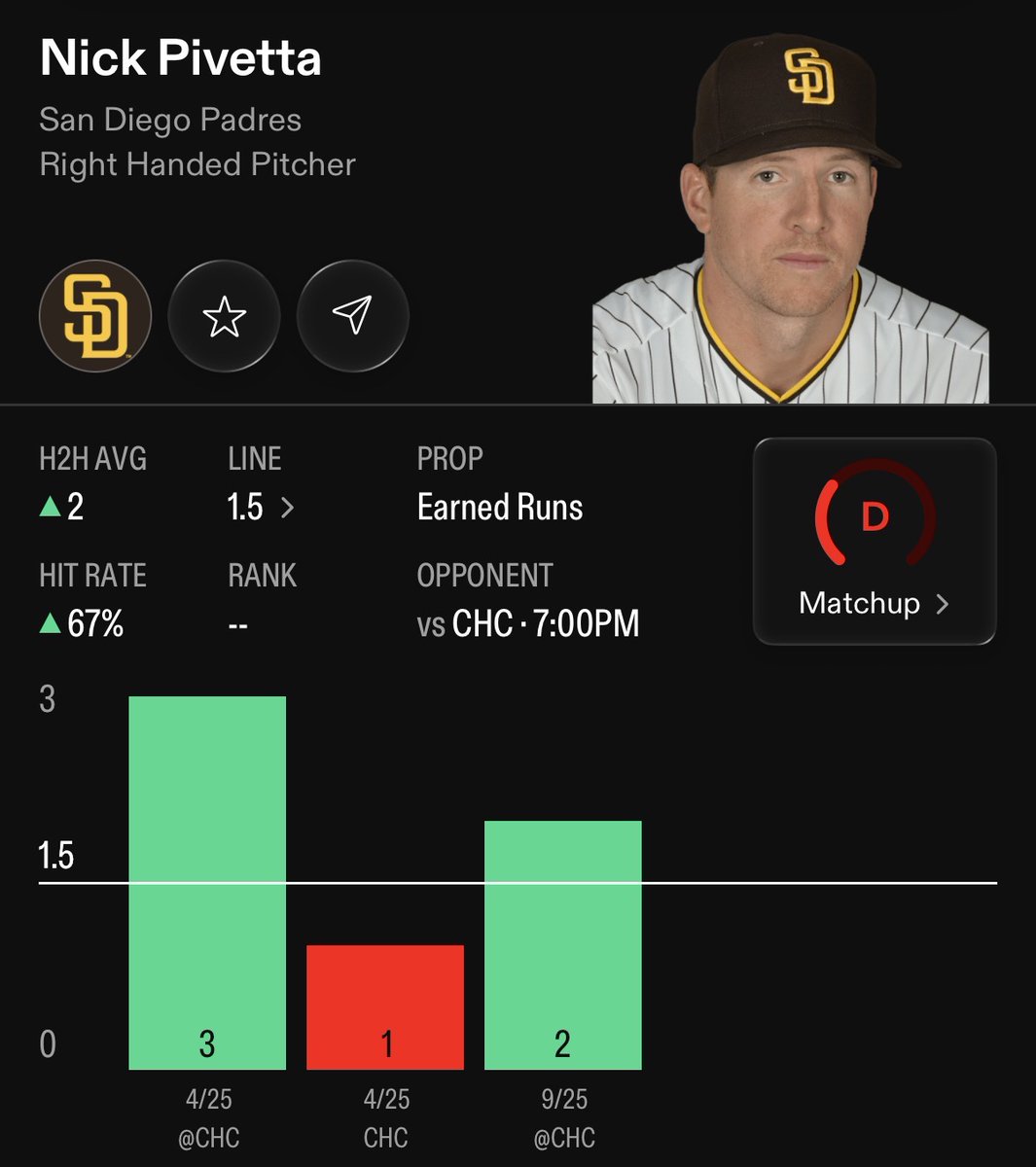
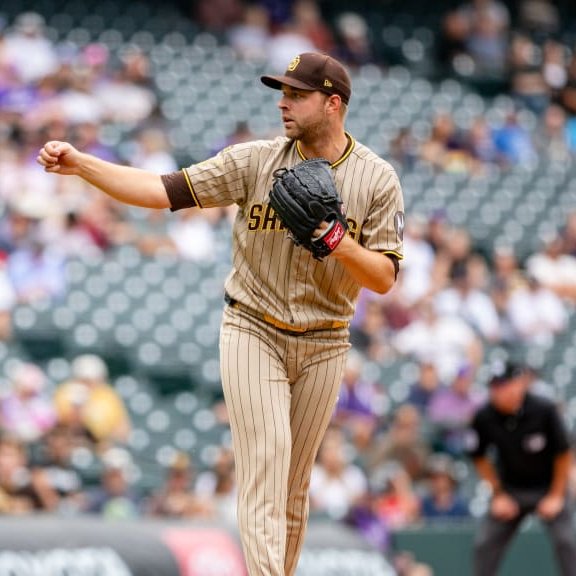
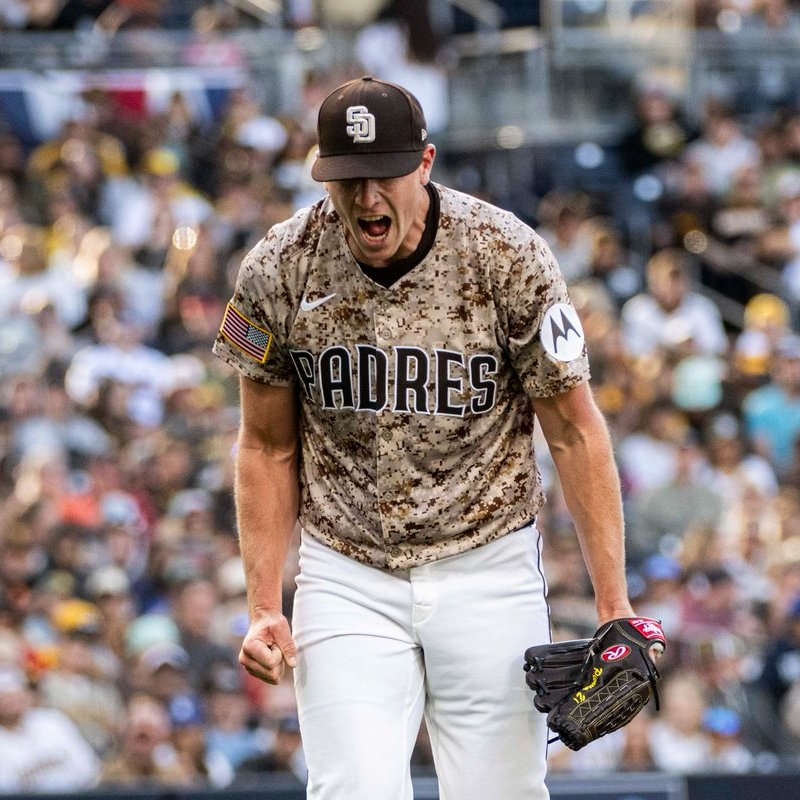
🔒Nick Pivetta O 1.5 ER
{-135} Fanatics #Padres
FOLLOW FOR MORE LOCKS!💪@izzobets
-The Cubs have been an absolute juggernaut offensively throughout the 2026 regular season, leading all of Major League Baseball with a staggering 850 runs scored. Averaging well over five runs per game, this lineup top-to-bottom doesn't offer any easy outs for opposing starting pitchers. When a team consistently puts traffic on the basepaths at this historic clip, giving up just two earned runs feels like a near certainty for any starter, let alone one coming off a limited regular-season workload.
-According to his 2026 Baseball Savant metrics, Nick Pivetta is heavily reliant on inducing balls in the air, with a massive 66.3% of his batted balls allowed categorized as flyballs or line drives. This is a terrifying profile when facing a Chicago Cubs lineup that mashed 220 home runs this season, good for third-highest in the majors. When you combine a flyball-heavy pitching profile with a team constructed to hit the ball out of the yard, the math strongly points to at least one multi-run homer or multiple solo shots.
-The current iteration of the 2026 Cubs batting order is significantly deeper than past versions, anchored by veteran designated hitter Alex Bregman hitting right in the middle of the lineup. Surrounded by lethal left-handed bats like Michael Busch, who launched 20 home runs this year, and Ian Happ, Pivetta will be forced to navigate a grueling right-left gauntlet. StatMuse data confirms the Cubs' collective .249 batting average against right-handed pitching proves they can easily string together the necessary hits to generate a pair of earned runs before the lineup even turns over a second time.
RTs♻️+ LIKEs💜Appreciated❗️
📊powered by:@propsdotcash
#gamblingx | #gamblingtwitter
MLB Prop #3⚾ {Sep 30}
100% HIT RATE‼️💎
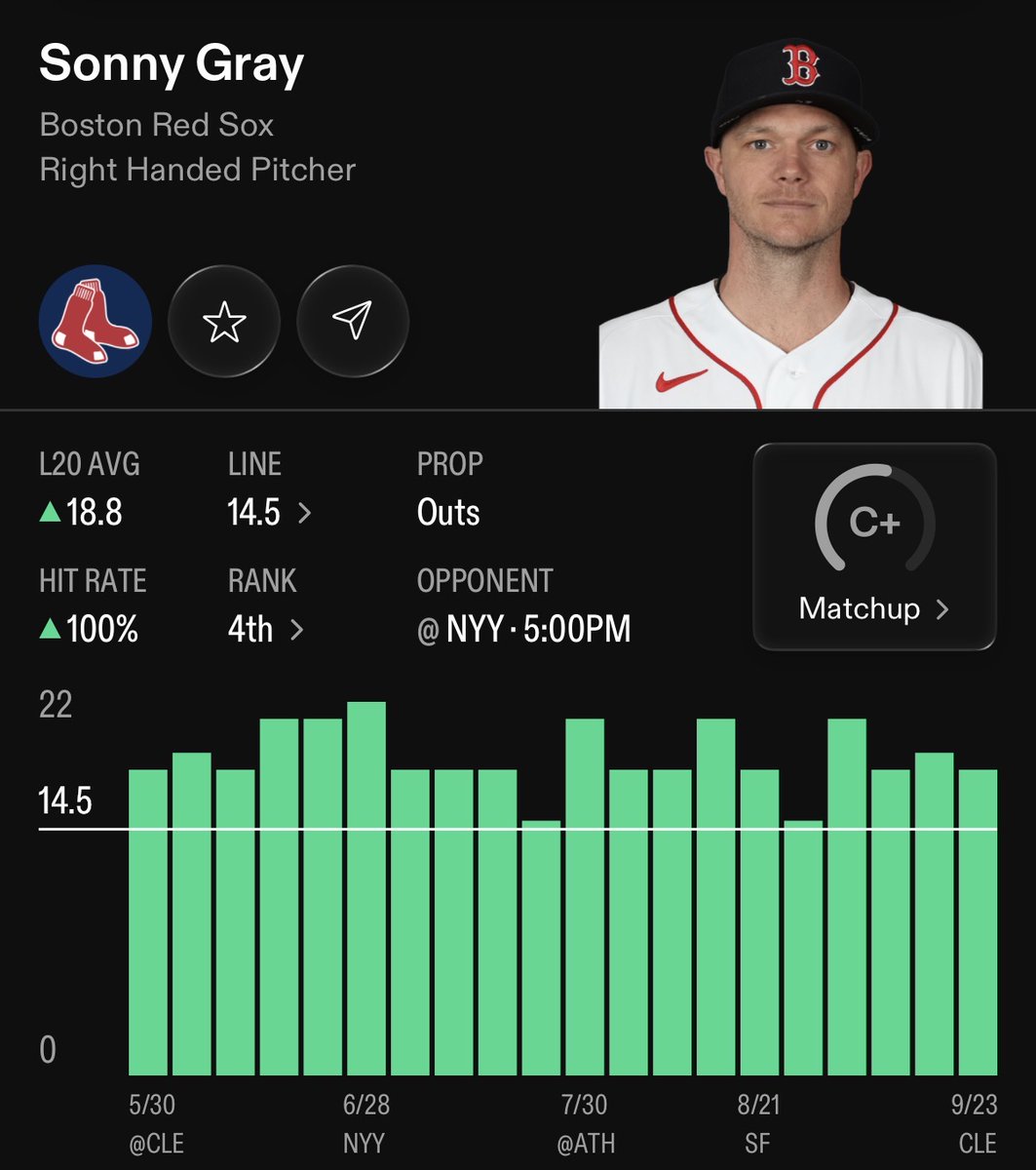
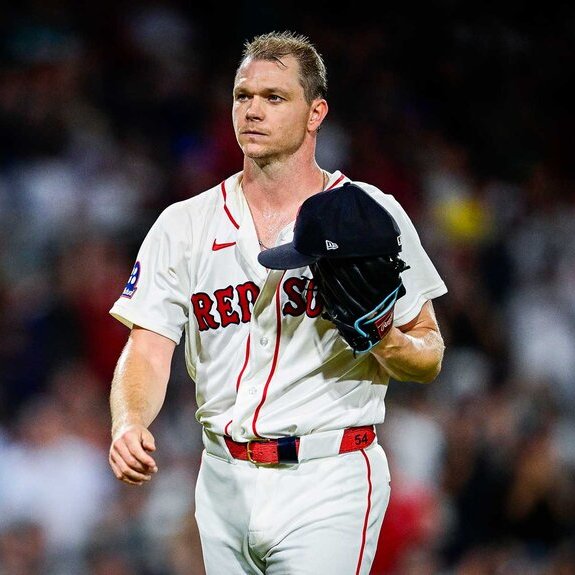
🔒Sonny Gray O 14.5 Outs
{-140} Caesars #RedSox
FOLLOW FOR MORE LOCKS!💪@izzobets
-Gray has already demonstrated a clear blueprint for neutralizing the New York Yankees' batting order during the 2026 campaign. Across two regular-season starts against New York, Gray logged 6.1 innings (19 outs) on June 5 and a masterful 7.1 innings (22 outs) of one-hit shutout ball on June 28. Having comfortably cleared 14.5 outs in both direct meetings against New York’s core hitters, Gray’s pitch arsenal—specifically his sweeping breaking ball and sinker tunneling—has proven uniquely effective at suppressing the Yankees' offensive rhythm.
-Gray enters the postseason riding an exceptional stretch of working deep into ballgames. In his late-season 2026 outings, Gray routinely completed 6.0 to 7.0 full frames, including 6.0 scoreless innings against Cleveland on September 23 and 7.0 shutout innings against Baltimore on September 5. He consistently throws between 85 and 100 pitches per start, giving him the pitch-count runway needed to face 20 to 25 batters. That workload volume guarantees ample opportunity to record 15 outs even if he encounters minor middle-inning traffic.
-The Yankees' lineup relies heavily on working deep counts and drawing walks, but Gray's primary pitch mix directly counters this approach. Gray’s high-spin sweeper and sinker induce out-of-zone chases and early-count ground balls, keeping his pitch count manageable through the front half of the game. By forcing weak contact and capitalizing on two-strike chase spots against New York's middle-and-bottom order, Gray minimizes pitch-taxing plate appearances, allowing him to sail through 5.0+ innings on efficient pitch totals.
RTs♻️+ LIKEs💜Appreciated❗️
📊powered by:@propsdotcash
#gamblingx | #gamblingtwitter
MLB Prop #2⚾ {Sep 30}
80% HIT RATE‼️💎
🔒Hunter Brown O 3.5 HA
{-120} Fanatics #Astros
FOLLOW FOR MORE LOCKS!💪@izzobets
-While Brown possesses elite strikeout capabilities, his hit allowance can fluctuate significantly when his pinpoint command wavers, a trend clearly visible in his late-season game logs. For instance, he yielded seven hits to the Philadelphia Phillies on September 9th, five hits to the Mets on August 28th, and seven hits to the Oakland Athletics on August 22nd. Against a disciplined playoff team, any minor decrease in velocity or lack of bite on his breaking pitches will be swiftly punished. The White Sox are capable of capitalizing on these mistakes, making the over a statistically sound proposition when his margin for error shrinks.
-Looking at his metrics since 2024, his batting average allowed against righties sits at .236, which is noticeably higher than his .202 mark against lefties. Over that span, he has allowed 189 hits to right-handed batters in fewer total batters faced. The Chicago White Sox possess a dangerous core of right-handed hitters who can directly exploit this specific split. By relying on their right-handed heavy hitters, Chicago gains a significant statistical edge in recording at least four hits.
-When evaluating Hunter Brown's recent history against the Chicago White Sox, it is crucial to look at his September 3rd start, where he surrendered six hits over six innings. Although he earned the win in that contest, the White Sox batters demonstrated a clear ability to track his arsenal and put the ball in play. Having seen his sequencing and release point so recently gives the Chicago lineup a distinct familiarity advantage. Hitters typically perform better in subsequent meetings within a short timeframe, making it highly probable they will exceed the modest 3.5 hits allowed line again.
RTs♻️+ LIKEs💜Appreciated❗️
📊powered by:@propsdotcash
#gamblingx | #gamblingtwitter
MLB Prop #1⚾ {Sep 30}
67% HIT RATE‼️💎
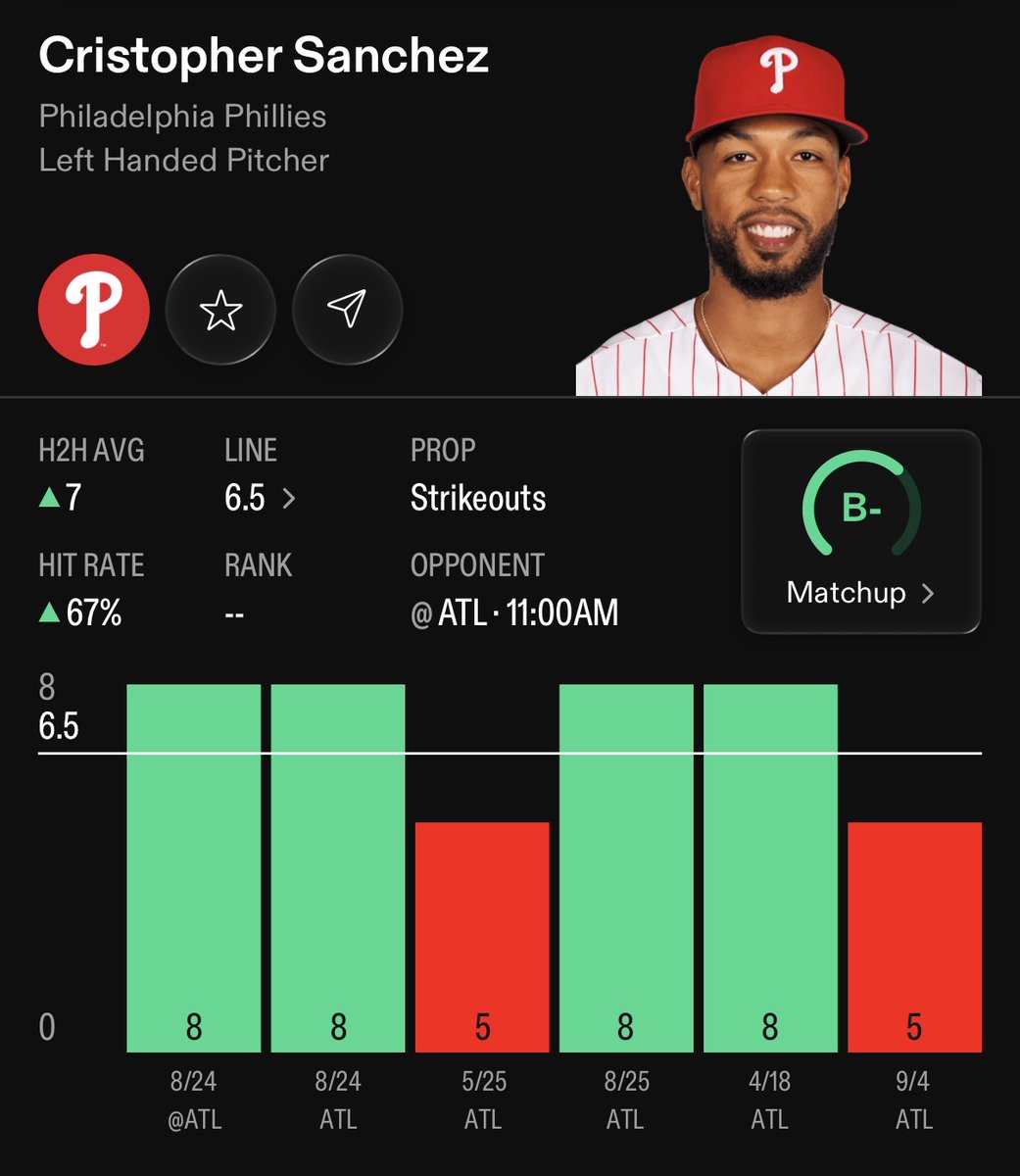
🔒Cristopher Sanchez O 6.5 Ks
{-108} Fanduel #Phillies
FOLLOW FOR MORE LOCKS!💪@izzobets
-Cristopher Sánchez enjoyed a massive breakout during the 2026 regular season, amassing 231 strikeouts across 207.0 innings pitched with an outstanding 27.0% strikeout rate. Backed by a career-high 15.8% swinging-strike rate (SwStr%), Sánchez generates elite swing-and-miss depth on a start-to-start basis. Averaging over 10.0 K/9, he only needs to reach his standard efficiency metrics to clear a 6.5 strikeout line, making 7+ Ks a baseline outcome rather than an unsustainable spike performance.
-Sánchez features a dominant pitch arsenal led by an elite changeup (37% usage) and a sweeping slider (19%) that tunnel seamlessly off his heavy four-seam sinker. The Atlanta Braves' aggressive batting order historically exhibits high chase rates against soft, out-of-zone breaking and off-speed pitches when falling behind early in counts. By keeping Atlanta’s right-handed heavy hitters off-balance with late vertical drop, Sánchez creates frequent multi-strikeout passes through the middle and lower thirds of the order.
-Sánchez enters October in peak form, having finished his regular season with a dominant 10-strikeout, 7.0-inning masterpiece against the Tampa Bay Rays on September 25. His late-season game logs highlight consistent high-volume K outings (including multiple 7, 8, and 10-K performances). Carrying this elite form into the playoffs, his stuff is operating at its absolute ceiling, making a 6.5 strikeout hurdle well within his current reach.
RTs♻️+ LIKEs💜Appreciated❗️
📊powered by:@propsdotcash
#gamblingx | #gamblingtwitter
MLB Prop #4⚾ {Sep 29}
80% HIT RATE‼️💎
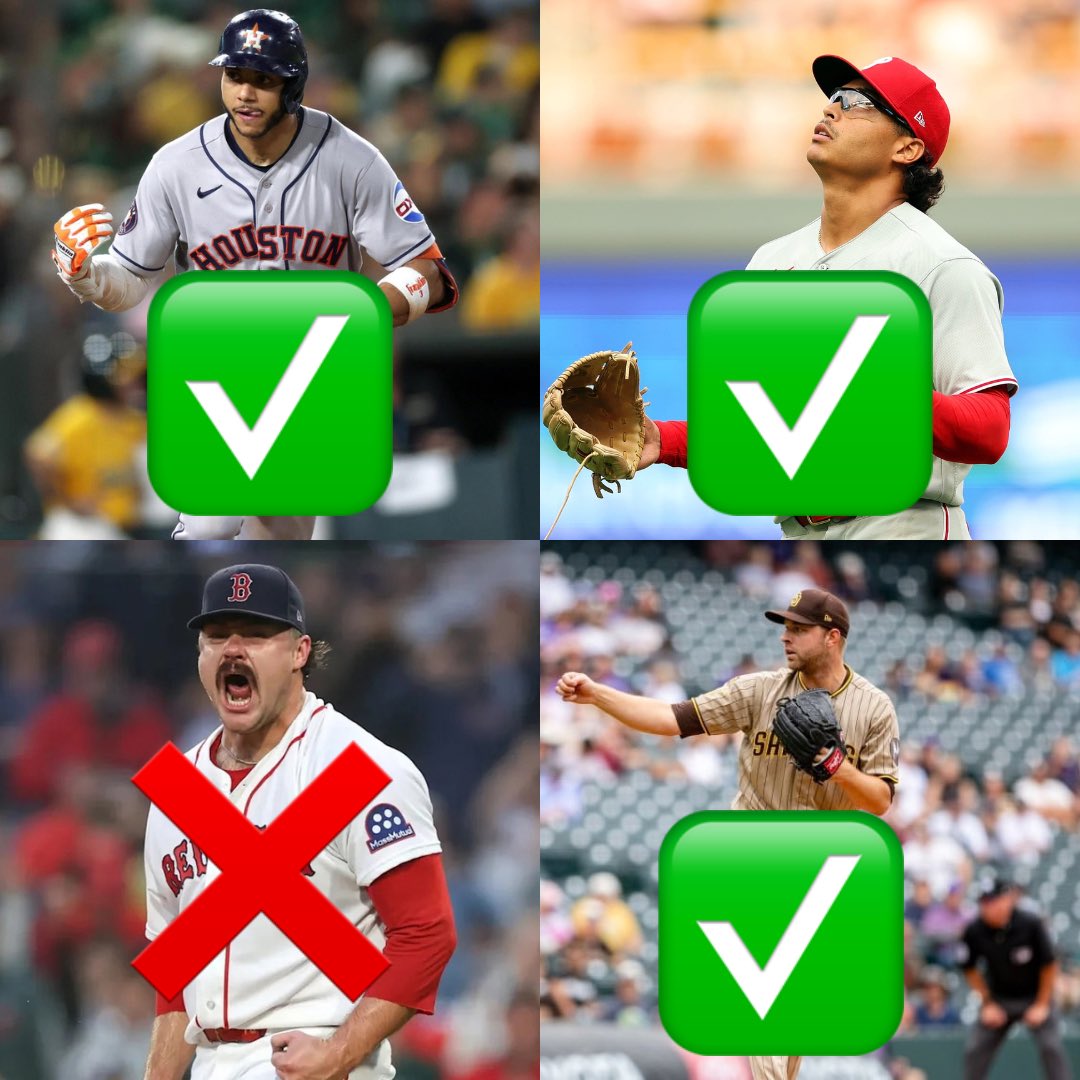
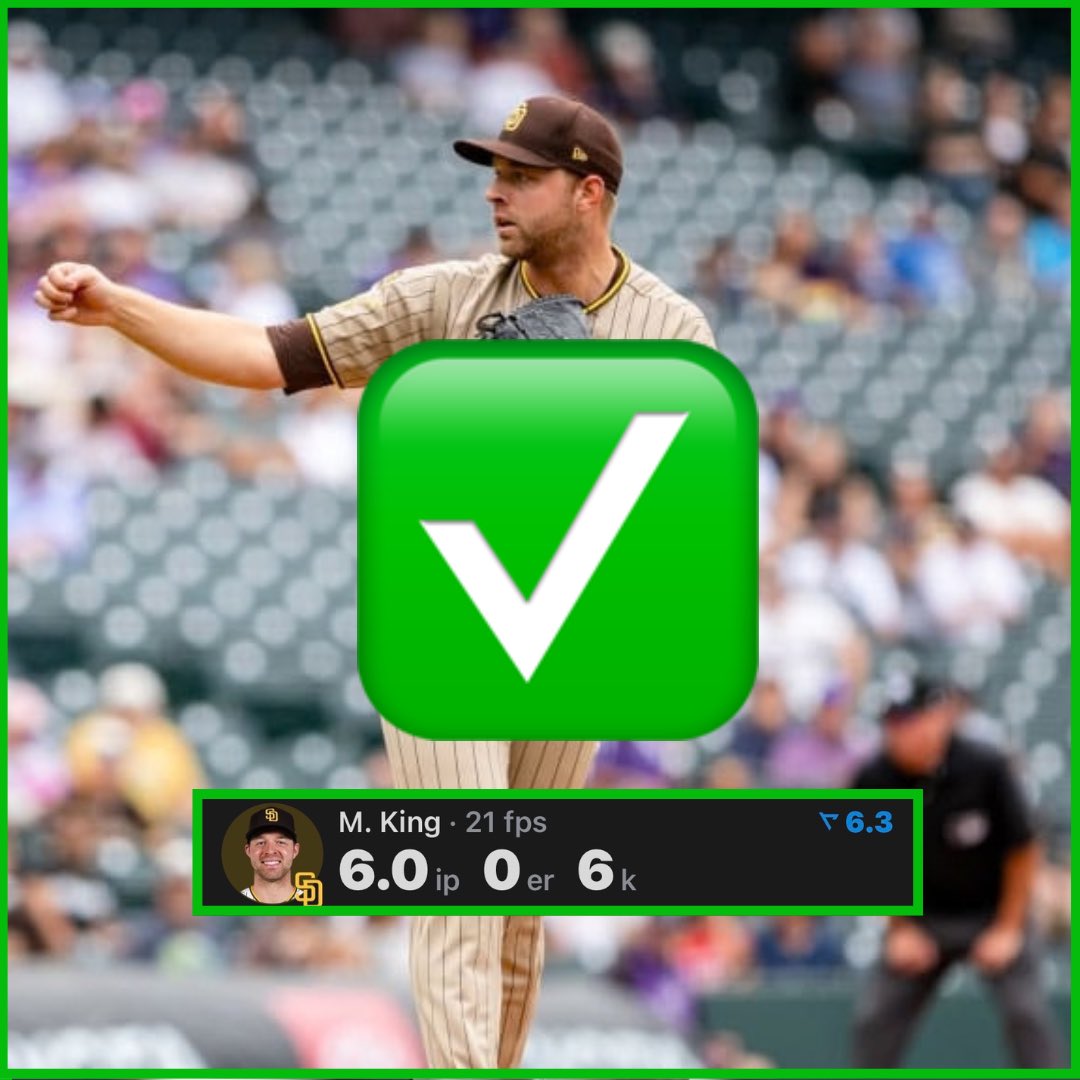
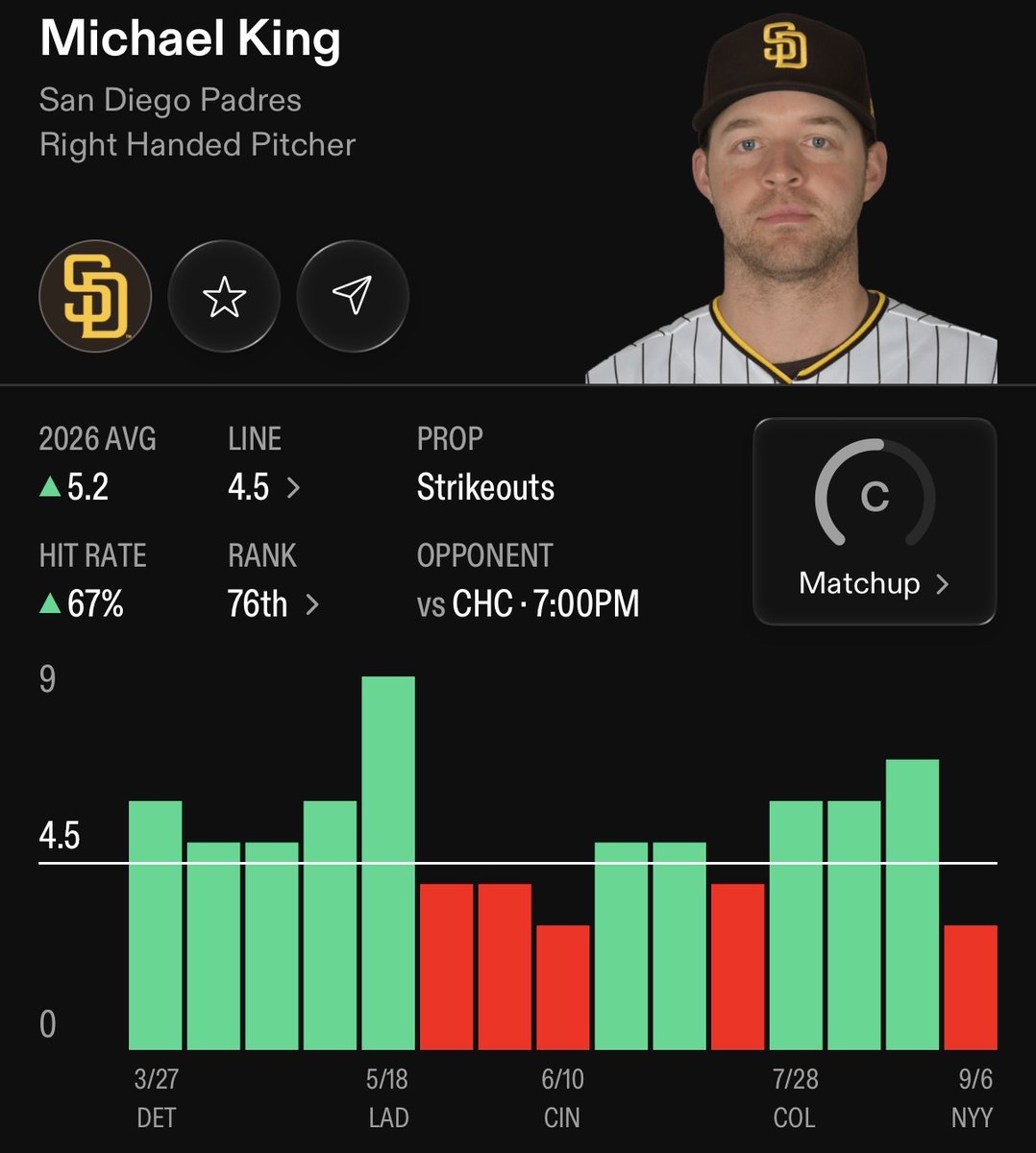
🔒Michael King O 4.5 Ks
{-120} BetMGM #Padres
FOLLOW FOR MORE LOCKS!💪@izzobets
-Michael King features a deep, elite pitch mix headlined by a sweeping slider and a high-fade changeup, creating a lethal combination against both righties and lefties. His sweeper locks up right-handed hitters by sweeping away from the barrel, while his changeup acts as a premier put-away option against lefties. The Cubs' projected lineup features swing-and-miss tendencies across both sides of the plate, giving King distinct put-away pitches regardless of how Chicago stacks their lineup. With multiple pitch options to generate swings and misses outside the zone, King has clear paths to punchouts against the entire order.
-The Chicago Cubs' batting lineup carries elevated Chase and Whiff rates against right-handed starters who execute high-spin off-speed and breaking pitches. Key middle-and-bottom order hitters in Chicago's lineup struggle when forced into two-strike counts against righties, frequently chasing pitches below the zone. King excels at commanding his sinker and four-seamer to get ahead early in counts, forcing Cubs hitters into defensive hitting positions where their swing-and-miss percentages spike dramatically. This dynamic creates frequent strikeout opportunities throughout their batting order.
RTs♻️+ LIKEs💜Appreciated❗️
📊powered by:@propsdotcash
#gamblingx | #gamblingtwitter
MLB Prop #1⚾ {Sep 29}
60% HIT RATE‼️💎
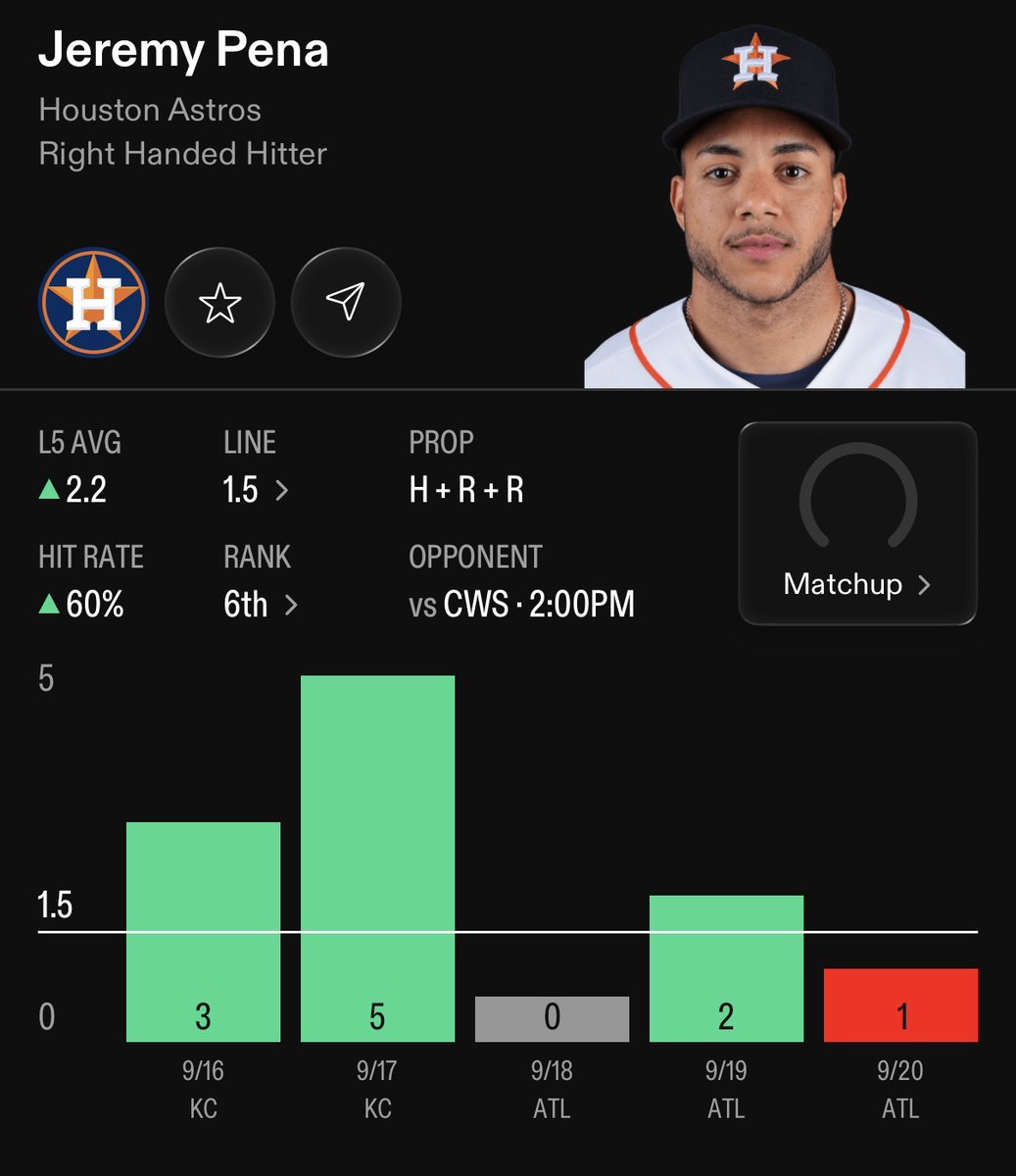
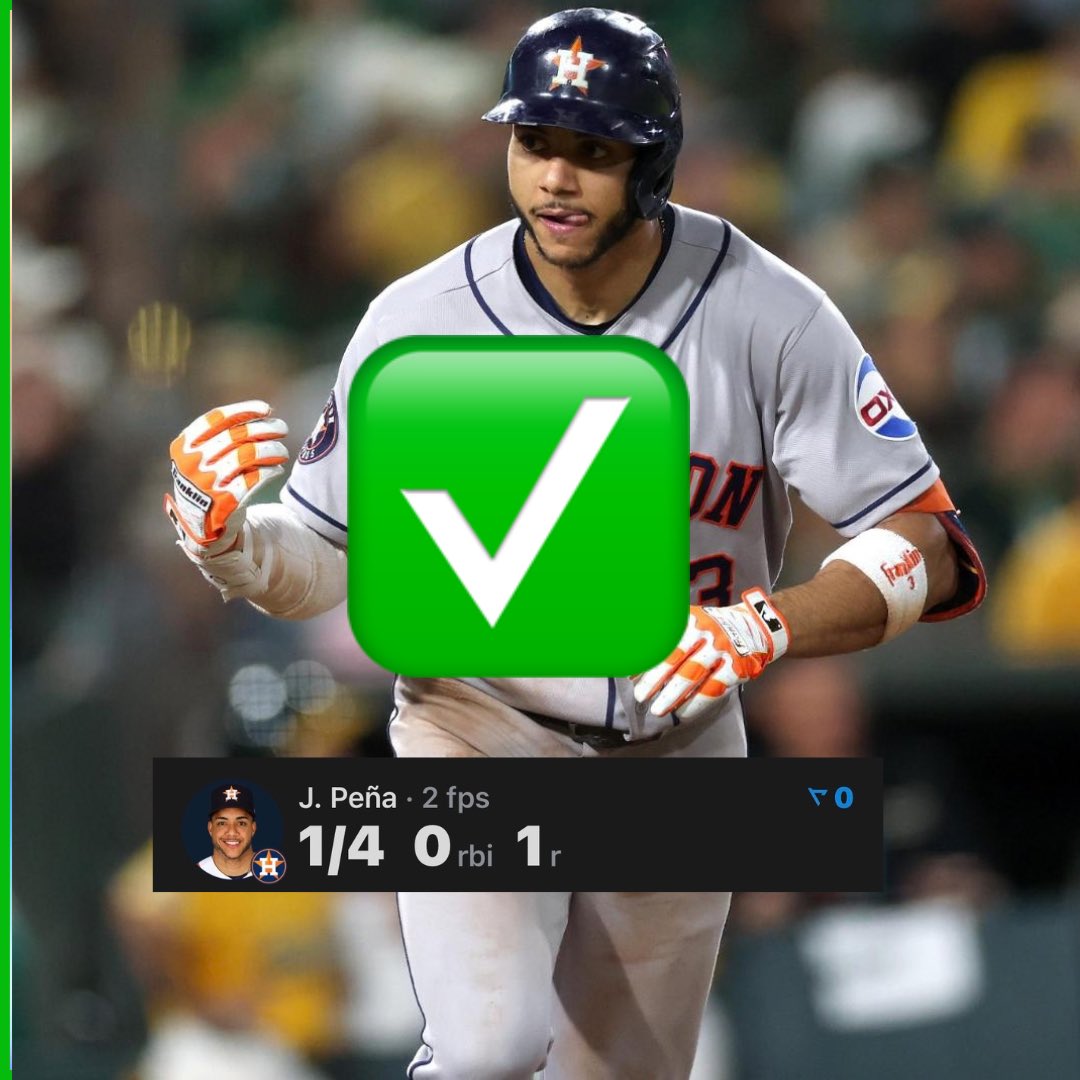
🔒Jeremy Pena O 1.5 H+R+R
{-130} BetMGM #Astros
FOLLOW FOR MORE LOCKS!💪@izzobets
-The White Sox pitching staff consistently ranks among the bottom tiers in ERA, WHIP, hard-hit percentage allowed, and opponent batting average. Facing a fragile White Sox starting rotation and an overexposed bullpen gives a high-contact hitter like Peña high-value matchups late into the game. The lack of reliable put-away velocity in Chicago’s pitching corps directly increases his chances of driving balls into gaps for extra bases.
-Peña’s contact metrics shine brightest against four-seam fastballs and hanging secondary pitches—the exact pitch types White Sox arms struggle to command under pressure. Chicago’s pitching staff frequently gets behind in counts, forcing them to throw strike-zone pitches in hitter-friendly counts (2-0, 3-1). Peña’s inside-the-zone contact profile allows him to punish middle-out pitches for sharp line drives, securing quick hits early in at-bats.
RTs♻️+ LIKEs💜Appreciated❗️
📊powered by:@propsdotcash
#gamblingx | #gamblingtwitter
MLB Prop #2⚾ {Sep 29}
80% HIT RATE‼️💎
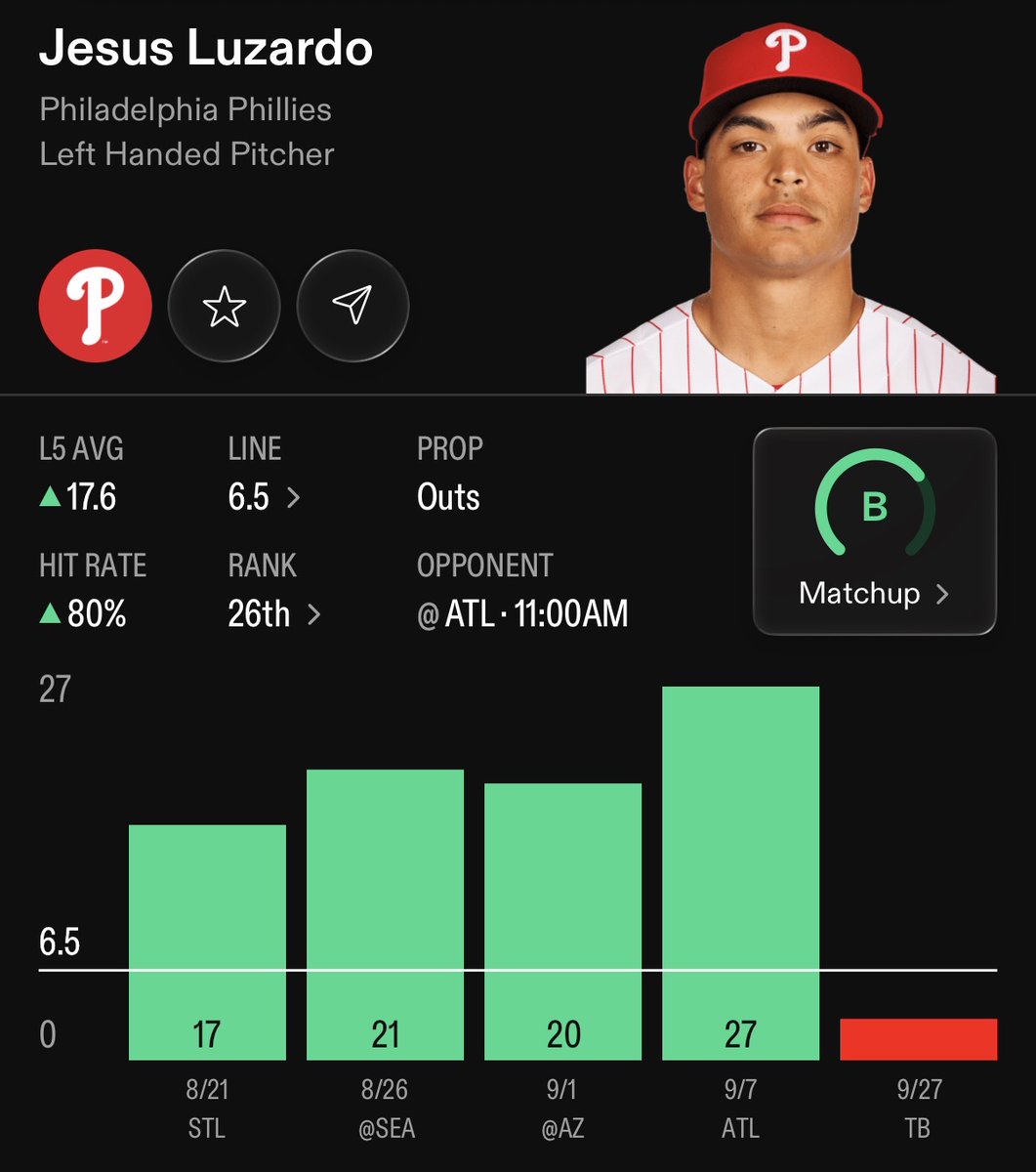
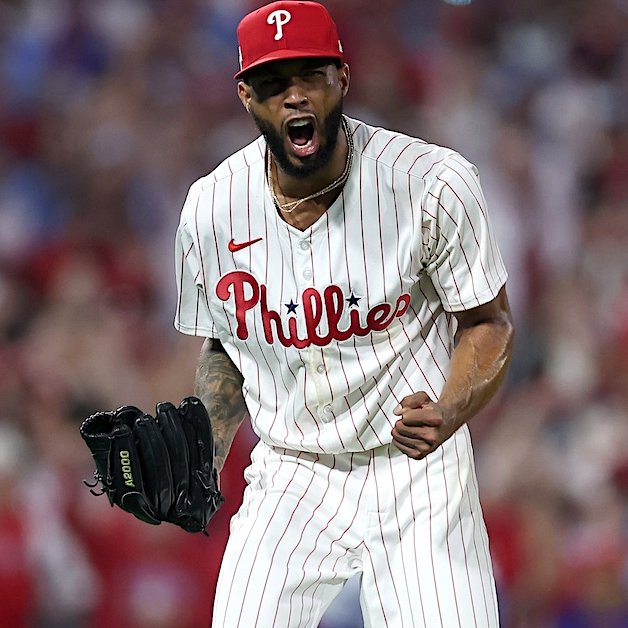
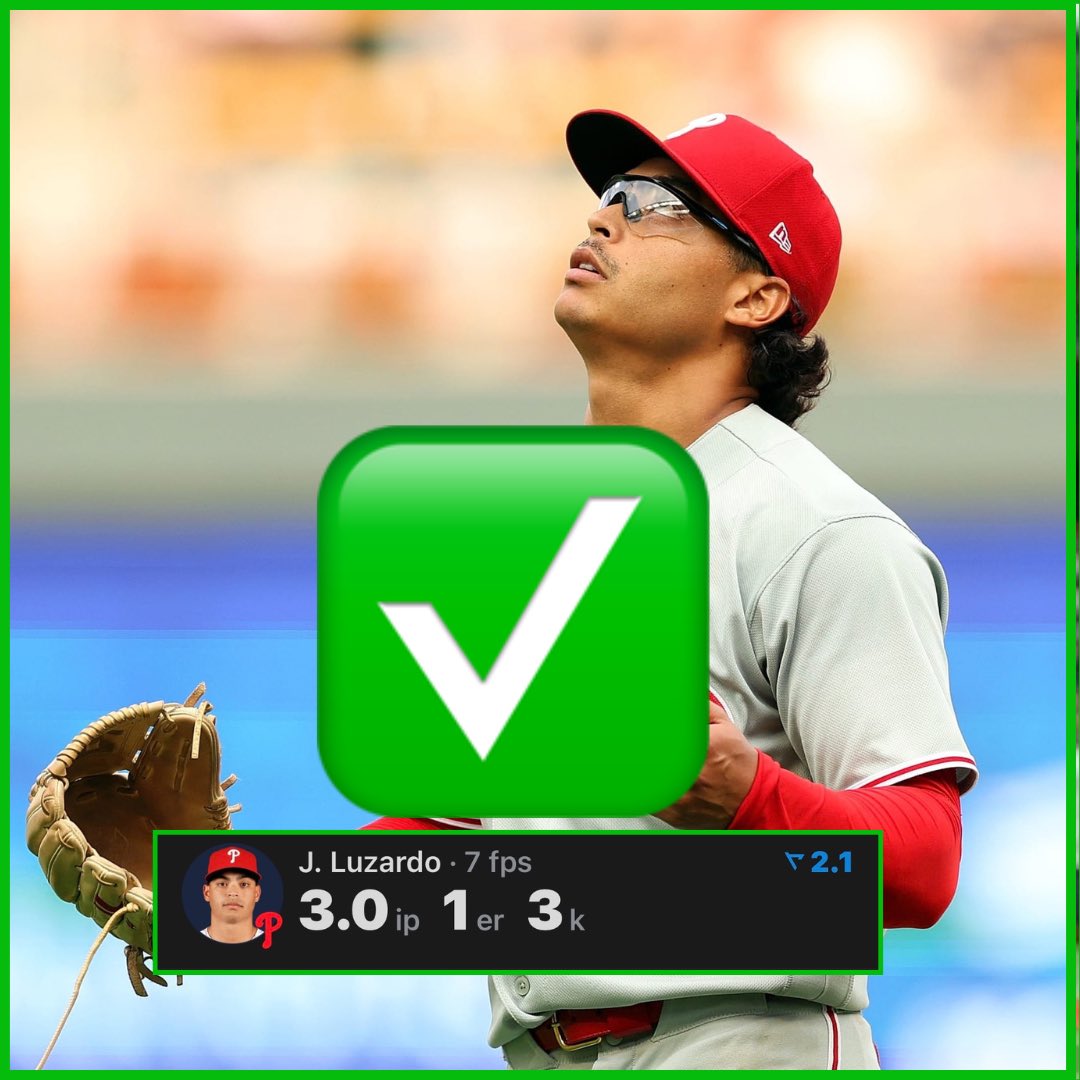
🔒Jesus Luzardo 6.5 Outs
{-125} Fanatics #Phillies
FOLLOW FOR MORE LOCKS!💪@izzobets
-While the Atlanta Braves feature a formidable batting order, their aggressive hitting philosophy inherently produces higher swing-and-miss and strikeout rates, particularly against left-handed power pitchers. Luzardo’s elite fastball velocity coupled with his wipeout slider allows him to rack up quick strikeout outs without accumulating long, pitch-taxing plate appearances. If he generates early whiffs or soft contact against the top of Atlanta’s order in the 1st inning, he can sail through the first pass of the lineup on low pitch volume, clearing the 6.5 outs line before familiarity or fatigue becomes an issue.
-The Braves' lineup relies heavily on elite left-handed bat production from anchors like Matt Olson and Michael Harris II. Luzardo’s career splits show dominant left-on-left metrics, where his sweeping slider and high-seam heat completely neutralize southpaw power. Managers design playoff rotations specifically to exploit these tactical advantages early in games. By winning these high-leverage matchups against Atlanta’s key lefties in the 1st and 2nd innings.
RTs♻️+ LIKEs💜Appreciated❗️
📊powered by:@propsdotcash
#gamblingx | #gamblingtwitter
MLB Prop #4⚾ {Sep 29}
80% HIT RATE‼️💎
🔒Michael King O 4.5 Ks
{-120} BetMGM #Padres
FOLLOW FOR MORE LOCKS!💪@izzobets
-Michael King features a deep, elite pitch mix headlined by a sweeping slider and a high-fade changeup, creating a lethal combination against both righties and lefties. His sweeper locks up right-handed hitters by sweeping away from the barrel, while his changeup acts as a premier put-away option against lefties. The Cubs' projected lineup features swing-and-miss tendencies across both sides of the plate, giving King distinct put-away pitches regardless of how Chicago stacks their lineup. With multiple pitch options to generate swings and misses outside the zone, King has clear paths to punchouts against the entire order.
-The Chicago Cubs' batting lineup carries elevated Chase and Whiff rates against right-handed starters who execute high-spin off-speed and breaking pitches. Key middle-and-bottom order hitters in Chicago's lineup struggle when forced into two-strike counts against righties, frequently chasing pitches below the zone. King excels at commanding his sinker and four-seamer to get ahead early in counts, forcing Cubs hitters into defensive hitting positions where their swing-and-miss percentages spike dramatically. This dynamic creates frequent strikeout opportunities throughout their batting order.
RTs♻️+ LIKEs💜Appreciated❗️
📊powered by:@propsdotcash
#gamblingx | #gamblingtwitter
MLB Prop #3⚾ {Sep 29}
80% HIT RATE‼️💎
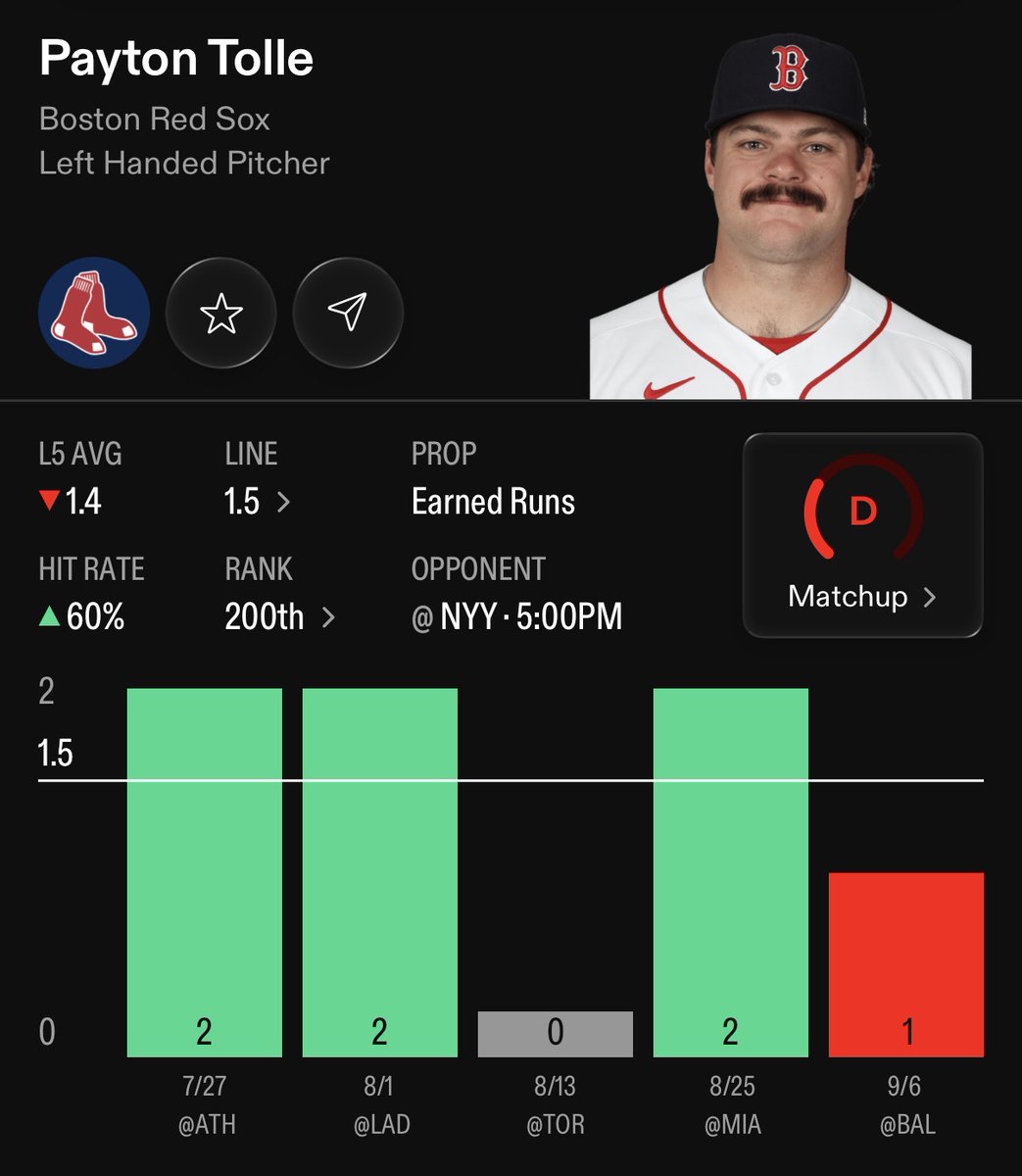
🔒Payton Tolle O 1.5 ER
{-125} DraftKings #RedSox
FOLLOW FOR MORE LOCKS!💪@izzobets
-Payton Tolle relies heavily on a high-velocity, high-extension fastball to establish dominance and set up secondary offerings. However, the Yankees' lineup is heavily scouted to hunt and punish high-velocity heat, particularly early in counts. When an offense equipped with elite bat speed anticipates a heavy dose of fastballs, batters can jump on his primary pitch early before he settles in, driving in quick runs.
-The New York Yankees field one of the most imposing lineups in baseball against left-handed pitching, anchored by elite sluggers like Aaron Judge and Giancarlo Stanton who destroy southpaw offerings. Payton Tolle, as a left-handed pitcher, faces a hostile structural matchup against a lineup stacked with right-handed power specifically engineered to punish lefties. In high-leverage postseason atmospheres, a single mislocated pitch can easily result in a multi-run homer or back-to-back extra-base hits, clearing the 1.5 earned run line in a matter of two plate appearances.
RTs♻️+ LIKEs💜Appreciated❗️
📊powered by:@propsdotcash
#gamblingx | #gamblingtwitter
MLB Prop #2⚾ {Sep 29}
80% HIT RATE‼️💎
🔒Jesus Luzardo 6.5 Outs
{-125} Fanatics #Phillies
FOLLOW FOR MORE LOCKS!💪@izzobets
-While the Atlanta Braves feature a formidable batting order, their aggressive hitting philosophy inherently produces higher swing-and-miss and strikeout rates, particularly against left-handed power pitchers. Luzardo’s elite fastball velocity coupled with his wipeout slider allows him to rack up quick strikeout outs without accumulating long, pitch-taxing plate appearances. If he generates early whiffs or soft contact against the top of Atlanta’s order in the 1st inning, he can sail through the first pass of the lineup on low pitch volume, clearing the 6.5 outs line before familiarity or fatigue becomes an issue.
-The Braves' lineup relies heavily on elite left-handed bat production from anchors like Matt Olson and Michael Harris II. Luzardo’s career splits show dominant left-on-left metrics, where his sweeping slider and high-seam heat completely neutralize southpaw power. Managers design playoff rotations specifically to exploit these tactical advantages early in games. By winning these high-leverage matchups against Atlanta’s key lefties in the 1st and 2nd innings.
RTs♻️+ LIKEs💜Appreciated❗️
📊powered by:@propsdotcash
#gamblingx | #gamblingtwitter