The quadratic formula, used to find the solutions to second-degree polynomials is the result of contributions from mathematicians across several cultures over centuries.
- Ancient Babylonians from 2000 BC knew how to solve specific quadratic problems using geometric methods
- Indian mathematician Brahmagupta during 628 CE provided modern set of rules for solving quadratic equations and even admitting negative numbers as possible solution.
- Sridharacharya, another Indian mathematician from 8th century derived a systematic way for solving the standard second-degree polynomial by completing the squares method (which avoided fractions until the final step), Modern Quadratic formula is also referred to as Sridharacharya's formula
- Muḥammad ibn Mūsā al-Khwārizmī, also known as the "Father of Algebra" in his book "His book Kitab al-Jabr wal-Muqabalah" from which the word "algebra" is derived. He gave systematic classification for types of quadratic equations and provided the general solutions by 'completing the squares' method.
- During the 15-16th century, European mathematician Simon Stevin and René Descartes adopted the Arabic methods and Indian number system, introducing modern symbolic notation and complex numbers
Rene Descartes also published 'La Géométrie', where he used the modern algebraic notation and connected the algebra with geometry
The Schwarzschild Metric is a solution to Einstein's field equations in general relativity, which describes the spacetime geometry around a spherically symmetric, non-rotating, and uncharged mass (like a star or a black hole).
Los inocentes: de la urbe marginal al cine contemporáneo. Adaptaciones de Oswaldo Reynoso: cuando la palabra se convierte en cine.
Por Jose Emilio Caro Gomez
@MinCulturaPe@casaliteratura
https://t.co/DJIYBPIULv
Finite-dimensional vector spaces are fundamental in statistics and ML, providing the mathematical framework for data representation. Data points are often viewed as vectors in R^n, allowing operations like dot products (for similarity) and projections. Key applications include: Principal Component Analysis (PCA) for dimensionality reduction, where data is projected onto lower-dimensional subspaces; linear regression, where solutions lie in column spaces; and support vector machines (SVMs), which find optimal hyperplanes to separate data. These spaces enable efficient computation and geometric intuition for complex algorithms.
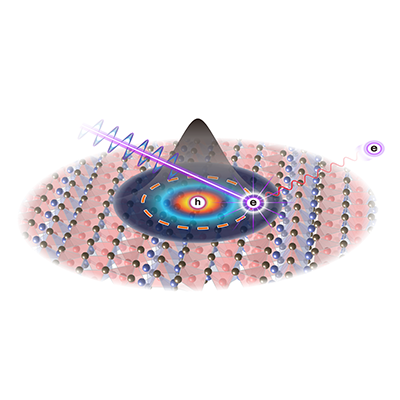
Orbital-selective angle-resolved photoemission spectroscopy provides a direct spectroscopic view of the ground state of an excitonic insulator https://t.co/9qR3DEcwJv
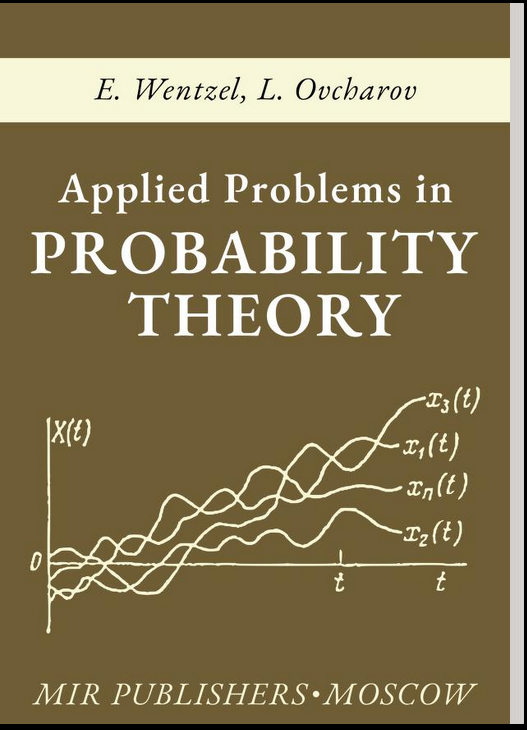
A golden learning resource for introduction to deep neural networks and differentiable programming.
"Alice's Adventures in a Differentiable Wonderland" ✨
- Automatic differentiation, stochastic optimization, and activation functions in depth and related core concepts.
- Convolutional networks, transformers, and graph neural networks
- Mathematical foundations including linear algebra, gradients, and probability theory
- Discusses implementation details in PyTorch and JAX
- Topic like Bayesian neural networks and neural scaling laws
A transition probability matrix describes the probabilities of moving from one state to another in a Markov chain. Each element, P_{ij}, represents the probability of transitioning from state i to state j. These matrices are fundamental for modeling systems that evolve over discrete time steps, such as predicting weather patterns, analyzing stock market trends, and simulating particle movements.
🌀 The Wigner function is a quasi-probability distribution in phase space that lets us analyze quantum states and observables with classical-like intuition. ✍️ Here’s a concise overview of its key features:
States: https://t.co/Zf8DKlbTve
Observables: https://t.co/4Pqf4iuTj0
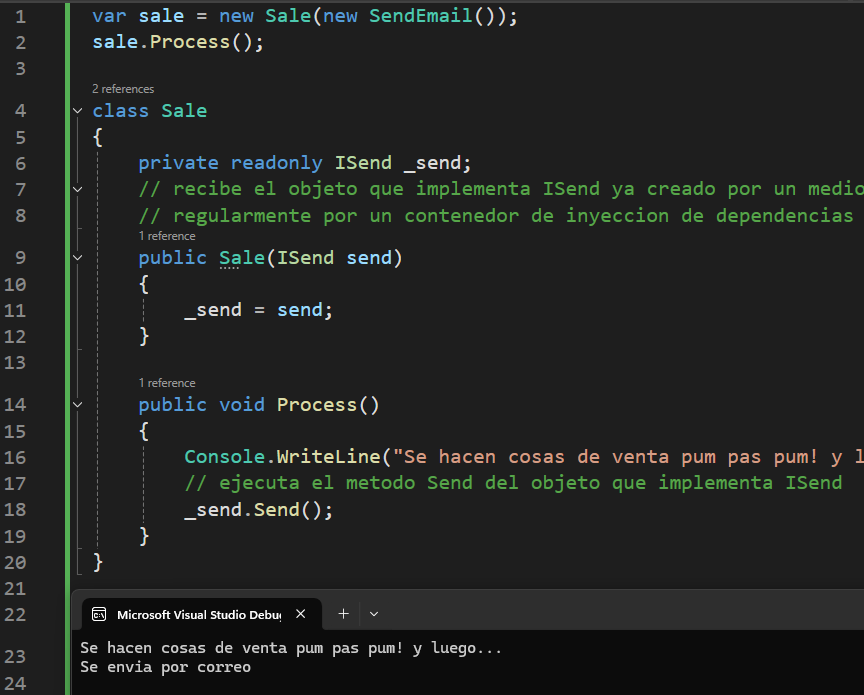
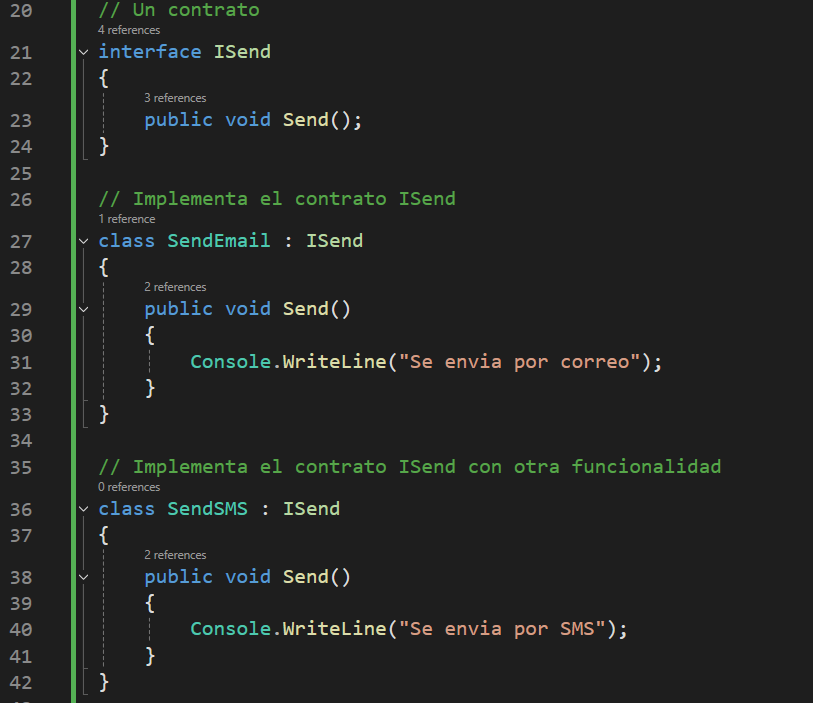
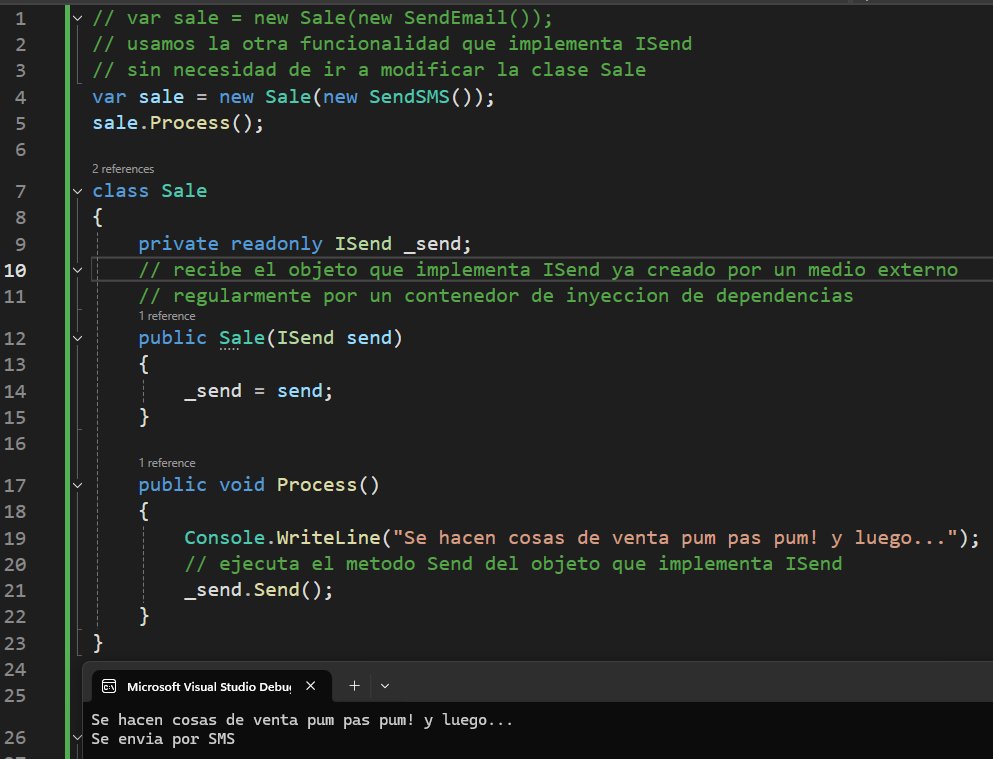
Mucho dev no entiende el poder de depender de abstracciones en sus reglas de negocio, y no tener directamente las funcionalidades ahí codificadas.
El depender de abstracciones te permite modificar tus reglas de negocio, sin depender de utilidades.
Entender esto es fundamental.
Muchos devs desconocen que es posible guardar funciones en listas o arrays, esto puede ayudar a darle flexibilidad a ejecuciones, nos permite escalar funcionamientos de una manera rápida.