Dunkin just won the best Super Bowl ad.
It’s hysterical, has big name celebs, has cameos that actually add to the ad, and is ridiculously memorable. Perfect in every way.
https://t.co/w9OMF6TzHN
The 3 commonly used clinical tests for an ACL deficient knee demonstration beautifully here during examination under anaesthesia:
1. The Pivot Shift Test
2. The Lachmans Test
3. The Anterior Drawer Test
@Hewett1Tim@TimHewett5
Parents of young athletes:
You're being sold a bill of goods…
Early specialization…
It's a fear campaign…
Its a billion dollar dumpster fire saying:
To become a great athlete you must:
Specialize early…
Train year-round…
Compete often…
If you don’t your child is going to miss out and fall behind
And for the most part:
It’s complete bullshit…
What it really is:
Early Development of sport-specific skills
Early success in sport
Little to no development of fundamental movement skills
Poor performances later in the sport
Higher chance of injury
Higher Chance of Burnout from Sport
Early start…Early finish!
It's a complete lack of understanding of how humans develop…
During the first 14 years of Life:
Be a human first:
Do plenty of activities that involve:
Rolling
Crawling
Climbing
Reaching
Bending
Rotating
Standing (1 foot)
Changing levels:
Be an athlete second:
Sprint
Jump
Hop
Climb
Wrestle
swim/bike/ski
catch/kick/throw/trap Etc
Sprinkle in lots of activities and multiple sports!
I can't guarantee a Div 1 scholarship but I can say that kids will be more Coordinated, stronger, more flexible, cardiovascularly fit, more resistant to fatigue and injury, and also be calmer, less stressed, leaner, and able to learn new skills. Skills like complex sports specific skills.
#LTAD
D.M. me for details about youth athletic development courses for purchase
I am currently looking for a licensed Physical Therapist interested in pursuing a PhD. Funded position available in my lab for projects involving gait and postural control. Supportive, collaborative environment. More details at: https://t.co/pOrjTujPm6
Please spread the word.
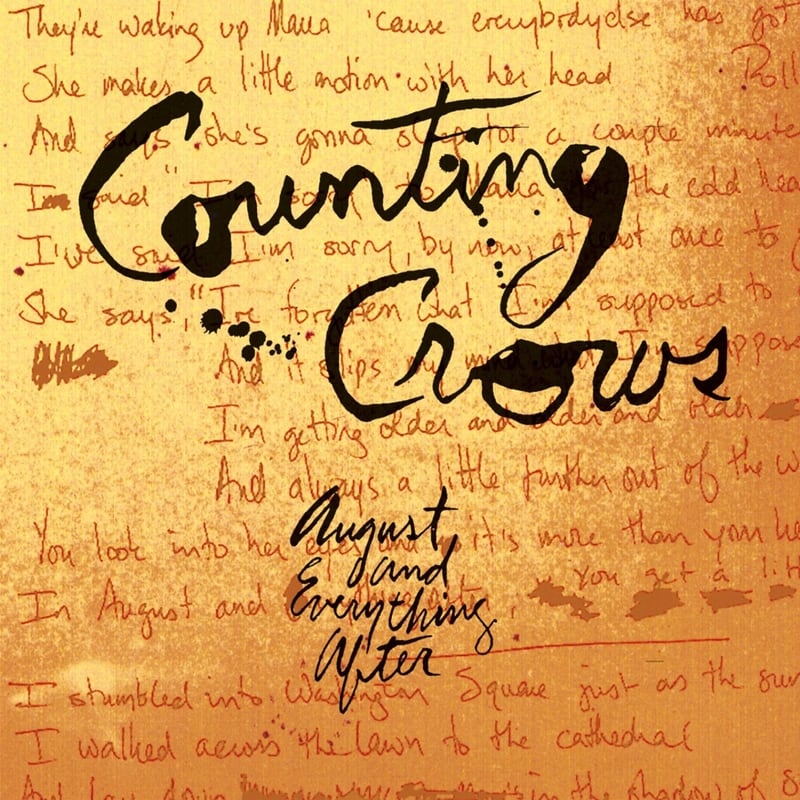
30 years ago… we released the album that changed our lives. Happy birthday to August and Everything After. To celebrate, we’ll be highlighting each song from the album on our socials. Let’s dig into this music together and reminisce on the memories associated with this record.
With 1.9 seconds left in overtime of Game 5 of the 2006 NBA Finals, Dwyane Wade went to the free throw line.
Wade & the Heat were down by 1. The series was tied 2-2.
He told Tiger Woods how he prepared to make those high-pressure free throws:
“The night before,” Wade said,
“I was in the gym at midnight.
And I was like, ‘I know games come down to free throws. No matter what happens, it's going to come down to free throws.’
So I was in the gym and I had my cousin standing next to me, I had him right in my ear talking shit to me.
And so the next night, I get in that same situation where I got to make these free throws. And I just went back to last night in the gym. I just went right back to that. I was like, ‘I just hit 200 of these last night. I got this.’"
"That's so good," Tiger says.
"It's like," Wade says, "your confidence comes from your work."
"Correct," Tiger replies.
Wade: "You've done it over and over. You've seen yourself do it."
Tiger: "Correct, thousands of times."
Wade hit the two free throws, and the Heat won 101-100 to take a 3-2 series lead. Then in Game 6, he had 36 points to help the Heat win the game and their first championship in franchise history. Wade was named NBA Finals MVP.
Takeaway 1:
Ryan Holiday likes to say,
"Belief in yourself is overrated. Generate evidence."
Wade simulated the situation so that when he was in that situation for real, he had the evidence.
“You've done it over and over,” he told himself. “You've seen yourself do it.”
Your confidence comes from your work, from your evidence.
Takeaway 2:
What Dwayne Wade figured out intuitively—that confidence is a function of the previous work put in—is scientifically accurate.
For nearly three decades, the neuroscientist Dr. Lisa Feldman Barrett has been studying where emotions—calmness, panic, nervousness, and so on—come from.
Her bestselling book, "How Emotions Are Made: The Secret Life of the Brain," gets its title from the discovery that emotions are constructed by the brain.
"In every waking moment," she writes, "your brain uses past experience to guide your present sensations."
In every waking moment, your brain sifts through its library of past experiences, looking for something similar to what is currently happening. If your brain can’t find anything in your past that is similar to your present, you are in a state of what brain scientists call “experiential blindness.”
If you are at the free-throw line with the game on the line, for instance, and you start to panic—you’re in a state of experiential blindness. Your brain, Dr. Barrett would say, is calling you out. You didn't put in the work. You didn't form the past experience needed for your brain to be able to say, as Wade was able to say, "I just hit 200 of these last night. I got this."
- - -
“You are continually cultivating your past…the experiences you have today become the past that your brain uses to make predictions for tomorrow.” — Dr. Lisa Feldman Barrett
Follow @bpoppenheimer for more content like this!
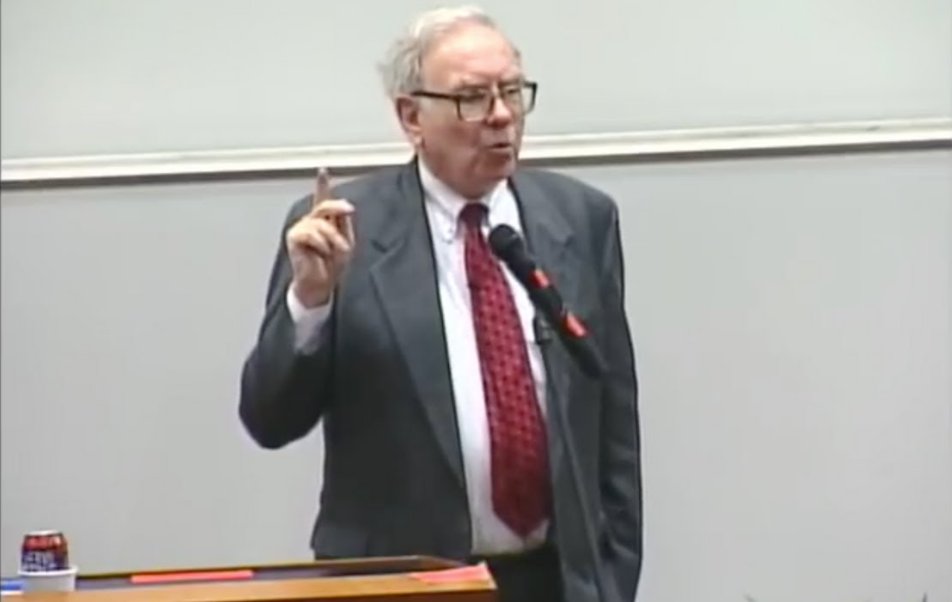
In 2001, Warren Buffett gave a talk at the University of Georgia.
He asked them the most Warren Buffett question ever:
• If you could invest in a friend and get 10% of their income for life -- who would you pick?
Once the students answered the question, he then asked this:
• Why would you invest in that person?
• What character traits do they have?
Now they have a list of character traits to adopt.
Shortly after this, Buffett asked:
If you could short a friend's earnings, who would you pick and why?
Now you have a list of character traits to avoid.
----
1. Do not think this thought experiment is only about money.
You can use it for whatever currency you value.
E.g. Happiness coin
If you could get 10% of a friend's happiness, who would you invest in and why?
If you could short someone's happiness, who would you pick and why?
You can run the same thought experiment with Fitness coin, Friendship coin, Romance coin, etc`
2. This thought experiment is genius because it hacks a bug in life's video game:
Humans are terrible at self-awareness.
But we are great at spotting things in other people.
E.g. If your friend is in the wrong relationship, you can realize in 10 minutes what may take them 10 years.
Daniel Kahneman summarised his book on cognitive biases with the following:
“The premise of this book is that it is easier to recognize other people’s mistakes than our own.” - Daniel Kahneman
3. Nuance - It has to be purely from merit.
Buffett says it can't be because someone will inherit a large sum from their parents.
It has to be based on their behavior.
E.g. If you want 10% of someone's fitness coin, it's not because of incredible genetics -- is because of the actions they take.



![Rainmaker1973's tweet photo. How a book written in 1910 could teach you calculus better than several books of today
[Full text: https://t.co/55dkZAfec3] https://t.co/1kgmnklGjK](https://pbs.twimg.com/media/F9NqCTUakAEb7sg.jpg)