Most $SUI holders know the supply is capped at 10 billion.
They have never read the mechanic that turns network growth into permanent scarcity.
It is called the Storage Fund.
It is the most important thing in the $SUI docs that almost nobody is talking about.
Here is exactly how it works.
Every time a transaction adds data to the Sui blockchain, the user pays a storage fee.
That fee does not go to validators. It does not get burned and forgotten.
It flows into the Storage Fund. A permanent pool of SUI that never fully depletes.
The Fund stakes itself like any other holder and earns staking rewards.
Those rewards get paid to validators to cover the cost of storing historical data that existed before they joined the network.
This quietly solves the fatal flaw every other L1 eventually hits.
New validators are forced to store years of old state they had zero part in creating. Most chains make that someone else's problem. That leads to centralization, rising costs, and eventual collapse of the validator set.
Sui makes past users pay for it. Forever.
The Fund spends only its returns. Never the principal. It is designed to outlast the network itself.
Now connect the dots to price.
Every new object created on chain generates storage fees. More fees means a bigger Fund. A bigger Fund means more SUI permanently locked away from circulation.
Network growth does not just increase demand.
It structurally reduces supply through the protocol itself.
Most holders are pricing parallel execution, sub-second finality, and Move language safety.
They have not started pricing the deflationary flywheel that turns real usage into permanent scarcity.
That gap between what the docs actually engineered and what the market currently understands is where the multi-year thesis lives.
The people who read the docs always buy before the people who read the price.
@ramonos Transfer to a charity remainder unitrust sell it and pay zero taxes and get paid from that trust for life
And after you pass away whatever is left of that money will go to a charity of your choice.. (not financial advice)
@ramonos Convert to stable
Take loans out against stables(non taxable event)
Go default on repayment
Let the loan holder liquidate to cover the loan
Relax 😎
Activity on Sui mainnet has resumed after a halt due to a crash bug in the gas charging logic introduced by the 1.72 release. A full incident review will be shared in the coming days.
BREAKING:
The EU just banned cash payments over €10,000.
And will require ID for all Bitcoin transactions starting 2027.
The same EU that's losing the stablecoin war to America.
The same EU whose German Chancellor called it a "world champion of over-regulation."
Is now tracking every Bitcoin transaction above a certain threshold.
Cash banned above €10,000.
Bitcoin requires ID.
Gold can still be bought anonymously.
The EU isn't fighting financial crime.
It's fighting financial freedom.
While America proposes zero capital gains on Bitcoin.
While UAE builds crypto banks with zero restrictions.
Europe is building a financial surveillance state.
And calling it consumer protection.
2027 is closer than it sounds.
El hombre más rico de China, Jack Ma, dijo: Si pones los plátanos y el dinero frente a los monos, los monos elegirán los plátanos, porque los monos no saben que el dinero puede comprar muchos plátanos.
De hecho, si ofreces trabajo y negocio a las personas, elegirán trabajar, porque la mayoría de las personas no saben que un negocio puede generar más dinero que un salario.
Una de las razones por las que los pobres son pobres es porque los pobres no están entrenados para reconocer la oportunidad emprendedora.
Pasan mucho tiempo en la escuela y lo que aprenden en la escuela es trabajar por un salario en lugar de trabajar para sí mismos.
La ganancia es mejor que los salarios porque los salarios pueden mantenerte, pero las ganancias pueden hacerte una fortuna.
Si no aprendes a reconocer las oportunidades, seguirás eligiendo el camino seguro en lugar del rentable.
Dad invests $50K.
It grows to $2M.
If he sells, l he owes tax on a $1.95M gain.
Instead, he puts it in a trust.
Borrows against it.
Lives tax-free.
Dies holding.
Kids inherit at a $2M basis.
IRS gets $0.
Er zijn in Nederland eigenlijk nog maar twee financieel veilige plekken..
Rijk genoeg om het systeem te ontwijken, of arm genoeg om door het systeem te worden opgevangen. Alles daartussen is de val.
Want wat betekent het nog om middenklasse te zijn?
Op papier verdien je “goed”. In de praktijk ben je vooral precies rijk genoeg om overal buiten te vallen, en precies arm genoeg om nergens vrij te zijn.
Je bent te rijk voor zorgtoeslag. Je bent te rijk voor huurtoeslag. Je bent te rijk voor kinderopvang toeslag. Je spaargeld wordt gezien als luxe. Je salaris wordt gezien als draagkracht. Je hypotheekaanvraag wordt gezien als risico. En je maandlasten? Die worden gezien als jouw probleem.
Je bent te arm om personeel aan te nemen. Je bent te arm om een jaar vrij te nemen. Je bent te arm om grote financiele fouten te maken. Je bent te arm voor een fatsoenlijke auto. Je bent te arm om een mooi huis te kopen. Je bent te arm om risico’s te nemen die je leven kunnen veranderen.
Je betaalt de volle prijs voor wonen, zorg, kinderopvang, boodschappen, belastingen en energie. En wat krijg je ervoor terug? Een stil compliment van het systeem: “De ruggengraat van onze economie.”
Te rijk voor hulp.
Te arm voor vrijheid.
De media noemt je vermogend.
Te verantwoordelijk om alles te laten klappen.
Te uitgeknepen om echt vooruit te komen.
De onderkant krijgt toeslagen. De bovenkant heeft BV’s, fiscalisten, vermogen en ruimte om fouten te maken.
Dus... er zijn in Nederland eigenlijk nog maar twee financieel veilige plekken.
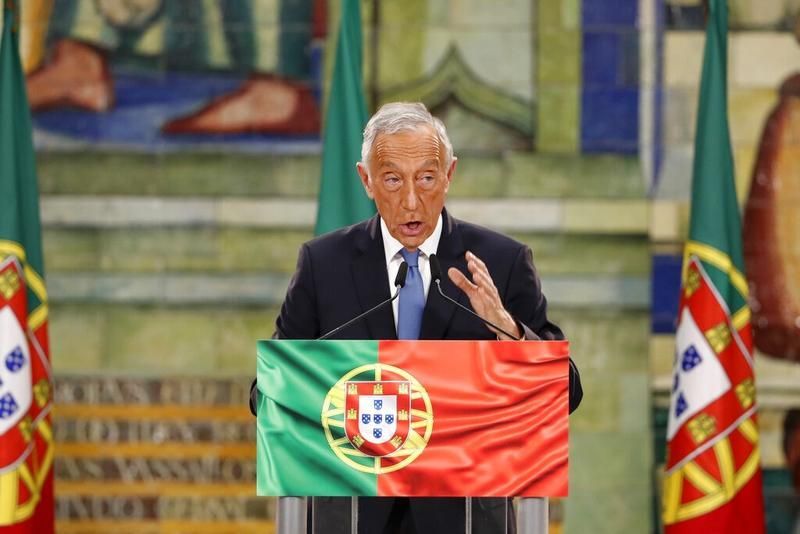
🇵🇹 PORTUGAL: 0% CAPITAL GAINS TAX ON BITCOIN - IF YOU HOLD 1 YEAR
Hold BTC for 365+ days as a Portuguese tax resident and pay zero tax on gains.
The most crypto-friendly tax regime in Europe
Drink a shot of olive oil, lemon juice and a shot of apple cider vinegar every night before bed for a month and you’ll see your face depuff and show structure. You’re welcome 🤝🏽