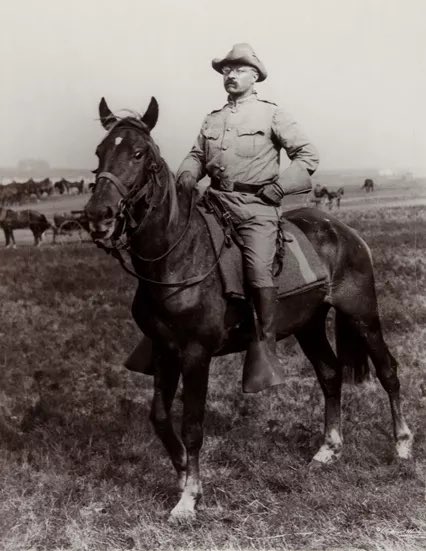
Texas Music has lost another good one.
Brian Burns was a gifted songwriter, storyteller, author, and educator who dedicated his life to preserving Texas history and culture. From Cherokee Rose to his solo work, his impact will be felt for generations.
Rest easy, Brian.
In a recent interview, Archbishop Vincenzo Paglia, former grand chancellor of the John Paul II Institute on Marriage and Family Life, confirmed the worst suspicions that many of us had.
He admitted that the changes he made at the Institute during the Pope Francis years were designed to initiate a "very profound" reform of the idea of the natural law.
Instead of absolute moral norms grounded in a keen understanding of the basic goods, he and his colleagues were proposing a moral theory rooted in historical discernment of subjective and cultural experience--not an "armchair theology" but one operating "within history and within people's lives."
This, of course, is the language of trendy postmodernism, and it is dangerous indeed.
Allow me to illustrate the principle with one example. Is slavery wrong?
Intrinsically wrong? Wrong no matter what public opinion polls say about it, no matter what the current consensus on it might be? I imagine any decent person would say yes.
But that yes is predicated upon precisely what the tradition calls the natural law and the basic goods. There are some values so fundamental that acts repugnant to them are by their very nature wicked.
If you want a highly articulate presentation of this idea, go to St. John Paul II's Veritatis Splendor.
If we say that this is just "armchair theologizing" and that morality is a function of ever-shifting cultural and experiential data, then why couldn't slavery be justified?
One of the very smartest persons that ever lived, the philosopher Aristotle, thought it was; extremely bright and morally upright persons in our country, well into the 19th century, thought it was permissible.
Who is to say whether the consensus might shift back again? Who is to say that "lived experience" might come to justify it?
What any truly coherent moral program requires is the very thing that Archbishop Paglia and his colleagues were endeavoring to eliminate, namely, absolute moral norms.
Ridding ourselves of these in the name of freedom or pastoral sensitivity actually renders moral discourse dysfunctional, just as relativizing the basic principle of logic would render any rational conversation impossible.
The Archbishop's interview, frankly, reminded me of the discussions I had at the Synod on Synodality with some of my German colleagues. Under the rubric of the development of doctrine, they were eager to relativize or radically change the principles undergirding classical morality. If this was and is truly the game, we have ventured onto perilous seas.
Link to the article below.
"Man should tremble, the world should quake, all Heaven should be deeply moved when the Son of God appears on the altar in the hands of the priest.”
St. Francis of Assisi
Jordan Peterson made a profound point on Chris Williamson’s podcast.
When God dies, a lot of unexpected things die with Him, including science.
Science isn’t some purely neutral, secular tool. It rests on deeply religious assumptions: that truth exists, that it’s knowable, that pursuing it is good, and that the universe makes sense.
These aren’t scientific claims, they’re metaphysical, rooted in a religious worldview. The universities themselves grew out of monasteries.
Without that deeper foundation, science eventually stops being about truth and becomes just another tool for power, ideology, or convenience. You lose the reason to be honest when the data gets inconvenient.
Do you think science can survive long-term without any belief in objective truth or a higher moral order?
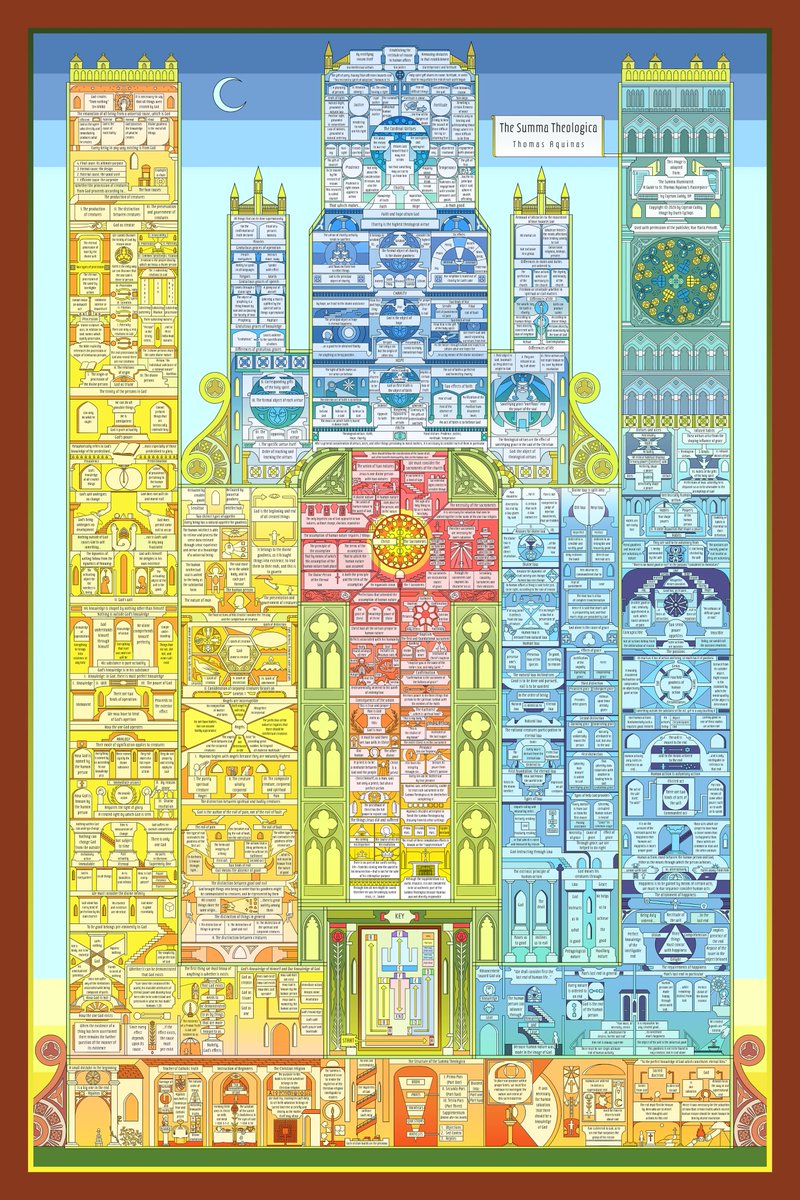
my friends, it is time:
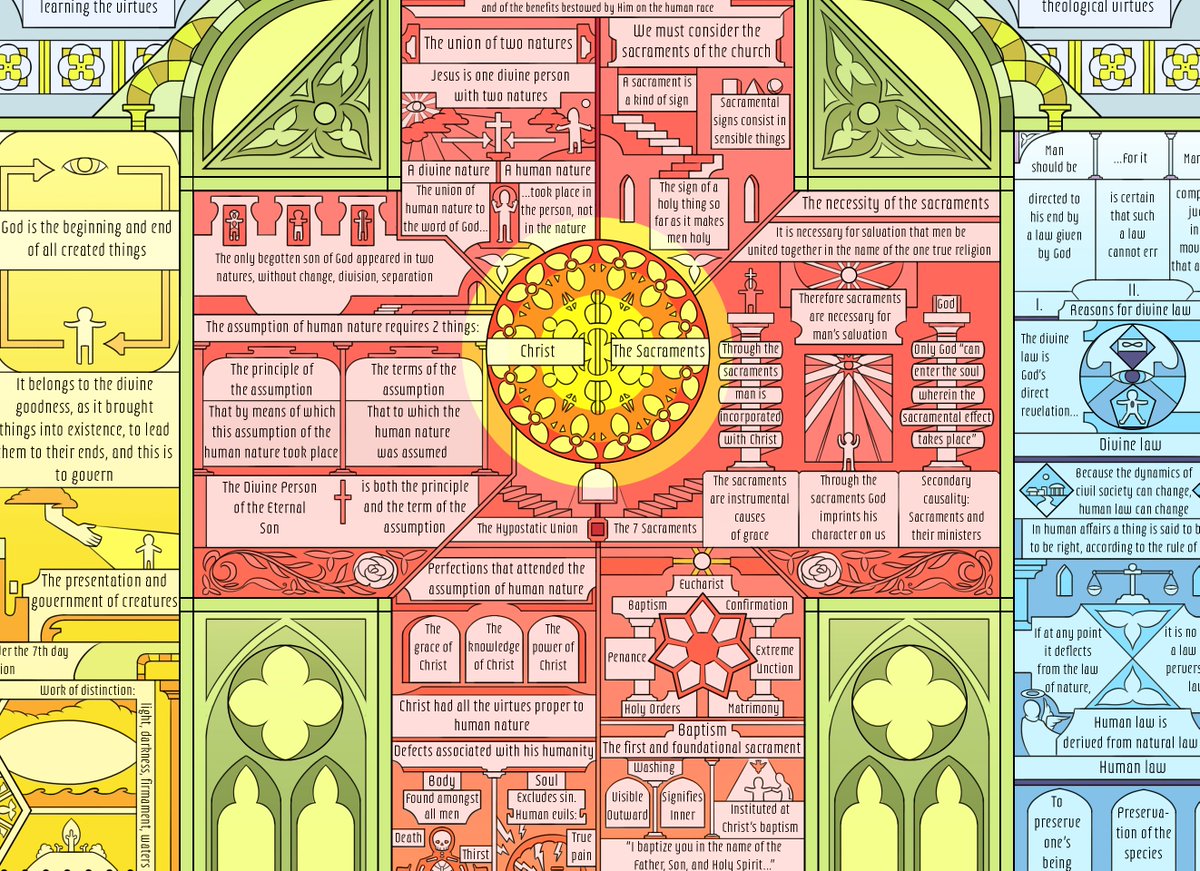
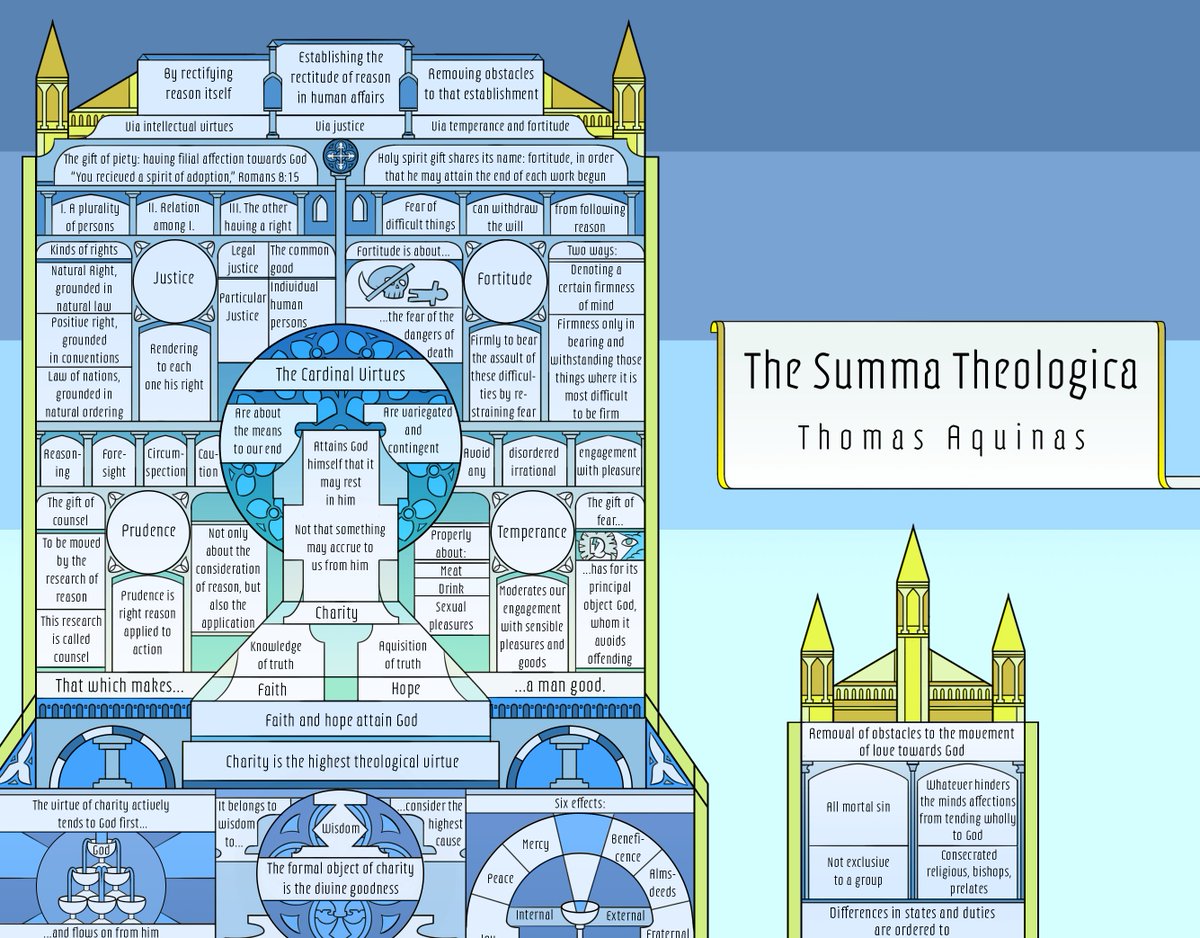
in conjunction with @avemariapress and a new book they released, i spent the last few months illustrating the entire structure of the summa theologica, by thomas aquinas.
in my shop here: https://t.co/7BXaOV3Uv7
can i show and tell you, in this thread: