In a new Stanford study, law professors by far preferred Gemini 2.5 Pro's responses over those written by their peers when they were unaware of who wrote the answers.
Rest in power, to a philosophy twitter og, Dr. Sammy very german last name.
(he not dead, he just on bluesky)
This was a fun, therapeutic practice of writing, a letter/poem/story (that Sammy'll see on my instagram story later tonight haha).
https://t.co/Uvj1J9G8k2
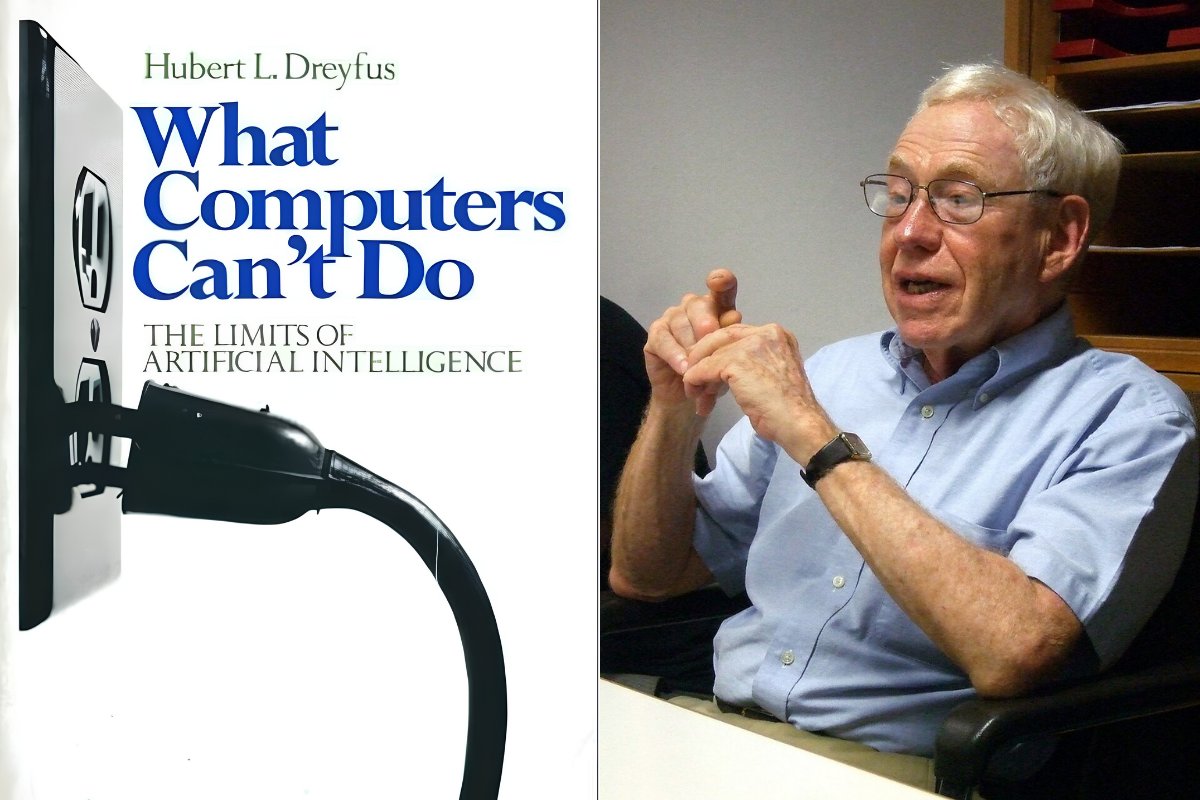
A Berkeley philosopher published a book in 1972 warning that AI would never understand the world the way humans do, got laughed off campus for it, then watched the entire AI research community spend 50 years slowly proving him right.
His name was Hubert Dreyfus. The book was called What Computers Can't Do.
And the story of what happened to him before, during, and after he wrote it is one of the most important things nobody tells you about the history of AI.
It started in 1965. RAND Corporation hired Dreyfus to study artificial intelligence. He turned in a 90-page report comparing AI research to alchemy. Not as a compliment.
He argued that AI researchers had made the same mistake over and over for a decade. They would get a narrow system working, predict it was the first step toward general machine intelligence, and watch it hit a wall nobody predicted. Simon said by 1967 computers would be world chess champion. They were not even close. Dreyfus called the whole thing a pattern. Early wins, massive promises, quiet collapse.
The AI community did not take it well.
Herbert Simon called the paper "garbage." Dreyfus taught at MIT at the time and later wrote that his colleagues "dared not be seen having lunch with me." The entire building avoided him.
Then they challenged him to a chess match against a computer.
Dreyfus had never claimed to be good at chess. He had only claimed that AI chess was weak, which it was. But MIT researchers organized a public game between Dreyfus and MacHack VI in 1967. He lost. The Association for Computing Machinery newsletter ran the headline: "A Ten-Year-Old Can Beat the Machine. But the Machine Can Beat Dreyfus."
The entire field celebrated. They had not answered his argument. They had just beaten him at chess. Nobody seemed to notice the difference.
Dreyfus expanded the paper into a full book in 1972. What Computers Can't Do laid out something deeper than chess criticism.
His argument was philosophical, not technical. He said human intelligence was not symbolic manipulation. It was not rules and logic trees. It was something more fundamental that no one had cracked: the ability to understand context, to act in the world through a body, to make judgments that depended on being alive and embedded in a situation.
He called it know-how versus know-that. A doctor who can feel something is wrong in a patient before naming what it is. A chess grandmaster who sees the right move before calculating it. A person who walks into a room and understands the social dynamics in four seconds without running a single algorithm.
These were not tasks you could formalize. Not because they were mysterious. But because they were rooted in physical embodiment and years of embedded experience in the world. A machine sitting inside a server rack had none of that. It had never touched anything. It had no body. It had never been afraid or hungry or confused in the middle of a city.
The AI community kept dismissing him for 20 more years. Then quietly, things started shifting.
The symbolic AI approach he had criticized started breaking down exactly where he said it would. Language was too ambiguous. Common sense was impossibly hard to encode. Systems that worked in narrow domains failed completely the moment the real world showed up.
By the 1990s, the field had largely abandoned the approach Dreyfus had attacked. When MIT Press published a new edition in 1992 with a long introduction updating his position, historians of AI started writing sentences like "time has proven the accuracy and perceptiveness of Dreyfus's comments."
In 2007, a journalist asked him whether he thought he had won the argument. He said: "I figure I won and it's over. They've given up."
He was right and wrong at the same time. Symbolic AI did collapse. But something else rose in its place: deep learning, trained on massive amounts of human-generated data, learning patterns from the bottom up instead of the top down. Systems that were not programmed with rules but that absorbed something about language and images and tasks from raw experience.
That is where the argument gets genuinely interesting and genuinely unresolved.
Dreyfus spent his last years thinking carefully about whether deep learning addressed his critique or just circumvented it. He had always said the problem was not intelligence as pattern recognition. He had always said the hard part was something else. Situatedness. Meaning. The ability to care about outcomes in a way that comes from having skin in the game.
A model trained on a trillion tokens of human text knows a great deal about what humans say. Whether it knows what humans mean is a different question. Whether it can act in the world the way a human acts, with a body and a history and stakes in what happens, is the question he spent 50 years trying to make people take seriously.
He died in 2017. GPT-2 was released two years later. GPT-4 was released six years after that.
The question he raised is still open. We build systems now that would have seemed miraculous in 1972. Systems that write, reason, code, argue, compose, translate, and explain. And the AI researchers at every major lab spend an enormous amount of time trying to figure out exactly what these systems are missing.
Dreyfus spent 50 years on a campus where people refused to eat lunch with him for saying that question mattered.
The man who was wrong about chess was right about almost everything else.
Future people will look back on current discussions about LLMs being conscious in the same way that we look back on Victorians discussing whether the telephone could be used to contact the spirit world.
Search is full of ads and wrong answers. Every other email is an ad. Prime Video charges you and shows ads. Paramount? Ads. Peacock? YouTube? Hulu? Ads followed by more ads. Netflix full of ads. Meta and X, every other thing is an ad. Pinterest is nothing but ads. AI is in everything. AI finishes sentences incorrectly and won’t stop. AI reads your email and search history to target you with more ads. Every time you open an app or visit a site there’s an update making it worse. In a hurry? First, click here to agree to terms you don’t have time to read and must accept. You need an account to do that. Change your temporary password. Enter your 2FA code. Check your email and enter that code. Now use a passkey. Your password is too simple to remember. Change it. No, not like that. Now log on. Enter your 2FA code. Check your email for a code… Welcome back! We’ve updated our terms of service and privacy policy (you have none). Subscribe to the site. Subscribe to Netflix. Subscribe to toilet paper. Subscribe to these groceries. Pay a membership fee for the right to subscribe then tip your driver who delivers the subscriptions your membership lets you subscribe to. Time to work? We’ve got to update your laptop and will slow down everything you do until you agree to update. But first, click here to agree. Update installed — your laptop’s broken now. It doesn’t matter, since your boss just replaced you with AI. Go to your phone to complain on social media. Wait, your phone needs an update so we can add more AI. Click here. Oh sorry, your phone can’t handle this update. Now it’s useless. Go get the newest phone. Here’s a text from a friend, an email, a voice mail they left three days ago but you didn’t see until now because of sync problems with the cloud. It’s their GoFundMe. Their MLM. Their Patreon. Never mind, you didn’t respond to their text within 9 minutes and now you’re no longer friends. They blocked you. Make new friends. Download this app to find people in your area. In your neighborhood. On your street. Two doors down from you. Do you know this person yet, we think you’d get along. You need an account to use this app. That username is taken. Enter a password. Not that one, you used it on another site. You need to be connected to WiFi to download the app. Allow the app to connect to other devices on your network. Allow the app to access your contacts, know your precise location, store your credit card details. Oops, sorry, we got hacked now all that info is available on the web. There’s a class action suit. You can join. It’ll take a decade to get your $3.73 share of the ten billion settlement. We’ll send it via PayPal or deposit it to your bank, just tell us those details. Oh no, another hack. That info is circulating now, too. Here’s a spam call, a spam email, a spam text. Why are you angry? Why are you talking about getting rid of your phone? Why don’t you like AI, it lets us make all of this easier? Do you know how ridiculous that sounds? This is progress. You’ll be left behind. Do you want to be left behind? Do you???