@plaguespanics https://t.co/OnUmi3vb4f I found this video and thought it was very interesting because you always hear about "underground" rap/hip-hop in the United States but a similar culture seems to exist in India. I never really thought about how peopleall over the world interact similarly.
@plaguespanics This is really thought-provoking to me because in most other major pandemics there wasn't air travel to facilitate a sickness to be able to travel across continents in a matter of hours. It really makes me think about how we were basically asking for a pandemic with air travel.
@plaguespanics My reaction is that it really shows the Eurocentrism that was present. From Europeans inviting themselves into foreign lands to the trading "Fair" prices with the natives and all the way to the Europeans becoming fed up an using force it all shows that Europeans thought
@plaguespanics One connection I made was how in the same way rice was used as a sort of currency or way of measuring debt in japan, Opium was used by companies to pay debts in China during the peak of Opium consumption in China.
@plaguespanics wondering if there was an early "Anti-monopoly" "Anti-big corporation/entity" movement or at least thoughts from people that can be compared to people's thoughts towards huge business today.
@plaguespanics The video combined with the article made me wonder - The same way we look at Apple, Google, and Facebook as being too big and needing to be broken up were there similar thoughts from individuals involved in the Dutch VOC and individuals affected by the Dutch VOC? I'm really...
@plaguespanics William Fraser is the very westernized/Americanized college student who goes and studies abroad for a semester, then comes back and tries subtly inserting in every conversation some detail about "when I was in ___, we did ___" to make everyone know he was abroad.
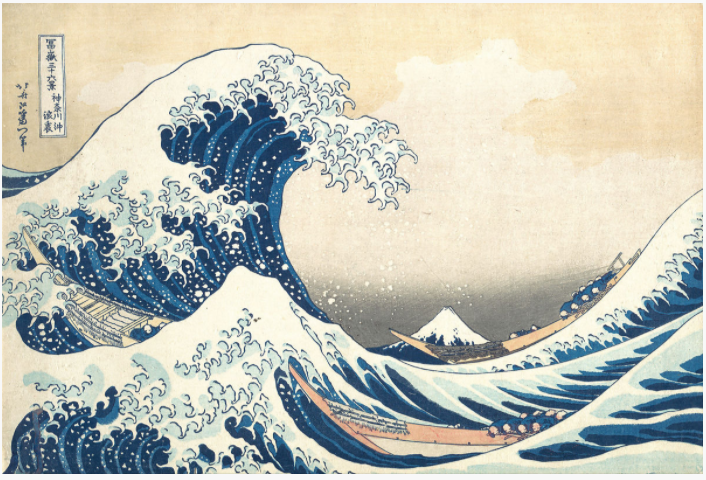
@plaguespanics I chose this image because it shows the true power of the sea and how the Japanese mastered the sea even in the roughest conditions to reach foreign lands. I really chose this image to explore because it reminds me of home and how close I am to the sea (long island, NY)
@plaguespanics The film showed me to what extent Japanese art made its way into Dutch life. Huge collections of dishes and Japanese robes/clothing were showcased which brings me to the belief that there's probably tons of leftover Japanese influence in New Amsterdam even today.
@plaguespanics culture in the form of dishes, robes and even shown in Dutch artwork. Both countries seemed to have benefits from their transactions unlike the Britian/China opium trade where China suffered addiction and the British got rich.
@plaguespanics I really wonder why the Japanese chose the Dutch to be close trading partners since the geographic distance and journey would pose much more of a challenge than if Japan chose a closer country to trade with. It was very interesting to see the Dutch fall in love with the Japanese
@plaguespanics I thought the part about how we're trying to historicize that growth is an obvious inherent thing for humans to want to do along with the explanation that being an entrepreneur to bring something new to an industry is a relatively modern part of our language.
@NikolaT123 @plaguespanics I think your response raises good points about how Britain really forced themselves into markets for their own profits without regard for the nation that's market it was. The opium trade and trade in India both harmed local populations financially and physically.
@churchreform1 @plaguespanics I think this is a very good point. The fact that Indian cotton has such a long history it's no wonder that once the British learned of this cotton that they fell in love with it and decided to create their own and sell it for profit.
@plaguespanics These two historical times are connected in the fact that Britan abused another country for the sake of profit. Britian textiles showed pictures of important Indian culture and were made to seem very desirable as was opium in China. British traders discovered goldmines in both.
@plaguespanics I really thought it was interesting that there are overlaps between the 12 months of flowers and other European tapestries and pieces of art. It really showed that people craved flowers so much that trends developed in the art and probably created high demand for specific flowers
@plaguespanics I would like to know if he thinks that we will continue this pattern of opportunity then closing off which leads to crisis then opportunity to closing off to another crisis as we have moved from the industrial revolution to climate change.
@plaguespanics The emphasis on how important cotton was (with 50% of today's clothing made from it) and the properties/characteristics that made it an ideal clothing material allowed me to further understand how important this industry and raw material were/is.
@plaguespanics The Q/A really hit the point home that European innovation and advancement was connected in some aspects and independent in others from the state of affairs in India and Asia. Details such as tone and emphasis that can't be found easily in reading were great over voice chat.