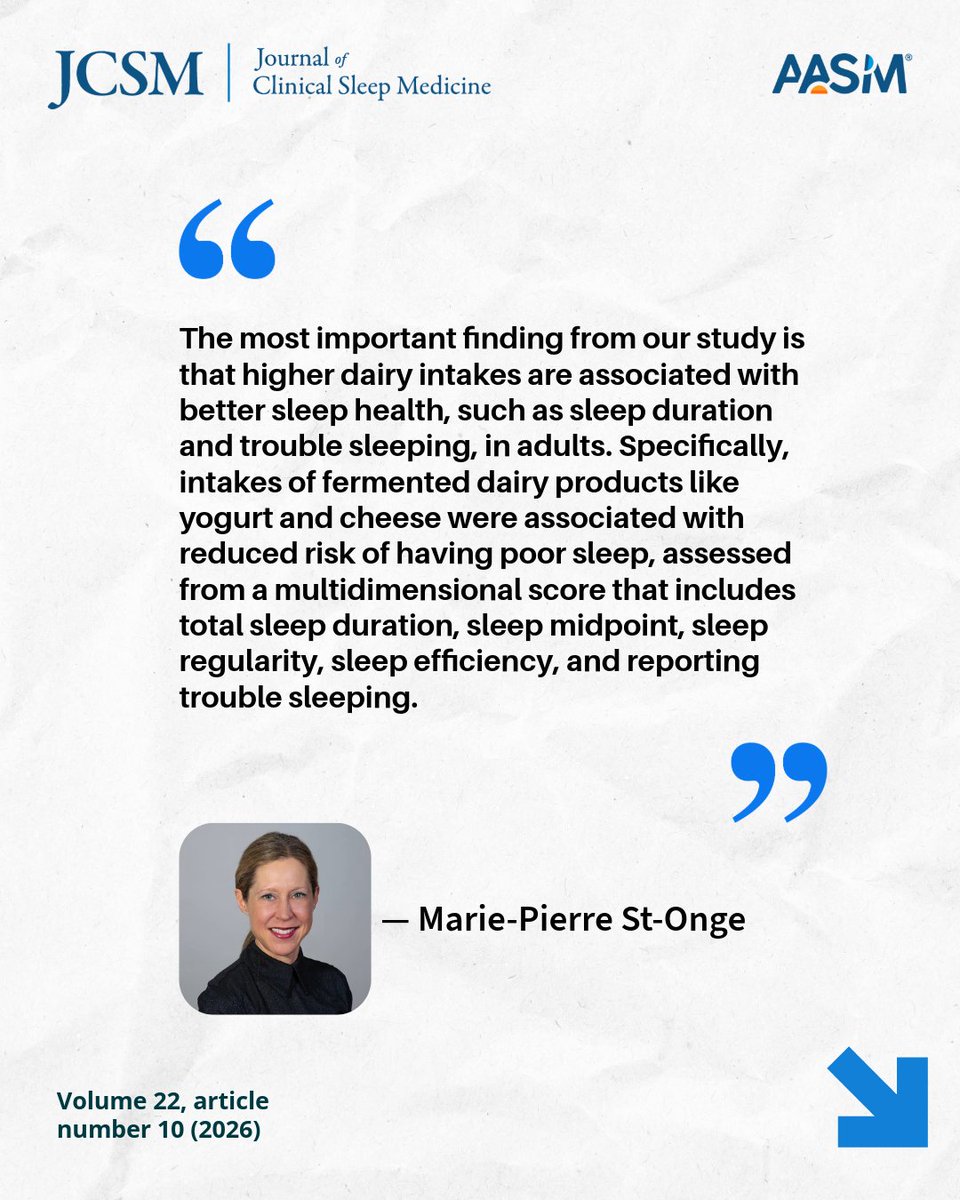
🥛 Could dairy intake be linked to better sleep?
A study of 23,000+ U.S. adults found that higher dairy intake was associated with lower odds of short and long sleep, as well as trouble sleeping.
View the full article 💤 https://t.co/c0m7IAvRMW
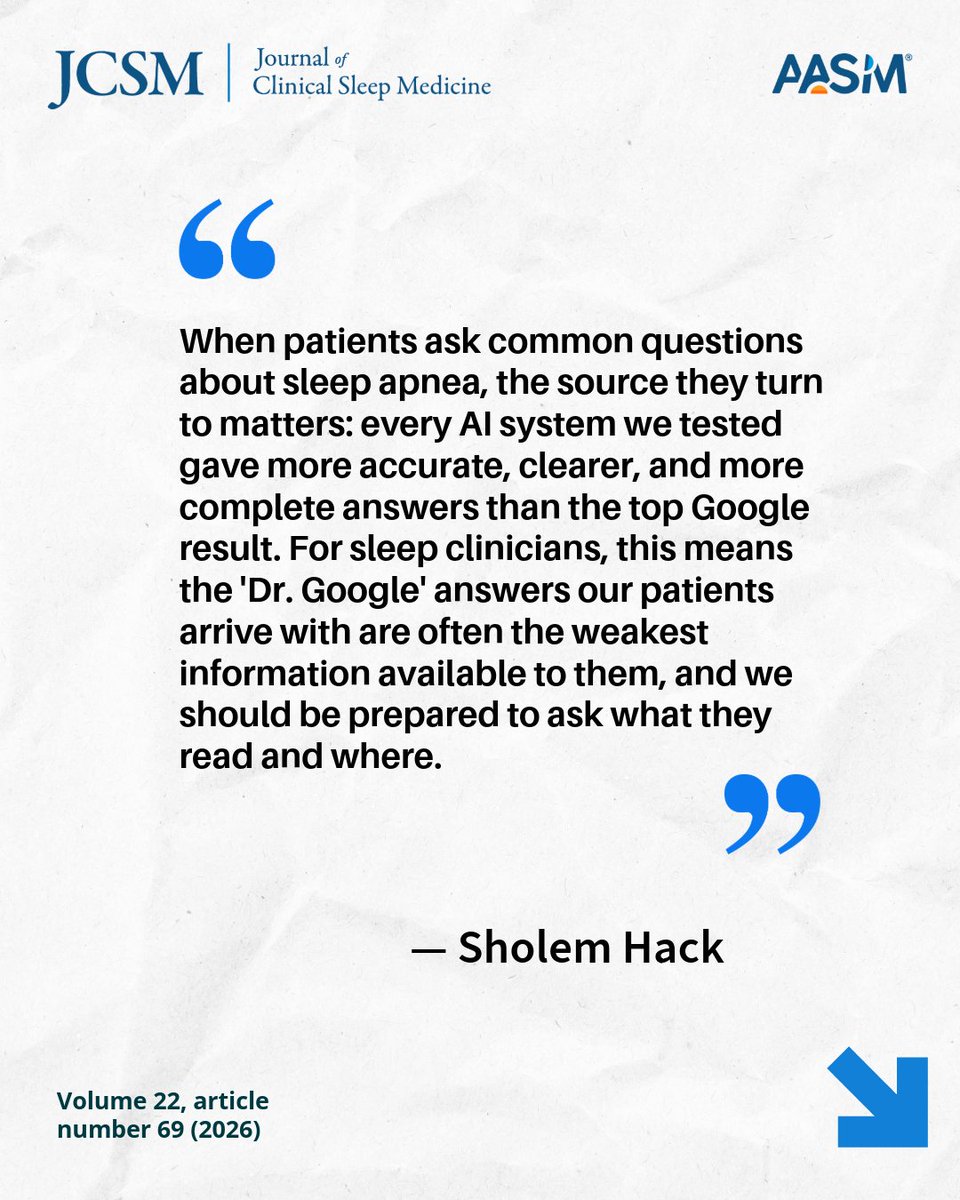
How does AI compare with Google Search when patients look for answers about OSA?
A new JCSM study found that AI systems provided more accurate, clear, complete, and useful answers to common OSA questions than Google Search.
Read the full article: https://t.co/8k0joBT8DR
New research in JCSM examines diabetes and COMISA, highlighting the importance of screening for both insomnia and obstructive sleep apnea in people with diabetes.
🔎 https://t.co/TbyqXHOpXu
How should obesity treatments and CPAP be integrated for patients with obesity and OSA? A new JCSM review examines the evidence, highlights knowledge gaps, and explores the future of sleep care. Read the article: https://t.co/xB2ctu5tjY
Findings suggest delayed school start times are associated with improved sleep duration among middle & high school students & a small reduction in depressive symptoms. Larger studies with standardized measures are needed to clarify these associations. https://t.co/GZdxaHNJN6
A new study in JCSM found GLP-1RAs were associated with reduced risks of heart failure, pulmonary hypertension, AMI, and death from all causes in obese OSA patients. Prospective studies are needed for validation. https://t.co/UYGgbZHXzq #GLP1#sleepapnea
A brief, four-session imagery rehearsal therapy (IRT) protocol may help reduce nightmare frequency and distress in #adolescents and young adults with complex #PTSD. Findings support IRT as a safe, scalable intervention. Read more: https://t.co/qJuXm2dDXr
Nightmares are common—and often undertreated—among veterans. New JCSM research highlights CBT-N as a powerful solution, but real-world barriers limit access. Adapting care could expand reach and improve outcomes. https://t.co/HQ4WcRViHN #SleepHealth#MentalHealth#Veterans
Sleep apnea diagnostics are rapidly evolving. A new JCSM narrative review examines established and emerging respiratory assessment modalities, highlights gaps in current literature, and calls for updated sleep testing classification frameworks. https://t.co/xVvkyhpXc0
Sleeping <7 hours raises chronic disease risk. The goal of this study is to evaluate objective short sleep duration among individuals who self-report insufficient sleep to test and evaluate predictors of the subjective–objective sleep duration difference. https://t.co/XTZzQn0AFd
Could AI transform how patients learn about #SleepApnea? A new #JCSM study compares GPT-4, GPT-5, DeepSeek, Mistral, OpenEvidence & Google Search on common OSA questions — and the findings may surprise you. https://t.co/NEcmF4Ybge
This theoretical review examines the clinical heterogeneity of early childhood insomnia and proposes a phenotype-based framework that integrates temperament into assessment and treatment planning in infants and preschool children (approximately 0–5 years). https://t.co/8eYUU0MrIi
Residual EDS measured by the PVT is linked to worse cognition in PAP‑adherent patients with OSA. This reveals a distinct cognitive risk in treated OSA & supports PVT as a practical tool to detect cognitive deficits in clinical/research settings. https://t.co/sMp2tfhzFe
This clinical practice guideline (CPG) provides an American Academy of Sleep Medicine (AASM) guideline on combination treatment of chronic insomnia in adults and reflects the current recommendations of the @AASMorg . https://t.co/Yf07w1zF5n
Published in @JCSMJournal: Adults with mild to moderate #OSA💤 partaking in steam-assisted respiratory muscle training (@WellO2_Official) for 12 weeks had improved #sleep architecture.
https://t.co/Kzfp56CRrs
New survey data show both CPAP and tirzepatide are acceptable treatments for comorbid obesity + OSA—but preferences diverge. Patients favor tirzepatide, providers lean CPAP. Findings highlight clinical equipoise and the need for comparative trials. https://t.co/UWriuaQJlr
Published in @JCSMJournal: More than 80% of patients implanted with a transvenous phrenic nerve stimulation device for central sleep apnea💤 had at least 4 hours of usage per night for 70% of nights at follow-up visits.
➕Dr. Ashtaad Dalal comments.
https://t.co/8iB2pbJ6RA
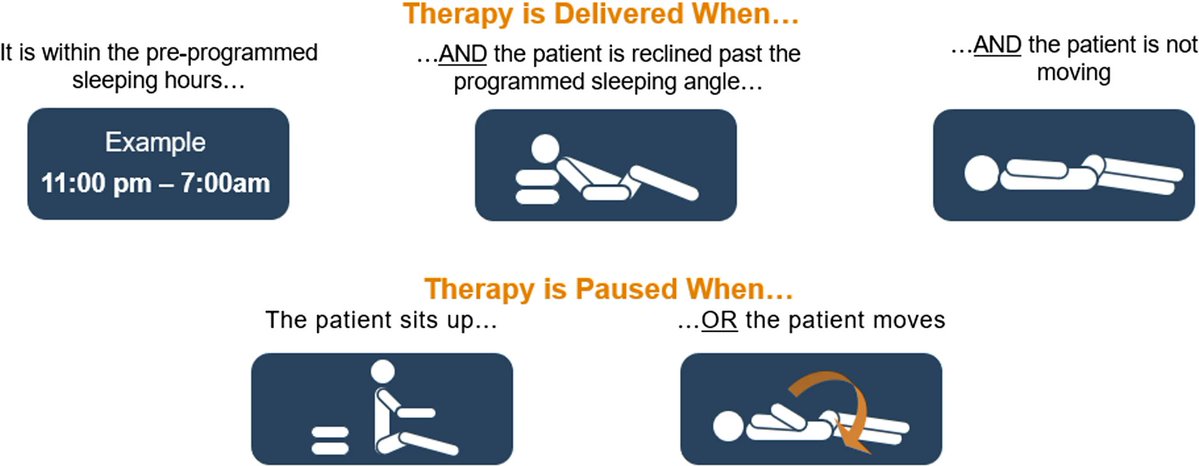
Transvenous phrenic nerve stimulation (TPNS) treats central sleep apnea in adults using automated activation based on programmed factors like sleep schedule, activity, and body position. This retrospective analysis evaluates adherence with TPNS therapy. https://t.co/aNtxczvGLi
Published in @JCSMJournal: Among children and adolescents, the risks for #influenza and #COVID-19 were raised📈 if they had been newly diagnosed with obstructive sleep apnea (#OSA)💤. @IDinChildren
https://t.co/wqFJU0RTs3