Prof. @canalUGR / Psicología / Adicciones / Ciencias del Deporte / Baloncesto / "Ni frágiles ni idiotas" (Shackleton Books) y "Trampas" (NextDoor y Yonki Books)
Hoy Ideal recoge la entrevista sobre “Ni frágiles ni idiotas” que me hizo @JeCabrero. Fue una charla de lo más entretenida y gratificante, y creo que se nota. 😁
https://t.co/Hrad0Eq4yA
‘La bola negra’ is a grand, sweeping, audaciously ambitious film, spanning decades from 1930s Spain through the Spanish Civil War and into 2017. A deeply moving portrait of a nation’s turbulent history and its reckoning with the past, with an unsettling relevance to today.
This is a blistering indictment of the ugly rot of fascism that has plagued history for generations, told through the experiences of those forced to live on the fringes, and a sprawling queer narrative about connection, persecution, exclusion and the consequences of being blackballed by society.
The actors are extraordinary. Guitarricadelafuente is sensational, and Penélope Cruz is fantastic in just a handful of scenes. Raül Refree’s score and Gris Jordana’s cinematography absolutely blew me away. What a riveting, haunting piece of filmmaking by directors Javier Ambrossi and Javier Calvi.
There’s something very ‘The Brutalist’ about its look and feel, and the sheer scale and grandeur of its visual storytelling.
There really is something extraordinary happening in Spanish cinema, particularly over the last few years. The ambition, the artistry, the willingness to confront uncomfortable truths. This is art.
Mañana 21-O (17h) doy la charla online abierta "Nuevos juegos para nuevos jugadores: Estrategias y diseño de la industria del azar para la Generación Z", para @FadJuventud (financiada por el Gob. de Cantabria, Consejería de Salud, D.G. de Salud Pública): https://t.co/SGEZwdXs7H
Hay otras películas sobre Granada (bastante buenas, por otra parte) donde ves a actores de la meseta intentando imitar el acento de forma tan torpe y ridícula que te impide disfrutar de ellas. Hasta en eso se nota el gusto por el detalle y el respeto a lo diverso.
Sé que no es ni de lejos lo más importante, pero que La Bola Negra haya llevado al mundo ciertos acentos, rincones y referencias, que para mí pertenecen a una intimidad cercana y local, me hace sentir orgulloso. Es una especie de vacuna frente a la ostentación de las banderas.
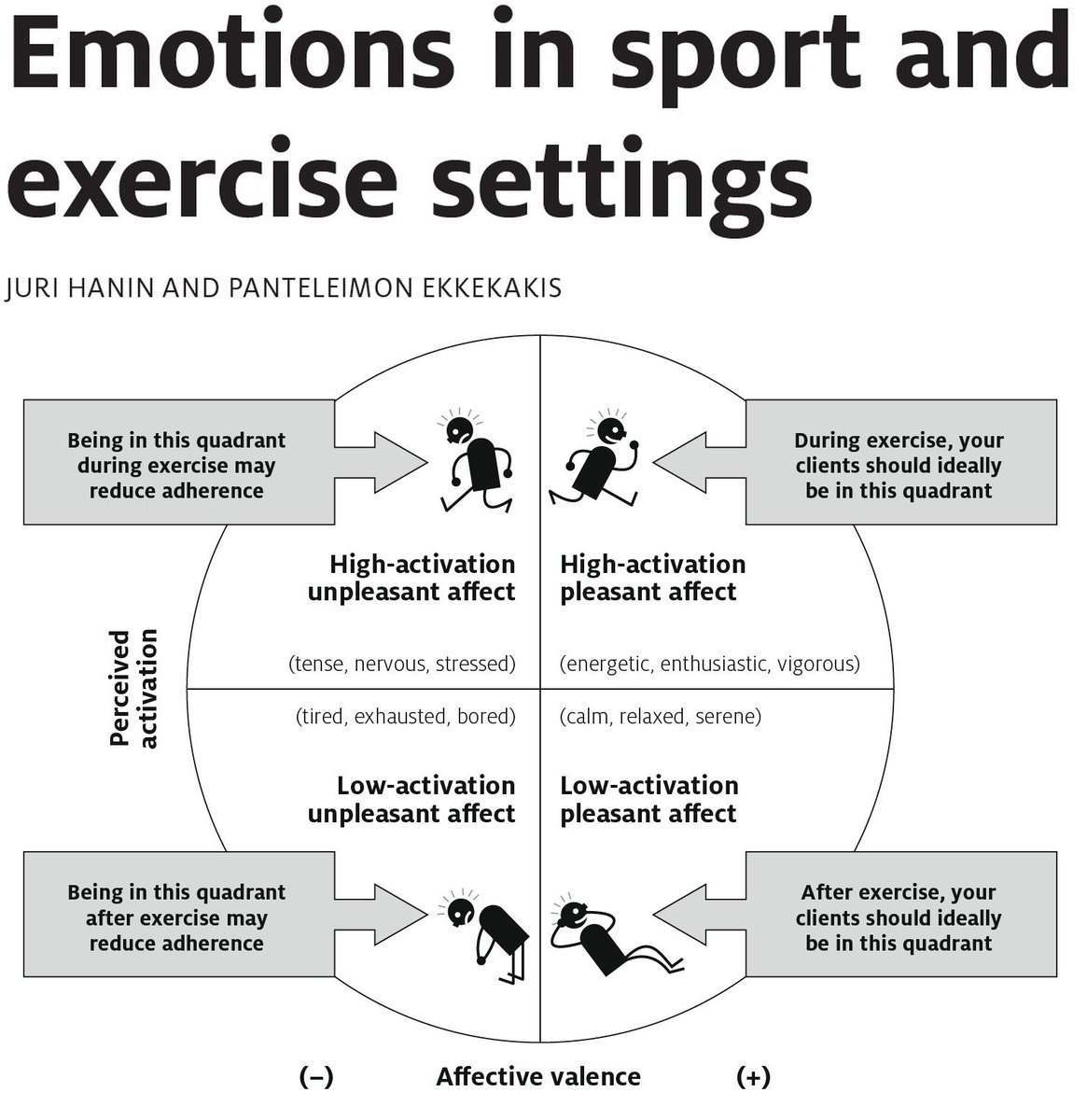
PDF of a book chapter with the legendary Jury Hanin.
Hanin, J., & Ekkekakis, P. (2014). Emotions in sport and exercise settings. In A. G. Papaioannou & D. Hackfort (Eds.), Routledge companion to sport and exercise psychology: Global perspectives and fundamental concepts (pp. 83–104). Routledge.
https://t.co/FJzwDNcODI
@misteriosoizq La gente es la población, o al menos una parte sustancial de la misma. No puedes decir que defiendes los intereses de la mayoría social si esa mayoría te concede una representación del 2%.
En la práctica, Podemos ha firmado su irrelevancia, si no su desaparición. Lo que nació como una posibilidad ilusionante de izquierda ha acabado convertido en una caricatura personalista. Cuesta creer que sigan diciendo que representan a "la gente".
“Rather than attempting to block young people from online services that allow them to access information and engage in age-essential communication, policies should focus on the incentives that drive companies to engage in behavior that creates risks.”
https://t.co/cNiE6a9Aur
Estupenda descripción de cómo las etiquetas patológicas se inventan, adquieren una pátina superficial de cientificidad y acaban adquiriendo vida propia en grupos que se identifican con esas etiquetas.
Sometime before 2016, a psychiatrist started asking their late-diagnosed adult patients with ADHD whether they thought they were more sensitive to rejection and failure than other people.
They said that they were. He didn’t (as far as I can tell) do any comparison with people with mental health problems, or with those with social anxiety. He didn’t look at children or those diagnosed in childhood. He just asked his patients to self-compare with others.
There were no attempts to test out whether this was specific to ADHD, nor universal in those with ADHD.
In 2016, the psychiatrist, William Dodson, gave this a name - rejection sensitivity dysphoria - and started writing about it. It resonated with influencers who created content talking about their RSD. It quickly multiplied. Articles were written about it on official sounding websites. Qualitative research was done, asking people who had heard about RSD whether they experienced it and what it was like.
By 2024, Dodson was saying that RSD was neurological and genetic, not related to trauma and wouldn’t respond to psychotherapy.
By 2026, bestselling author Alex Partridge wrote a whole book about his RSD, pinning it squarely to ADHD and saying that RSD ‘explained my entire life’. He gave a convincing sounding brain-based explanation about ‘glitches’ in how the ADHD brain processes dopamine and nor-epinephrine, and how these lead to rejection feeling far more brutal than for people without ADHD. There is no evidence of this that I have found.
And in this way a psychological and emotional reaction was framed as a neurobiological symptom. Millions started to think that perhaps they had ADHD, because they were sensitive to rejection and failure. RSD spread, and soon people started saying it was part of autism too.
Why does that matter? Because when people think something is due to how their brains work, they think that it is set in stone and won’t change. They think that medication is their only option, and that psychotherapy has nothing to offer. Emotional sensitivity is a really common psychological symptom, and it hasn’t been shown that it’s uniquely part of ADHD. RSD is an example of how neurodivergence is expanding to incorporate emotional reactions, and in the process turning psychology into neurology.
With RSD, the most basic scientific questions haven’t been answered, but you’d never know that from what you see online. There, it all seems so certain and clear.
It’s not.