Having your wife, brother and political mentor all appear in court to answer allegations of corruption – within a few weeks – isn’t a great look.
And yet that’s exactly the position Pedro Sánchez, Spain’s socialist PM, finds himself in, eight years after he first took up the position.
All deny the charges they face.
@memphisbarker
Find out more about the scandal that could bring Sánchez down 👇
https://t.co/LYwC8wPc8W
Because we get asked a lot.
The Technological Republic, in brief.
1. Silicon Valley owes a moral debt to the country that made its rise possible. The engineering elite of Silicon Valley has an affirmative obligation to participate in the defense of the nation.
2. We must rebel against the tyranny of the apps. Is the iPhone our greatest creative if not crowning achievement as a civilization? The object has changed our lives, but it may also now be limiting and constraining our sense of the possible.
3. Free email is not enough. The decadence of a culture or civilization, and indeed its ruling class, will be forgiven only if that culture is capable of delivering economic growth and security for the public.
4. The limits of soft power, of soaring rhetoric alone, have been exposed. The ability of free and democratic societies to prevail requires something more than moral appeal. It requires hard power, and hard power in this century will be built on software.
5. The question is not whether A.I. weapons will be built; it is who will build them and for what purpose. Our adversaries will not pause to indulge in theatrical debates about the merits of developing technologies with critical military and national security applications. They will proceed.
6. National service should be a universal duty. We should, as a society, seriously consider moving away from an all-volunteer force and only fight the next war if everyone shares in the risk and the cost.
7. If a U.S. Marine asks for a better rifle, we should build it; and the same goes for software. We should as a country be capable of continuing a debate about the appropriateness of military action abroad while remaining unflinching in our commitment to those we have asked to step into harm’s way.
8. Public servants need not be our priests. Any business that compensated its employees in the way that the federal government compensates public servants would struggle to survive.
9. We should show far more grace towards those who have subjected themselves to public life. The eradication of any space for forgiveness—a jettisoning of any tolerance for the complexities and contradictions of the human psyche—may leave us with a cast of characters at the helm we will grow to regret.
10. The psychologization of modern politics is leading us astray. Those who look to the political arena to nourish their soul and sense of self, who rely too heavily on their internal life finding expression in people they may never meet, will be left disappointed.
11. Our society has grown too eager to hasten, and is often gleeful at, the demise of its enemies. The vanquishing of an opponent is a moment to pause, not rejoice.
12. The atomic age is ending. One age of deterrence, the atomic age, is ending, and a new era of deterrence built on A.I. is set to begin.
13. No other country in the history of the world has advanced progressive values more than this one. The United States is far from perfect. But it is easy to forget how much more opportunity exists in this country for those who are not hereditary elites than in any other nation on the planet.
14. American power has made possible an extraordinarily long peace. Too many have forgotten or perhaps take for granted that nearly a century of some version of peace has prevailed in the world without a great power military conflict. At least three generations — billions of people and their children and now grandchildren — have never known a world war.
15. The postwar neutering of Germany and Japan must be undone. The defanging of Germany was an overcorrection for which Europe is now paying a heavy price. A similar and highly theatrical commitment to Japanese pacifism will, if maintained, also threaten to shift the balance of power in Asia.
16. We should applaud those who attempt to build where the market has failed to act. The culture almost snickers at Musk’s interest in grand narrative, as if billionaires ought to simply stay in their lane of enriching themselves . . . . Any curiosity or genuine interest in the value of what he has created is essentially dismissed, or perhaps lurks from beneath a thinly veiled scorn.
17. Silicon Valley must play a role in addressing violent crime. Many politicians across the United States have essentially shrugged when it comes to violent crime, abandoning any serious efforts to address the problem or take on any risk with their constituencies or donors in coming up with solutions and experiments in what should be a desperate bid to save lives.
18. The ruthless exposure of the private lives of public figures drives far too much talent away from government service. The public arena—and the shallow and petty assaults against those who dare to do something other than enrich themselves—has become so unforgiving that the republic is left with a significant roster of ineffectual, empty vessels whose ambition one would forgive if there were any genuine belief structure lurking within.
19. The caution in public life that we unwittingly encourage is corrosive. Those who say nothing wrong often say nothing much at all.
20. The pervasive intolerance of religious belief in certain circles must be resisted. The elite’s intolerance of religious belief is perhaps one of the most telling signs that its political project constitutes a less open intellectual movement than many within it would claim.
21. Some cultures have produced vital advances; others remain dysfunctional and regressive. All cultures are now equal. Criticism and value judgments are forbidden. Yet this new dogma glosses over the fact that certain cultures and indeed subcultures . . . have produced wonders. Others have proven middling, and worse, regressive and harmful.
22. We must resist the shallow temptation of a vacant and hollow pluralism. We, in America and more broadly the West, have for the past half century resisted defining national cultures in the name of inclusivity. But inclusion into what?
Excerpts from the #1 New York Times Bestseller The Technological Republic: Hard Power, Soft Belief, and the Future of the West, by Alexander C. Karp & Nicholas W. Zamiska
https://t.co/8igjazz1On
El Kit Digital repartió 3.000 millones de euros entre pymes españolas.
¿El resultado? Muchas pymes acabaron con una web nueva que nadie visita y un CRM que nadie usa.
El problema no era la herramienta. Era que nadie les ayudó a integrarla en su negocio real.
España tiene 3,5 millones de pymes.
La mayoría aún no usa IA en ningún proceso de su negocio.
Desde Telvia ayudamos a pymes españolas a implementar IA de forma real: sin humo, sin equipo técnico necesario.
Esto es lo que aprendemos en el camino 🦁
https://t.co/qZzSdU12GE
I might get some pushback for this, but I honestly think a lot of parents, especially in places like Silicon Valley and especially many Asian parents, are training their kids for the wrong world.
I see kids at the age of 7-8 packed with after-school math, more reading, more test prep, with the goal to make them “smarter.”
But from my perspective, living deep in the AI world every single day, I’m pretty sure raw intelligence is about to become a commodity.
Very soon, AI is going to do math better than the best mathematician, it’ll diagnose better than top doctors around the world, it’ll draft contracts better than elite lawyers, and it’ll learn faster than any PhD, instantly, endlessly, and without any fatigue.
All of that knowledge will live right in your pocket.
So think about it… if we’re raising kids to win by being “the smartest in the room,” we’re really training them for something that’s already being replaced.
In my opinion, this is a waste of time, $, and effort.
What I focus on with my kids is very different.
I care about willpower.
I care about passion.
I care about loving something enough to stick with it, especially when it feels hard.
And as a Dad, my job is to support that, whatever it is, and teach them to never give up.
I could be totally wrong though…
But when I look at where AI is headed, I don’t think the future belongs to the kid who memorized the most formulas or did the most math problems, etc.
In the future, I think the winners are going to be kids who
1/ can push through frustration
2/ can stay curious
3/ can keep going deeper into their passions than others
4/ can use AI tools to build cool things
5/ has the will power to never give up
In this day and age, school doesn’t really teach this and I don’t think after-school classes teach that either. I don’t think any of this can really be taught at school tbh, it’s something that is developed inside the home through the environment we as parents cultivate.
In a world where AI will help you build anything, create anything, and learn anything instantly, I don’t think the real edge will be intelligence anymore like the past.
The edge will come down to grit, discipline, emotional strength, and to keep going as others quit.
AI will be so deeply woven into our kids’ lives whether we like it or not.
That part is unavoidable.
However, what is avoidable is raising kids who only know how to follow instructions, chase grades, and wait for approval.
I always tell my kids, I don’t care what grade you get in a test. I care that you know what you got wrong, why you got it wrong, and what you’re doing to avoid that mistake in the future.
Because I firmly believe in the future, the kids who will thrive the most will be the ones who want something badly enough to go after it, who aren’t afraid to fail, and those who know how to leverage AI.
Just my two cents.
But if we’re serious about the future, I think it’s time parents start training for that world, NOT the one we grew up in.
Thrilled to share big news from the GSK BD front this morning — we’ve just signed a landmark, multi‑asset collaboration with Hengrui.
The two companies will work together to develop up to 12 innovative medicines across respiratory, immunology and oncology. This partnership couples Hengrui’s prolific discovery engine with GSK’s late‑stage development and commercial capabilities.
Congratulations to the deal team that worked tirelessly putting this pioneering deal in place. We look forward to working closely with Hengrui over the coming years to advance the collaboration.
“A great molecule trumps everything,” Anderson said. “The molecule makes the franchise, not the other way around.”
If you missed it, I dove into CEO Bill Anderson's plan to save Bayer: https://t.co/ONVdFQqLi2
None of these are cancer treatments
This is dangerous misinformation
If you are unfortunate enough to be diagnosed with cancer, please consult an oncologist
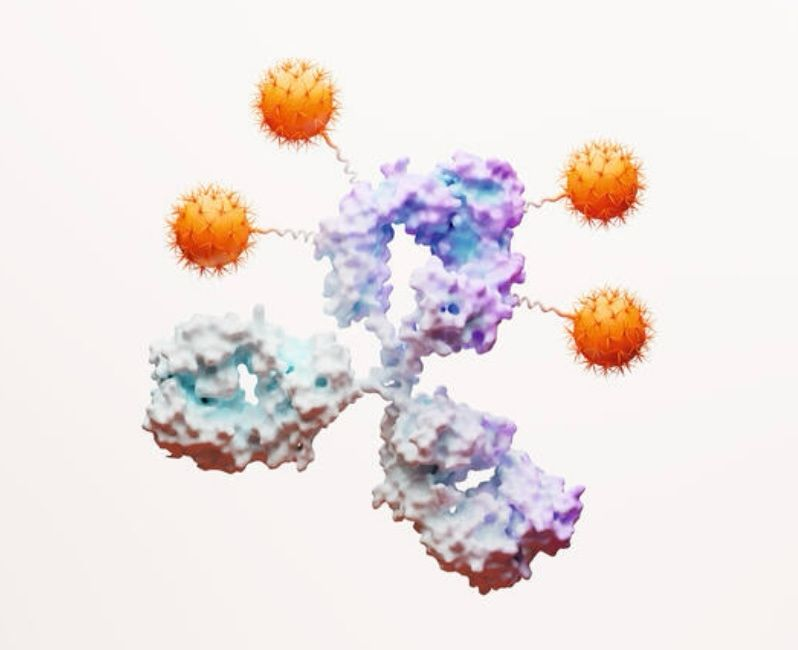
Excited to share the news of our recently executed option agreement with Duality Biologics. This partnership builds on our growing ambition in oncology and strengthens our ADC portfolio with a potential best-in-class candidate for gastrointestinal cancers.
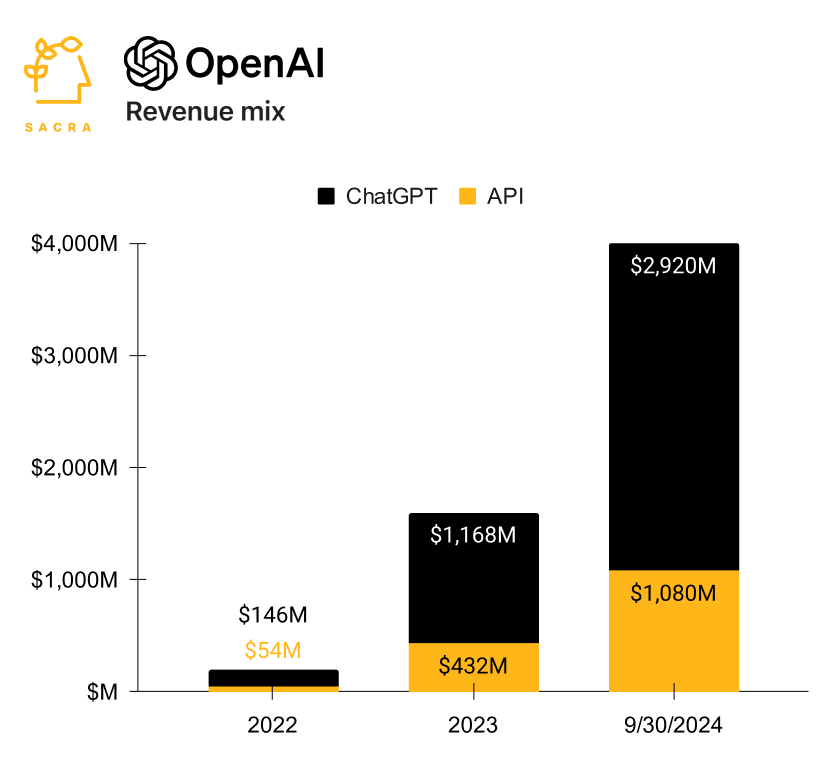
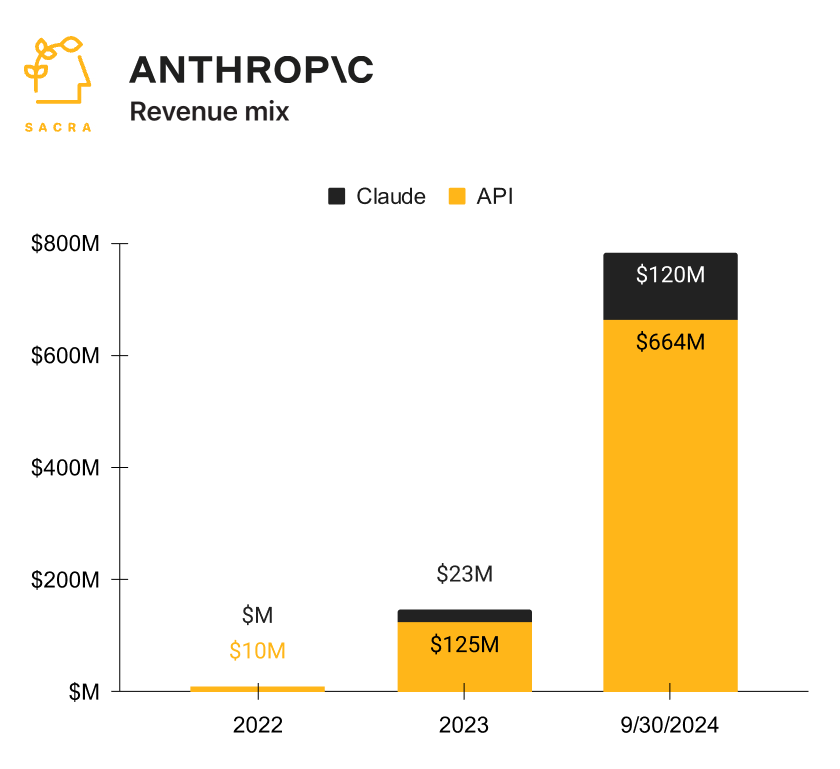
Based on their revenue streams, @AnthropicAI emerges as an infrastructure player, while @OpenAI operates more like a consumer-facing company.
Going to be interesting to see where each company is a few years from now.
Today, I’m excited to share with you all the fruit of our effort at @OpenAI to create AI models capable of truly general reasoning: OpenAI's new o1 model series! (aka 🍓) Let me explain 🧵 1/