Helmet of the Day: the most successful of the CFL's attempt to break into the US market. Advancing to the Grey Cup Final in both of their seasons, winning it in 1995. Despite that, with the looming move of the Cleveland Browns to Baltimore, team owner
Jim Speros, decided to fold the Baltimore franchise and resurrect the Montreal Alouettes. Baltimore is one of three Grey Cup winners to have folded.
Rich Gannon’s career was the ultimate late bloom. Cut, benched, backup then an MVP at 37 who powered the Raiders to a Super Bowl with pinpoint rhythm passing and toughness. One of the great second-act stories in NFL history.
Follow @NFLHuddleUp to resurrect legends like him.
#NFL 🏈 #History #Football #Raiders
#RaiderNation
Las Vegas sports history will be made on Tuesday as it will be the first time a regular-season MLB game and an NHL game will be played in the city on the same day. https://t.co/MhEQu1XThl #vegas#forgedingold#stanleycup#athletics
84 years ago today, a pilot running out of fuel made a decision that won the Pacific War. Most Americans have never heard his name.
June 4, 1942. Six months after Pearl Harbor, Japan's navy is undefeated. Four of the carriers that burned Pearl, Akagi, Kaga, Soryu, and Hiryu, are steaming toward Midway to finish off the US Pacific Fleet.
At 7:52 AM, Wade McClusky launches from USS Enterprise leading 32 Dauntless dive bombers. Here's the detail nobody mentions: McClusky is a fighter pilot. He'd been given the air group weeks earlier and had barely flown a dive bomber in combat. Now he's leading every SBD the Enterprise has at the most important target in the Pacific.
9:20 AM. He arrives at the intercept point where the Japanese fleet is supposed to be.
Empty ocean. Nothing for miles.
The Japanese had turned. Nobody knew where. And now McClusky owns the worst math problem in naval aviation: his fuel is bleeding away, and every minute he keeps searching, he condemns more of his own pilots to ditch in open water where nobody will find them.
Doctrine is clear. Turn back.
McClusky keeps going. He works a search pattern, squeezing miles out of dying fuel tanks.
9:55 AM. Far below, a single Japanese destroyer is cutting a white scar across the ocean at flank speed. It's the Arashi, racing to rejoin the fleet after depth-charging the American submarine Nautilus. Think about that. A failed sub attack is about to give away the entire Japanese navy.
McClusky reads the wake like an arrow and follows it.
10:02 AM. The horizon fills with the entire Japanese strike force. Four carriers, their decks crammed with planes being refueled and rearmed. Fuel lines snaking everywhere. Bombs stacked in the open.
And here's the miracle: the sky above them is empty. Minutes earlier, American torpedo squadrons had attacked at sea level and been annihilated. Torpedo 8 lost all 15 planes. One survivor, Ensign George Gay, watched what came next while hiding under his seat cushion in the water. Those doomed pilots dragged every Japanese fighter down to the waves. The door upstairs was wide open.
10:22 AM. McClusky pushes over from 14,500 feet. Both squadrons follow him down onto Kaga. It's actually a mistake, doctrine said split the targets, but Lt. Dick Best catches it mid-dive, pulls out with two wingmen, and goes after Akagi alone. His single bomb pierces the flight deck into the packed hangar. It's enough.
By 10:28, Kaga, Akagi, and Soryu, the third hit simultaneously by Yorktown's bombers, are floating infernos. Six minutes. Three carriers that attacked Pearl Harbor, gone. Hiryu follows them to the bottom that evening.
The cost of McClusky's gamble was real. Many Enterprise bombers never made it home, some shot down, others swallowed by the sea when their tanks ran dry. McClusky himself was jumped by two Zeros on the way out, took five bullets through his shoulder, and still flew his shot-up Dauntless back to the Enterprise.
Admiral Nimitz said McClusky's decision "decided the fate of our carrier task force and our forces at Midway." Japan never won another major battle.
One borrowed pilot. One destroyer's wake. One choice to keep flying when every gauge said go home.
84 years ago today, four Japanese aircraft carriers were burning in the Pacific because of a man who went to work in a smoking jacket and slippers.
Washington took his job, buried his name, and blocked his medal for 44 years.
This is the story of Joseph Rochefort, the codebreaker who saved Midway.
December 7, 1941. Pearl Harbor burns. Rochefort, head of a Navy codebreaking unit on Oahu, takes it personally. He tells a colleague that an intelligence officer has exactly one job: to tell his commander today what the enemy will do tomorrow. On December 7, he believes he failed at it.
He decides he will never fail at it again.
His unit is Station HYPO, hidden in a windowless basement at Pearl Harbor that his men call "the Dungeon." It is cold, damp, and lit like a morgue. Rochefort wears a smoking jacket over his uniform to fight the chill and slippers because the concrete floor wrecks his feet. He works 20 hour days, sleeps on a cot in the basement, and lives on coffee.
His team is just as strange. Brilliant misfit cryptanalysts like Joe Finnegan and Ham Wright, plus the surviving bandsmen of the battleship USS California, sunk on December 7. The musicians turn out to be naturals at running the IBM punch card machines. Sailors who played trombones in November are reconstructing an enemy cipher by March.
Their target: JN-25, the Imperial Japanese Navy's operational code. Tens of thousands of code groups, layered with additives, changed regularly. On a good day HYPO can read maybe 10 to 15 percent of any message. They rebuild the rest from fragments, traffic patterns, callsigns, and Rochefort's freakish memory. He had spent three years in Japan learning the language. He could hold months of intercepts in his head at once.
By May 1942, processing up to 140 decrypts a day, HYPO sees something enormous taking shape. Admiral Yamamoto, the architect of Pearl Harbor, is massing nearly 200 ships for one decisive battle. The target appears in the intercepts as two letters: AF.
Rochefort is certain AF is Midway Atoll.
Washington is certain he is wrong. The Navy's own codebreaking office, OP-20-G, argues for the South Pacific. Others fear Hawaii again, or even the West Coast. The Army wants planes held back to defend San Francisco. If Nimitz bets his last carriers on Midway and Rochefort is wrong, the Pacific is lost.
So HYPO sets one of the great traps in the history of intelligence.
The idea comes from staffer Jasper Holmes. The order goes to Midway by undersea cable, which the Japanese cannot tap: broadcast by radio, in plain language, that your water distillation plant has broken down.
Midway sends the fake distress call.
Two days later, HYPO decrypts a Japanese intelligence report to fleet commanders: AF is short of fresh water.
Two letters, confirmed. The argument is over.
Now Nimitz goes all in. The carrier Yorktown, mauled in the Coral Sea and given 90 days of repairs, is patched up in 72 hours and sent back out. Three American carriers slip northeast of Midway and wait at a spot on the map they name Point Luck.
On May 27, HYPO cracks the Japanese date and time cipher, the final piece. Nimitz's intelligence officer Edwin Layton, Rochefort's closest friend and partner, gives Nimitz a prediction of nearly insane precision: the Japanese carriers will be spotted on bearing 325 degrees, 175 miles from Midway, around 0600 on June 4.
On the morning of June 4, 1942, a PBY scout plane radios in the sighting. Nimitz turns to Layton and says: well, you were only five minutes, five degrees, and five miles out.
What follows are the most consequential ten minutes of the Pacific war. American dive bombers catch the Japanese carriers with fueled planes and stacked ordnance on their decks. By nightfall, Akagi, Kaga, Soryu, and Hiryu, four of the six carriers that hit Pearl Harbor, are gone, along with thousands of men and the irreplaceable core of Japan's elite naval aviators. Six months after Pearl Harbor, Japan's advance across the Pacific is broken. It never recovers.
A basement full of misfits had handed the US Navy the greatest ambush in its history.
Then came the knives.
The same Washington officers who had called Midway wrong now claimed the credit. They whispered that Rochefort was difficult, an ex-enlisted man without the right pedigree. Nimitz recommended him for the Distinguished Service Medal. Washington killed it. Nimitz tried again. Killed again.
In October 1942, four months after the victory he made possible, Rochefort was pulled from HYPO. The man who outwitted Yamamoto spent much of the rest of the war commanding a floating dry dock in San Francisco Bay.
He never lobbied for himself, never wrote a self-serving memoir, and rarely spoke of it. He said his real reward came at Midway itself. He died in 1976, unknown to the public, medal denied.
His old shipmates refused to let it go. Layton and others fought the Navy bureaucracy for years with the declassified record. In 1985 the Navy relented, and on May 30, 1986, President Reagan presented the Distinguished Service Medal to Rochefort's children in the Roosevelt Room of the White House.
44 years late.
One man in slippers, in a basement, out-thought an empire and was punished for being right.
37 years ago today, the Chinese government brutally crushed peaceful protesters in and around Tiananmen Square who were demanding an end to corruption, freedom of speech, and democratic reform. The massacre revealed a truth the world should never forget: the Chinese Communist Party will do whatever it takes to preserve its grip on power. If it did not value the lives of its own citizens, why would it value the lives of others?
84 years ago today, the most important Japanese admiral in the Pacific sailed into a fog bank he could not see out of, carrying secret orders he believed were known to no one on earth.
The Americans had read them three weeks ago.
In May 1942, Admiral Isoroku Yamamoto had a plan to end the war in the Pacific in 30 days. He would draw the surviving US Navy carriers into a trap near a tiny atoll called Midway, 1,300 miles northwest of Hawaii, and destroy them with the largest naval force ever assembled. 200 ships. 700 aircraft. 100,000 men. Four heavy carriers under Vice Admiral Chuichi Nagumo would lead the strike. The American fleet, which had only three serviceable carriers left after the Coral Sea, would be annihilated. Then Hawaii would fall. Then the US would sue for peace.
The plan was perfect.
It was also compromised.
In a basement in Pearl Harbor, a small team of cryptanalysts under Commander Joseph Rochefort had broken the Japanese naval cipher JN-25 in the spring of 1942. They were reading roughly 20 percent of every Japanese signal in real time, and educated guesswork filled in the rest. By mid-May they knew the target was somewhere referred to only as "AF." But where was AF?
Rochefort had a hunch. He sent a signal in the clear from Midway saying their water distillation plant had broken down. Two days later, Japanese intercepts mentioned that "AF" was running short of fresh water. Bingo.
By May 27 Admiral Chester Nimitz knew the date of the Japanese attack, the composition of the Japanese force, the route Nagumo would take, and roughly the time he would launch his first strike. He pulled every American carrier to a point northeast of Midway called "Point Luck" and waited. The trap had been set for him. He set a trap inside the trap.
On June 2, Nagumo's four carriers approached Midway through the worst fog any of them had ever seen. Visibility dropped below 600 yards. His ships could barely see each other. He held radio silence to protect his approach. He believed he had complete surprise. He believed the American carriers were thousands of miles away in the South Pacific. He believed he was about to win the war.
Yamamoto, on the battleship Yamato 600 miles behind him, had intelligence that the American carriers might in fact be at sea. He chose not to break radio silence to warn Nagumo. He assumed Nagumo had the same intelligence. Nagumo did not.
At 4:30 AM on June 4, Nagumo launched 108 aircraft against Midway from a position the Americans had been waiting for him to reach.
By sunset, three of his four carriers were burning hulks. The fourth would sink the next morning. Japan lost 3,057 men, 248 aircraft, and the four best carriers of the Pacific War in a single day. Japanese naval aviation never recovered. The war was decided in six minutes between 10:22 and 10:28 AM on June 4.
The whole disaster traced back to one decision on June 2: a Japanese admiral sailing into fog, trusting that nobody knew where he was going.
There are layers and levels to the NFL.
One team in the NFC West is trading for Myles Garrett.
Another is having a public contract dispute with Jacoby Brissett.
Vancouver is rough these days. I went for a long walk last night and it’s shocking how many stores and restaurants and cafes have recently gone out of business. And of course the hobo situation is still appalling. We’re lucky we have all this natural beauty to boost our spirits.
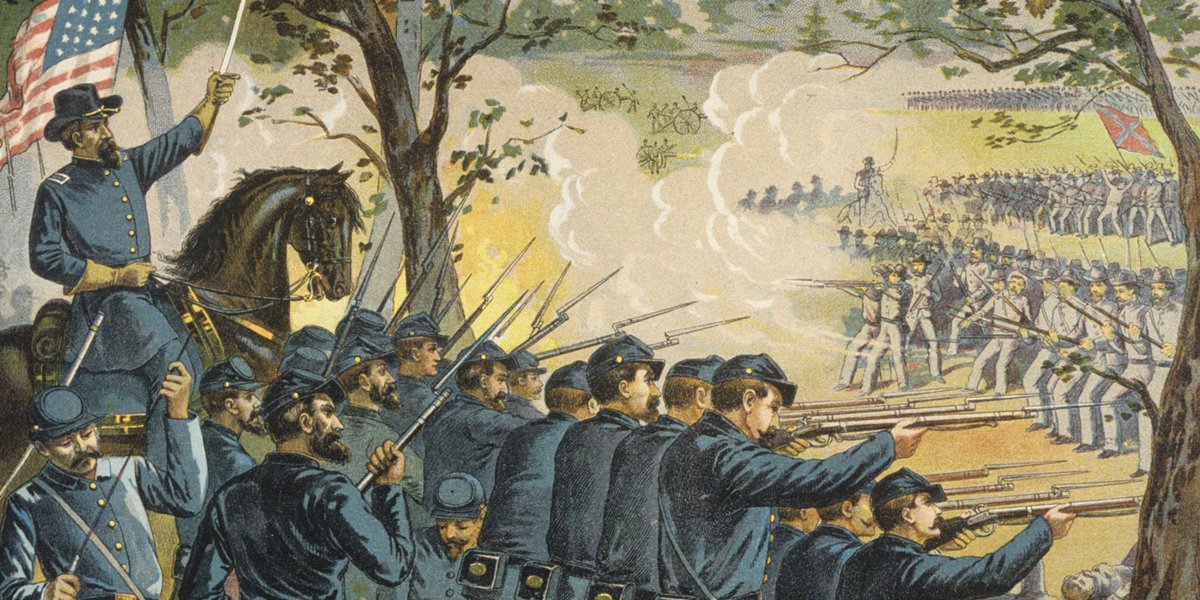
162 years ago today, on May 5, 1864, Ulysses S. Grant marched 120,000 men into a forest in Virginia and started a battle so horrific that wounded soldiers used their last bullets on themselves, generals wept openly at what they were ordering their men to do, and the woods themselves caught fire and burned the dying alive where they lay.
It was called the Battle of the Wilderness.
The forest had a reputation before the armies even arrived. Locals called it the Wilderness for a reason. It was second-growth scrub left over from a century of iron mining, a tangled hellscape of stunted oaks, dense thickets, and brambles so thick a man could lose sight of his own hand. Robert E. Lee picked it on purpose. He knew Grant had twice as many men and three times the artillery, and he knew none of that would matter in country where you could not see twenty feet in any direction.
The fighting started by accident. Two columns blundered into each other on the Orange Turnpike around midday and opened fire at point-blank range. Within an hour, both sides had thrown in entire corps. Men aimed at muzzle flashes because there were no targets to see. Officers lost regiments. Regiments lost companies. One Union colonel later said he fought all afternoon without ever seeing a single Confederate soldier, only smoke and screams and the occasional silhouette pitching backward into the brush.
Then the woods caught fire.
The underbrush was bone dry. Powder flashes ignited leaves. Wind fanned the flames. Within hours, walls of fire were rolling through the forest, faster than wounded men could crawl. Soldiers who had taken a bullet to the leg, or the spine, or the gut, lay helpless in the path of the flames and listened to them coming. Some called out for water. Some called out for their mothers. Some called out to be shot. Hundreds were burned alive. Survivors said the screams went on for hours and then, slowly, one by one, stopped.
A Union officer wrote in his diary that night, "It was as though Christian men had turned to fiends, and hell itself had usurped the place of earth." A Confederate captain wrote, "I have never prayed harder in my life, not to live, but to forget."
The fighting went on for three days. Lee's army nearly broke on the second morning when a Union assault punched through his right flank, only to be saved at the last possible moment by the arrival of Longstreet's corps after a forced overnight march. Longstreet himself was shot through the throat by his own men in the smoke and confusion, less than five miles from where Stonewall Jackson had been shot by his own men exactly one year and one day earlier, in the same forest, in the same kind of chaos. Lee considered it a curse on the Wilderness itself.
By the time the guns went quiet on May 7, around 29,000 men were dead, wounded, missing, or captured. It was, by any honest reckoning, a Union defeat. Grant had been outmaneuvered, outfought, and bled white in terrain that turned every advantage he had into a liability.
Every Union commander before him, after a beating like that, had turned the army around and retreated north to lick its wounds. McClellan had done it. Pope had done it. Burnside had done it. Hooker had done it. Meade had done it after Gettysburg, even after winning. It was simply what the Army of the Potomac did.
That night, the order came down to march. The men were told to pack up. They formed into columns by torchlight, exhausted and filthy and stinking of smoke, and they began to move. When they reached the crossroads at the edge of the burning forest, the road north went one way and the road south, deeper into Confederate Virginia, went the other.
Grant turned the army south.
The soldiers, who had been through this song and dance a dozen times before, took a moment to realize what was happening. Then they understood. They were not retreating. They were not going home. They were going to keep fighting, and keep fighting, and keep fighting, until the war was over.
The cheer that went up that night could be heard for miles. Confederate pickets heard it across the lines and knew, in that exact moment, that something fundamental had changed. One of Lee's officers wrote later that he heard the cheering and understood, with absolute clarity, that the Confederacy was going to lose the war.
He was right. Eleven months later, Lee surrendered at Appomattox.
But it started here, in a burning forest on May 5, 1864, when an unassuming little man with a cigar in his teeth refused to do what every other Union general had done, and pointed his army south instead of north.