We present a manuscript in which we describe the genetics of natural variation in the ploidy of A. lyrata from the White Sea to the Bering Strait, resequencing whole genomes of > 400 A. lyrata from herbarium and seed collections. https://t.co/hNtRLbjq8s
Congratulations to Jozefien @JDVandeVelde
from @Polina_Novik Lab who passed her PhD viva 🎓🥳 with flying colours and is now ready for new adventures! Well done and we are excited to find out what the future holds for her! 💫
@jrossibarra You are also welcome to try our tool https://t.co/vQiabsOwUC We've been struggling with pixy when it comes to multiple species and multiple ploidy vcfs. It's new, so let us know if something doesn't work.
Excited to present a poster about my PhD work today at #SMBE2023! Come find me at poster 299 in the San Paolo Cloisters if you’re interested in adaptation to polyploidy in animals! 🐸
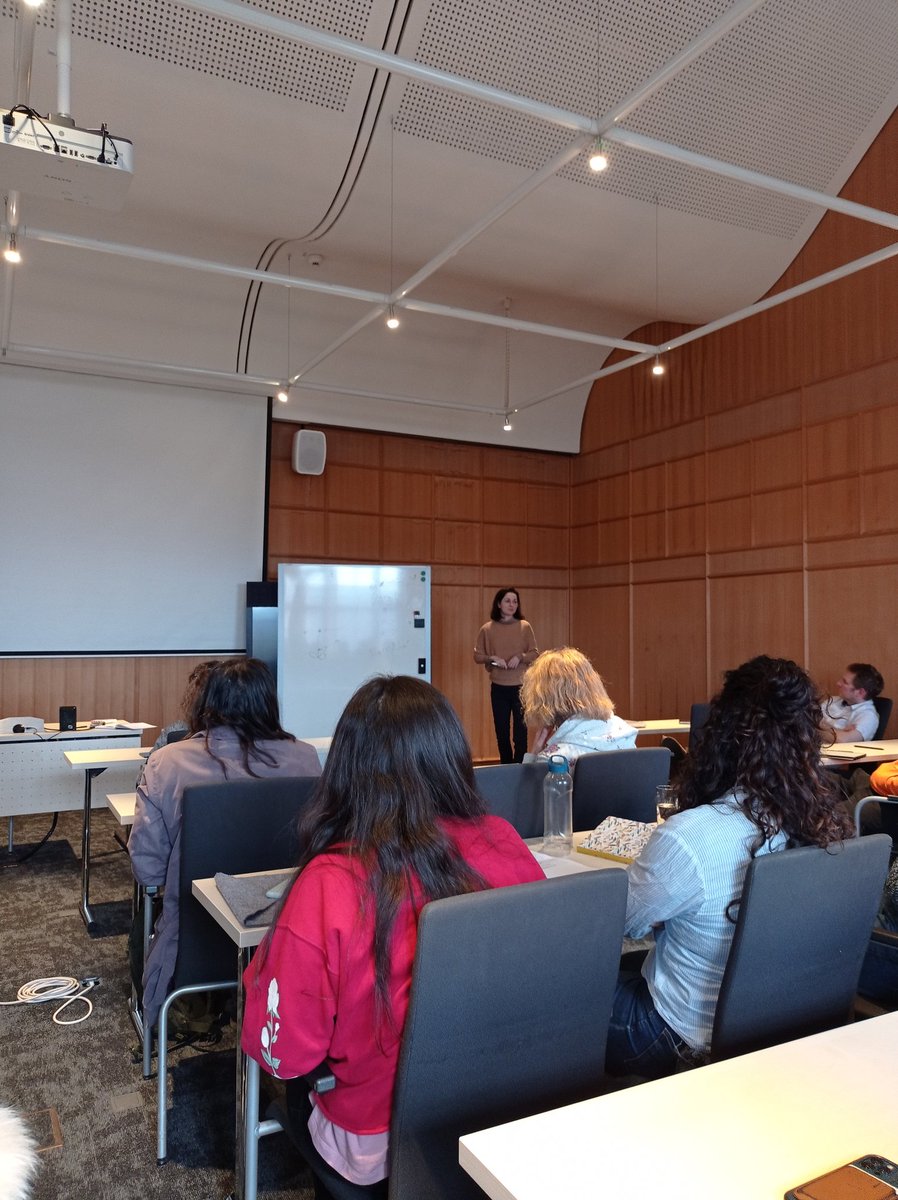
And now for the polyploidy enthusiasts, the great @Polina_Novik gives her chalk talk about adaptations following polyploidization! #ChromBioDeptRetreat
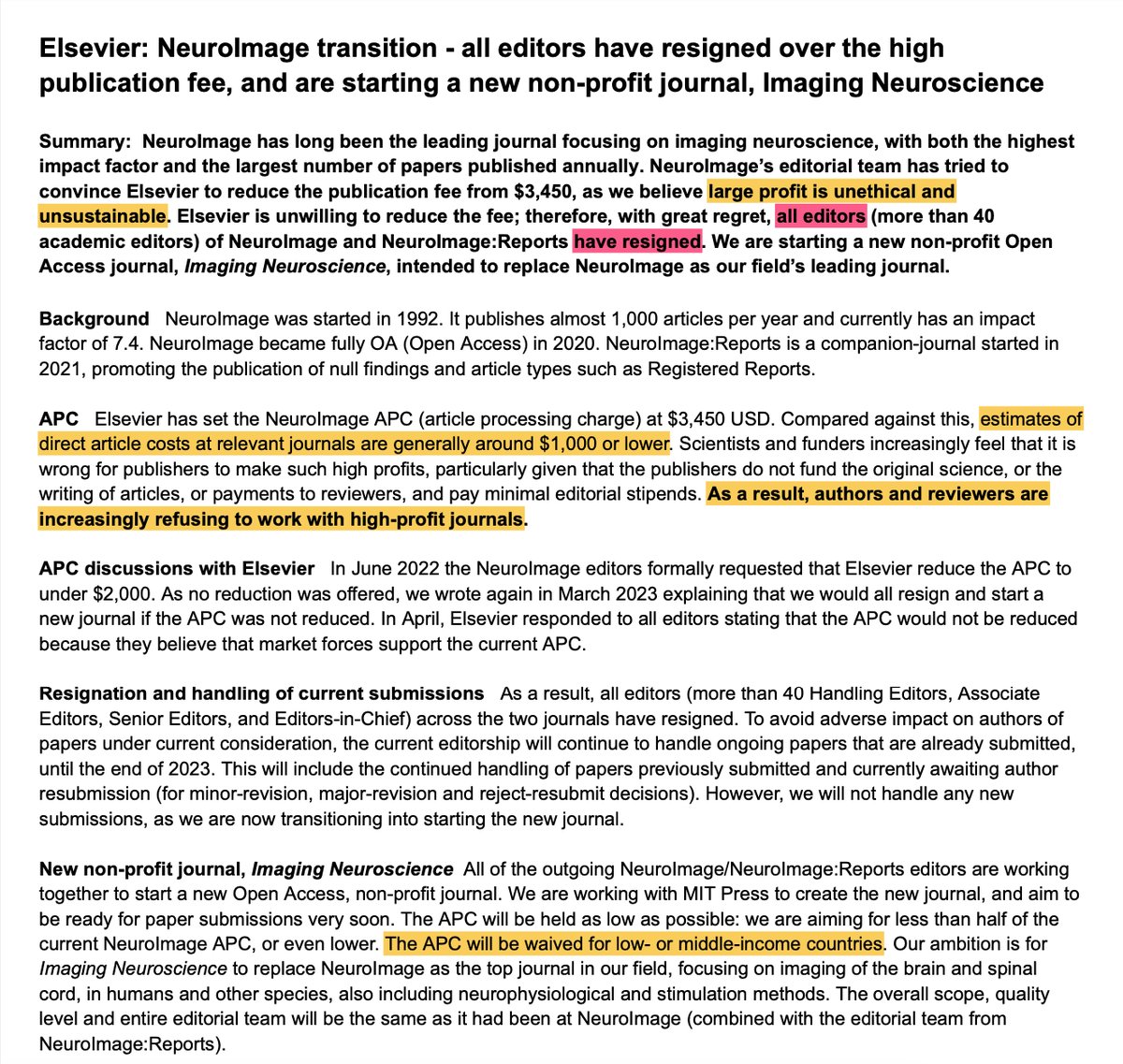
All Editors of NeuroImage (IF = 7) resigned because Elsevier didn’t want to reduce the hefty publication fee (it’s $3,450 !!!). And then started their OWN journal!
Just a reminder - the profit margin for academic publishing often reaches 40% (while for non-academic - 15%).
Obviously, who would reduce the profits to 15% only to make authors happy? It’s all about business. Profits should NOT drop.
This is one of the reasons why we have to pay A LOT to publish an open-access #research paper.
Let's look at numbers. NeuroImage publishes ~1,000 articles per year and it’s fully open access. Thus, it gives ~ $3.5 million in direct revenue from APC.
In the letter, the editors say that “the estimates of direct article costs at relevant journals are generally around $1,000 or lower”, which gives you some idea of profit margins just from this journal.
At first, the editors proposed a compromise by reducing the APC to $2000. However, after some “battles”, Elsevier stated that “the APC would not be reduced because they believe that market forces support the current APC”.
Outcome of this situation?
1. All 40 editors have resigned.
2. All editors decided to start a new NON-profit journal “Imaging Neuroscience”:
- It's under MIT Press
- Fees <50% of the current APC for NeuroImage
- The overall scope, quality level and entire editorial team will be the same as previously for NeuroImage
- The APC will be WAIVED for low- or middle-income countries.
My thoughts:
1. It is a great move by the editors. As I know how academics love to disagree with each other, I find this cooperative nature of their efforts mind-blowing.
2. This sets an example of how an editorial team can make their own journal.
3. This can be the beginning of a major shift in academic publishing.
Big changes take much time. But milestone events are often noticeable, and this resignation is clearly one of them.
Finally, all this suggests that prestige of a journal should NOT originate only from the impact factor and editorial board members.
It should be also based on how accessible the APC is for an average research group.
#science #AcademicTwitter
Our open access review on how selfing ancestral diploids can promote the establishment of the new allopolyploids 🌱 is now online @alisondawnscott @Uliana_Kolesni
https://t.co/0qV1MwQVQk
Fourth day already at #ESEB2022! I already thoroughly enjoyed to finally hear some in-person science and I look forward to presenting my own work tomorrow in S25, Terrace 2A. Please come by if you're interested in polyploidy, cute frogs and meiotic adaptation 🐸🐸