@BenPhillips_ANU@_mumbling_me@PeteWargent If you believe the AI boosters everything is about to get automated, unit labour costs will suddenly collapse, productivity growth will rise to 15% p.a. and unemployment to 30%. That describes a CPI < 0 world. It's also utter rubbish.
@IFM_Economist Vs the NRF's normal lending rates, $1b of interest free loans is <$100m p.a. of stimulus. Not zero, but a drop in the ocean against the fuel excise cut (only for three months for now, but annualised is 100x higher)
@IFM_Economist It was inevitable once they started publishing votes a demand would be made to know who voted for what. Commence a new relationship as you intend to continue it.
@IFM_Economist Proposition - how firms respond to the capacity utilisation question on activity surveys is fundamentally different from how economists/RBA understand capacity constraints (ie the output gap).
@IFM_Economist There's two divergence breaks here - one around 2015 when mining boom ended, another 2022 when pandemic ended. "Q: How did you go bankrupt?" "A: At first slowly, then all of a sudden".
@IFM_Economist This is the invidious policy choice our analysis reveals: Do govts continue labour market support but blow their budgets, or reimpose fiscal discipline but blow the labour market? My concern is no-one is talking about option 3 - return private sector hiring to normal strength.
@BenPhillips_ANU Migration is a red herring in terms of the rapid growth in house prices since late 2020. Yet also a convenient scapegoat that distracts from the underlying issues.
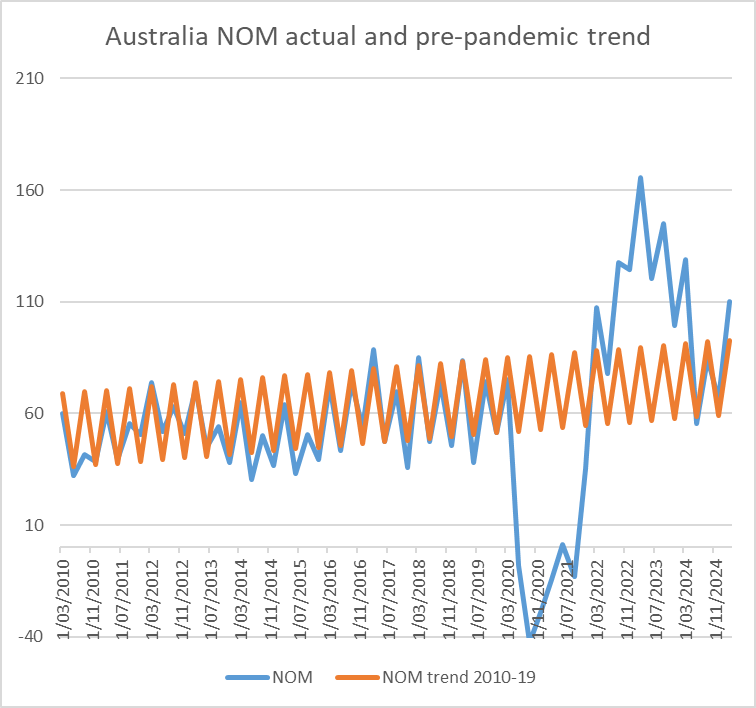
@BenPhillips_ANU The Q125 NOM was above trend (data below), but only by ~10k persons. Given long enough this will do it to housing demand, but not yet nor for a while. My concern is that the migration program is being unreasonably blamed for housing problems which are entirely homegrown.
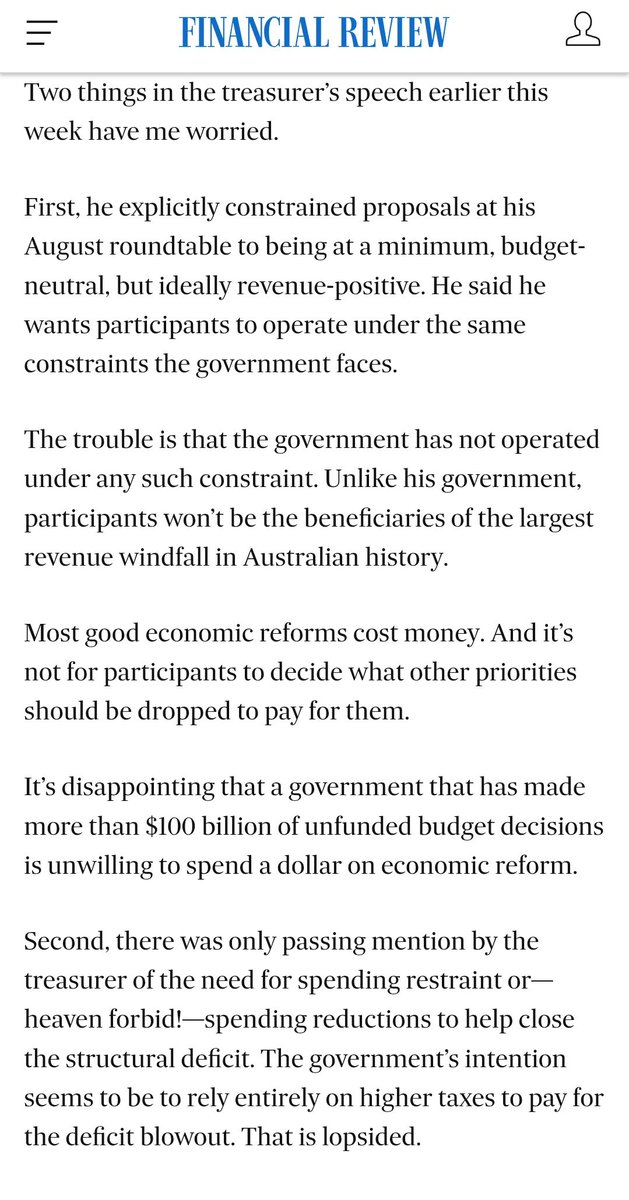
@SHamiltonian@IFM_Economist There was some defensive commentary about the historical trajectory of the tax/GDP ratio (something like "higher under Howard") that could do with a fact-check.
@IFM_Economist@SHamiltonian Throughout his speech, it was presumed the budget was unsustainable due to the tax take being too low, rather than spending being too high. Not one question probed this. Are we accepting 30% of GDP as normal now?
@BenPhillips_ANU Having read the expenditure weights for housing items for both CPI and the SLCIs just yesterday, I did know that. But will admit its a very niche professional interest.
@SHamiltonian As I suspect the last Australian to officially obtain a major in "Economic History" (USyd '05, the year it was discontinued), this is a key and valid distinction. Knowing the interwar debates over free trade is not the same as understanding the impacts of the Tariff Act of 1930.