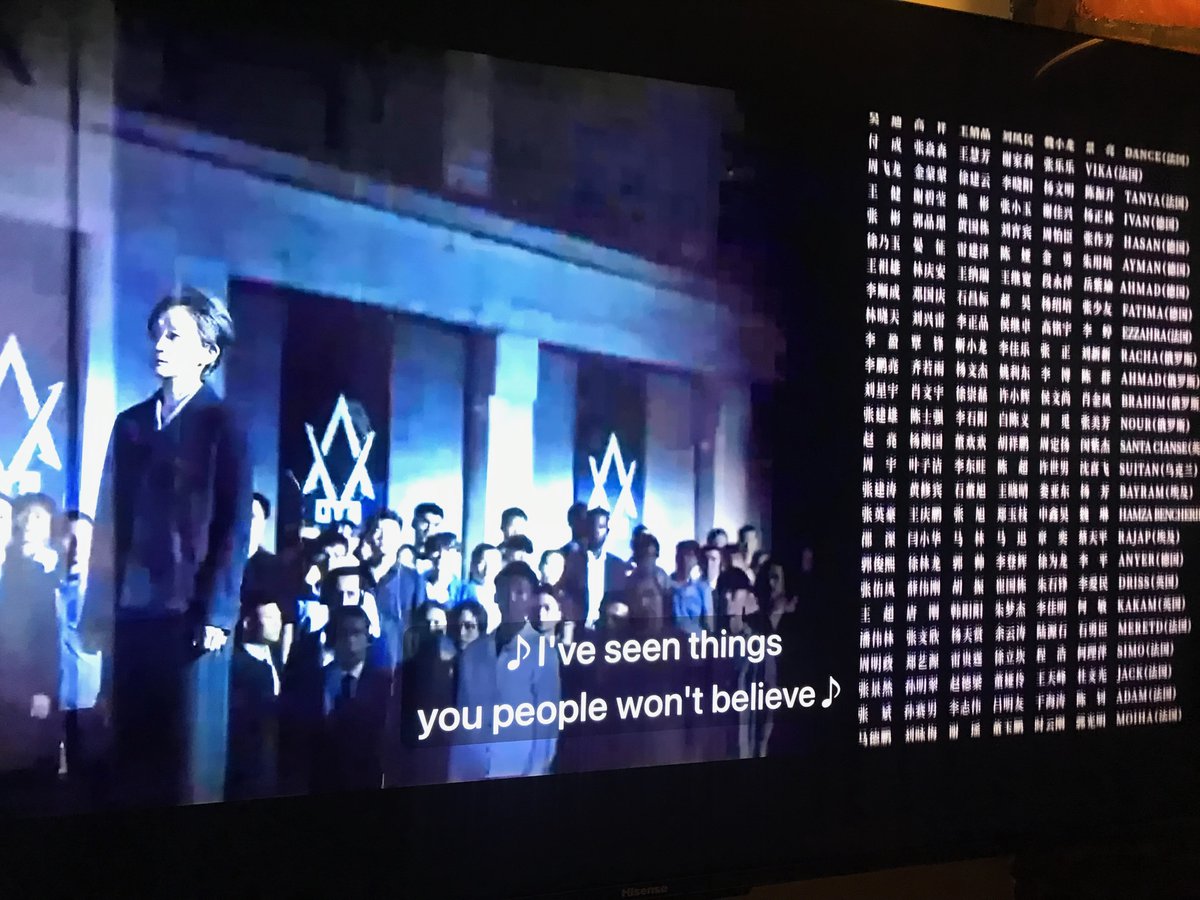
One of life’s little mysteries is why the end-credit song for Three-Body, the Chinese TV adaptation of The Three-Body Problem, almost exactly quotes a familiar line from Blade Runner.
I’m well aware of this because: It’s now 50+ years after Apollo 11, I’m writing and thinking about space, and I’ve got a blasted cold. <burn sizzle grimace wink looney-eye-roll>
Maybe the biggest surprise of the 1st space race: not that people tired of it but that it led to complaints, ironic but sometimes at least half serious. To wit: “They can put a man on the Moon, but they can’t solve the common cold?!?!”
I won’t say you should read more books, but if you read none, you may be a drag to others. The current Economist says this about books and book clubs (at https://t.co/7sFIRztjuP):
Seen on the Wired landing page today. Haven’t read it but can guess how it starts.
Step 1—Travel back in time by about a week.
Step 2—Avoid breaking time-travel rules.…
Come to think of it, AIs have written nothing on the subject, good, bad, or indifferent, that I know of. They may have been _prompted_ to write something about their own writing or other form of artistry, but that’s different. Have they no initiative?
It’s very hard to keep up and be sure, but for me, all the best stories about AIs venturing into human cultural creation have been written/made by humans. Example: the Coppélia ballet. Balanchine’s version will be up in May at @NYCBallet.
Issues of George are now much wanted, the WSJ says. Too bad it went out of business because not enough people wanted a copy! (A cultural Catch-22, that.) BTW, I worked there briefly, as a copy-editor errant. https://t.co/Cy9xDgsdlL via @WSJ
The NYT Balance for 3/22/26 Arts section
Pieces (video &/or text) about Antigone: 2
Pieces about BTS: 9
(Exact numbers hard to determine because of crossover between “live coverage” and separately listed articles. [In case you wonder, there was no “live coverage” of Antigone.])
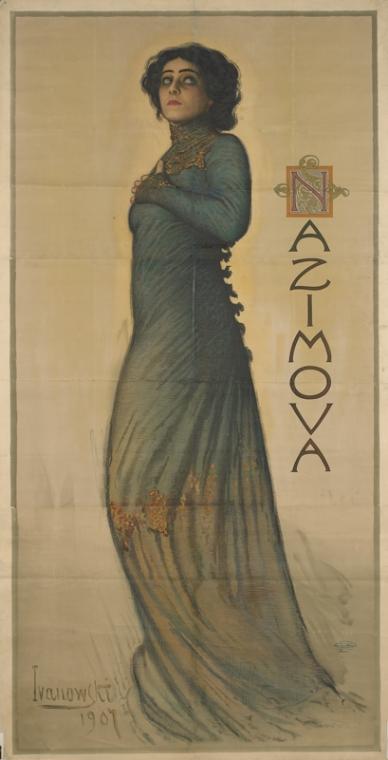
Theatrical art of the late 19th and early 20th centuries was often lovely, atmospheric stuff. Alphonse Mucha, whose Bernhardt posters I’ve seen for decades, didn’t do it all alone. Today I found this, a poster of Alla Nazimova as Hedda Gabler by Sigismund Ivanowski from 1907.
Over the weekend, I saw a man on the train reading Sun Tzu’s Art of War. Something is strange and ironic about this. My guess is that the practitioners of war no longer think they need to read the book. They think they could write it, and so we get another farrago.
Found a new movie about surveillance, justice, and AI, called Mercy. Looks like it’s about 99% less complicated than Nick Harkaway’s novel Gnomon. OTOH, it has Rebecca Ferguson. #MercyMovie
Also, FWIW, the universe may be less complicated than Harkaway’s novel Gnomon.
Besides, the writing in those shows, complex but clear, is a welcome relief. So is the talent—the high capability—of actors such as Michiel Huisman, Franka Potente, and Sidse Babett Knudsen.
Current talk about Venezuela and Colombia reminds me of a limited TV series called Echo 3. And talk of Greenland and Denmark reminds me of a series called Borgen: Power and Glory.
Some might say this means I watch too much TV. Maybe I do, but I learned things from Echo 3 and from Borgen: Power and Glory that help me understand those parts of the world.