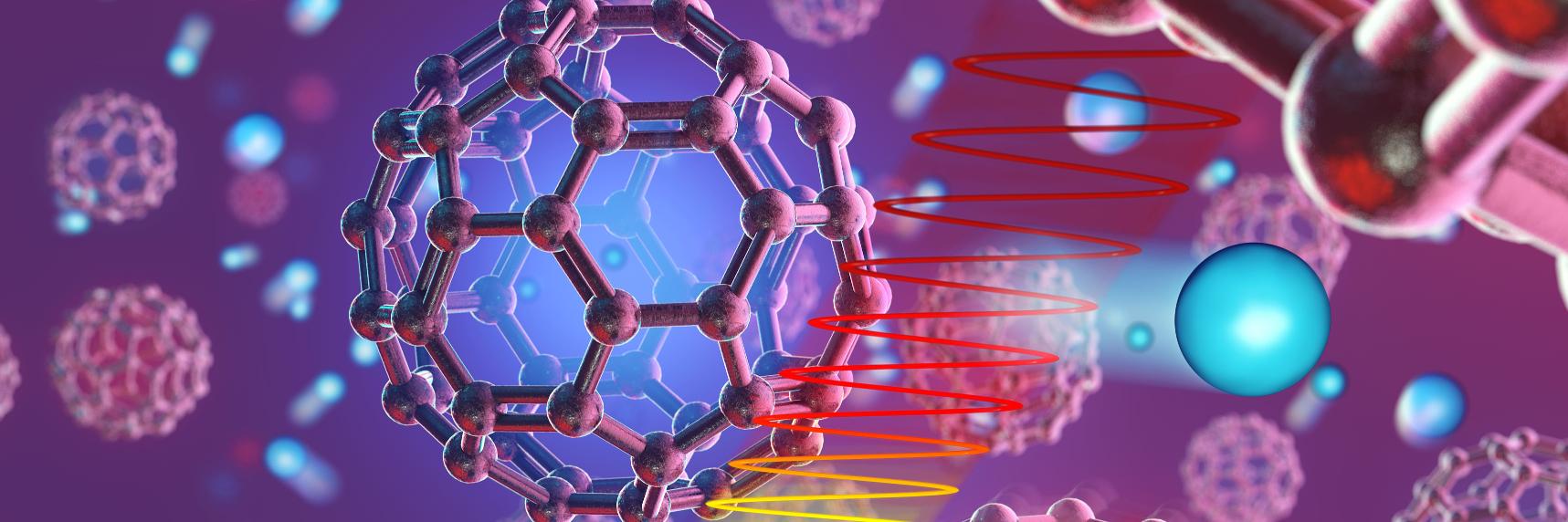
Using Lieb-Mattis states, a new entanglement-enhanced protocol for differential phase sensing in two-node quantum sensor networks is immune to common-mode noise but robust to local imperfections. The work introduces a unitary and dissipative protocol.
🔗 https://t.co/Kj0flaCdPQ
Science in action at JILA 🔬✨
Last week, more than 110 high school students put their research on display at the annual PISEC High School Poster Symposium! Students connected with CU mentors, toured labs, and practiced science communication skills.
The future of STEM is bright 🌟
Read more: https://t.co/xMHLTCdPID
@CUBoulder@CUBoulderPhys
JILA Fellow and @CUBoulder Prof. Jun Ye has been elected a Member of the American Academy of Arts and Sciences, one of the nation’s oldest and most prestigious honorary societies.
Congratulations, Prof. Ye! 👏
Read more: https://t.co/Rlvs2NkTWX
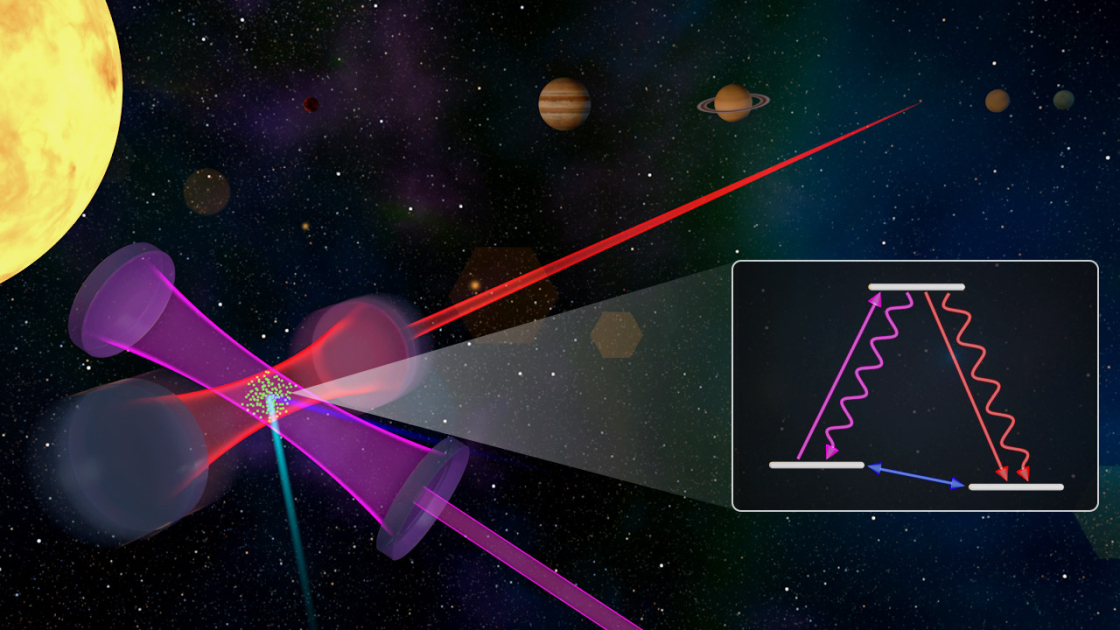
JILA researchers have proposed a new superradiant laser design for next‑generation “active” atomic clocks that overcomes two major challenges: atom heating and vibration sensitivity. Their findings were recently published in @PhysRevLett.
Read more: https://t.co/Y40Txlb8rZ
Congratulations to @CUBoulder physics graduate student Anya Grafov for being selected as one of only 16 global recipients of the 2026 @ZontaIntl Women in STEM Award! 🎉
Read more: https://t.co/1lofM5s1Cx
@CUBoulderPhys | @GradBuffs
Congratulations to JILA postdoctoral researcher Megan Bentley on being selected as a 2026 Arnold O. Beckman Postdoctoral Fellow from the @BeckmanFnd – one of just 18 researchers nationwide to receive this fellowship!🎉
Learn more about Megan and her work: https://t.co/7ewLbCYGxS
@lewandoh | @CUBoulder | @CUBoulderPhys
Exciting quantum news: @GoogleQuantumAI has named JILA fellow and @CUBoulder physics prof. Adam Kaufman to lead a new neutral atom quantum computing hardware team!
More: https://t.co/81g0eR62rL
@CUBoulderPhys
Google Quantum AI is expanding to include neutral atom research with our superconducting program. Complementary paths will accelerate our mission to build a large-scale, error-corrected quantum computer—an engineering challenge we are excited to tackle. https://t.co/nSV5VTi5v7
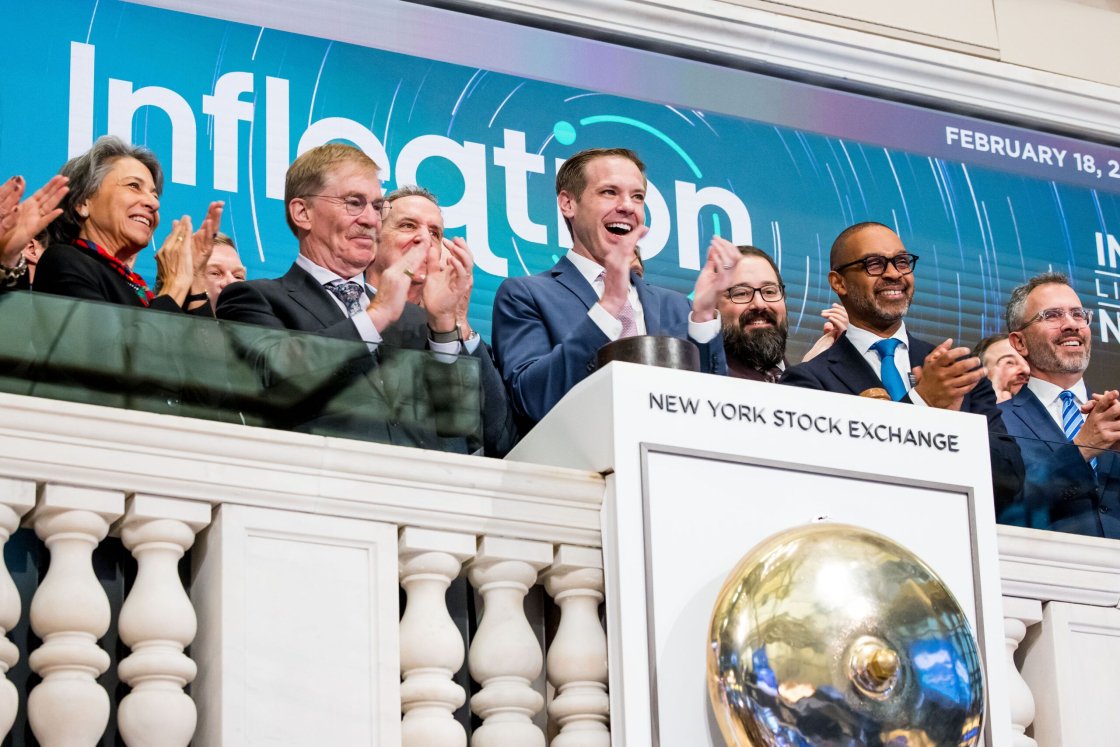
JILA Fellow and @CUBoulder Professor Dana Anderson is celebrating a major milestone as @infleqtion, the quantum technology company he founded, officially went public on the New York Stock Exchange! 📈
Read more: https://t.co/OTGsN4XT6G
Image credit: Infleqtion
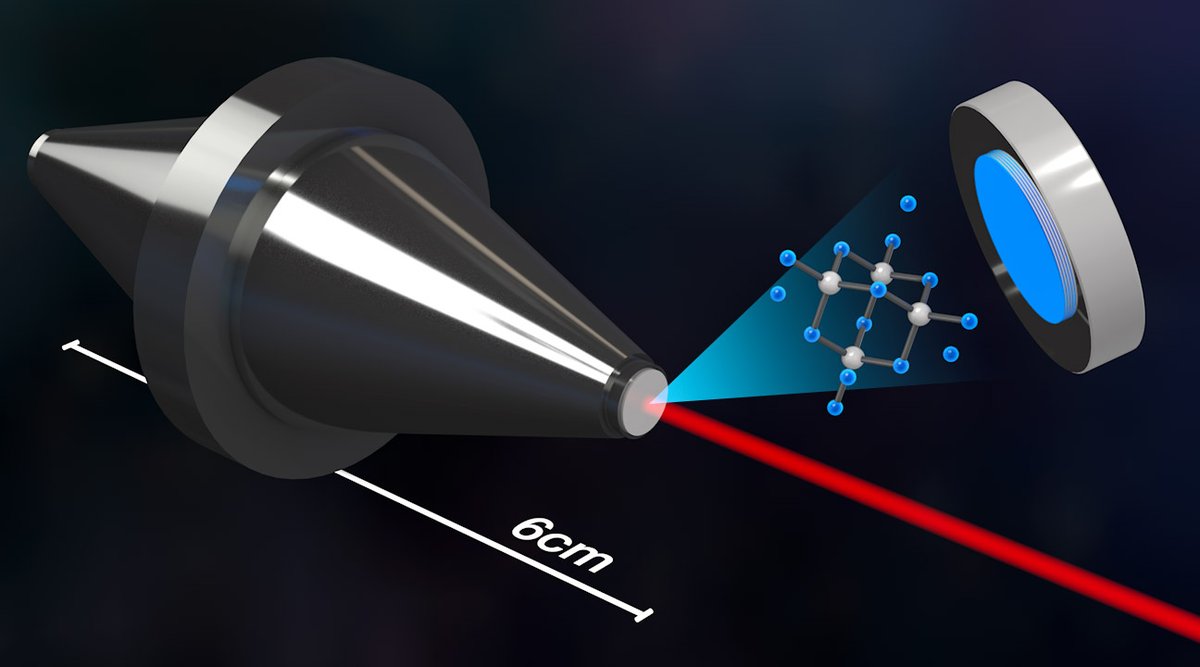
JILA researchers, working with collaborators in Germany, have demonstrated that new crystalline mirror coatings can dramatically reduce atomic‑level noise inside optical cavities, allowing lasers to reach record‑breaking frequency stability.
Read more: https://t.co/asUHhNZcg1
@CUBoulder | @NIST | @CUArtsSciences | @CUBoulderNews
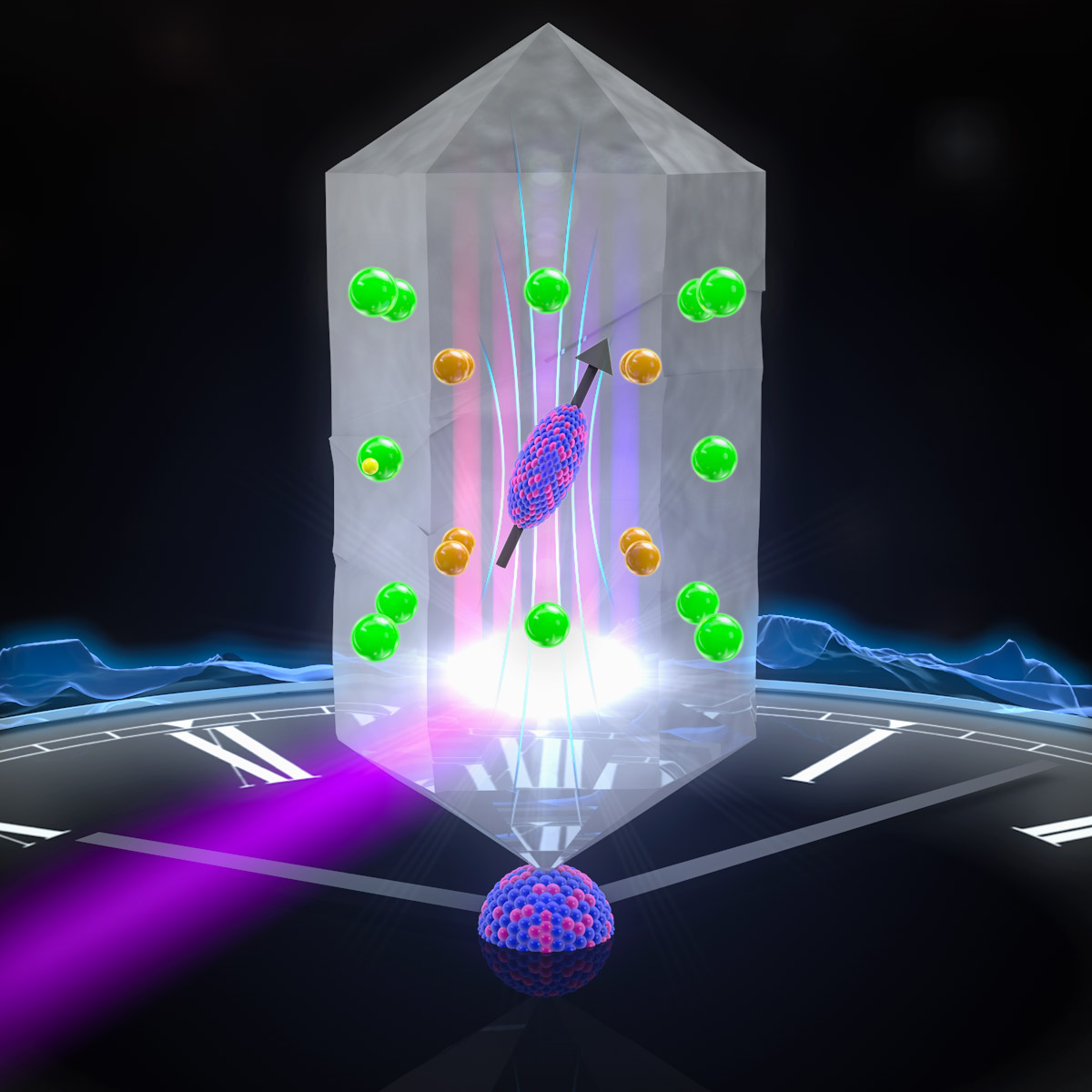
JILA researchers just took a major step toward next‑gen nuclear clocks. In a new @Nature study, @JunYeJILA's team tracked thorium‑doped crystals for nearly a year and found remarkably stable nuclear transitions—key for ultra‑precise, compact clocks.
Read more: https://t.co/W7jkeqo2up
@NIST | @CUBoulder | @CUBoulderPhys | @CUArtsSciences
JILA is proud to announce that Dr. Kai Li, a researcher in the Jun Ye Group, has been named the recipient of the 2026 @EuropeanXFEL Young Scientist Award. This prestigious honor is awarded annually to an early-career scientist who has made exceptional contributions through experiments conducted at the European X-ray Free-Electron Laser (XFEL), one of the world’s most advanced facilities for probing matter on atomic length and time scales.
https://t.co/3NQ24fV54J
JILA & NIST Fellow Jun Ye named a Clarivate Highly Cited Researcher for the 12th consecutive year—placing him among the top 1% of scientists worldwide.
His work in precision measurement & quantum science continues to shape the future.
https://t.co/mtbKgFn4dD
A team led by JILA and @NIST Fellow Jun Ye has demonstrated a new way to boost clock precision using quantum entanglement. By making atoms "tick" in tighter unison, they’ve reduced the randomness that typically limits time measurement.
Their breakthrough surpasses the Standard Quantum Limit (SQL)—a fundamental threshold in quantum physics—thanks to a method called spin entanglement. This advancement could enhance technologies like GPS, and deepen our understanding of gravity and the universe itself.
https://t.co/yOR4ZTB3Gq
JILA is proud to continue as a key partner in the Department of Energy’s Quantum Systems Accelerator (QSA), led by Lawrence Berkeley National Laboratory.
The DOE recently announced a $625 million investment to advance the next phase of the National Quantum Information Science Research Centers. Through our work in QSA and the Q-SEnSE Center, JILA plays a leading role in developing quantum technologies that will transform science and society.
JILA Fellow Jun Ye leads our effort, joined by senior investigators Cindy Regal, Adam Kaufman, Ana Maria Rey, James Thompson, Murray Holland, and Xun Gao. Their expertise in quantum sensing, simulation, and precision measurement will help drive breakthroughs in scalable quantum platforms and real-world applications.
https://t.co/4Jkxs2j6Li
A team led by JILA Fellows and @CUBoulder professors Margaret Murnane and Henry Kapteyn has made a significant advance to make soft X-rays more accessible: they have developed an ultrastable, scalable and repeatable method for generating soft X-ray beams using a custom-built 3-micron ultrafast laser that is focused into an anti-resonant hollow-core fiber.
https://t.co/rcwYm0CqZB
Researchers led by JILA and @NIST Fellow Jun Ye have shown how to make atomic clocks even more precise by leveraging entanglement. This allows the atoms to “tick” more in sync, reducing the randomness that usually limits how precisely we can measure time.
Their results show that it’s possible to go beyond what’s known as the Standard Quantum Limit (SQL)—a fundamental barrier in quantum measurements—by using a technique called spin squeezing. This work could help improve everything from GPS systems to tests of gravity and the nature of the universe.
https://t.co/yOR4ZTB3Gq