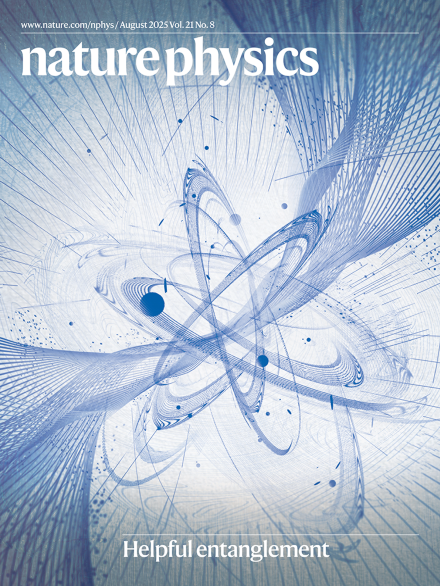
The August cover of @NaturePhysics features work by researchers affiliated @JointQuICS. The paper—coauthored by @QiZhao_Quantum and @andrewmchilds—shows that quantum simulation algorithms can be faster in the presence of entanglement.
Learn more: https://t.co/WSR5LmDylx
Congrats to @NIST & @UofMaryland physicist Michael Gullans on winning the Arthur S. Flemming Award! The prestigious honor recognizes his breakthrough work in taming noisy qubits to make practical quantum computers a reality. Learn more: https://t.co/snYMtrf3kK
The Institute for Robust Quantum Simulation is thrilled to announce that @NSF has renewed its funding, totaling $37.5 million. @Harvard is joining the RQS NSF consortium, expanding the current collaboration between @UofMaryland, @DukeU, @Princeton & @Yale. https://t.co/uTpgCCYLEU
A new study @PhysRevLett shows that some quantum states previously thought to provide the "magic" needed for quantum computation can actually be simulated efficiently by classical computers. The findings redefine scientists’ understanding of the boundary between classical and quantum computing, and identify a more precise resource required for achieving a genuine quantum advantage. The study was coauthored by @JointQuICS Fellow @nicoleyh11, and @ParticulateDave and J.J. Thio from the University of Cambridge's @DeptofPhysics. Learn more: https://t.co/r4A4tcmBMA
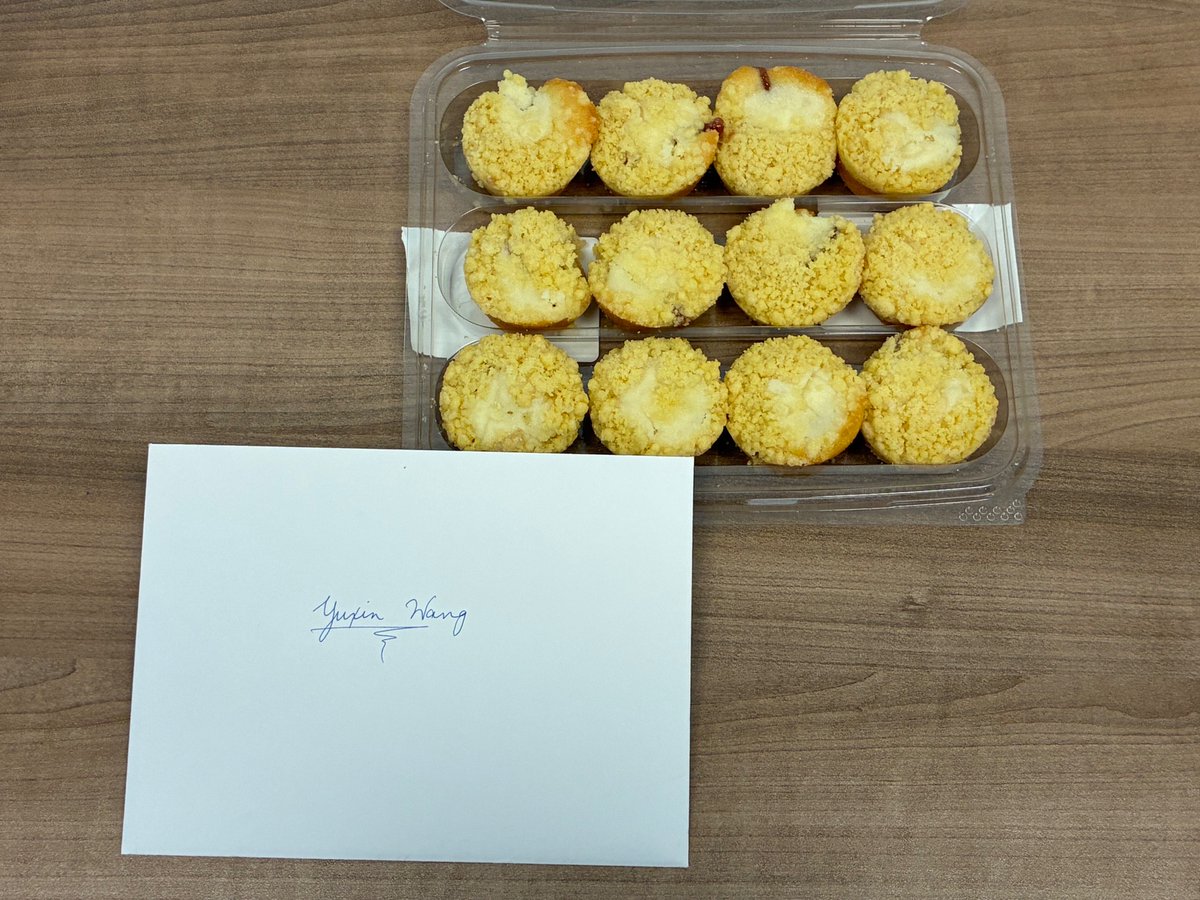
Congratulations to Yuxin Wang on 3 productive years as a Hartree Postdoctoral Fellow @JointQuICS! Thanks for sharing with us your expertise on open quantum systems and AMO physics, as well as your good cheer and generous spirit.
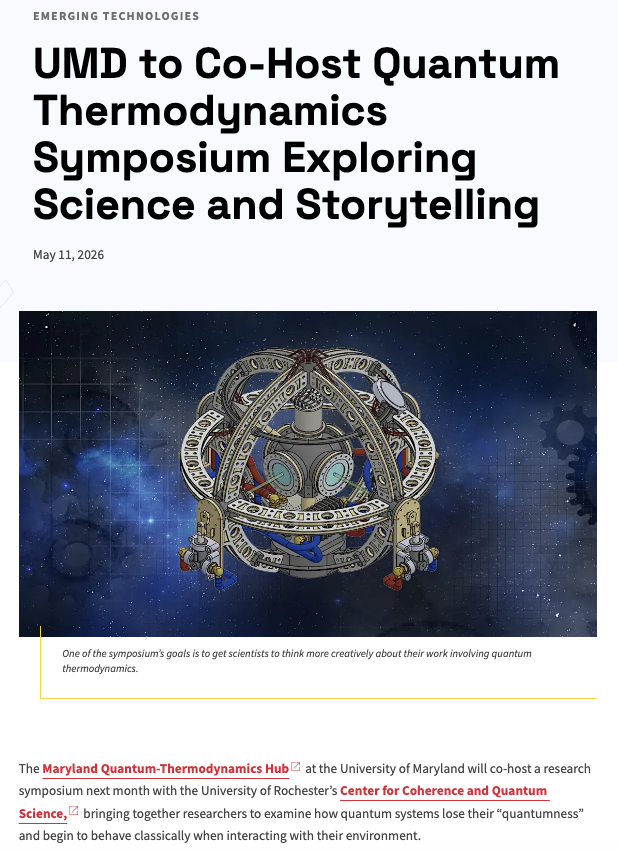
Looking forward to visiting Rochester for “Quantum Thermodynamics and Decoherence” this week. If you’re in the area, stop by at least for the public lecture! Author Mark Alpert will talk about bridging quantum science and writing. @umiacs https://t.co/ImrLjbq2Gg
Researchers @JointQuICS are on 2 of the 5 teams selected as finalists in the $5 million @xprize Quantum Applications competition, which challenges teams to demonstrate where quantum computing can deliver meaningful advantage over classical approaches.
@UofMaryland Ph.D. students Mahathi Vempati (@mahathi_vempat) and Jeffery Yu, along with their adviser Andrew Childs (@andrewmchilds), collaborated with researchers @UMich to develop a hybrid classical-quantum algorithm to solve the neutron diffusion k-eigenvalue problem, modeling nuclear criticality in heterogeneous media. Such calculations are essential for designing safe reactors, managing nuclear fuel, and modeling radiation behavior.
@JointQuICS Fellow Michael Gullans is part of a multi-institutional team that developed a framework for simulating chemistry and material properties that compute closer to underlying physics by using native fermion and boson degrees of freedom. They showed significant resource savings relative to conventional qubit-based approaches. This framework could help address pressing challenges across industry and advanced manufacturing that require material properties that depend on quantum interactions.
As the finalists enter Phase II of the competition—a stage defined by deeper technical validation, benchmarking, and execution—they will further develop their solutions with an emphasis on realistic hardware assumptions and constraints, direct quantitative comparison to leading classical methods, and clear demonstration of performance improvements and potential for real-world adoption. https://t.co/olUpEUPzDK
Congrats to Andrew Childs (@andrewmchilds) for receiving the Excellence in Research Award from the Washington Academy of Sciences (@WashAcadSciDC)! He is being recognized for his work redefining quantum algorithms and building a vibrant quantum ecosystem in the DMV. https://t.co/NYlOJo40M4 #WorldQuantumDay
The quantum-steampunk creative-writing course had a treat when Shayan Majidy came to guest-lecture about quantum computers...and he was joined by the Power Rangers of quantum computing. @JointQuICS@UMDPhysics@UMDEnglish@umdcs@ChemBiochemUMD
Announcing the symposium Quantum Thermodynamics and Decoherence! Registration is free and now open. Highlights include a keynote by a physics-inspired novelist and poster-session prizes for students/postdocs. Join us in New York June 3–4! https://t.co/MZPrAUjR6S
Collaborators and I noticed that many quantum metrologists apply effective time reversals, but in (sometimes radically) different ways and often without knowing of each other's work. This perspective bridges the gaps and highlights new ones. https://t.co/6ISst0NrM4
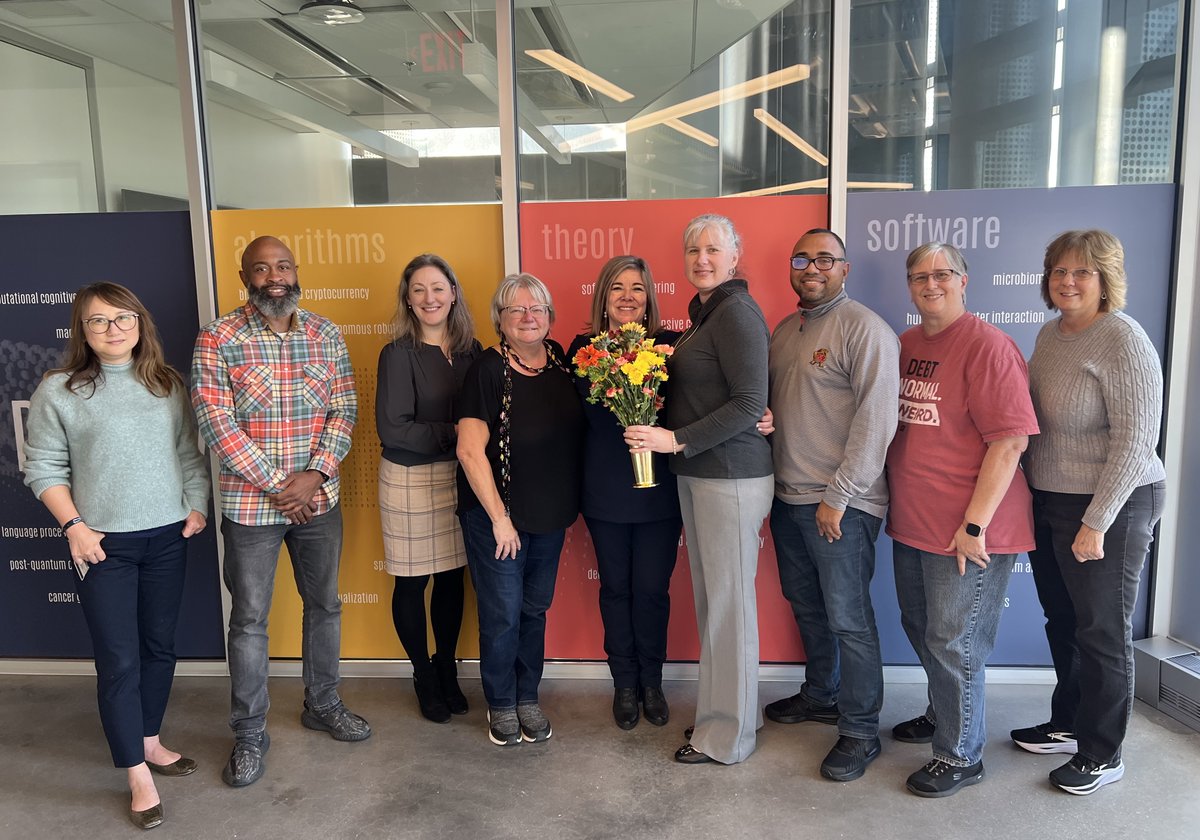
After nearly 30 years of working in the @umiacs business office, Yerty Valenzuela is retiring. As director of research program administration, Yerty has been a cornerstone of UMIACS operations, supporting research programs and managing key accounts with dedication and expertise. Congratulations to Yerty on her retirement!
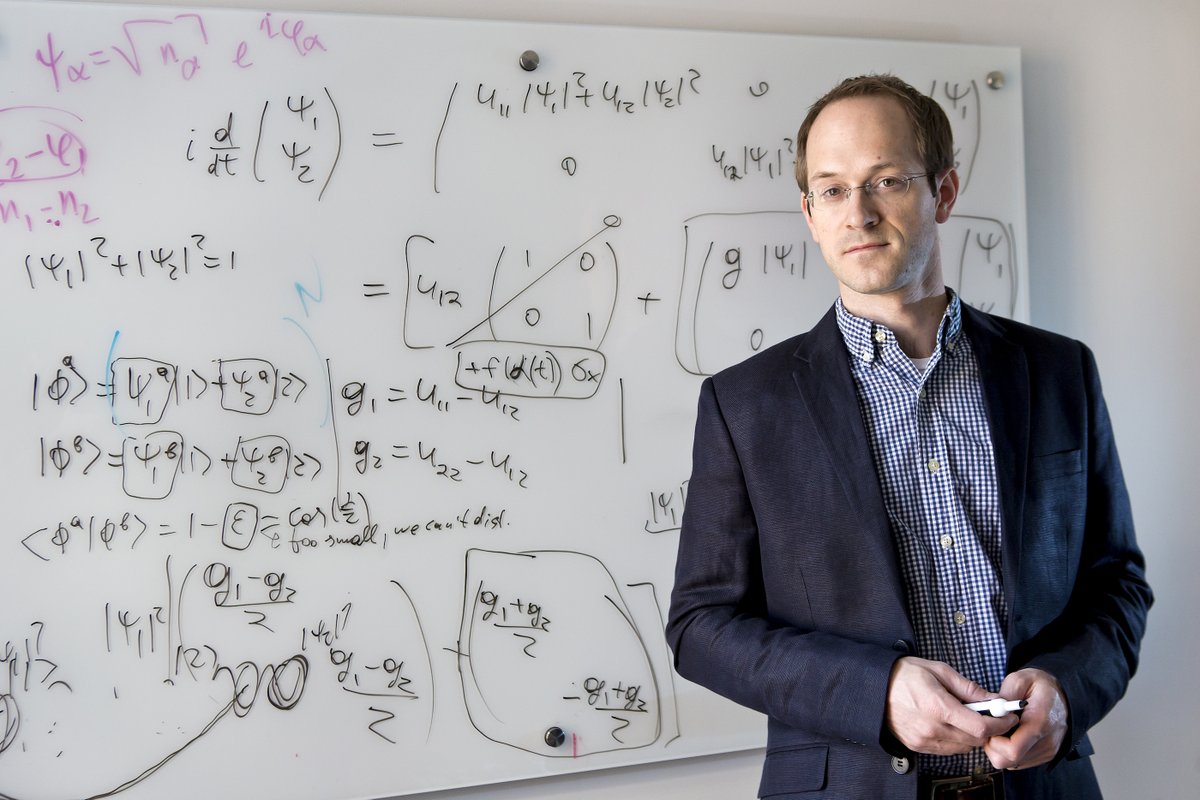
Watch the latest #KITP Blackboard Lunch talk by Michael Gullans (@jointquics) and learn about "The limits and applications of noisy quantum dynamics" https://t.co/qujW65wf3j
Most quantum information scientists detest the noise that erodes the performance of quantum computers. @JointQuICS postdoctoral fellow Yuxin Wang sees the glass as half-full: noise is a fascinating subject to study. From this week's @JQInews Seminar.
More than $5 million in new funding from several private companies—including @Fidelity and @NormalComputing—will expand Maryland’s Quantum-Thermodynamics Hub, co-led by Nicole Yunger Halpern (@nicoleyh11), and support it for three more years. Read more: https://t.co/wuptEMTDLP
New work by researchers @NIST & @JointQuICS to make entangled qubits more robust against noise, and therefore a promising route to real-world quantum sensors, was published @PhysRevLett. The paper's coauthors are Cheng-Ju (Jacob) Lin, Zi-Wen Liu, Victor Albert (@victorvalbert) and Alexey Gorshkov.
David Gross (Cologne) talks about SDP based quantum algorithms. Take home: hidden constants matter. Even if there is an asymptotic speedup in your favorite use case, it may still not be in the parameter regime that is relevant to the problem size you're interested in.
This in-person, public @montgomerycoll lecture features NIST & @JointQuICS researcher Carl Miller:
Behind the Q-Ball: Quantum Physics, Games & the Re-Invention of Cryptography
🕡Sept. 11, 6:00pm ET
📍Globe Hall, High Technology and Science Center, Germantown, MD
Jacob Taylor joined Daniel Carney (@four_form) & Manthos Karydas of @BerkeleyLab to rethink gravity. In a paper published in @PhysRevX, they propose new “toy models” where gravity emerges from quantum particles—no gravitons needed. Learn more: https://t.co/CY1dh8tJx3
We had a blast hosting The Schrödinger Sessions Revisited workshop earlier this month thanks to support from the @APSphysics Innovation Fund (and in honor of @QuantumYear2025). Quantum physics doesn't have to be spooky! https://t.co/TguWhUZa9D @UMDPhysics@UMDscience@NIST