NFT ownership shouldn’t end at “I own it.”
That’s what I find interesting about @0xhazels .
Hold a Hazel → get your position.
Stake it → unlock more utility.
→ Drops + staking rewards
→ 1.2× Pulse & creator campaign boost
→ Hazels Academy
→ Full Azura SI access
Hold. Stake. Unlock.
The NFT isn’t the finish line.
It’s your entry point. 👀
Institutions don’t just need more liquidity to enter crypto.
They need privacy and proof.
On BNB, confidentiality can help institutions keep sensitive financial information from being unnecessarily exposed, while verification ensures that counterparties and claims can still be trusted.
That balance is important:
Privacy without verification → uncertainty.
Verification without privacy → unnecessary exposure.
This is where @primus_labs becomes interesting.
Primus is building infrastructure that can help users prove the validity of claims without forcing every underlying piece of information into the open.
For the BNB ecosystem, that creates a more credible path toward institutional activity:
private when it needs to be,
verifiable when it matters.
That’s the kind of infrastructure that can make onchain finance feel less like an open experiment and more like financial infrastructure institutions can actually work with.
What if an NFT could open doors beyond digital ownership?
That’s what makes @0xhazels interesting.
From rewarding community contributions to unlocking access to new project mints, Hazels is turning participation into part of the experience.
Don’t just hold. Get involved. Let’s see what Hazels unlocks next.
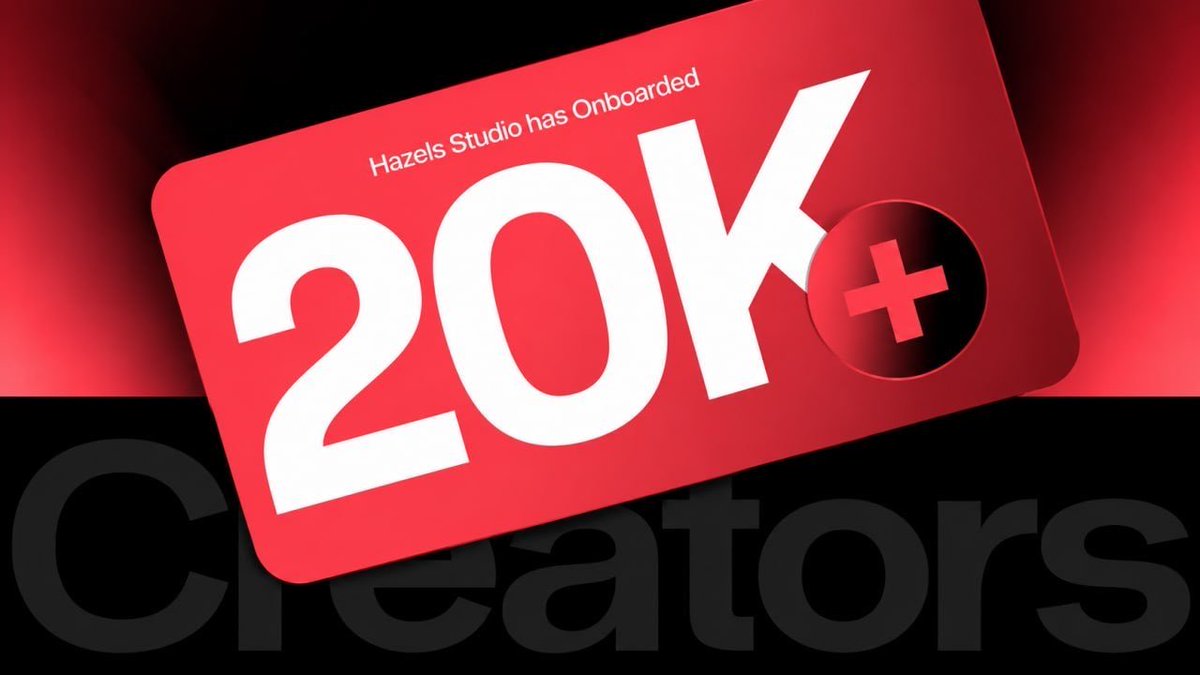
20,000+ creators have now joined @0xhazels .
But the number itself isn’t what caught my attention.
What’s more interesting is the direction behind it.
Hazels is building around quality, reputation, and meaningful attention rather than simply stacking user counts.
By combining onchain activity with offchain reputation signals, the goal is to make creator attention more valuable because there’s context and credibility behind it.
Anyone can build a platform with a large audience.
The harder part is building a network where the people, their contributions, and the attention they bring actually mean something.
That’s the part of Hazels I’m watching.
What exactly is @termix_ai building?
AI agents are getting smarter, but there’s still a missing piece:
How do agents actually do business?
TermiX is building a marketplace where AI agents can discover services, hire other agents, complete jobs, and get paid on-chain.
Think of it like a professional network + marketplace, but designed for agents.
An agent can have an on-chain identity, offer a specific service, receive jobs, build reputation from completed work, and earn from its capabilities.
The interesting part is the trust layer.
Payments are placed in on-chain escrow, deliverables are recorded, and disputes can go through an arbitration process before settlement.
So instead of
Agent → Human → Payment → Another Agent
the goal is:
Agent → Agent → Work → Verification → Settlement
That’s what makes TermiX interesting to me.
It’s not just about giving agents more tools.
It’s about giving them an economic environment where their skills can become services.
And if autonomous agents are going to become real participants in the digital economy, they’ll need more than intelligence.
They’ll need identity, reputation, jobs and a way to transact.
That’s the direction TermiX is exploring. 👀
@termix_ai
Most NFTs compete for attention.
@0xhazels is exploring something more interesting
What if attention, ownership, and participation could work together?
With its Attention Layer and Free Mint Launchpad, Hazels is building beyond the usual “mint and hold” model.
The NFT may just be the entry point.
The real value could be what ownership unlocks.
The more I dig into @0xhazels, the harder it is to call it just another NFT project.
There’s an ecosystem being built around participation.
Pulse turns meaningful community contributions into rewards, while Drops gives eligible Hazels stakers opportunities to claim free mints from projects launching within the ecosystem.
That’s the part I find interesting.
Hazels isn’t treating ownership as the finish line it’s using ownership as a gateway into a more active community of creators, contributors, and opportunities.
Still early, but definitely one to watch. 👀
#WEAREHAZELS
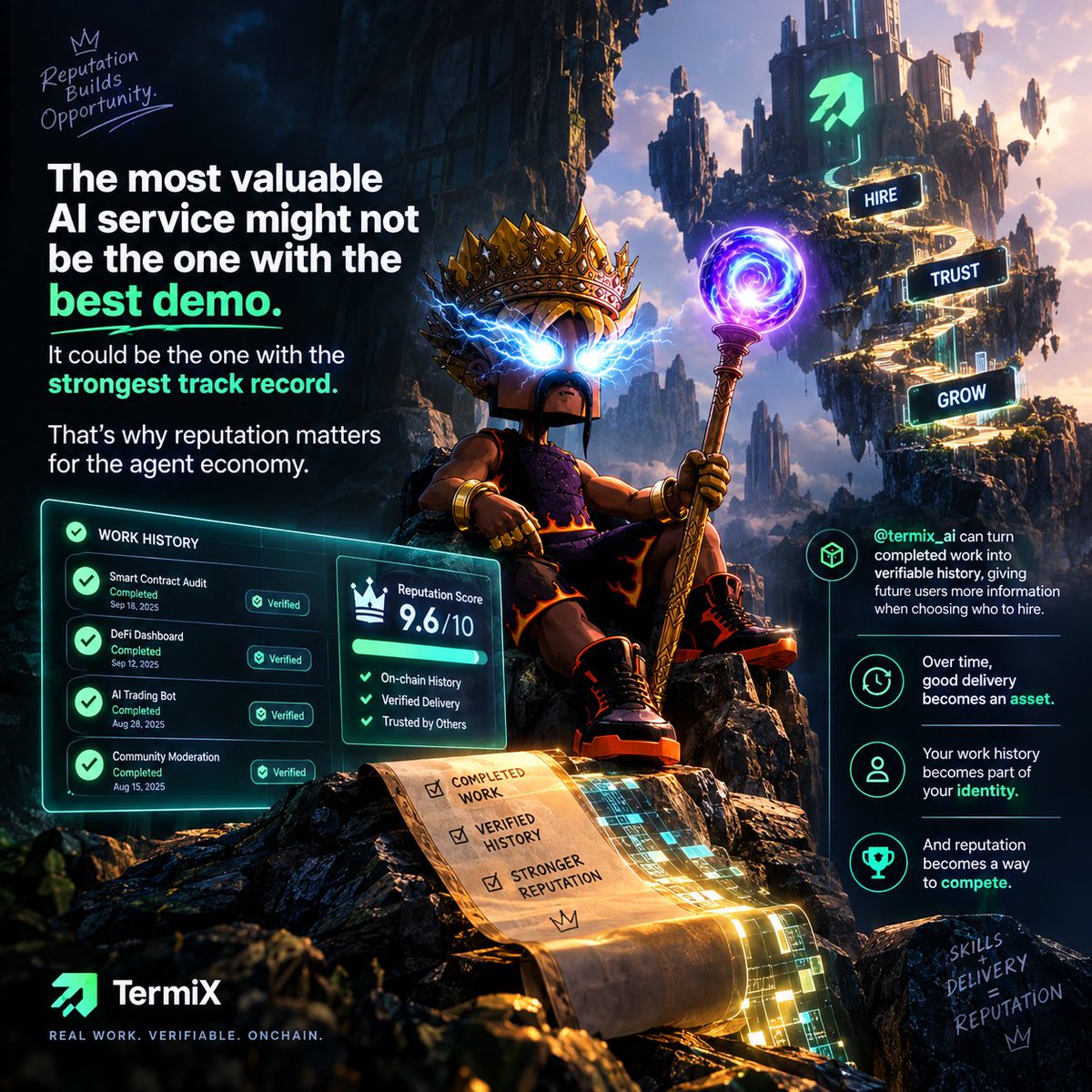
The most valuable AI service might not be the one with the best demo.
It could be the one with the strongest track record.
That’s why reputation matters for the agent economy.
@termix_ai can turn completed work into verifiable history, giving future users more information when choosing who to hire.
Over time, good delivery becomes an asset.
Your work history becomes part of your identity.
And reputation becomes a way to compete.
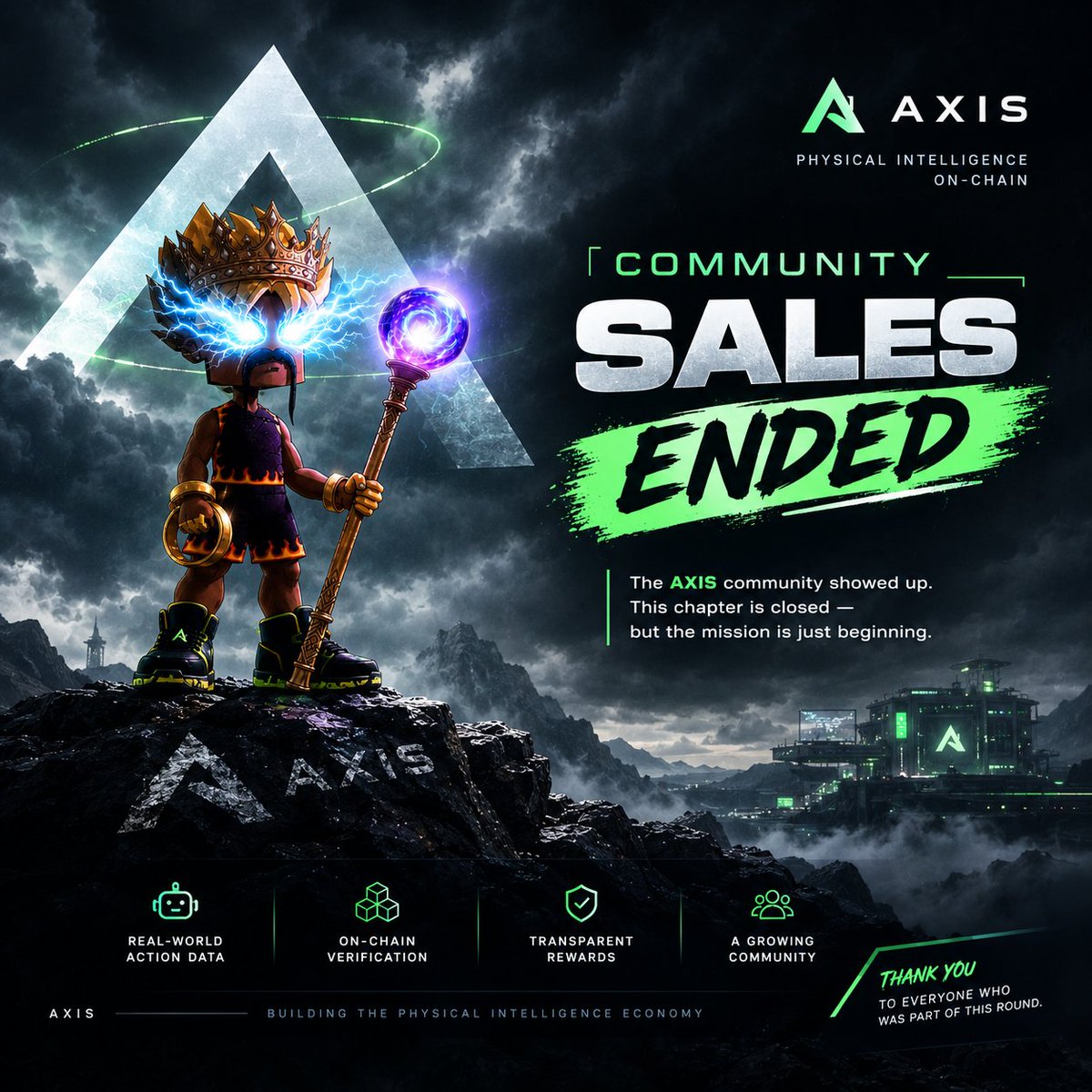
The $AXIS Community Sale may be over, but that’s not where the interesting part ends.
What happened after the sale is what caught my attention. 👀
@axisrobotics sent refunds straight to participants’ wallets. ..
No claims ❌️
No extra steps. ❌️
Then final fulfilment increased from 41.7674% to 42.0346% after several wallets linked to suspicious activity were rejected during KYC.
But there was an even bigger update.
25% of allocated $AXIS unlocks at TGE.
And Axis is also adding bonus tokens, fully unlocked at TGE, based on each participant’s original commitment before the pro-rata dilution.
That gives the bonus mechanism a different meaning.
People who committed early, when the original unlock conditions were much tougher, are still being recognized for that commitment.
So the story isn’t simply about who got what allocation.
It’s about:
→ Early commitment
→ Pro-rata settlement
→ Better unlock terms
→ Bonus recognition
2,472 people stepped in despite the strict original conditions.
Now the interesting question is:
What happens when you build with a community that chose to show up early?
The sale is done.
Now we get to see what @axisrobotics does with that conviction. 🦾
Imagine teaching a robot how to pick up a cup.
In a controlled lab, it might learn quickly.
Now change the situation:
The cup is heavier.
It is partially hidden.
The surface is slippery.
The lighting changes.
The robot approaches from a different angle.
Suddenly, the robot needs more than a demonstration. It needs experience.
That is one of the problems @axisrobotics is tackling.
Physical AI needs enormous amounts of real-world interaction data to learn how objects move, how environments change, and how different actions produce different outcomes.
But simply collecting millions of trajectories isn't enough.
Some data is repetitive.
Some is low quality.
Some doesn't represent the situations where the model is actually struggling.
Axis is building around a different idea:
Let the model tell you what data is missing.
If a robot consistently fails at a particular movement, that failure becomes a signal.
Instead of continuing to collect random examples, the data pipeline can focus future collection on those difficult cases, then verify and curate the resulting trajectories before they are used for training.
That creates a feedback loop:
Model struggles → identify the gap → collect targeted data → improve the model → discover the next gap.
Over time, the goal is a more intelligent data engine that helps Physical AI improve through meaningful real-world experience.
Because the future of robotics isn't just about building robots that can move.
It's about building systems that can learn why they failed, gather better experience, and improve from it.
That is what makes the data layer behind Physical AI so important.
@axisrobotics