Chairman Bilawal Bhutto Zardari
Your illustrious mother, Shaheed Mohtarma Benazir Bhutto, addressing the 50th Session of the UN Commission on Human Rights in Geneva in February 1994, as Prime Minister of Pakistan, made a moving appeal:
“Open your hearts to the tragedy of Kashmir.”
She referred to the presence of 600,000 Indian security personnel in Kashmir.
Many tragedies have unfolded since then. Today, we face the prospect of a mini-tragedy in Rawalakot, Azad Kashmir, which we must not allow to happen.
The PPP has been part of the Government in Azad Kashmir and is now in opposition. As you rightly observed, one of the most patriotic responsibilities in politics is to perform the role of opposition.
We expect you to follow in the footsteps of your grandfather, grandmother and mother, and uphold the fiduciary responsibilities towards the people of Jammu and Kashmir, as well as the historical and constitutional obligations arising under the UN framework on Kashmir.
Regrettably, the PPP appears to have drifted away from the depth of its historical commitment to the Kashmir cause. This distance needs to be addressed.
The balance between the responsibilities apportioned under the Karachi Agreement of 1949 and the representative authority of the elected institutions of Azad Kashmir has been disturbed. It is important to restore that balance in accordance with the constitutional framework and the UN template on Kashmir.
We urge you to exercise your political influence to avert any further tragedy in Rawalakot and elsewhere in Azad Kashmir, and to promote an inclusive political process that respects the elected representatives, democratic institutions and all schools of political opinion.
The people of Azad Kashmir deserve political engagement, constitutional responsibility and dialogue — not confrontation or another tragedy.
@BBhuttoZardari@PPP_Org@sherryrehman
India’s Promise of Religious Equality Must Be Demonstrated in Its Courts
The Jammu and Kashmir Council for Human Rights (JKCHR) expresses serious concern at reports that a Gujarat court cited the Vedas, Manusmriti and other Hindu religious texts while sentencing three Muslim men to life imprisonment for cow slaughter.
The reported sentences were imposed under legislation. Nevertheless, the invocation of religious doctrine in explaining such severe punishment raises an urgent question: can every citizen have confidence that criminal justice is administered through impartial constitutional reasoning, irrespective of faith?
Respect for Hindu religious beliefs is entirely compatible with demanding that courts determine guilt through evidence and justify punishment through constitutionally valid law and proportionate reasoning. Religious reverence must not become an aggravating standard imposed upon people who do not share that belief.
India has assured the United Nations of its religious diversity, constitutional protections and capacity to correct its shortcomings. Those assurances must be tested by the treatment of vulnerable people, including Muslims, Dalits and other marginalised communities. The participation of minority representatives in international delegations cannot substitute for effective protection at home.
JKCHR calls for effective access to appellate review of these convictions and sentences, including scrutiny of the religious reasoning and the proportionality of life imprisonment. It also calls for examination of whether cow-protection legislation and its enforcement produce discriminatory outcomes.
India’s claim that its institutions can correct injustice now requires a concrete demonstration. Equal citizenship must be experienced in the courtroom as well as proclaimed at the United Nations.
Dr. Syed Nazir Gilani
President, Jammu and Kashmir Council for Human Rights
In Special Consultative Status with the United Nations ECOSOC
JKCHR MESSAGE ON BLACK DAY — 27 OCTOBER 2026
India Must Fulfil Its Commitment at the United Nations: Protect the People of Jammu and Kashmir and Let Them Freely Determine Their Future
Addressed to
the Government and people of India,
the Government and people of Pakistan, and
the United Nations
On 27 October 2026, seventy-nine years after Indian troops entered Jammu and Kashmir, the Jammu and Kashmir Council for Human Rights (JKCHR) calls for Black Day remembrance to become a renewed demand for protection, accountability and peaceful resolution through the freely expressed will of the people.
We recall the words of India’s representative, Gopalaswami Ayyangar, before the 227th meeting of the United Nations Security Council on 15 January 1948.
India explained that it had approached the Council under Article 35 of the UN Charter to invoke its assistance, prevent armed conflict and protect lives. It spoke of its hesitation and deepest regret, its commitment to exhaust every possible resource for avoiding war, and the centuries of common living, culture and traditions connecting the peoples of India and Pakistan.
Most significantly, India envisaged the people of Jammu and Kashmir being enabled:
“to carve out for themselves by a free choice of their own, the economic and political destiny that awaits them.”
India also urged that action to stop the fighting should protect life, property and honour and avert war between the two neighbouring States. Its appeal was explicit:
“Not merely urgency but immediacy should characterise the action.”
To the Government of India:
These words form part of your own presentation to the international community.
JKCHR calls upon you to honour their substance: protect the life, liberty, property and dignity of the people of Jammu and Kashmir; respect their political agency; and engage in a peaceful process consistent with the relevant United Nations resolutions. The passage of time cannot substitute for the people’s free choice.
To the people of India:
We appeal to your democratic conscience. India’s representative invoked your shared history with Pakistan and placed the protection of Kashmir’s people before the Security Council.
Upholding that humanitarian purpose and the promise of free choice would honour the principles proclaimed in your name.
To the Government of Pakistan:
Translate support for Kashmir into sustained, peaceful and accountable diplomatic action within the agreed United Nations framework. Keep the rights, safety and freely expressed wishes of the people of Jammu and Kashmir at the centre of policy. Their future must not be reduced to an understanding between governments that excludes them.
To the people of Pakistan:
Continue your solidarity through informed advocacy, respect for the diversity of Kashmir’s people, and an unwavering commitment to their right to determine their future peacefully.
To the United Nations:
India approached the Security Council seeking assistance to prevent war and save lives. JKCHR calls for renewed diplomatic engagement to advance the relevant resolutions, protect human rights and facilitate the promised free and fair plebiscite.
Seventy-nine years after 27 October 1947, remembrance must carry a practical purpose: protection of the people, prevention of war, and fulfilment of their right to self-determination.
The people of Jammu and Kashmir are the holders of rights. Their free choice must guide the settlement of their future.
Dr. Syed Nazir Gilani
President
Jammu and Kashmir Council for Human Rights — JKCHR
(In special consultative status with the United Nations ECOSOC)
UN record reference: S/PV.227, 15 January 1948.
@UN@antonioguterres@OIC_OCI@OICatUN@narendramodi@CMShehbaz@DrSJaishankar@ForeignOfficePk@PTI_News@kmskashmirnews@RahulGandhi@mmansari52@OmarAbdullah@farooq_pm@tariqfarooq60@MirwaizKashmir
26 October 2026
FAROOQ ABDULLAH'S STATEMENT ON PAKISTAN: AN INSURANCE FOR THE PROTECTION OF KASHMIR'S PEOPLE AND IDENTITY
The Gupkar Declaration of 4 August 2019 provides an important context for understanding Dr. Farooq Abdullah's recent statement at Baramulla.
The Jammu and Kashmir Council for Human Rights (JKCHR) considers Dr. Farooq Abdullah's observation that Pakistan's continued international advocacy of the Kashmir question provides a measure of protection to Kashmiris to be consistent with the apprehensions collectively expressed by the signatories of the Gupkar Declaration.
On 4 August 2019, the National Conference and other major political parties warned that the abrogation of Articles 370 and 35A, unconstitutional delimitation and trifurcation of the State would constitute aggression against the people of Jammu, Kashmir and Ladakh.
The developments of 5 August 2019, including the removal of constitutional protections, division of the State, restrictions on civil liberties and detention of political leaders, gave substantial grounds for those apprehensions.
The question is not one of allegiance to Pakistan. It is whether international attention and accountability can provide an additional safeguard against the erosion of Kashmiri identity, dignity, political rights and the protections associated with the accession arrangements of 27 October 1947.
JKCHR maintains that Pakistan's advocacy of the unresolved Kashmir question at the United Nations serves as an important diplomatic reminder that the future of Jammu and Kashmir has an international dimension and cannot be reduced exclusively to domestic constitutional arrangements.
The people of Kashmir have a distinct title to self-determination. India and Pakistan have their respective claims, which must be considered within the framework of the United Nations resolutions and the rights of the people concerned.
Dr. Farooq Abdullah's remarks should therefore be examined in the context of the Gupkar Declaration and the experience of the people since August 2019, rather than being treated simply as an expression of political loyalty to another country.
International advocacy is not a substitute for the rights of Kashmiris. It is one possible safeguard for ensuring that those rights remain visible, protected and subject to international scrutiny.
JKCHR respectfully reminds the National Conference and the other signatories of their collective undertaking of 4 August 2019 to defend the identity, autonomy and constitutional guarantees of the people of Jammu, Kashmir and Ladakh.
The protection of the people, their dignity, their habitat and their right to determine their political future must remain the central concern.
Dr. Syed Nazir Gilani
President
Jammu and Kashmir Council for Human Rights (JKCHR)
NGO in Special Consultative Status with UN ECOSOC
#JKCHR #FarooqAbdullah #GupkarDeclaration #Kashmir #HumanRights #SelfDetermination #unitednationsday
@UN@antonioguterres@JKNC_@OmarAbdullah@GulamNabiAzadK2@MehboobaMufti@tarigami@sajadlone@MuzzafarShah1@mmansari52@OIC_OCI@OICatUN
JKCHR endorses Farooq Abdullah’s recognition of Pakistan’s protective advocacy on Kashmir
Jammu and Kashmir Council for Human Rights (JKCHR) endorses Dr Farooq Abdullah’s statement at the Baramulla gathering on 24 October 2026 that Kashmir remains unresolved and that Pakistan’s continued international advocacy helps protect Kashmiris and their identity.
JKCHR regards Pakistan’s support for Kashmiris’ right to a free and impartial vote under United Nations auspices as an essential insurance against demographic engineering, the erosion of Kashmiri identity, and harm to the people and habitat of Jammu and Kashmir.
The accession accepted by India on 27 October 1947 carried a commitment to reference to the people. That promised popular endorsement remains outstanding. India’s subsequent commitments at the United Nations placed the determination of the State’s future within an internationally agreed plebiscite framework.
India must honour the UNCIP template of 13 August 1948 and 5 January 1949. Security Council Resolution 91 of 30 March 1951 expressly affirms that a constituent assembly cannot substitute for the people’s decision through a free and impartial plebiscite under UN auspices. Domestic constitutional measures cannot fulfil that outstanding promise.
The OHCHR Kashmir reports of 14 June 2018 and 8 July 2019 called for full respect for the right of self-determination of the people of Kashmir as protected under international law.
JKCHR demands that the Government of India implement these recommendations, protect fundamental rights, and refrain from measures that prejudice the people’s future choice.
Pakistan’s support is an insurance for the protection of Kashmir’s people. The future of Jammu and Kashmir must be determined by its people through the promised free and fair vote.
Dr Syed Nazir Gilani
President, JKCHR
(In special consultative status with the United Nations ECOSOC)
#Kashmir #SelfDetermination #HumanRights #JKCHR
@UN@antonioguterres@ohchr@OICatUN@JKNC_
Kashmir - Wokplace Dignity
JKCHR — Public Message on Dignity and Administrative Accountability
JKCHR strongly condemns the abusive language, public humiliation and threats of suspension reportedly directed by IAS officer Kumar Rajeev Ranjan at JKAS officer Beenish Wani during an official online meeting.
A subordinate in service is not subordinate in human dignity.
Supervisory authority carries a heightened responsibility to listen, exercise restraint and correct with fairness. Insults and shouted assertions of rank betray that responsibility. Threatening disciplinary action when an officer objects to degrading language raises serious concerns about retaliation and misuse of authority.
The reported behaviour falls far below the standards expected of a senior civil servant and sets a damaging example for every officer attending the meeting. Administrative disagreement must be addressed through reasoned discussion and fair procedure.
JKCHR calls upon the competent authorities to preserve the complete recording, undertake a prompt and impartial inquiry, protect Ms Wani against retaliation, and ensure appropriate accountability. If substantiated, the conduct warrants disciplinary action and an unequivocal apology.
Every employee, irrespective of rank, gender, religion or regional identity, deserves a workplace free from intimidation and humiliation.
Public office is a trust. Seniority increases responsibility; it does not confer a licence to abuse.
Dr. Syed Nazir Gilani
President, Jammu and Kashmir Council for Human Rights
@manojsinha_@OmarAbdullah@MehboobaMufti@MuzzafarShah1@tarigami
#JKCHR #WorkplaceDignity #AdministrativeAccountability
Raja Farooq Haider Khan sahib @farooq_pm Thank you for your kind hospitality, warmth and inspiration.
I was duly reminded of Dr. P Graham's description that we are "People of Legend, song and story, associated with snow-capped mountains, beautiful valleys and life-giving waters".
We truly deserve Graham's description.
I was touched by your concern for the people and the habitat.
You made me travel through villages and individual description of people was so sweet and great.
Budh Singh Khadniyari and his famous gun, that you have today, is our great history. I felt that you are spiritually connected with the habitat and people.
You punctuated your discussion with sentences in Kashmiri language. It was deeply touching.
Let us not forget that the State is fractured. People are divided and distributed.
Your claim that world will listen to you is just and true.
Together, we have a duty to give meaning to our suffering.
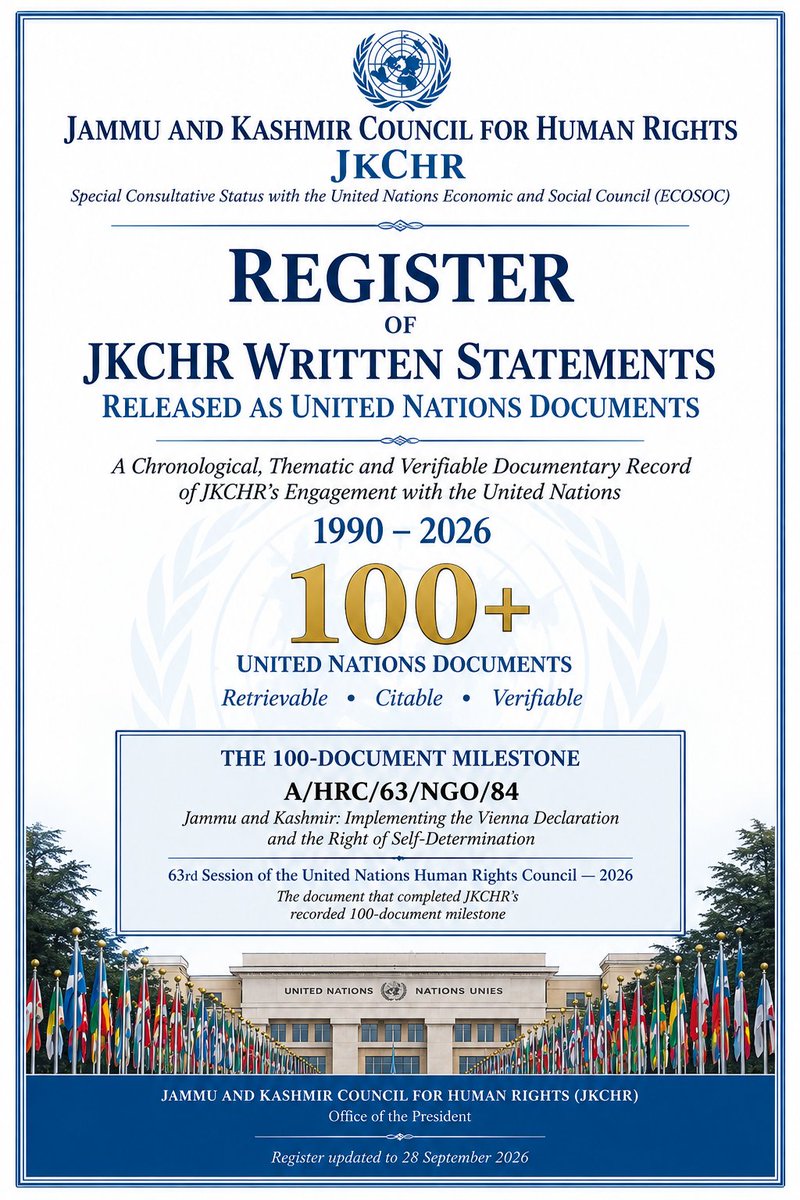
JKCHR has completed 100th statement/document on Kashmir. These have been released as UN General Assembly Documents on Kashmir.
These are retrievable, verifiable and citable.
Thank you once again for your kind hospitality.
Dr. Syed Nazir Gilani
President JKCHR
In Special Consultative Status with the United Nations
ایک کہانی
جموں وکشمیر
اور
آزاد کشمیر
جموں وکشمیر میں 5 اگست 2019 کا بھارتی ایکشن ممکن نہیں تھا اور نہ ہی ریاست کی خصوصی حیثیت، شناخت، جھنڈا، قوانین، آئین اور زبان پر دھاوا بولا جاتا، اگر 2014 کے انتخاب کے بعد مفتی محمد سعید کی سیاسی جماعت پیپلز ڈیموکریٹک پارٹی PDP بھارتیہ جنتا پارٹی BJP کے ساتھ اقتدار کے لئے اتحاد نہ کرتی اور Agenda of the Alliance پر دستخط نہ کرتی۔
آج ریاست کے عوام لوکل اختیار سے نہ محروم ہوتے اور نہ ان کی زمین بکتی۔
آج مفتی محمد سعید قبر میں ہیں۔ اور انکی صاحبزادی محبوبہ مفتی سڑکوں کی خاک چھان رہی ہے۔
عوام کی بے توقیری اور ایک شناخت، ایک کلچر کی بربادی کی بنیاد اقتدار کی ہوس کے لئے یہ سیاسی لین دین بنا۔
آزاد کشمیر میں بھی اقوام متحدہ کی ٹمپلیٹ، آئین پاکستان کے آرٹیکل 257 اور دوسرے ایگریمنٹس کو نظر انداز کرکے اقتدار کی ہوس کے لئے لین دین شروع ہوئے۔
پاکستان کی قومی کشمیر پالیسی اور آئین میں درج Wishes of the People کی ضمانت پر کاری ضرب مقامی سیاسی قائدین کی اقتدار کی لالچ اور ہوس نے لگائی۔
پاکستان کی قومی سیاسی جماعتوں نے پاکستان میں جاری سیاسی مقابلے اور اختلاف کو آزاد کشمیر میں امپورٹ کرنے کے لئے مقامی سہارے تلاش کئے۔ ان سیاسی جماعتوں نے آزاد کشمیر کے صاف، ستھرے اور سادہ ماحول کو آلودہ اور گندلا کیا۔
آزاد کشمیر کا، مسئلہ کشمیر پر، حکومتی / ریاستی موقف اور عوام کی خدمت کا براہ راست احتسابی عمل، اتھل پتھل ہوگیا۔
مقامی سیاسی جماعتوں نے گھٹنے ٹیک دئے اور اپنی عوام کے ووٹ کی قوت پر عدم اعتماد کیا،اور پاکستانی سیاسی جماعتوں کی تابعداری قبول کی۔
اب ہمارے صدر، وزیراعظم، وزراء اور ممبران اسمبلی تابع منظوری کے پروڈکٹس Products ہیں۔ ووٹ اور الیکشن ایک رسمی کاروائی ہے۔
ان کی پہلی ترجیح مسئلہ کشمیر اور آزاد کشمیر کے عوام کی فلاح اور گوڈ گورننس نہیں بلکہ، پاکستانی سیاسی جماعتوں کے سربراہان یا ان کے نامزد اشخاص کی خوش نودی ہے۔
یہ خوش نودی، تابعداری اور لین دین کے ایک نئے کلچر کو جنم دے چکی ہے۔ درمیان کا یہ رابطہ کار سیاہ اور سفید کا مالک ہے۔
آج ہم 4 اکتوبر/24 اکتوبر 1947 کے بعد پہلی بار سیاسی امتحانی مرکز میں، بیٹھے سوالنامہ دیکھ کر پریشان ہیں۔ دنیا کی نظریں ہم پر لگی ہیں۔ ایسا ماحول اور یہ صورتحال پہلے نہیں دیکھی گئی۔
کسی کو کسی پر بھروسہ نہیں۔
پوری ریاست میں 5 صاحب دستار موجود نہیں، جو سیاہ کو سیاہ اور سفید کو سفید کہہ سکیں، فریقین کی سرزنش کریں اور بھروسے کو بحال کر سکیں۔
آزاد کشمیر رہے گا تو کراچی ایگریمنٹ بھی ہے۔
ایگریمنٹ کی شق VIII ایک راہداری ہے۔ چیف سیکرٹری اور آئی جی پولیس نے اس راہداری کی حساسیت کا احترام کرنا ہے۔ انہیں 5 اگست 2019 کے بعد کا سرینگر کا لیفٹیننٹ گورنر نہیں بننا۔
کہنے اور لکھنے کو اتنا کچھ ہے کہ بہتوں کے ایزار(ازار) بند ڈھیلے پڑ جائیں۔ لیکن احتیاط کے دامن کا خیال بھی ہے۔
کہتے ہیں کہ انت بھلا سو بھلا۔ میں انسانی حقوق کی تحریک کے ساتھ ایک طویل عرصے سے وابستہ ہوں۔ سب سے بڑا امتحان حق زیست Right to Life ہے۔ جو حقوق کی تحریک انسانی زندگی کو محفوظ نہ رکھ سکے، اس میں قیادت اور سمجھ کا کوئی معاملہ ضرور ہے۔
سٹیج کی صلاحیت اور ڈائیلاگ کی مہارت الگ الگ موضوع ہیں۔
اجارہ داری اور ہر فن مولا کی شیلف لائف بہت کم ہوتی ہے۔ اس طرز عمل میں misdirect ہونے کے چانسز chances زیادہ ہیں۔ اور ہم misdirect ہوگئے۔
لگتا ایسا ہی ہے کہ مسئلہ کشمیر کی اصل jurisprudence کو چھوڑ کر اقتدار کے لئے پاکستان کی بڑی سیاسی جماعتوں کے ساتھ آزاد کشمیر کے قائدین کا متاع درست ثابت نہیں ہوا۔
سید نذیر گیلانی
6 اکتوبر 2026
۔۔
قابل غور طرز عمل
کشمیریوں نے اپنے چراغ خود گل کئے
عدم برداشت کا پرابلم
یہ کہنا درست نہیں کہ تاج برطانیہ(انگریز) نے کشمیریوں کو مارچ 1846 میں مہاراجہ کو فروخت کیا۔
اصل میں علاقہ Territory اور عوام پر سیاسی اختیار Political Authority Over Inhabitants ایک فریق سے دوسرے فریق کو ٹرانسفر ہوا۔
اس معاہدے میں کشمیری عوام کا کوئی ذکر نہیں۔ اور یہی مہاراجہ کے خلاف جدوجہد کا باعث بنا۔
اس طرح کے سودے
Louisiana Purchase 1803
Alaska 1867
Mexican Cession 1848
Gadsden Purchase 1853
Philippines 1898
کے علاقوں کے بھی ہوئے۔
البتہ ان تین علاقوں کے عوام کے حقوق کا ذکر ٹرانسفر دستاویزات میں موجود تھا۔
کشمیریوں پر سیاسی اور انتظامی کنٹرول ٹرانسفر ہوا۔
اس کنٹرول کی حدود ہم نے طے کرنی تھی اور یہ ہم 1846 سے لے کر آج تک نہ کر سکے۔ ہمارے حقوق کی حدود آج بھی میاں نواز شریف، آصف علی زرداری، عمران خان اور اسی طرح کے دوسرے چراغ بیگ طے کرتے ہیں۔
وادی اور آزاد کشمیر میں رہنے والے ریاستی باشندوں کا طرز سیاست قابل غور اور دلچسپ رہا ہے۔
وادی میں کشمیری :شیر" اور "بکرا" دو کیمپس میں تقسیم ہوگئے۔
اور یہ تقسیم ہی ان کی جدوجہد اور سیاسی ایجنڈے کی بنیاد رہی۔ آخر اس تقسیم کی عمر بیت گئی اور 1990 سے ایک نئی تقسیم کا ایجنڈا سامنے آیا۔ آج یہ تقسیم بھی اللہ کو پیاری ہوگئی اور ایک نئی تقسیم سامنے آئی ہے۔
آزاد کشمیر میں شروع میں لوکل مہاجر تفریق کا ایجنڈا introduce کیا گیا۔ مہاجرین کو 7 لاکھ جاسوس لکھا گیا۔ حمائیت اور مخالفت کی یہ پہچان کافی عرصہ تک جاری رہی۔
کے ایچ خورشید، یوسف صراف اور کئ دوسرے ریاستی باشندے اس تقسیم کا شکار بنے۔
آزاد کشمیر میں 1950 کی سیاسی اور معاشی حقوق کی تحریک کی ناکامی کے بعد تین چار سال قبل عوامی حقوق کی ایک نئی تحریک شروع ہوئی۔
اس کامیاب تحریک نے بھی اچانک ریاستی باشندوں میں فرق اور امتیاز کرنے کا آئیٹم اپنے ایجنڈے میں شامل کیا۔
مہاجرین کے معاملے پر بحث وتمحیث کا میکانزم فریقین کے درمیان طے معائیدے میں موجود ہے اور اس کا آئینی اور قانونی راستہ سپریم کورٹ نے اپنی ایڈوائزری میں دے دیا۔
حقوق کی جدوجہد میں سب سے بنیادی حق حق شنوائی Right of Audience ہے۔ یہ معاملہ بڑی آسانی سے گفت وشنید سے حل کیا جاسکتا ہے۔
کشمیر میں حقوق کی تحریک میں لوکل مہاجر بحث کوئی عام بحث نہیں۔ اس کے کئی پہلو ہیں۔ اس میں تحمل اور احتیاط کی ضرورت ہے۔
وادی کشمیر کی طرح آزاد کشمیر کی عوامی حقوق کی تحریک میں مزاحمت کار اور سہولت کار کی تقسیم کا سلسلہ شروع ہوا ہے۔
وادی کشمیر میں کشمیریوں نے اسی طرح کے الزامات اور القابات میں عمر گزار دی۔ یہاں تک کہ معاشرہ تقسیم ہوکر رہ گیا۔
حقوق کی تحریک میں کوئی قاضی اور جج نہیں ہوتا۔ حقوق کی تحریک کا بنیادی اصول:
Human Rights Are For All
Know Them, Demand Them and Defend Them.
مخالف دلیل اور اعتراض سہولت کاری نہیں ہوتی۔ آزاد کشمیر کی سیاست لمحہ موجود میں پاکستان کی قومی سیاسی جماعتوں کے ڈسپلن کی پابند اور تابعدار ہے۔
فیصلوں کا اختیار مظفرآباد کے پاس نہیں۔ اس کی بڑی مثال چوہدری یاسین اور شاہ غلام قادر ہیں۔
اب رہے سہے عام کشمیری کو مزاحمت کار اور سہولت کاری کے کیمپس میں تقسیم کرنا، عوام اور حقوق کی جنگ نہیں۔ یہ ایک زہریلی بحث ہے۔
سوال پیدا ہوتا ہے کہ اگر آزاد کشمیر میں سکھ، ہندو اور دوسرے مذاہب کے ریاستی باشندے ہوتے تو ان کے کسی ممکنہ اعتراض اور اختلاف کو ہم کیا کہتے؟ کیا وہ سب را کے ایجنٹ کہلاتے؟
اقوام متحدہ نے کشمیریوں کو پیپل آف لیجنڈ
People of Legend
کہا ہے۔
ہم نے اسے شیر، بکرا، نابئئد، مزاحمت کار، سہولت کار، را کا ایجنٹ، آئی ایس آئی کا ایجنٹ اور نہ جانے کیا کیا نہیں کہا۔
ہم نے اپنے چراغ خود گل کئے(بھجائے) اور عدم برداشت ہمارا پرابلم رہا ہے۔ ہماری اصل پرابلم قیادت رہی ہے۔
ہم 1846 سے لے کر آج تک ایک یاسر عرفات اور حنان عشروی پیدا نہیں کر سکے۔ ریاست اور اپنے مخالفت کو اینگیج engage کرنے کے عمل اور امتحان میں ہم ہمیشہ ناکام رہے۔
سید نذیر گیلانی
3 اکتوبر 2026
صدر آزاد کشمیر،
وزیراعظم آزاد کشمیر،
سپیکر اسمبلی
کے نام جموں وکشمیر کونسل برائے انسانی حقوق JKCHR نے منتخب حکومت کے انتظامی اختیارات، حکومت پاکستان کی طرف سے کراچی ایگریمنٹ کی شق viii کے تحت عاریتی تعینات افسران کی حیثیت اور اقوام متحدہ کے فریم ورک کے تحت ذمہداریوں پر ایک مکتوب ارسال کیا ہے۔
اس مکتوب کی نقول وزیراعظم پاکستان/چئیرمین کشمیر کونسل، وزیر امور کشمیر اور چئیرمین پارلیمانی کشمیر کمیٹی کو بھی ارسال کی گئ ہیں۔
اہم سوال :
"The executive authority of Azad Jammu and Kashmir must be exercised through its constitutionally established institutions and Government. The elected political executive cannot surrender, whether formally or through administrative practice, its constitutional responsibility to officers serving on loan.
Civil servants are instruments through which lawful governmental decisions are implemented. They cannot replace the elected Government as the source of executive authority, political accountability or public policy."
آزد جموں و کشمیر کا انتظامی اختیار اس کے آئینی طور پر قائم شدہ اداروں اور حکومت کے ذریعے ہی استعمال کیا جانا چاہیے۔ منتخب سیاسی انتظامیہ اپنی آئینی ذمہ داری، خواہ باضابطہ طور پر یا انتظامی عمل کے ذریعے، عاریتاً خدمات انجام دینے والے افسران کے سپرد نہیں کر سکتی۔
سرکاری ملازمین وہ انتظامی ذرائع ہیں جن کے ذریعے حکومت کے قانونی فیصلوں پر عمل درآمد کیا جاتا ہے۔ وہ انتظامی اختیار کے منبع، سیاسی جواب دہی یا عوامی پالیسی کے تعین کے حوالے سے منتخب حکومت کی جگہ نہیں لے سکتے۔
سید نذیر گیلانی
یکم اکتوبر 2026
Syed Aga Hadi Sahib has something genuinely magnetic about him. What could it be, if not his charismatic personality, intellectual openness and willingness to engage with new thoughts? In a world where rigidity often closes doors, his openness creates space for dialogue, reflection and fresh perspectives. That, perhaps, is his real strength.
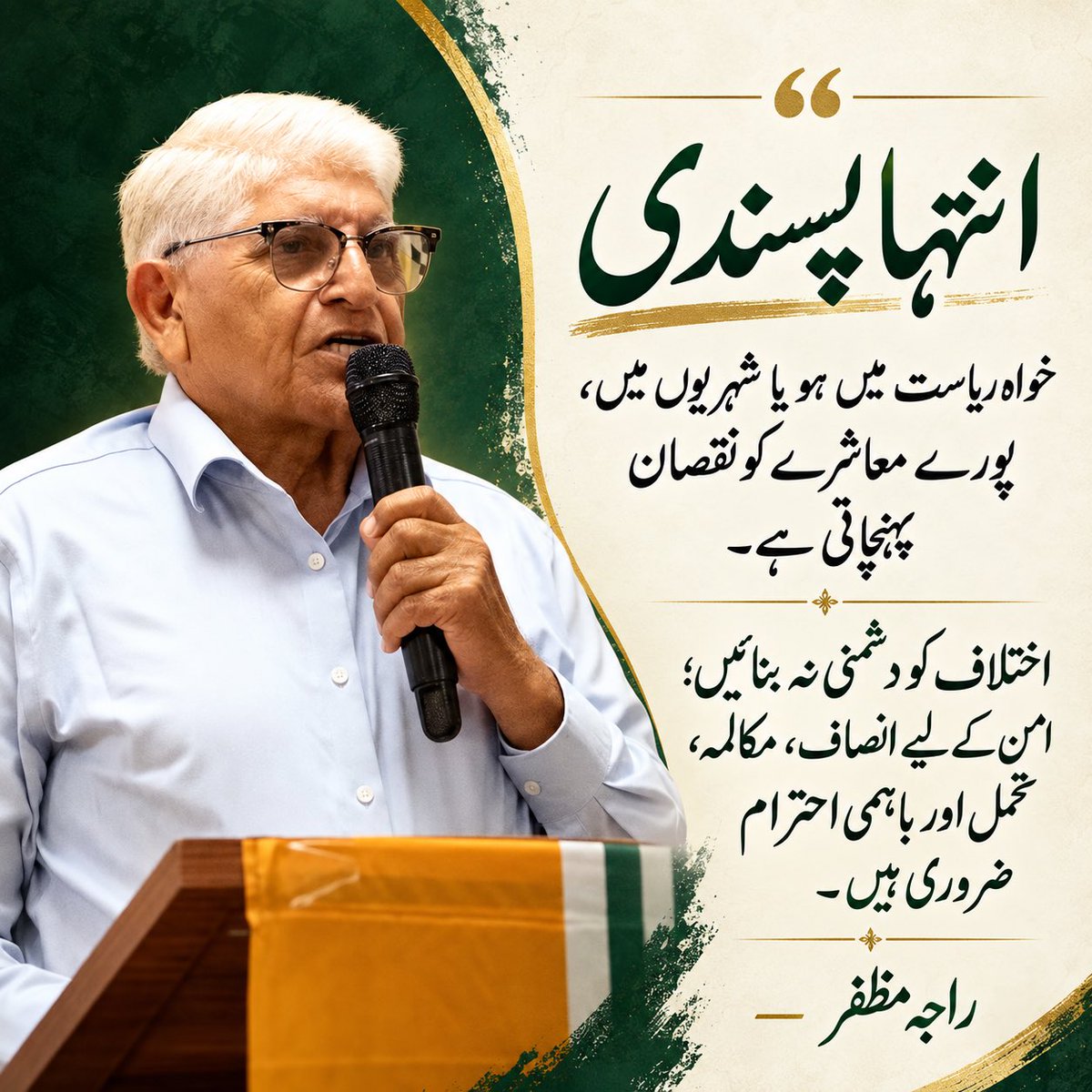
امید ہے کہ آپ اتفاق کریں گے۔ میرا ماننا ہے کہ جب انتہا پسندی وہ سیاسی نظریات میں ہو یا مذہبی نظریات میں کسی شہری کے دل میں جگہ بناتی ہے تو رشتوں میں دراڑ پڑتی ہے۔
اور جب وہ انتہا پسندی ریاست کے پالیسی سازوں اور صاحب اختیار شخصیات کی سوچ میں آ جائے تو اس کا سارا بوجھ پورا معاشرہ اور قوم اٹھاتی ہے۔
اس انتہا پسندی کی قیمت اکثر وہ لوگ چکاتے ہیں جو صرف عزت، تحفظ اور سکون کے ساتھ جینا چاہتے ہیں: مائیں اپنے بچوں کے لیے فکرمند رہتی ہیں، پڑوسی ایک دوسرے سے دور ہو جاتے ہیں، سکول اور مسجدیں ویران ہو جاتی ہیں اور اختلاف راے کی جگہ خوف لے لیتا ہے۔ ایک دوسرے سے نفرت لے لیتی ہے۔
ہم ایک دوسرے سے اختلاف کر سکتے ہیں، مگر ایک دوسرے کو دشمن سمجھ کر امن قائم نہیں کر سکتے۔ مکالمے کا دروازہ بھی کھلا رکھیں، اور اپنی زبان و عمل میں تحمل اور باہمی احترام کو جگہ دیں۔
ہر انسان کا دکھ محسوس کرنا ہی ایک بہتر معاشرے کی ابتدا ہے۔
— راجہ مظفر
#follower
#highlight
"یہ ممکن ہے"
India VS Pakistan at the UN GA
The peoples of India and Pakistan have shared centuries of history, culture and human relationships.
Even after Partition, families and communities remain connected by kinship across boundaries.
Their exchanges and disagreements at the United Nations General Assembly may reflect the realities of their bilateral relationship. But we, the people of the State of Jammu and Kashmir, would welcome a different course.
We would like to see India and Pakistan overcome their discord, respect the established UN framework on Kashmir, and honour the freely expressed will of the people of Jammu and Kashmir.
It would be a historic transformation if, instead of repeatedly answering charges with counter-charges at the UN and other international forums, India and Pakistan could one day associate themselves with each other's constructive statements—as States from Europe, Africa and other regions often do at the UN General Assembly and Security Council.
Such a moment would not diminish either country. It would demonstrate that dialogue, mutual respect and the free will of the people can prevail over decades of confrontation.
Kashmir should become a bridge to peace, not a permanent cause of discord.
People and their leaders could do it ! Why to wait before we consume many generations?
There is no profit in hurting the "Legendary People" associated with life giving waters and snow capped mountains.
Dr. Syed Nazir Gilani
President, JKCHR
@narendramodi@CMShehbaz@PresidentOfTurk@HakanFidan@DrSJaishankar@ForeignOfficePk@UN@antonioguterres@KSAMOFA@FaisalbinFarhan
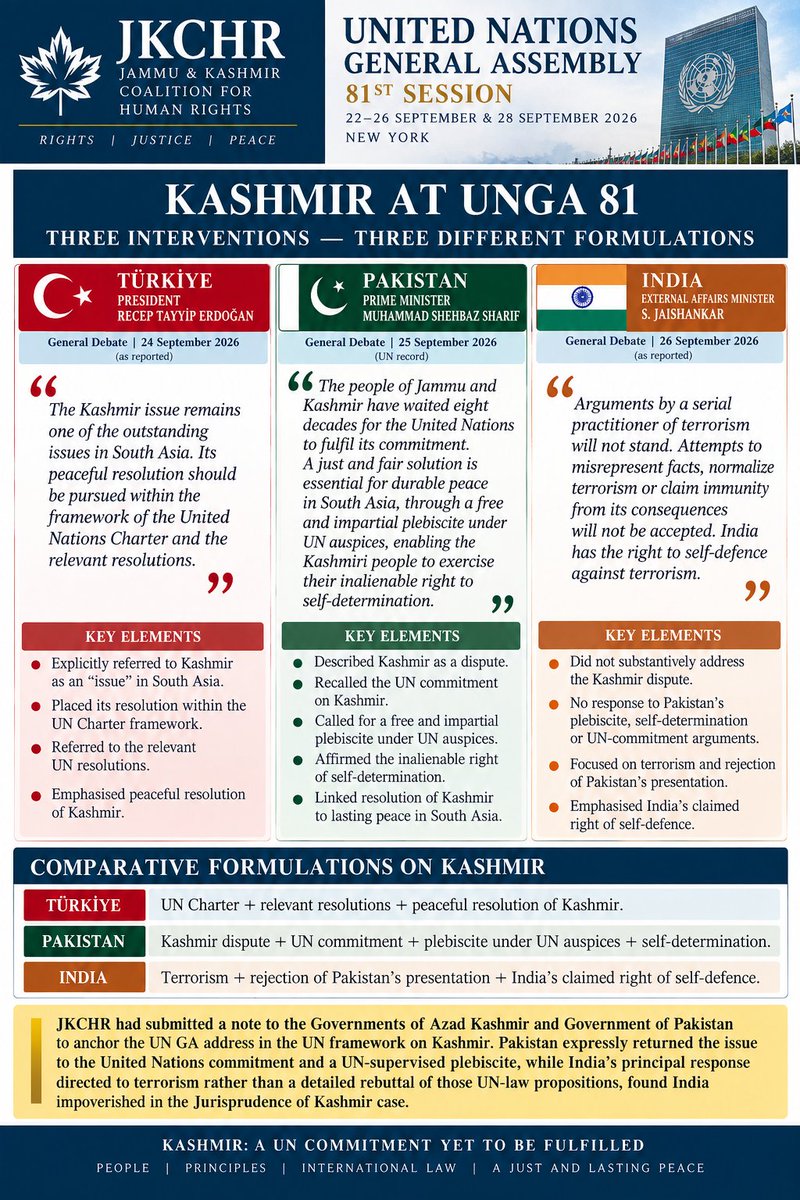
ترکی، پاکستان اور بھارت کے بیانات!
کشمیر کیس کی جیورسپروڈنس Jurisprudence کی بالا دستی !
ہندوستان کیس کی Jurisprudence کی معتبریت کا مقابلہ نہ کرسکا !
جموں کشمیر کونسل براۓ انسانی حقوق کا UN template کی جیورسپروڈنس پر نوٹ !
#JKCHR THANKS #PRESIDENT RECEP TAYYİP #ERDOĞAN FOR RAISING #KASHMIR AT THE #UN
The Jammu and Kashmir Council for Human Rights (JKCHR) expresses its appreciation to President of Türkiye Recep Tayyip Erdoğan for explicitly raising Kashmir in his address to the 81st Session of the United Nations General Assembly.
President Erdoğan’s formulation carries #three important elements.
He recognised Kashmir as #an “issue” among the disputes of South Asia.
He placed its consideration “within the #framework of the United Nations Charter.”
And, importantly, he expressly #referred to the “relevant resolutions.”
The reference therefore went beyond a call for bilateral dialogue: it #situated Kashmir within the framework of the UN #Charter and relevant United Nations resolutions.
JKCHR thanks #President Erdoğan and the #people of #Türkiye for keeping the Kashmir issue visible at the United Nations and for reaffirming the relevance of the established UN framework.
Jammu and Kashmir Council for Human Rights (JKCHR)
Special Consultative Status with UN ECOSOC
@RTErdogan@SerraiaSofia@MFATurkiye@HakanFidan@NumanKurtulmus@trtworld@ForeignOfficePk
The OIC Contact Group
@OICatUN@MIshaqDar50
has again placed Kashmir on the international agenda. The question now is: what comes next?
In this short vlog, I present three proposals for discussion: restoring the representative role envisioned for the Azad Jammu & Kashmir Government, institutionalizing Kashmiri representation at international forums, and creating a sustained dialogue involving India, Pakistan and Kashmiris.
Kashmir must not only be discussed. Kashmiris must have a seat at the table.
@The_NewArab@Saudi_Gazette@OIC_OCI
کشمیری نمائندگی کو institutionalize کیا جائے، اور OIC کے ذریعے اقوام متحدہ اور دوسرے عالمی فورمز پر مناسب مبصر یا نمائندہ حیثیت کی راہ تلاش کی جائے۔